Our Short List of 3

- Best for: FPS and action players who need a vertical grip and refuse to give up a flagship sensor.
- Sensor: PixArt 3950 optical sensor
- Maximum sensitivity: 30,000 DPI
- Polling rate: up to 8000Hz
- Connectivity: 2.4 GHz wireless, Bluetooth 5.1, wired

- Best for: players who game and work at the same desk and want one vertical mouse with gaming-brand polish.
- Buttons: 6 buttons
- Design: vertical ergonomic shape with base wrist support
- Connectivity: 2.4GHz, Bluetooth, USB C wired mode
- Lighting: Chroma RGB

- Best for: medium to large hands with wrist pain that shows up in everyday computer use, not just in games.
- Vertical angle: 57 degrees
- Sensor: 4000 DPI high-precision optical sensor
- Battery: rechargeable, up to 4 months per charge
- Quick charge: 1 minute of charging gives about 3 hours of use
All 5 Picks at a Glance
| Product | Specs | Action |
|---|---|---|
| Keychron M5 8K Vertical Ergonomic Mouse |
| Check price on Amazon |
| Razer Pro Click V2 Vertical Wireless Mouse |
| Check price on Amazon |
| Logitech MX Vertical Wireless Mouse |
| Check price on Amazon |
 Logitech Lift Vertical Ergonomic Mouse |
| Check price on Amazon |
 Razer DeathAdder V3 Pro Wireless Gaming Mouse |
| Check price on Amazon |
Key takeaways
- Gaming mice that ease wrist strain: vertical and ergonomic shapes with real gaming sensors, picked from Amazon listings for sore-wrist players.
When your wrist starts aching halfway through a session, the real decision is not sensor speed. It is whether you keep playing with a flat mouse that forces your forearm to twist palm-down for hours, or switch to a shape that lets the wrist sit closer to neutral while you play. That trade-off decides everything else: vertical shells change your grip the most, sculpted ergonomic shells change it the least, and the sensor only matters once the shape stops hurting.
This roundup is for ranked players protecting an already sore wrist, casual gamers whose hands cramp during long co-op nights, and people who split the same desk between work and play. Every pick below was chosen from its Amazon product page, using the shape, angle, sensor, and battery details stated in the listing itself.
Quick Picks
As an Amazon Associate we earn from qualifying purchases
| Product | Best for | Key spec from title |
|---|---|---|
| Keychron M5 8K Vertical Ergonomic Mouse | Vertical grip without giving up gaming specs | PixArt 3950 sensor, 30000 DPI, 8000Hz polling |
| Razer Pro Click V2 Vertical Wireless Mouse | Vertical comfort with a gaming brand’s extras | 6 button ergonomic design, Chroma RGB |
| Logitech MX Vertical Wireless Mouse | Proven vertical shape for medium to large hands | 57 degree vertical angle, 4000 DPI sensor |
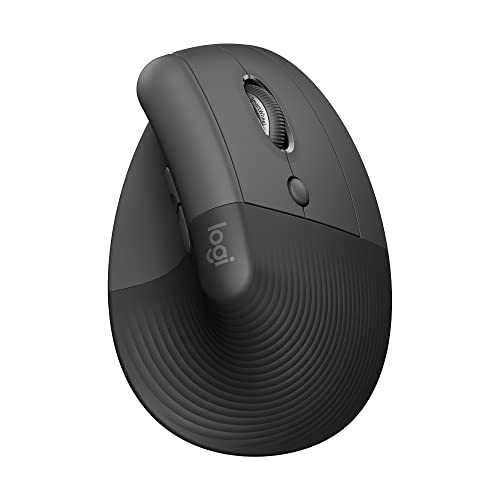
| Logitech Lift Vertical Ergonomic Mouse | Smaller hands that need a true vertical grip | 57 degree angle, 4000 DPI, 125 g |
| Razer DeathAdder V3 Pro Wireless Gaming Mouse | Competitive players who will not go vertical | 63g ergonomic shell, Focus Pro 30K sensor |
How to Choose
Decide how much grip change your wrist actually needs
A flat mouse holds your forearm in pronation, palm turned down, and that twist is what many sore-wrist players are trying to escape. A vertical mouse rotates the hand into a handshake position, which removes most of the twist but changes how every click and flick feels. A sculpted ergonomic shell sits between the two: the palm stays mostly down, yet the body is contoured so fingers rest instead of clawing. If pain shows up during ordinary desktop use too, start vertical. If it only appears in long matches, an ergonomic shell may be enough.
Match the shell size to your hand before anything else
Comfort claims collapse when the shell is the wrong size. A vertical mouse that is too tall forces your fingers to stretch for the buttons, trading wrist strain for finger strain. The Lift is built for small to medium hands at 125 g, while the MX Vertical targets medium to large hands. Measure your hand from wrist crease to middle fingertip, then compare it with the dimensions in each listing. A gaming mouse you must pinch to control will fatigue the hand no matter how good its angle looks in photos.
Check the sensor and polling rate against your games
Office-grade vertical mice often stop at low DPI ceilings and basic polling, which feels floaty in shooters. For gaming, look at the stated sensor model and maximum DPI, and at whether the listing gives a polling rate. The Keychron M5 8K lists a PixArt 3950 sensor with 8000Hz polling, numbers in line with mainstream esports mice, while the Logitech vertical models list 4000 DPI sensors suited to slower-paced games and mixed desktop use. Strategy, MMO, and simulation players rarely need more; competitive FPS players usually do.
Weigh battery style and connection against your desk habits
A wired mouse drags its cable across the desk, and that drag is extra work your wrist does thousands of times a night. Wireless removes it, but the power source matters: the MX Vertical recharges and runs up to four months per charge, the Lift runs up to 24 months on a single AA battery, and the DeathAdder V3 Pro lists up to 90 hours. Tri-mode models such as the M5 8K and the Pro Click V2 Vertical also keep a wired mode, handy when a battery dies mid-match.
The 5 Best Options
Keychron M5 8K Vertical Ergonomic Mouse
- Best for: FPS and action players who need a vertical grip and refuse to give up a flagship sensor.
- Sensor: PixArt 3950 optical sensor
- Maximum sensitivity: 30,000 DPI
- Polling rate: up to 8000Hz
- Connectivity: 2.4 GHz wireless, Bluetooth 5.1, wired
FPS and action players who need a vertical grip and refuse to give up a flagship sensor.
the 47 degree angle is shallower than the 57 degree Logitech shells, so the posture change is milder than a full vertical convert might expect.
Vertical gaming mice used to mean office sensors in an upright shell. The M5 8K is the exception in this list: its listing pairs the vertical shape with a PixArt 3950 sensor, up to 30,000 DPI, and 8000Hz polling over 2.4 GHz wireless, Bluetooth 5.1, or a wired connection. The 47 degree vertical angle and thumb rest keep the forearm untwisted, and at 95 g it stays light enough for the sweeping arm movements a vertical grip encourages. For players whose wrist pain rules out flat mice but whose games still punish slow hardware, this is the most complete answer here.
Razer Pro Click V2 Vertical Wireless Mouse
- Best for: players who game and work at the same desk and want one vertical mouse with gaming-brand polish.
- Buttons: 6 buttons
- Design: vertical ergonomic shape with base wrist support
- Connectivity: 2.4GHz, Bluetooth, USB C wired mode
- Lighting: Chroma RGB
players who game and work at the same desk and want one vertical mouse with gaming-brand polish.
the listing leans on productivity features, so check the button layout against any game where you rely on more than two side buttons.
Razer built this one for people who want the handshake grip without leaving a gaming ecosystem behind. The listing describes a six-button vertical design shaped for a natural handshake position, with a base support that lifts the wrist so it glides instead of dragging on the desk. It connects over 2.4GHz, Bluetooth, or USB C wired mode, so the same mouse can follow you from a gaming PC to a work laptop. Chroma RGB lighting runs along the base, which is cosmetic, but the multi-device switching underneath it is genuinely useful for mixed desks.
Logitech MX Vertical Wireless Mouse
- Best for: medium to large hands with wrist pain that shows up in everyday computer use, not just in games.
- Vertical angle: 57 degrees
- Sensor: 4000 DPI high-precision optical sensor
- Battery: rechargeable, up to 4 months per charge
- Quick charge: 1 minute of charging gives about 3 hours of use
medium to large hands with wrist pain that shows up in everyday computer use, not just in games.
4000 DPI and standard polling make it a poor fit for competitive FPS play, and there is no left-hand version of this model.
The MX Vertical is the long-running reference point for vertical mice, and its listing is unusually specific about why: a 57 degree vertical angle, a natural handshake position that Logitech states reduces muscular activity by 10 percent compared with a standard mouse, and an ergonomist-approved shape with a comfortable thumb rest. Its 4000 DPI sensor includes a cursor speed switch for jumping between precision and fast movement, which suits slower games and desktop work better than twitch shooters. It connects to up to three computers and recharges over USB, with up to four months of use per charge.
Logitech Lift Vertical Ergonomic Mouse
- Best for: small to medium hands, casual gamers, and anyone who wants a vertical mouse that needs no charging routine.
- Vertical angle: 57 degrees
- Tracking: 4000 DPI, fully adjustable
- Weight: 125 g
- Dimensions: 108 x 70 x 71 mm
small to medium hands, casual gamers, and anyone who wants a vertical mouse that needs no charging routine.
the compact shell cramps large hands, and the 4000 DPI ceiling plus quiet-click switches are tuned for comfort rather than fast competitive play.
The Lift takes the same 57 degree idea and shrinks it for smaller hands. The listing gives a weight of 125 g and dimensions of 108 x 70 x 71 mm, with a soft thumb rest and quiet clicks that suit shared rooms. Tracking is 4000 DPI and fully adjustable, and the mouse connects by Bluetooth or the included Logi Bolt USB receiver. Power comes from a single AA battery rated for up to 24 months, so there is no charging cable in the routine at all. For casual and mid-core gaming on a sore wrist, that simplicity is the point.
Razer DeathAdder V3 Pro Wireless Gaming Mouse
- Best for: competitive players whose discomfort comes from effort and tension rather than forearm twist, and who want a proven esports shape.
- Weight: 63 g
- Dimensions: 128 x 68 x 44 mm
- Sensor: Focus Pro 30K optical sensor, up to 30,000 DPI
- Tracking speed: up to 750 IPS, up to 70 G acceleration
competitive players whose discomfort comes from effort and tension rather than forearm twist, and who want a proven esports shape.
it is still a conventional palm-down mouse, so if a clinician has pointed at forearm pronation as your problem, a vertical model above is the safer direction.
Some wrists cannot tolerate a flat mouse, and some players cannot tolerate a vertical one. The DeathAdder V3 Pro is the middle path: a right-handed ergonomic shell, refined with esports player feedback according to the listing, that supports the palm so fingers and wrist stay relaxed without changing the basic grip. It weighs 63 g, runs a Focus Pro 30K optical sensor with up to 750 IPS tracking, uses Gen-3 optical switches, and connects over HyperSpeed wireless with up to 90 hours of battery life. It will not untwist your forearm, but its low weight cuts the effort behind every movement.
Which One Fits Your Situation
Your wrist hurts during work hours too, not only in games
Go vertical and stay vertical. The MX Vertical suits medium to large hands with its 57 degree angle and rechargeable battery, while the Lift covers smaller hands and runs for up to 24 months on one AA battery. Using the same posture for documents and matches means your wrist is not re-adapting every time you sit down, which is where much of the relief comes from.
You play shooters and need real gaming hardware
Start with the Keychron M5 8K. It is the only vertical mouse here whose listing pairs the upright grip with a PixArt 3950 sensor and 8000Hz polling, so the comfort change does not come with a performance ceiling. If the vertical grip itself ruins your aim after a fair trial, the DeathAdder V3 Pro keeps an ergonomic shape and drops the weight to 63 g instead.
One desk, one mouse, both a job and a hobby
The Razer Pro Click V2 Vertical fits the mixed desk best. Its 2.4GHz, Bluetooth, and USB C wired modes let it move between a gaming rig and a laptop without re-pairing rituals, and the base support keeps the wrist lifted through long workdays as well as evening sessions. The Chroma RGB is optional flair; the tri-mode connection is the practical reason to pick it.
Your hands are small and most mice feel oversized
Choose the Lift. Its 108 x 70 x 71 mm shell and 125 g weight are scaled for small to medium hands, and the thumb rest gives your grip a defined home instead of a stretch. Large-shell vertical mice such as the MX Vertical can leave smaller hands pinching to reach the main buttons, which quietly replaces wrist strain with finger strain over a long session.
Common Mistakes
- Expecting a mouse to treat a medical condition on its own. Carpal tunnel symptoms deserve a clinician’s input; a better-shaped mouse reduces strain, but it is not a diagnosis or a cure.
- Switching to a vertical mouse and judging it after one evening. The grip uses different muscles, and aim usually feels clumsy for the first week or two before it settles.
- Buying by sensor numbers while ignoring shell size. A flagship sensor in a shell your hand must pinch will still leave you sore by the end of the night.
- Keeping a death grip on the mouse. Squeezing harder than the game requires is a common source of forearm tension, whatever shape you hold.
- Pairing an ergonomic mouse with a desk setup that fights it. A chair height that leaves your elbow bent sharply upward or a wrist resting on a hard desk edge can undo the benefit of the new shape.
Frequently Asked Questions
Can a vertical mouse really help with carpal tunnel symptoms?
A vertical mouse changes forearm posture from palm-down to a handshake position, which reduces the twisting and wrist pressure that aggravate many people’s symptoms during long sessions. It does not treat carpal tunnel syndrome itself. Think of it as removing one source of strain from your setup, and get persistent numbness or pain checked by a medical professional.
How long does it take to get used to a vertical gaming mouse?
Most players need one to two weeks of regular use before the grip feels natural. Clicks land differently because your fingers press sideways, and fine aim in shooters usually comes back last. A sensible approach is to keep the vertical mouse for everything, including desktop use, so the hours add up quickly, rather than swapping back to a flat mouse whenever a match matters.
Is an ergonomic gaming mouse enough if I cannot stand vertical shapes?
For many players, yes. A contoured shell such as the DeathAdder V3 Pro supports the palm and cuts the gripping effort, and its 63 g weight means each movement costs less force. That addresses strain from tension and effort. It does not change forearm rotation, so if the twist itself is what hurts, vertical remains the better experiment.
What DPI and polling rate do I actually need for gaming on a sore wrist?
It depends on the games. Slow-paced strategy, MMO, and simulation titles play comfortably on the 4000 DPI sensors in the Logitech vertical mice. Fast shooters reward the higher ceilings and polling rates in listings like the Keychron M5 8K, with its PixArt 3950 sensor and 8000Hz polling. Higher sensitivity settings also mean less physical hand travel per turn, which can itself reduce fatigue.
FAQ
Can a vertical mouse really help with carpal tunnel symptoms?
How long does it take to get used to a vertical gaming mouse?
Is an ergonomic gaming mouse enough if I cannot stand vertical shapes?
What DPI and polling rate do I actually need for gaming on a sore wrist?
More from Amazon
Programs that pair well with the guide above. Offers and eligibility are set by Amazon and may change.
Free shipping on eligible items, Prime Video and more. Eligible new members can start with a free trial.
Start a Prime free trialA Prime membership for ages 18-24 with a trial period. Eligibility is set by Amazon.
See Prime for Young AdultsAudiobooks and podcasts to listen to on the go. Eligible new members can start with a free trial.
Try Audible freeAd-free music streaming. Eligible new subscribers can start with a free trial.
Try Music Unlimited freeAs an Amazon Associate we earn from qualifying purchases.