Our Short List of 3

- Fully adjustable stand with height, tilt, swivel, and pivot
- 100Hz refresh rate for smooth everyday movement
- Built-in speakers for calls and streaming
- Eye Comfort certification and a clean ash white design

- Large, easy-to-read 27-inch IPS panel
- 144Hz panel with 1ms response time and FreeSync support
- Built-in 3W speakers
- Fully adjustable stand with height, tilt, swivel, and pivot

- Frameless, ultra-slim design that looks tidy on any desk
- 100Hz refresh rate with 1ms MPRT and Adaptive-Sync
- Low Blue Light and Flicker Free eye-care features
- VESA mountable for arms and wall brackets
All 5 Picks at a Glance
| Product | Specs | Action |
|---|---|---|
| Dell S2725HS — Best All-Rounder |
| Check price on Amazon |
| Dell 27 Plus S2725HSM — Best Simple Large Screen |
| Check price on Amazon |
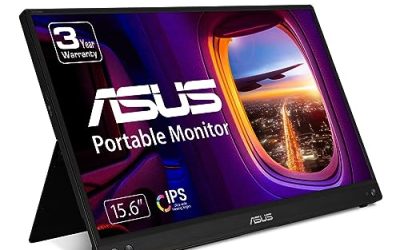
| ASUS VA27EHF — Best Slim Value Pick |
| Check price on Amazon |
 ASUS ProArt Display PA278QV — Best for Colour Work |
| Check price on Amazon |
 LG UltraGear 27GP850-B — Best for Play |
| Check price on Amazon |
Key takeaways
- Find the best 27 inch monitors for work, study, and play. Compare five 27-inch IPS and Nano IPS screens on resolution, refresh rate, ports, and stands.
As an Amazon Associate I earn from qualifying purchases.
The Short Answer
A 27-inch monitor is the sweet spot for most desks: large enough for two windows side by side, small enough to fit a standard desk, and available from Full HD to QHD. If you want one answer, start with the Dell S2725HS — a 27-inch Full HD IPS panel with a 100Hz refresh rate, built-in speakers, and a fully adjustable stand for long workdays, video calls, and streaming.
The right choice still depends on what you do most. A sharper QHD panel makes text crisper and gives photo and design work more room, while a faster refresh rate makes motion smoother for play. A simple Full HD screen keeps things easy when your main jobs are documents, browsing, and video calls. This guide compares five 27-inch monitors that cover those jobs, and every link goes to its Amazon listing for a final specification check before buying.
Our Top Picks
- Best all-rounder: Dell S2725HS — 27-inch Full HD IPS, 100Hz, built-in speakers, fully adjustable stand.
- Best simple large screen: Dell 27 Plus S2725HSM — 27-inch Full HD IPS, 144Hz, built-in speakers, fully adjustable stand.
- Best slim value pick: ASUS VA27EHF — 27-inch Full HD IPS, frameless, 100Hz, eye-care features.
- Best for colour work: ASUS ProArt Display PA278QV — 27-inch QHD IPS, factory-calibrated colour, fully adjustable stand.
- Best for play: LG UltraGear 27GP850-B — 27-inch QHD Nano IPS, 165Hz, wide colour coverage.
Quick Comparison
| Monitor | Best for | Panel and resolution | Refresh rate | Stand |
|---|---|---|---|---|
| Dell S2725HS | Work and video calls | 27-inch IPS, 1920 x 1080 | 100Hz | Height, tilt, swivel, pivot |
| Dell 27 Plus S2725HSM | Large text, spreadsheets | 27-inch IPS, 1920 x 1080 | 144Hz | Height, tilt, swivel, pivot |
| ASUS VA27EHF | Tidy desks, casual play | 27-inch IPS, 1920 x 1080 | 100Hz | Tilt |
| ASUS ProArt Display PA278QV | Photo and design work | 27-inch IPS, 2560 x 1440 | 75Hz | Height, tilt, swivel, pivot |
| LG UltraGear 27GP850-B | Fast-paced play | 27-inch Nano IPS, 2560 x 1440 | 165Hz | Height, tilt, pivot |
How to Choose
Start with resolution, because it decides sharpness
Resolution is the number of pixels on the screen, and on a 27-inch panel it makes a visible difference. Full HD, written as 1920 x 1080, is the standard for everyday work: text stays easy to read, and the screen works with almost any laptop or desktop, including older machines. The trade-off is that pixels are slightly more visible up close than on a smaller screen, so sit at arm’s length or further for the crispest text.
QHD, written as 2560 x 1440, packs more pixels across the same 27 inches. Text looks sharper, windows hold more detail, and photo and design work benefits from the extra room. A 4K panel goes further still, but it demands more from your computer, so for most buyers the real choice is Full HD for simplicity or QHD for sharpness.
Pick the panel type for your viewing habits
Most 27-inch monitors in this guide use an IPS panel, and that is a sensible default. IPS panels keep colours steady when you lean to one side or share the screen, which matters on a wide 27-inch display, and they handle a mix of work, video, and casual play without a weak spot.
Nano IPS, used in the LG UltraGear pick, is an IPS variation with wider colour coverage, suiting vivid games and photo work. VA panels, found on many curved screens, provide deeper blacks and strong contrast, but colours can shift more at an angle. If you work head-on and watch films in a dim room, VA is a fair choice; if you share the screen or care about colour consistency, IPS is the safer pick.
Match the refresh rate to what you actually do
Refresh rate, measured in hertz, tells you how many times per second the screen redraws its image. A 60Hz screen is fine for documents, video calls, and streaming. A 75Hz screen feels a little smoother when you scroll, and a 100Hz screen makes everyday movement noticeably fluid without demanding a powerful graphics card.
For play, the refresh rate matters more. A 165Hz screen redraws far more often, so fast motion looks smoother — but only if your computer can produce high frame rates, so check your graphics card first. For office work and study, 75Hz to 100Hz is the sensible range; for dedicated play, 144Hz or above is worth considering.
Check the ports before you buy
Ports decide whether the monitor works with the computer you already own. HDMI is the most common connection and appears on nearly every laptop and desktop. DisplayPort appears on many desktops and supports higher refresh rates at QHD. USB-C video, where fitted, can carry the picture and charge a laptop through one cable.
Count what you need: one port for your main computer, and a second if you also connect a work laptop, a console, or a streaming stick. If your laptop has only USB-C outputs, confirm on the listing whether the monitor accepts USB-C video or whether you need an adapter. Also check what cables come in the box.
The stand matters more at 27 inches
A 27-inch screen is wide and heavy enough that the stand shapes how comfortable it feels. A tilt-only stand is enough if the screen sits at the right height already, but height adjustment lets you raise the screen to eye level, which helps your neck during long sessions. Swivel turns the screen toward a second person, and pivot rotates it upright for long documents.
If the stand falls short, a VESA mount lets you attach the screen to a monitor arm or a wall bracket; all five picks here are VESA mountable. Measure your desk first: a 27-inch monitor needs a desk roughly 24 inches deep, and a wider desk if you plan to add a second screen beside it.
Do not forget speakers and eye comfort
Built-in speakers save you from buying separate audio gear for video calls and streaming, though they rarely match dedicated speakers or headphones for music. If sound quality matters, plan for external audio either way.
Eye-care features reduce flicker and filter blue light, which helps during long sessions. They do not replace good habits: keep the screen at arm’s length and match its brightness to the room.
The Picks in Detail
Dell S2725HS — Best All-Rounder
- Fully adjustable stand with height, tilt, swivel, and pivot
- 100Hz refresh rate for smooth everyday movement
- Built-in speakers for calls and streaming
- Eye Comfort certification and a clean ash white design
Check the Dell S2725HS on Amazon
The Dell S2725HS is the pick for buyers who want one monitor that does everything well. Its 27-inch Full HD IPS panel shows clear text and steady colours, and the 100Hz refresh rate makes scrolling feel smooth. The 1500:1 contrast ratio, stated on the listing, gives the picture more depth than a basic office screen.
What sets it apart is the stand. Height, tilt, swivel, and pivot adjustment let you set the screen at eye level, turn it toward a colleague, or rotate it upright for long documents. Two built-in 5W speakers handle video calls and streaming without extra gear, and the listing notes TUV Rheinland Eye Comfort certification. Two HDMI 1.4 inputs cover a desktop and a laptop, though there is no DisplayPort or USB-C video, so check your computer’s outputs before buying.
Pros
Cons
Dell 27 Plus S2725HSM — Best Simple Large Screen
- Large, easy-to-read 27-inch IPS panel
- 144Hz panel with 1ms response time and FreeSync support
- Built-in 3W speakers
- Fully adjustable stand with height, tilt, swivel, and pivot
Check the Dell 27 Plus S2725HSM on Amazon
The Dell 27 Plus S2725HSM is the straightforward choice with a faster panel: a big, clear screen. Its 27-inch Full HD IPS panel makes text and menus larger and easier to read — good for spreadsheets, reading, and several windows at once. It is the newer sibling of the Dell S2725HS above, with a 144Hz refresh rate and a 1ms response time instead of 100Hz.
The listing states a 1500:1 contrast ratio, AMD FreeSync support, two built-in 3W speakers, and HDMI input. The stand adjusts for height, tilt, swivel, and pivot, so it sits at eye level without a riser or a monitor arm. Confirm the full port list on the listing before buying.
Pros
Cons
ASUS VA27EHF — Best Slim Value Pick
- Frameless, ultra-slim design that looks tidy on any desk
- 100Hz refresh rate with 1ms MPRT and Adaptive-Sync
- Low Blue Light and Flicker Free eye-care features
- VESA mountable for arms and wall brackets
Check the ASUS VA27EHF on Amazon
The ASUS VA27EHF is the tidy-desk pick. Its 27-inch Full HD IPS panel sits in a frameless, ultra-slim frame, so the screen takes up little visual space and pairs well with a second monitor. The 100Hz refresh rate and 1ms MPRT response time, both stated on the listing, keep scrolling smooth, with Adaptive-Sync support to reduce tearing.
ASUS fits its Eye Care features here: Low Blue Light and Flicker Free modes, aimed at long sessions. The monitor connects over HDMI and mounts to a wall or arm through its VESA mount, and the tilt stand covers basic angle adjustment. There are no built-in speakers and no height adjustment, so this pick suits buyers who already have headphones or speakers.
Pros
Cons
ASUS ProArt Display PA278QV — Best for Colour Work
- Sharp QHD resolution with factory-calibrated colour accuracy
- Full sRGB and Rec. 709 coverage with Delta E under 2
- Fully adjustable stand with height, tilt, swivel, and pivot
- Wide port selection including DisplayPort, HDMI, DVI-D, and Mini DisplayPort
Check the ASUS ProArt Display PA278QV on Amazon
The ASUS ProArt Display PA278QV is the pick for photo editing, graphic design, and any work where colour must be right. Its 27-inch QHD IPS panel shows 2560 x 1440 pixels, which keeps text sharp and gives editing windows more room than Full HD. The listing states full sRGB and Rec. 709 coverage with a Delta E under 2, plus Calman Verified factory calibration.
The stand is fully adjustable for height, tilt, swivel, and pivot, and the anti-glare coating cuts reflections from windows and lamps. Connectivity is generous: DisplayPort, HDMI, DVI-D, and Mini DisplayPort cover old and new computers alike, though there is no USB-C video, so laptop users with only USB-C outputs need an adapter. The 75Hz refresh rate and 5ms response time suit creative work rather than fast-paced play — the honest trade-off for colour accuracy at this size.
Pros
Cons
LG UltraGear 27GP850-B — Best for Play
- Fast 165Hz refresh rate with 1ms response time at QHD
- Nano IPS panel with wide DCI-P3 colour coverage
- G-SYNC Compatible and FreeSync Premium support
- Height, tilt, and pivot stand with DisplayHDR 400 support
Check the LG UltraGear 27GP850-B on Amazon
The LG UltraGear 27GP850-B is the pick for buyers who want their 27-inch screen to keep up with fast games. Its 27-inch QHD Nano IPS panel combines 2560 x 1440 resolution with a 165Hz refresh rate and a 1ms response time, so motion stays smooth and detailed. The listing notes NVIDIA G-SYNC compatibility and AMD FreeSync Premium support, which reduce tearing and stutter, and wide DCI-P3 colour coverage keeps games vivid.
The stand adjusts for height, tilt, and pivot, and the screen supports DisplayHDR 400, which adds punch to supported games and video. It connects over DisplayPort and HDMI; confirm on the listing whether your graphics card and cable support the full 165Hz refresh rate at QHD, because older cables and ports can limit it. It suits a desk with a capable graphics card, not a basic office laptop.
Pros
Cons
Who Should Choose What
If your day is documents, email, video calls, and streaming, the Dell S2725HS is the easiest choice: the adjustable stand and built-in speakers remove the two most common add-ons, and the 100Hz panel keeps everyday movement smooth.
If you want the largest, simplest screen for reading and spreadsheets, the Dell 27 Plus S2725HSM fits. Its big text, faster 144Hz panel, and built-in speakers suit a deep desk, a shared family computer, or a second screen. The adjustable stand sets the screen at eye level without a riser.
If your desk is small or you value a clean look, the ASUS VA27EHF is the tidy option. The frameless design and 100Hz panel suit a compact setup or a dual-screen arrangement where slim bezels matter.
If you edit photos, design graphics, or work with colour every day, the ASUS ProArt Display PA278QV is the clear pick: its QHD resolution and factory-calibrated colour are what matter for creative work.
If play comes first, the LG UltraGear 27GP850-B is the pick. Its 165Hz QHD panel is built for fast motion, and the wide colour coverage keeps games looking vivid. Make sure your graphics card can drive it before you buy.
Common Mistakes
Buying on size alone. A 27-inch screen needs a desk about 24 inches deep so it sits at a comfortable distance. On a shallow desk the screen fills your field of view.
Assuming Full HD looks the same at every size. The same 1920 x 1080 resolution stretches further on a 27-inch panel than on a 24-inch one, so text looks softer up close. Sit at arm’s length or further, or step up to QHD for sharper text.
Ignoring the ports. A monitor with only HDMI inputs cannot connect to a laptop with only USB-C outputs without an adapter, and an old cable can limit a fast panel to a lower refresh rate. Check your computer’s outputs before ordering.
Forgetting the stand. A tilt-only stand is fine when the desk height is right, but a screen that sits too low strains your neck over a long day. Height adjustment, a riser, or a monitor arm solves it.
Paying for speed you cannot use. A 165Hz panel only helps if your computer produces high frame rates. On a basic office laptop, a 75Hz or 100Hz screen gives you the same everyday experience.
Skipping the cable check. Some boxes include only one cable type. Confirm on the listing what ships in the box so you are not waiting on a cable on setup day.
Frequently Asked Questions
Is a 27-inch monitor too big for a standard desk?
For most standard desks it is not, as long as the desk is about 24 inches deep. That depth lets the screen sit at arm’s length, the comfortable viewing distance for a 27-inch panel. On a shallower desk, a 24-inch screen fits better.
Is Full HD enough on a 27-inch monitor?
Yes for everyday work, reading, video calls, and streaming, especially at arm’s length or further. Text stays easy to read, and Full HD works with almost any computer. If you edit photos or read fine print all day, QHD is sharper.
Should I choose IPS or VA for a 27-inch monitor?
IPS is the safer default: colours stay steady from the side, which matters on a wide screen you might share. VA gives deeper blacks and stronger contrast for films in a dim room. For mixed work and shared viewing, choose IPS.
What refresh rate do I actually need?
For documents, browsing, and video calls, 60Hz is fine and 75Hz to 100Hz feels smoother. For casual play, 100Hz is a good middle ground. For fast-paced play, 144Hz or above makes a real difference, but only when your graphics card can match those frame rates.
Do I need USB-C on a 27-inch monitor?
Only if your laptop relies on USB-C outputs. USB-C video can carry the picture and charge the laptop through one cable. None of the five picks here lists USB-C video, so plan on an adapter if your laptop has only USB-C outputs — confirm on the listing either way.
Conclusion
The best 27 inch monitors match the size to the job: a flexible all-rounder, a simple large screen for reading, a slim value pick, a colour-accurate QHD screen for creative work, and a fast QHD screen for play. Start with the Dell S2725HS for work, calls, and streaming without extra gear. Step up to the ASUS ProArt Display PA278QV for colour work, or the LG UltraGear 27GP850-B for fast play. Whichever you choose, measure your desk, check your computer’s ports, and confirm the specifications on the listing before buying.
FAQ
Is a 27-inch monitor too big for a standard desk?
Is Full HD enough on a 27-inch monitor?
Should I choose IPS or VA for a 27-inch monitor?
What refresh rate do I actually need?
Do I need USB-C on a 27-inch monitor?
More from Amazon
Programs that pair well with the guide above. Offers and eligibility are set by Amazon and may change.
Free shipping on eligible items, Prime Video and more. Eligible new members can start with a free trial.
Start a Prime free trialA Prime membership for ages 18-24 with a trial period. Eligibility is set by Amazon.
See Prime for Young AdultsAudiobooks and podcasts to listen to on the go. Eligible new members can start with a free trial.
Try Audible freeAd-free music streaming. Eligible new subscribers can start with a free trial.
Try Music Unlimited freeAs an Amazon Associate we earn from qualifying purchases.