Our Short List of 3

- Best for: A first gaming laptop that also handles school or office work without extra setup.
- Display: 15.6-inch FHD IPS, 1920 x 1080, 144Hz
- Processor: AMD Ryzen 7 7445HS, 6 cores, up to 4.7 GHz
- Graphics: NVIDIA GeForce RTX 4050, 6GB GDDR6
- Memory: 16GB DDR5

- Best for: Buyers who want a laptop they can upgrade with more memory and storage in a year or two.
- Display: 15.6-inch FHD IPS, 1920 x 1080, 144Hz, 300 nits, full sRGB
- Processor: AMD Ryzen 7 170, 8 cores, up to 4.75 GHz
- Graphics: NVIDIA GeForce RTX 4050, 6GB GDDR6
- Memory: 16GB DDR5, expandable to 64GB
- Best for: Competitive play at high refresh rates with a full terabyte for a growing game library.
- Display: 15.6-inch FHD IPS, 1920 x 1080, 165Hz
- Processor: Intel Core i7-13620H
- Graphics: NVIDIA GeForce RTX 4050, 6GB GDDR6
- Memory: 16GB DDR5, expandable to 32GB
All 5 Picks at a Glance
| Product | Specs | Action |
|---|---|---|
| HP Victus 15 |
| Check price on Amazon |
| Lenovo LOQ 15 |
| Check price on Amazon |
| Acer Nitro V 15 (ANV15-52-76NK) |
| Check price on Amazon |
 ASUS TUF Gaming A15 (FA507NU-DS74) |
| Check price on Amazon |
 MSI Katana A15 AI (B8VF-448US) |
| Check price on Amazon |
Key takeaways
- Compare five value gaming laptops with RTX 4050 and RTX 4060 graphics, 144Hz screens and 16GB memory, and find the machine that fits your games.
A gaming laptop only earns its place on your desk when the graphics card, screen and memory line up with the games you actually play. Many buyers fixate on one headline number, usually the graphics chip, and end up with a machine that stutters in multiplayer, fills its drive after three installs, or shows washed-out colours in every scene. The smarter move is to weigh the whole package: a balanced chip pairing, a fast screen, enough memory to keep background apps open, and storage room for a real library.
This guide is for first-time buyers moving up from a shared family laptop, students who need one machine for classes and evening games, and anyone replacing an ageing rig without chasing flagship hardware. Every laptop below was chosen from the name and specifications printed on its Amazon product page, with the focus on what each configuration gives you for everyday 1080p gaming.
Quick Picks
As an Amazon Associate we earn from qualifying purchases.
| Product | Best for | Key spec |
|---|---|---|
| HP Victus 15 | First gaming laptop on a straightforward setup | Ryzen 7 7445HS, RTX 4050, 15.6-inch FHD 144Hz |
| Lenovo LOQ 15 | Upgrading memory and storage later | Ryzen 7 170, RTX 4050, 15.6-inch FHD 144Hz, full sRGB |
| Acer Nitro V 15 | Fast competitive play with room for a big library | Core i7-13620H, RTX 4050, 15.6-inch FHD 165Hz, 1TB SSD |
| ASUS TUF Gaming A15 | A large library and a durable chassis | Ryzen 7 7735HS, RTX 4050, 15.6-inch FHD 144Hz, 1TB SSD |
| MSI Katana A15 AI | The strongest graphics and most memory here | Ryzen 7 8845HS, RTX 4060, 15.6-inch FHD 144Hz, 32GB DDR5 |
How to Choose
Start with the graphics chip and its power limit
The graphics chip decides which settings your games can hold at 1080p, but the chip name alone does not tell the whole story. The same RTX 4050 can run at different wattages in different chassis, and a lower-wattage version will trail a higher-wattage one in sustained play. Look for the TGP figure on the listing when it is published, and treat a listing that hides it as a reason to ask questions rather than assume the best. An RTX 4050 with 6GB of video memory handles modern titles at 1080p with sensible settings, while an RTX 4060 with 8GB gives extra headroom for ray tracing and heavier scenes.
Treat 16GB of memory as the floor
Memory is the upgrade buyers regret skipping most often. With 8GB, a game plus a browser, a chat app and a launcher can push the machine into swapping, which shows up as hitching exactly when a match gets busy. Sixteen gigabytes of DDR5 keeps that combination comfortable, and it leaves room for streaming software or a second monitor full of reference material. A machine with two memory slots and a stated maximum of 32GB or 64GB is worth favouring over a soldered-only design, because it lets you extend the laptop’s useful life without replacing the whole machine.
Judge the screen by refresh rate and colour, not size alone
Almost every laptop in this class uses a 15.6-inch Full HD panel, so the differences that matter sit underneath the size. A 144Hz refresh rate makes motion visibly smoother than a 60Hz panel, and the step to 165Hz helps further in fast shooters. Colour coverage matters just as much: a panel with full sRGB coverage shows games and video the way their creators intended, while a narrow-gamut panel can look pale next to it. Brightness around 300 nits keeps the image readable in a lit room, and an anti-glare finish helps when a window sits behind you.
Check storage, ports and cooling before you commit
A 512GB drive sounds generous until three modern games, the operating system and a few applications share it. A 1TB SSD removes that pressure for most libraries, and a second M.2 slot is the next best thing because it lets you add a drive later. Ports decide what else the laptop can do: USB-C, HDMI and Ethernet cover an external monitor, a wired connection for online play, and a headset or controller without a dongle pile-up. Cooling deserves the same attention, since dual fans and a chassis with real exhaust vents hold frame rates steadier during long sessions than a thin shell that throttles early.
The 5 Best Options
HP Victus 15
- Best for: A first gaming laptop that also handles school or office work without extra setup.
- Display: 15.6-inch FHD IPS, 1920 x 1080, 144Hz
- Processor: AMD Ryzen 7 7445HS, 6 cores, up to 4.7 GHz
- Graphics: NVIDIA GeForce RTX 4050, 6GB GDDR6
- Memory: 16GB DDR5
A first gaming laptop that also handles school or office work without extra setup.
The 512GB drive fills quickly with large games, so plan which titles stay installed or add external storage early.
The HP Victus 15 is the most straightforward entry point in this group, and that simplicity is its strength. Its Ryzen 7 7445HS processor and RTX 4050 graphics cover popular multiplayer titles and story-driven games at 1080p without demanding that you learn tuning software on day one. The 144Hz display keeps motion smooth, the backlit keyboard helps in dim rooms, and the numeric keypad is genuinely useful for coursework and spreadsheets between sessions.
Watch out for: The 512GB drive fills quickly with large games, so plan which titles stay installed or add external storage early.
Lenovo LOQ 15
- Best for: Buyers who want a laptop they can upgrade with more memory and storage in a year or two.
- Display: 15.6-inch FHD IPS, 1920 x 1080, 144Hz, 300 nits, full sRGB
- Processor: AMD Ryzen 7 170, 8 cores, up to 4.75 GHz
- Graphics: NVIDIA GeForce RTX 4050, 6GB GDDR6
- Memory: 16GB DDR5, expandable to 64GB
Buyers who want a laptop they can upgrade with more memory and storage in a year or two.
One spec field on the listing records a different screen size from the title, so confirm the display size on the listing before ordering.
The Lenovo LOQ 15 stands out for buyers who like to improve a machine over time rather than replace it. Its Ryzen 7 170 processor and RTX 4050 graphics deliver the same smooth 1080p foundation as the other RTX 4050 picks here, while the chassis is built around upgradeability, with memory expandable to 64GB and storage to 2TB. The 144Hz IPS display covers full sRGB and 300 nits, which makes it one of the nicer screens in this group for both games and photo or video work.
Watch out for: One spec field on the listing records a different screen size from the title, so confirm the display size on the listing before ordering.
Acer Nitro V 15 (ANV15-52-76NK)
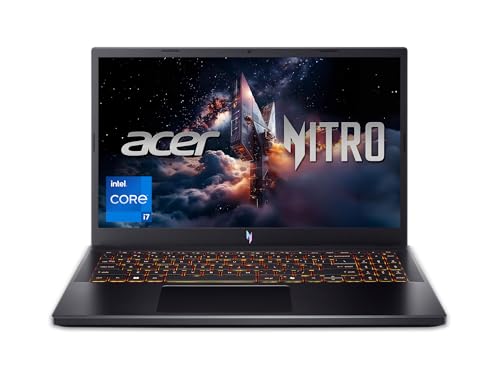
- Best for: Competitive play at high refresh rates with a full terabyte for a growing game library.
- Display: 15.6-inch FHD IPS, 1920 x 1080, 165Hz
- Processor: Intel Core i7-13620H
- Graphics: NVIDIA GeForce RTX 4050, 6GB GDDR6
- Memory: 16GB DDR5, expandable to 32GB
Competitive play at high refresh rates with a full terabyte for a growing game library.
This model sits in a large Nitro V family with near-identical names, so match the model number ANV15-52-76NK on the listing to the configuration you want.
The Acer Nitro V 15 pairs a 165Hz screen with a full terabyte of storage, which is the combination competitive players ask for most. Its Core i7-13620H processor has the cores to keep a game, voice chat and a browser running side by side, and the RTX 4050 graphics hold high refresh rates in fast shooters at 1080p. Dual fans keep the chassis composed during long sessions, and the numeric keypad plus backlit keyboard make the machine equally at home on a desk full of coursework.
Watch out for: This model sits in a large Nitro V family with near-identical names, so match the model number ANV15-52-76NK on the listing to the configuration you want.
ASUS TUF Gaming A15 (FA507NU-DS74)
- Best for: Players with a large game library who want 1TB of storage and a sturdy chassis from the start.
- Display: 15.6-inch FHD, 1920 x 1080, 144Hz, full sRGB
- Processor: AMD Ryzen 7 7735HS, 8 cores, up to 4.7 GHz
- Graphics: NVIDIA GeForce RTX 4050, 6GB GDDR6
- Memory: 16GB DDR5-4800
Players with a large game library who want 1TB of storage and a sturdy chassis from the start.
This is a 2023 model and the listing may be a seller bundle that includes a hub accessory, so confirm exactly what is included and who the seller is before buying.
The ASUS TUF Gaming A15 is built for buyers who keep a laptop for years and load it with games. Its Ryzen 7 7735HS processor and RTX 4050 graphics are a proven pairing for 1080p play, the 144Hz display carries full sRGB coverage for accurate colour, and the 1TB SSD means a dozen large titles can live on the drive at once. The TUF line’s durable chassis and Wi-Fi 6E connectivity round out a machine that suits a desk setup, a dorm room, or a living-room gaming spot equally well.
Watch out for: This is a 2023 model and the listing may be a seller bundle that includes a hub accessory, so confirm exactly what is included and who the seller is before buying.
MSI Katana A15 AI (B8VF-448US)
- Best for: Players who want the strongest graphics and the most memory in this guide, with no upgrade project after purchase.
- Display: 15.6-inch FHD, 1920 x 1080, 144Hz
- Processor: AMD Ryzen 7 8845HS
- Graphics: NVIDIA GeForce RTX 4060, 8GB GDDR6
- Memory: 32GB DDR5
Players who want the strongest graphics and the most memory in this guide, with no upgrade project after purchase.
The listing’s weight and dimensions fields contain inconsistent figures, so ignore them and confirm the configuration, not the shipping figures, before buying.
The MSI Katana A15 AI is the strongest performer in this guide, and the reason is simple: it pairs an RTX 4060 with 32GB of memory fitted at the factory. That combination handles heavier settings, larger scenes and background streaming software without the memory pressure the 16GB machines can hit. The Ryzen 7 8845HS processor keeps demanding games and creative apps moving, the 144Hz display suits fast-paced play, and Cooler Boost 5 cooling is designed to hold performance steady when a session runs long.
Watch out for: The listing’s weight and dimensions fields contain inconsistent figures, so ignore them and confirm the configuration, not the shipping figures, before buying.
Which One Fits Your Situation
You are buying your first gaming laptop
Choose the HP Victus 15. Its Ryzen 7 processor, RTX 4050 graphics and 144Hz screen cover the games most new players start with, and nothing about the setup demands technical knowledge. The backlit keyboard and numeric keypad make it a capable everyday machine too, so it earns its keep between gaming sessions.
You want to upgrade the machine instead of replacing it
Choose the Lenovo LOQ 15. Memory expands to 64GB and storage to 2TB, which means a single memory or drive upgrade in a year or two can extend its useful life well beyond the other RTX 4050 picks here. The full-sRGB screen is a bonus for anyone who also edits photos or video.
You play fast competitive games and keep many titles installed
Choose the Acer Nitro V 15. The 165Hz display gives fast shooters an edge over the 144Hz panels, the Core i7 processor handles voice chat and background apps without strain, and the 1TB drive holds a serious library without constant uninstalling. Dual fans keep frame rates steady through long sessions, so the machine stays composed when a match runs late.
You want the strongest graphics and the most memory available here
Choose the MSI Katana A15 AI. Its RTX 4060 graphics and 32GB of factory-fitted memory are a clear step above the rest of this group, which shows in heavier games and in multitasking. If the TUF Gaming A15’s durable chassis and 1TB drive appeal more than raw graphics power, it is the closest alternative.
Common Mistakes
- Buying on the graphics chip name alone without checking its power limit, because the same RTX 4050 performs differently at different wattages.
- Accepting 8GB of memory to save a little now, then hitting stuttering when a game, browser and chat app run together.
- Choosing a 60Hz screen for fast multiplayer games, where a 144Hz or 165Hz panel makes a visible difference.
- Filling a 512GB drive with three large games and then paying for external storage that could have been avoided with a 1TB model.
- Confusing near-identical model numbers in the Nitro V, Victus and Katana families and ordering a different configuration from the one compared here.
Frequently Asked Questions
Is an RTX 4050 laptop enough for modern games at 1080p?
Yes, for most modern games at 1080p with sensible settings. The RTX 4050 with 6GB of video memory handles popular multiplayer titles at high refresh rates and story-driven games at medium to high settings. Support for DLSS and ray tracing helps in supported titles, though the heaviest ray-traced scenes may need lower settings to stay smooth.
How much memory does a gaming laptop need in 2026?
Sixteen gigabytes is the practical minimum for a gaming laptop in 2026. It leaves room for the game itself plus a browser, voice chat and a launcher running alongside. Eight gigabytes can work for lighter titles, but it struggles once background apps pile up. Thirty-two gigabytes, as fitted to the Katana A15 AI here, adds comfort for streaming and creative work.
Does a 165Hz screen matter if my games run below 165 frames per second?
Yes, it still helps. A higher refresh rate reduces visible tearing and makes motion smoother even when frame rates sit below the maximum, and it leaves headroom for lighter games that do reach those frame rates. The difference between 60Hz and 144Hz is the larger jump, while 165Hz is a smaller but real improvement for competitive play.
Should I choose 512GB or 1TB of storage?
Choose 1TB if you play several large games at once, since modern titles commonly need 50GB or more each and the operating system takes its own share. A 512GB drive works if you rotate a small number of games and uninstall finished ones promptly. A second M.2 slot is a good fallback, because it lets you add a drive later.
FAQ
Is an RTX 4050 laptop enough for modern games at 1080p?
How much memory does a gaming laptop need in 2026?
Does a 165Hz screen matter if my games run below 165 frames per second?
Should I choose 512GB or 1TB of storage?
More from Amazon
Programs that pair well with the guide above. Offers and eligibility are set by Amazon and may change.
Free shipping on eligible items, Prime Video and more. Eligible new members can start with a free trial.
Start a Prime free trialA Prime membership for ages 18-24 with a trial period. Eligibility is set by Amazon.
See Prime for Young AdultsAudiobooks and podcasts to listen to on the go. Eligible new members can start with a free trial.
Try Audible freeAd-free music streaming. Eligible new subscribers can start with a free trial.
Try Music Unlimited freeAs an Amazon Associate we earn from qualifying purchases.