Key takeaways
- Find the best heavy duty 16 inch truck tires for work: load range E all-terrain tires in LT265/75R16 with strong sidewalls, deep tread and long tread life.
A heavy-duty truck tire in a 16-inch size has a hard job: it must carry a loaded bed or a trailer, grip loose gravel and wet pavement, and survive potholes and job-site debris without a sidewall failure. The real decision is not which tread looks most aggressive but which tire matches your load, your driving mix, and the size stamped on your door placard. All three tires below are LT265/75R16 light-truck tires with load range E, picked from the names and specs on their Amazon pages for load capacity, sidewall strength, tread life, and wet-weather grip.

This guide is for pickup owners who haul tools, tow a trailer, or drive a work truck over gravel and dirt every week, plus owners of older full-size trucks that still run 16-inch wheels. Each tire here is a single tire, not a set, so the guide explains how to check the load index, the speed symbol, and the tread depth before you order the number your truck needs.
Quick Picks
As an Amazon Associate we earn from qualifying purchases
| Product | Best for | Key spec from title |
|---|---|---|
| BFGoodrich All-Terrain T/A KO2 | Rocky trails and job sites | Load range E, 123/120R |
| Cooper Discoverer AT3 LT | Long tread life on mixed roads | 123/120R load index |
| Toyo Open Country A/T III | Quiet highway miles with off-road grip | 123/120R E/10 rating |
How to Choose
Load Range and Load Index
Load range E means a 10-ply rated tire built for heavy loads, and the load index tells you how much weight each tire can carry. In this size, 123/120R means 3,415 pounds as a single tire and 3,086 pounds in a dual setup, so check your truck’s gross weight and your trailer tongue weight against those numbers. A tire with a lower load range may look identical but will flex more under a heavy bed and wear faster. Match the load index on your door placard at minimum, and never fit a passenger-car tire on a truck that hauls or tows. A higher load index also runs cooler under a heavy load.
Tread Design and Terrain
Tread design decides where the tire grips and where it struggles. Large, widely spaced lugs bite into mud and loose gravel, while tighter center ribs keep the tire quiet and stable on pavement. All three tires here are all-terrain designs, which means they split the difference between highway comfort and off-road bite. If most of your miles are paved with occasional gravel, pick a tread with a solid center rib. If you regularly drive muddy job sites, pick the most open tread pattern and accept a little more road noise. A tire with siped tread blocks grips better on wet pavement, while large shoulder lugs dig into soft ground when you leave the road.
Sidewall Strength and Puncture Resistance
Sidewalls fail on job sites more often than tread wears out, so sidewall construction deserves a close look. Reinforced sidewalls with extra rubber thickness resist cuts from rocks, stumps, and scrap metal, and they hold up when a tire drops into a rut at speed. Check the manufacturer’s sidewall technology and the ply rating, and look for a tire with a rim protector rib if you park against curbs, because a raised rib takes the scrape instead of the wheel. A stronger sidewall also keeps the tire stable under a heavy load, which reduces sway when towing a trailer down the highway.
Tread Life and Wet Grip
Tread life and wet grip pull in opposite directions, so balance them against your driving mix. A harder tread compound lasts longer but can slip on wet pavement, while a softer compound grips better in rain and wears faster. Look at the treadwear rating, the tread depth in thirty-seconds of an inch, and whether the tire carries a severe snow rating if you drive in winter. Deep tread clears water better and resists hydroplaning, which matters on a loaded truck where braking distances grow. Rotate your tires on schedule, because even the best tire wears unevenly without it. A higher treadwear rating usually means longer life, but read it with the traction grade.
The 3 Best Options
BFGoodrich All-Terrain T/A KO2
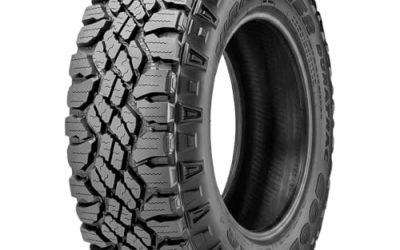
The BFGoodrich All-Terrain T/A KO2 is the toughest tire in this guide, built for trucks that leave pavement regularly. Its CoreGard sidewall technology adds rubber thickness to resist splits and bruises from rocks and debris, and the 10-ply load range E construction carries heavy beds and trailers without flexing. The aggressive tread pattern grips mud, gravel, and rock, while the interlocking tread blocks keep the tire stable on the highway. With a 123/120R service description and an 80 PSI maximum pressure, it suits full-size pickups that work hard every week.
Specs
- Size LT265/75R16, load range E, 123/120R
- CoreGard Technology for 20 percent tougher sidewalls
- 10-ply construction
- Maximum pressure 80 PSI
- Load capacity 3,415 pounds as a single tire
- Tread depth 15/32 in
- Severe snow rated
- Manufacturer part number 67179
Best for: Pickup owners who drive rocky trails and job sites with a loaded truck.
Watch out for: The aggressive tread is louder on pavement than a highway tire, so expect more road noise on long highway trips.
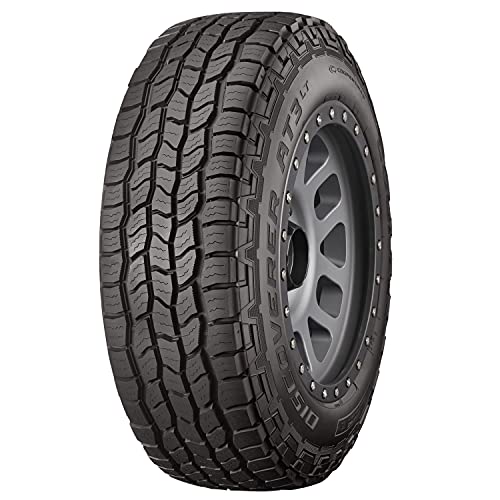
Cooper Discoverer AT3 LT
The Cooper Discoverer AT3 LT is the long-life pick in this guide, built for trucks that split their miles between pavement and gravel. Its all-season tread uses a durable compound that resists uneven wear, and the stone-ejector ribs push small rocks out of the grooves before they drill into the tread. The tire carries the same 123/120R load index as the others here, so it handles a loaded bed or a trailer without complaint. Whisper grooves in the tread reduce road noise, which makes it the easiest of the three to live with on a daily commute.
Specs
- Size LT265/75R16, 123/120R
- All-season tread with durable compound
- Stone-ejector ribs in the tread grooves
- Even wear technology for longer tread life
- Manufacturer part number 170007001
- Load range E
Best for: Drivers who want long tread life across pavement, gravel, and dirt roads.
Watch out for: The tighter tread pattern grips less in deep mud than the most open all-terrain designs, so it suits graded dirt more than boggy ground.
Toyo Open Country A/T III
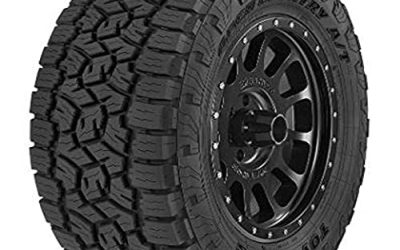
The Toyo Open Country A/T III is the quiet highway pick in this guide, built for trucks that spend most miles on pavement but still need real off-road grip. Its tread uses a balanced block layout that keeps the ride smooth and the cabin quiet, while the open shoulder grooves clear water and loose gravel. The tire carries a 123/120R E/10 rating, so it handles the same heavy loads as the others here. A three-peak mountain snowflake rating means it is rated for severe snow, which helps trucks that work through winter without swapping tires.
Specs
- Size LT265/75R16, 123/120R E/10
- All-terrain tread with open shoulder grooves
- Three-peak mountain snowflake rating for severe snow
- 10-ply rated construction
- Manufacturer part number 355650
Best for: Truck owners who want quiet highway miles with genuine off-road and winter grip.
Watch out for: Two sidewall styles exist for this size, so confirm whether your listing is the raised outline white letter version or the black sidewall version before ordering.
Which One Fits Your Situation
Hauling Tools and Towing Daily
If your truck hauls tools and tows a trailer every day, the BFGoodrich KO2 fits best because its reinforced sidewalls and 10-ply construction handle heavy loads and job-site debris without flexing. The aggressive tread grips loose gravel at the yard, and the 80 PSI maximum pressure lets you air up for a heavy tow. Check your door placard for the correct pressure, and rotate the tires on schedule to keep the aggressive tread wearing evenly.
Long Commutes with Weekend Gravel
If you commute on pavement during the week and drive gravel on weekends, pick the Cooper Discoverer AT3 LT because its durable compound and even-wear design stretch tread life across mixed miles. The stone-ejector ribs keep gravel from drilling into the tread on dirt roads, and the quieter tread makes the daily drive easier. It is the best balance of life, comfort, and load capacity in this guide. Check pressure weekly on mixed-road use.
Highway Miles in All Seasons
If most of your miles are highway driving in rain and snow, the Toyo Open Country A/T III fits because its balanced tread stays quiet at speed while its severe snow rating covers winter driving without a tire swap. The open shoulder grooves clear standing water, which helps a loaded truck stop sooner on wet pavement. Confirm the sidewall style on your listing, then order the number of tires your truck needs. Rotate on schedule.
Rocky Trails and Rough Ground
If your truck regularly crosses rocky trails and rough ground, go back to the BFGoodrich KO2 because its CoreGard sidewalls resist the splits and bruises that end a tire early on sharp stone. The deep tread and open pattern bite into loose rock, and the 10-ply construction holds its shape under a loaded bed. Air down slightly for rough trails if your driving allows it, and air back up before highway miles. Check sidewalls often.
Common Mistakes
- Ordering a passenger-car tire in the same size instead of a light-truck tire with load range E.
- Ignoring the load index and fitting a tire that cannot carry the truck plus its trailer.
- Buying one tire when the truck needs a matched set for even wear and handling.
- Running the wrong pressure for the load, which wears the center or the shoulders early.
- Skipping rotation, which lets the drive axle wear its tires far faster than the steering axle.
Frequently Asked Questions
What does load range E mean on a 16 inch truck tire?
Load range E means the tire has a 10-ply rated construction built for heavy loads, with an 80 PSI maximum. It carries far more weight than a standard passenger tire, which matters when a pickup hauls or tows. Match the load range on your door placard, because a weaker tire flexes more and wears out sooner.
Can I mix different all-terrain tires on the same truck?
Do not mix different tire models on the same axle, because different tread patterns grip differently and can pull the truck to one side, especially in rain. The safest choice is four matching tires of the same model, size, load index, and speed symbol. If you must replace one tire, match the model and size of the other three.
How long do heavy duty 16 inch truck tires last?
Tread life depends on the compound, the load, and how often you rotate, but a well-kept all-terrain tire in this class often lasts tens of thousands of miles. Heavy loads, rough gravel, and missed rotations shorten life, while correct pressure and regular rotation stretch it. Check tread depth by gauge, and replace tires at the wear bars.
Do I need to change tire pressure when towing?
Yes, towing a trailer or carrying a heavy bed calls for higher pressure within the tire’s maximum, because extra weight needs extra support to keep the tire stable. Check the pressure on your door placard for loaded driving, and measure when the tires are cold before a trip. Never exceed the maximum pressure molded on the sidewall.
FAQ
What does load range E mean on a 16 inch truck tire?
Can I mix different all-terrain tires on the same truck?
How long do heavy duty 16 inch truck tires last?
Do I need to change tire pressure when towing?
More from Amazon
Programs that pair well with the guide above. Offers and eligibility are set by Amazon and may change.
Free shipping on eligible items, Prime Video and more. Eligible new members can start with a free trial.
Start a Prime free trialA Prime membership for ages 18-24 with a trial period. Eligibility is set by Amazon.
See Prime for Young AdultsAudiobooks and podcasts to listen to on the go. Eligible new members can start with a free trial.
Try Audible freeAd-free music streaming. Eligible new subscribers can start with a free trial.
Try Music Unlimited freeAs an Amazon Associate we earn from qualifying purchases.