Our Short List of 3

- Best for: Players who want a proven pro-level shape with long battery life and simple software.
- Sensor: HERO 2
- Maximum DPI: 44,000
- Weight: 60 grams
- Report rate: 8K polling

- Best for: Palm grip players with medium to large hands who want an ergonomic wireless shell.
- Sensor: Razer Focus Pro 30K Optical Sensor
- Maximum DPI: 30,000
- Weight: 63 grams
- Dimensions: 128 mm long, 68 mm wide, 44 mm high

- Best for: Claw and fingertip players who want a PAW3395 sensor in a light symmetrical shell.
- Sensor: PixArt PAW3395
- Maximum DPI: 26,000
- Tracking speed: 650 IPS, 50 G acceleration
- Weight: 53 grams
All 4 Picks at a Glance
| Product | Specs | Action |
|---|---|---|
| Logitech G PRO X Superlight 2 |
| Check price on Amazon |
| Razer DeathAdder V3 Pro |
| Check price on Amazon |
| Pulsar X2 V2 |
| Check price on Amazon |
 Pulsar X2 Crazylight |
| Check price on Amazon |
Key takeaways
- Five wireless gaming mice built for FPS play, compared on weight, sensor, polling rate and battery life to help you pick the right one for your grip.
Choosing a wireless mouse for FPS play comes down to trust: the connection has to feel wired, the sensor cannot spin out mid-flick, and the shell has to move at the speed of your arm. Modern 2.4 GHz flagships all promise that, so the real decision is weight, shape, and how much polling rate and battery life you are willing to trade against each other.
This guide is for competitive and aspiring FPS players comparing the Razer Viper V3 Pro, Logitech G PRO X Superlight 2, Razer DeathAdder V3 Pro, Pulsar X2 V2, and Pulsar X2 Crazylight. Every pick is a lightweight wireless model with a flagship optical sensor, and each one suits a different grip, hand size, and priority.
Quick Picks
As an Amazon Associate we earn from qualifying purchases
| Product | Best for | Key spec |
|---|---|---|
| Razer Viper V3 Pro | True 8K wireless polling out of the box | Focus Pro 35K Optical Sensor Gen-2 |
| Logitech G PRO X Superlight 2 | Players who want proven pro-circuit hardware | HERO 2 sensor with 44K DPI |
| Razer DeathAdder V3 Pro | Palm grip players who want an ergonomic shell | Focus Pro 30K Optical Sensor |
| Pulsar X2 V2 | Claw grip players on a mid-range budget | PixArt PAW3395 sensor |
| Pulsar X2 Crazylight | Fingertip players chasing the lowest weight | 35 gram shell with XS-1 sensor |
How to Choose
Match the Shape to Your Grip
Shape decides comfort before any spec does. Symmetrical shells like the Viper V3 Pro and the Pulsar X2 V2 suit claw and fingertip grips because both sides curve the same way, while the DeathAdder V3 Pro uses a right-handed ergonomic shape that fills the palm. Measure your hand, check the listed length and height of each shell, and be honest about how you hold the mouse during long ranked sessions. A sensor cannot rescue a shape that cramps your hand.
Weight and How It Changes Aim
Weight shapes your aiming style. Mice in the 35 to 55 gram range, like the X2 Crazylight and Viper V3 Pro, start and stop with very little effort, which helps low-sensitivity arm aimers make fast corrections. Models around 60 to 63 grams, like the Superlight 2 and DeathAdder V3 Pro, add a touch of stability that some players prefer for tracking. None of these mice is heavy, so choose by feel: lighter for flick-heavy play, slightly heavier for smoother, steadier tracking.
Polling Rate Versus Battery Life
Polling rate is how often the mouse reports its position. The standard is 1000 Hz, and flagship models now reach 8000 Hz wirelessly, which can make cursor movement feel smoother on high refresh rate monitors. The cost is battery: the Viper V3 Pro lists up to 95 hours at 1000 Hz and far less at 8000 Hz. Some mice include the high-polling dongle, while others, like the Pulsar X2 V2 with its 4K-ready design, need a separate dongle purchase. Decide whether your monitor and games justify the trade.
Sensor Numbers That Actually Matter
DPI headlines run far beyond what anyone uses, since most FPS players set somewhere between 400 and 1600 DPI. The figures worth comparing are tracking speed in IPS and acceleration, because they show whether the sensor stays accurate during fast swipes. The Focus Pro 35K in the Viper V3 Pro lists 750 IPS and 70 G, while the PAW3395 in the X2 V2 lists 650 IPS and 50 G. All five sensors here comfortably exceed what human arm movement can outrun.
The 5 Best Options
Razer Viper V3 Pro
The Viper V3 Pro is the pick for players who want the full high-polling package without extra purchases. Its symmetrical shell weighs 54 grams in black, the Focus Pro 35K Optical Sensor Gen-2 tracks on surfaces including glass, and the included HyperPolling Wireless Dongle delivers a true wireless polling rate of up to 8000 Hz. Razer lists up to 95 hours of battery at 1000 Hz, so dropping the polling rate for everyday play stretches the gap between charges considerably.
Specs
- Sensor: Razer Focus Pro 35K Optical Sensor Gen-2
- Maximum DPI: 35,000
- Tracking speed: 750 IPS, 70 G acceleration
- Weight: 54 grams (black)
- Polling rate: up to 8000 Hz wireless with included HyperPolling dongle
- Battery life: up to 95 hours at 1000 Hz
- Switches: Razer Optical Mouse Switches Gen-3
- Connectivity: Razer HyperSpeed Wireless and wired
- Buttons: 8 programmable
Best for: Competitive FPS players who want 8K wireless polling included in the box.
Watch out for: Battery life drops sharply at 8000 Hz, and the symmetrical shape will not suit strict palm grip players.
ASIN: B0CW25XR5R
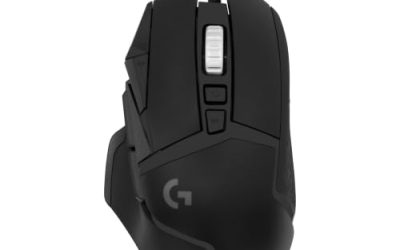
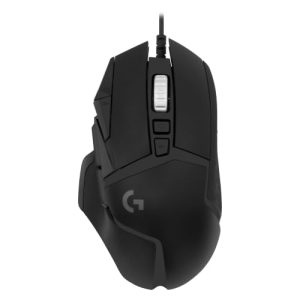
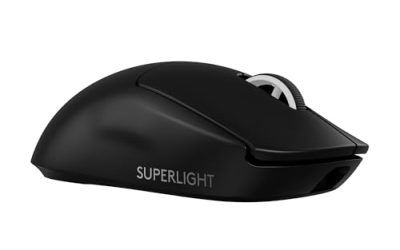
Logitech G PRO X Superlight 2
- Best for: Players who want a proven pro-level shape with long battery life and simple software.
- Sensor: HERO 2
- Maximum DPI: 44,000
- Weight: 60 grams
- Report rate: 8K polling
Players who want a proven pro-level shape with long battery life and simple software.
Only five buttons, and the shape runs small for large hands using a full palm grip.
The Superlight 2 is the safe, proven choice for players who value a mature shape and long battery life. Logitech lists a 60 gram symmetrical shell, the HERO 2 sensor with up to 44,000 DPI, and an 8K report rate over its LIGHTSPEED wireless connection. LIGHTFORCE hybrid switches pair optical actuation with a mechanical feel, and the listing rates battery life at up to 95 hours. Five programmable buttons keep the layout simple, which suits FPS players who bind little beyond ping and voice keys.
Razer DeathAdder V3 Pro
- Best for: Palm grip players with medium to large hands who want an ergonomic wireless shell.
- Sensor: Razer Focus Pro 30K Optical Sensor
- Maximum DPI: 30,000
- Weight: 63 grams
- Dimensions: 128 mm long, 68 mm wide, 44 mm high
Palm grip players with medium to large hands who want an ergonomic wireless shell.
True 8000 Hz polling needs the HyperPolling dongle, which is not part of this base listing.
The DeathAdder V3 Pro is the ergonomic option in this group, built for right-handed palm and relaxed claw grips. Razer lists a 63 gram shell shaped at 128 mm long, the Focus Pro 30K Optical Sensor, and Gen-3 optical switches rated for fast, consistent clicks. HyperSpeed Wireless keeps latency low, and battery life is listed at up to 90 hours. Unlike the Viper, this base version polls at the standard rate out of the box, with the 8000 Hz upgrade handled by a separate HyperPolling dongle.
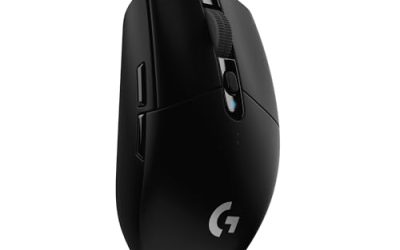
Pulsar X2 V2
- Best for: Claw and fingertip players who want a PAW3395 sensor in a light symmetrical shell.
- Sensor: PixArt PAW3395
- Maximum DPI: 26,000
- Tracking speed: 650 IPS, 50 G acceleration
- Weight: 53 grams
Claw and fingertip players who want a PAW3395 sensor in a light symmetrical shell.
The 4K wireless dongle is a separate purchase, and the medium shell may feel small for palm grip.
The X2 V2 gives claw and fingertip players a flagship PixArt sensor in a 53 gram symmetrical shell without flagship pricing pressure. Pulsar lists the PAW3395 sensor at 26,000 DPI with 650 IPS tracking and 50 G acceleration, optical switches rated at 90 million clicks, and a 2.4 GHz connection with a 1 ms report rate. Battery life is listed at 70 hours. The shell is 4K polling ready, meaning the faster dongle is an optional upgrade rather than a requirement for strong FPS performance.
Pulsar X2 Crazylight
- Best for: Fingertip grip players who want the lightest possible shell for fast micro-adjustments.
- Sensor: Pulsar XS-1
- Maximum DPI: 32,000
- Tracking speed: 750 IPS, 50 G acceleration
- Weight: 35 grams
Fingertip grip players who want the lightest possible shell for fast micro-adjustments.
The ultra-light shell can feel twitchy for palm grip, and this listing showed no featured offer at check time, so confirm the seller before ordering.
The X2 Crazylight is the extreme end of the lightweight trend at just 35 grams, aimed at fingertip players who move the mouse with small, fast adjustments. Pulsar lists its XS-1 flagship sensor with up to 32,000 DPI, 750 IPS tracking, and 50 G acceleration, plus optical switches rated for 100 million clicks. The listing describes 8K polling support, the rate favored by players on very high refresh rate monitors. At this weight there is almost no inertia, which rewards a light touch and a controlled grip.
Which One Fits Your Situation
You Play Ranked FPS Several Nights a Week
Take the Razer Viper V3 Pro. It is the only pick here that pairs a top-tier sensor with a true 8000 Hz wireless polling rate from an included dongle, and its 54 gram symmetrical shell suits the claw and fingertip grips most ranked players use. The long battery rating at 1000 Hz also covers practice days between matches.
Your Hand Aches With Flat Symmetrical Mice
Choose the Razer DeathAdder V3 Pro. Its taller, right-handed ergonomic shell supports the palm instead of forcing your fingers to pinch a low profile, and at 63 grams it stays light enough for low-sensitivity arm aiming. The Focus Pro 30K sensor and 90 hour battery mean you give up nothing in tracking or endurance.
You Want Pro Hardware Without the Flagship Tier
The Pulsar X2 V2 covers the essentials: a PAW3395 sensor, optical switches, a 53 gram shell, and 70 hours of battery. It skips the bundled high-polling dongle, which keeps the package focused on what matters at 1000 Hz. Add the 4K dongle later only if you move to a very high refresh rate monitor.
You Play Fingertip and Hate Inertia
The Pulsar X2 Crazylight at 35 grams removes nearly all resistance from small corrections, and its XS-1 sensor still tracks at 750 IPS. It rewards players who steer with their fingers and wrist rather than their whole arm. If you have never used a mouse this light, expect an adjustment period before your stopping accuracy settles.
Common Mistakes
- Buying by maximum DPI alone, when in-game settings between 400 and 1600 DPI are what you will actually use.
- Chasing 8000 Hz polling on a 60 Hz or 144 Hz monitor, where the smoother reports bring little visible benefit but drain the battery.
- Ignoring shape and grip fit, then blaming the sensor for aim that feels off.
- Leaving the wireless dongle buried behind a metal PC case, which can weaken the signal; use the included extension adapter to place it on the desk.
- Forgetting that some models need a separate dongle for their highest polling rate, so the headline number is not always active out of the box.
Frequently Asked Questions
Is wireless fast enough for competitive FPS play?
Yes, at the level of the mice in this guide. Connections like Razer HyperSpeed and Logitech LIGHTSPEED report over 2.4 GHz with latency designed to match wired mice, and the sensors track far faster than an arm can move. Placement of the dongle, close to the mouse with a clear path, matters more than the wired or wireless label.
Does 8000 Hz polling really improve aim?
It can make cursor movement look smoother on high refresh rate monitors because the mouse reports its position more often. The improvement is subtle, and it shortens battery life a great deal, as the Viper V3 Pro figures show. Most players will not see a score change from it, so treat 8000 Hz as a refinement rather than a requirement.
How light should an FPS mouse be?
Most competitive players land between 35 and 65 grams, which covers every pick here. Lighter mice reduce the effort of starting and stopping flicks, while slightly heavier ones can feel steadier for tracking. Grip style matters more than the number: fingertip players often prefer the lightest shells, while palm players usually want more shell under the hand.
Which grip styles do these mice suit?
The Viper V3 Pro, Superlight 2, X2 V2, and X2 Crazylight use symmetrical shells that suit claw and fingertip grips, and relaxed palm on smaller hands. The DeathAdder V3 Pro is the dedicated ergonomic shape for right-handed palm grip. Check the listed shell length against your hand size before choosing, since the same grip feels different across sizes.
FAQ
Is wireless fast enough for competitive FPS play?
Does 8000 Hz polling really improve aim?
How light should an FPS mouse be?
Which grip styles do these mice suit?
More from Amazon
Programs that pair well with the guide above. Offers and eligibility are set by Amazon and may change.
Free shipping on eligible items, Prime Video and more. Eligible new members can start with a free trial.
Start a Prime free trialA Prime membership for ages 18-24 with a trial period. Eligibility is set by Amazon.
See Prime for Young AdultsAudiobooks and podcasts to listen to on the go. Eligible new members can start with a free trial.
Try Audible freeAd-free music streaming. Eligible new subscribers can start with a free trial.
Try Music Unlimited freeAs an Amazon Associate we earn from qualifying purchases.