Key takeaways
- Compare the best cross country mountain bikes, from carbon hardtails with 12-speed drivetrains to an aluminum value pick, with specs from each listing.
Cross country riding rewards a bike that climbs willingly, holds speed on rolling singletrack and stays light enough to move quickly when the trail points uphill. The five complete bikes below are the cross country mountain bikes whose Amazon listings could be verified for this guide, and they split into two clear camps. Four of them are carbon hardtails or short-travel carbon builds from direct-to-consumer brands that sell through Amazon, and one is an aluminum hardtail from an established name in the sport. As an Amazon Associate, I earn from qualifying purchases.

Each pick is presented the way its listing presents it, with the frame material, wheel size, drivetrain and brake type taken from the listing information. Where a listing leaves a detail unstated, that gap is noted rather than filled in. If you are shopping for a first dedicated cross country bike, or replacing an older hardtail with something lighter and simpler, this shortlist covers the realistic Amazon options from the very light to the more affordable.
What Makes a Bike a Cross Country Bike
Cross country, usually shortened to XC, is the endurance side of mountain biking. Courses and trails mix climbing, descending and flat singletrack, so the bikes built for it trade suspension travel for low weight and pedaling efficiency. Most XC bikes are hardtails, with a suspension fork up front and a rigid rear end, because a locked-out rear triangle wastes less energy on climbs. Full suspension XC bikes do exist, but they keep travel short and geometry steep compared with trail or enduro machines.
Wheel size is another marker. Fast-rolling 29-inch wheels dominate modern XC because they carry momentum over roots and rocks and hold speed on open sections, while 27.5-inch and 26-inch wheels still appear on smaller frames and older designs. Drivetrains have also been simplified: a single chainring paired with a wide-range cassette gives enough spread for steep climbs and fast fire roads without a front derailleur. Hydraulic disc brakes are the norm, since they stop consistently in mud and wet weather with less hand effort. Keep those markers in mind while reading the five picks, because each one hits them in a slightly different way.
Tires and fit matter as much as the headline parts. Cross country tires use lighter casings and lower-profile tread than trail rubber, trading a little grip for speed, and most of these frames leave room to change tire width as conditions change. A fork lockout, fitted to many XC forks, firms the front end for smooth climbs and paved links between trails. Body position is more stretched and forward than on a trail bike, which puts weight over the front wheel for climbing traction, so the frame size and reach figures in each listing deserve a careful look against your own height before you order.
1. TRIFOX Carbon 29er Hardtail
The TRIFOX carbon hardtail is the most current-looking package in this group. Its listing describes a T800 carbon fiber frame in a 29er format with a 17-inch frame size, paired with a Shimano Deore M6100 groupset that delivers 12 speeds through a single chainring. That 1×12 layout is exactly what most XC riders now expect: one shifter, a wide cassette range and no front derailleur to adjust or drop a chain from on rough ground.
Spec summaries drawn from the listing give the bike a hydraulic suspension fork with 130mm of travel, which is generous for the category and pushes this build slightly toward the trail end of cross country. Listing summaries also put the complete weight at about 26 pounds, light enough that climbing should feel responsive rather than reluctant. The wheels are aluminum rather than carbon, a sensible place to control cost, and the color shown is an obsidian yellow finish. For riders who want a modern carbon hardtail with a wide-range drivetrain from an Amazon listing, this is the natural first stop in the shortlist.
Specs
- Frame: T800 carbon fiber hardtail
- Wheel size: 29 inches
- Drivetrain: Shimano Deore M6100, 12-speed
- Fork: Hydraulic suspension fork, 130mm travel
- Brakes: Hydraulic disc
- Listed weight: About 26 pounds
2. SAVADECK Lantop 610 Carbon Hardtail
The SAVADECK Lantop 610 takes a similar carbon hardtail idea and builds it around Shimano’s CUES component family instead. The listing, sold under model number SCMB0008, describes a carbon fiber mountain bike with a U6000 10-speed shift groupset and Shimano MT200 hydraulic disc brakes. Ten speeds from a single chainring keeps the cockpit simple, and CUES was designed by Shimano for durability and smooth shifting under load, which suits riders who log long training miles.
The variant documented here runs 29-inch wheels on a 17-inch frame, and the listing’s own size guidance covers 15.5, 17 and 19-inch frames matched to rider height. An oil spring fork handles the front suspension duties, and the listing states the bike arrives about 90 percent pre-assembled before packing, so final setup covers the bars, pedals and front wheel rather than a full build. SAVADECK’s own specification for the Lantop 610 names a T800 carbon fiber frame, which keeps the chassis in the same lightweight class as the TRIFOX above while the component mix aims at dependable everyday performance.
Specs
- Frame: Carbon fiber hardtail
- Wheel size: 29 inches
- Frame sizes listed: 15.5, 17 and 19 inches
- Drivetrain: Shimano CUES U6000, 10-speed
- Brakes: Shimano MT200 hydraulic disc
- Fork: Oil spring fork
3. BEIOU BO-CB018 Carbon Hardtail
The BEIOU BO-CB018 is the veteran of this list and the lightest documented build here. Listing-compiled specifications describe a Toray T800 carbon fiber hardtail with a Shimano Deore M610 drivetrain offering 30 speeds through a triple chainring setup, plus hydraulic disc brakes. That gearing layout predates the current 1x trend, and some riders still prefer it: the small ring gives a very low climbing gear, and the big ring suits fast, flat transfers between trailheads.
The trade-off is wheel size. The CB018 rolls on 26-inch wheels, which accelerate quickly and keep the bike compact, but give up some of the rollover and momentum of a 29er on rough ground. The documented weight is 23.5 pounds, genuinely light for a complete bike at any wheel size, and frame sizes are listed in two options. Riders who value low weight and a wide gear range over the newest standards, or who simply prefer the quicker feel of smaller wheels, will find this older carbon design still makes a clear case for itself.
Specs
- Frame: Toray T800 carbon fiber hardtail
- Wheel size: 26 inches
- Drivetrain: Shimano Deore M610, 30-speed
- Brakes: Hydraulic disc
- Listed weight: 23.5 pounds
4. SAVADECK Carbon Soft Tail Full Suspension
Four of these five picks are hardtails, so this SAVADECK build covers the riders who want rear suspension without leaving the cross country category behind. The listing, model SCMB0014, describes a carbon fiber frame with a dual-link rear suspension design and an integrated rear triangle, paired with a Fox front fork. A Shimano Deore M6100 12-speed groupset handles shifting, matching the wide-range single-ring layout of the TRIFOX hardtail above.
The documented variant runs 29-inch wheels on a 19-inch frame, and the listing’s technical details name carbon fiber for the wheel material as well as the frame, which is unusual at this level and helps explain the bike’s positioning as the premium option in this shortlist. Rear suspension adds comfort and traction on long, rough race courses, where a hardtail can beat a rider up over several hours. The cost of that comfort is extra weight and extra pivots to maintain, and the listing does not state a complete-bike weight, so that figure is left open here rather than guessed.
Specs
- Frame: Carbon fiber, dual-link full suspension
- Wheel size: 29 inches
- Frame size listed: 19 inches
- Drivetrain: Shimano Deore M6100, 12-speed
- Fork: Fox front fork
- Wheel material: Carbon fiber
5. Mongoose Tyax Expert
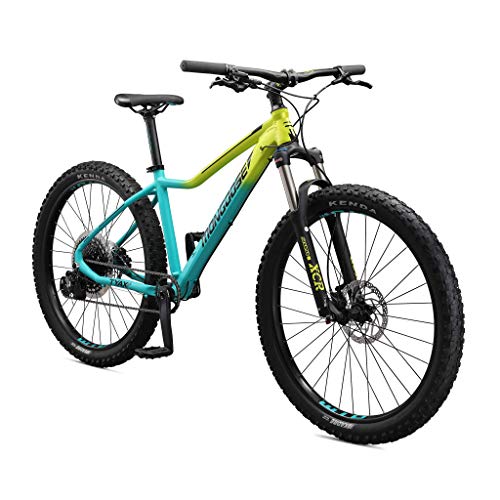
The Mongoose Tyax Expert is the established-brand option and the only aluminum frame in this group. Its Amazon listing describes a Tectonic T2 aluminum hardtail with hydraulic disc brakes, and the documented variant pairs 27.5-inch wheels with a women’s medium frame in a yellow and teal finish. Mongoose builds the Tyax line as its cross country hardtail range, and guide summaries of the listing credit it with a 100mm travel suspension fork up front.
That fork travel figure is the most traditional in this list, matching the short-travel pattern classic XC bikes are known for. Listing summaries also describe a Shimano Acera based drivetrain, a step below the Deore and CUES groupsets on the carbon bikes but a proven, easy-to-service setup. For riders who prefer a familiar brand name, an aluminum frame that shrugs off workshop knocks, and a smaller wheel size that suits shorter riders, the Tyax Expert is the sensible value route into cross country riding. It is also the one pick here sized and finished specifically for women in its documented listing.
Specs
- Frame: Tectonic T2 aluminum hardtail
- Wheel size: 27.5 inches
- Frame size listed: Women’s medium
- Fork: Suspension fork, 100mm travel
- Brakes: Hydraulic disc
- Model number: M29200F10MD-PC
How to Choose Between These XC Bikes
Begin with wheel size, because it shapes how the bike feels everywhere. A 29er holds speed and smooths rough ground, which is why four of these five picks use it or offer it; 27.5-inch and 26-inch wheels feel quicker to accelerate and suit smaller riders. Next, decide between hardtail and full suspension. Hardtails are lighter, simpler and need less maintenance, and most cross country riding does not demand rear suspension. Choose the full suspension SAVADECK if your local courses are rocky enough that fatigue over long rides is a real concern.
Then look at the drivetrain. The 12-speed and 10-speed single-ring setups on the TRIFOX, SAVADECK full suspension and Lantop 610 are the modern pattern: simple, light and wide-ranging. The BEIOU’s 30-speed triple and the Mongoose’s Acera-based setup give more total gears and cheaper replacement parts, at the cost of a front derailleur to manage. Finally, check the frame size against the listing’s height guidance before ordering, and budget time for assembly or a shop setup, since most of these bikes ship partly assembled and work best after a professional check of the gears, brakes and wheel true.
FAQ
Is a hardtail or full suspension bike better for cross country racing?
For most riders, a hardtail is the better cross country choice because it is lighter, pedals more directly and costs less to maintain. Full suspension earns its place on rough, rocky courses and longer events, where the extra comfort and rear-wheel traction protect a rider’s energy over several hours of riding.
Why do most cross country bikes use 29-inch wheels?
Larger wheels roll over roots and rocks with less effort, hold momentum on flat and downhill sections, and offer a bigger contact patch for cornering grip. Those traits suit cross country courses, which mix climbing with fast, flowing singletrack. Smaller wheels still suit shorter riders and tighter, slower trails.
What does a 1×12 drivetrain do on an XC bike?
A single chainring with a 12-speed wide-range cassette covers nearly the same spread as older triple setups, with one shifter instead of two. It is lighter, simpler to use while riding hard, and keeps the chain more secure over rough ground, which is why most of the bikes in this guide use one.
Do these bikes arrive fully assembled?
No. The listings describe partial assembly, typically around 85 to 90 percent complete, with the handlebar, front wheel, pedals and saddle left to fit. A careful home setup is possible with the right tools, and several brands note that professional assembly keeps the frame warranty valid, so a shop visit is worth planning for.
FAQ
Is a hardtail or full suspension bike better for cross country racing?
Why do most cross country bikes use 29-inch wheels?
What does a 1×12 drivetrain do on an XC bike?
Do these bikes arrive fully assembled?
More from Amazon
Programs that pair well with the guide above. Offers and eligibility are set by Amazon and may change.
Free shipping on eligible items, Prime Video and more. Eligible new members can start with a free trial.
Start a Prime free trialA Prime membership for ages 18-24 with a trial period. Eligibility is set by Amazon.
See Prime for Young AdultsAudiobooks and podcasts to listen to on the go. Eligible new members can start with a free trial.
Try Audible freeAd-free music streaming. Eligible new subscribers can start with a free trial.
Try Music Unlimited freeAs an Amazon Associate we earn from qualifying purchases.