Key takeaways
- Discover the best cameras for astrophotography, from full-frame mirrorless bodies to a dedicated cooled astro camera, with sensor, noise and tracking guidance.
The best cameras for astrophotography turn a dark, star-filled sky into images full of color, structure and detail that the naked eye can barely glimpse. A camera built for the night needs a large sensor, clean high-ISO performance, long-exposure control and a body that keeps working when temperatures drop after midnight. Whether you are photographing the Milky Way over a mountain ridge, the Moon through a telescope or faint nebulae from your backyard, the right camera makes the difference between a noisy, washed-out frame and a shot worth printing. This guide explains what matters most in an astrophotography camera and compares four strong options, from versatile full-frame mirrorless bodies to a dedicated cooled astronomy camera.
How to Choose a Camera for Astrophotography
Astrophotography places unusual demands on a camera. Daytime cameras are judged on autofocus speed, burst rates and video features, but night-sky work rewards a different set of strengths. Understanding them before you buy will save you from spending on features you will never use under the stars.
Sensor Size and High-ISO Performance
Sensor size is the single most important factor for night-sky photography. A full-frame sensor gathers far more light per pixel than a crop sensor, which means cleaner images at high ISO settings and less noise in the shadows where faint stars and nebulosity live. When you push a camera to ISO 3200, 6400 or beyond for a Milky Way exposure, a large sensor with modern back-illuminated design holds detail that a smaller sensor smears into grain. Look for cameras known for low read noise and good dynamic range, because you will often lift shadows heavily in post-processing to reveal faint structures.
Long Exposures and Noise Control
Astrophotography relies on long exposures, sometimes 20 to 30 seconds for wide-field Milky Way shots and several minutes for deep-sky targets tracked on an equatorial mount. A camera should offer a bulb mode, a built-in intervalometer or easy remote-shutter support so you can shoot long sequences without touching the body. In-camera long-exposure noise reduction can help with single frames, but many astrophotographers prefer to shoot dark frames separately and stack images in software, so a camera that produces consistent, predictable raw files matters more than aggressive in-camera processing. Heat is another enemy: sensors warm up during long sessions, and warm sensors produce more noise, which is why dedicated astronomy cameras use active cooling.
Lenses, Mounts and Compatibility
The camera body is only half the system. For wide-field nightscapes you want fast, wide-angle lenses with apertures of f/2.8 or wider, while deep-sky imaging usually means attaching the camera directly to a telescope. Check that the body you choose has a good selection of fast wide lenses available, or an adapter path to lenses you already own. Mirrorless mounts from Canon and Sony both offer excellent wide-angle options, and both adapt well to telescope use with the right T-ring or adapter. If you plan to move from Milky Way landscapes to deep-sky imaging later, a body with a removable infrared cut filter option, or a manufacturer that supports astro-modified versions, is a bonus.
Battery Life and Cold-Weather Handling
Night shoots run for hours in the cold, and cold drains batteries fast. A camera with a large-capacity battery, a battery grip option or USB power delivery support will keep you shooting instead of swapping cells in the dark. Simple, glove-friendly controls and a bright, tilting screen also matter more than they seem to at noon in a camera shop. At 2 a.m. on a hillside, you want buttons you can find by touch and a screen you can read at a glance without ruining your night vision.
Dedicated Astro Camera vs. Mirrorless
A general-purpose mirrorless camera is the best starting point for most people because it also works for daytime photography, travel and portraits. A dedicated astronomy camera, by contrast, does one job brilliantly: it mounts to a telescope, cools its sensor to reduce noise, and captures deep-sky objects through long, stacked exposures controlled by a computer. It cannot take a handheld photo of the Milky Way over a lake. Many serious astrophotographers eventually own both, starting with a mirrorless body and adding a cooled camera when they move to tracked deep-sky imaging.
Top Picks: Best Cameras for Astrophotography
1. Canon EOS R6 Mark II — Best Overall Full-Frame Mirrorless for Astrophotography

The Canon EOS R6 Mark II is a superb all-round choice for night-sky photography. Its 24.2-megapixel full-frame CMOS sensor delivers clean files at high ISO settings, and its Dual Pixel CMOS AF II system can lock onto stars in conditions where older cameras hunt helplessly. The in-body image stabilization helps with handheld framing and composition, while the fully articulating screen makes it easy to compose low-angle Milky Way shots without lying on wet grass. The R6 Mark II supports long exposures, interval shooting and remote control, and Canon’s RF mount offers fast wide-angle lenses that are ideal for nightscapes. It also handles 4K video well, which is useful for time-lapse sequences of the Milky Way moving across the sky. For a photographer who wants one camera that excels at astrophotography and still serves as a daily workhorse, this is the strongest pick in this guide.
Canon EOS R6 Mark II on Amazon
2. Sony a7 III — Best Value Full-Frame Camera for Night-Sky Photography
The Sony a7 III remains one of the best value full-frame cameras for astrophotography years after its release, and for good reason. Its 24.2-megapixel back-illuminated full-frame sensor is renowned for low noise at high ISO, and its large dynamic range gives you plenty of room to lift faint nebulosity out of the shadows in post-processing. The a7 III offers excellent battery life for its class, a long-exposure bulb mode, and compatibility with an enormous range of E-mount lenses, including fast wide-angle primes that are perfect for Milky Way photography. It also adapts easily to telescopes with inexpensive T-rings, making it a natural stepping stone from wide-field nightscapes to tracked deep-sky imaging. If you want proven full-frame astro performance without paying for the newest flagship, the a7 III is hard to beat.
3. Canon EOS R8 — Best Lightweight Full-Frame Camera for Astrophotography
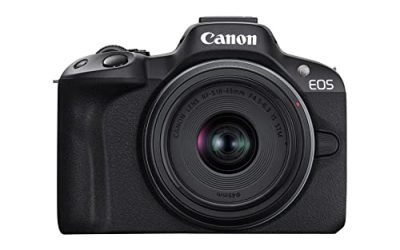
The Canon EOS R8 packs a 24.2-megapixel full-frame sensor into the lightest full-frame body Canon makes, which makes it an excellent choice for hikers, travelers and anyone who walks a long way to a dark-sky location. Despite its compact size, it shares much of its imaging DNA with more expensive Canon bodies, including Dual Pixel CMOS AF II and clean high-ISO output. The vari-angle screen is helpful for awkward tripod positions, and the camera pairs beautifully with compact, fast RF lenses for Milky Way panoramas. Its smaller battery means you should carry spares or a USB power bank on long nights, but the weight savings on the trail more than compensate. For astrophotographers who value portability and want a modern full-frame sensor, the R8 is a compelling option.
4. ZWO ASI533MC Pro — Best Dedicated Cooled Camera for Deep-Sky Astrophotography
The ZWO ASI533MC Pro is a different kind of camera entirely: a dedicated, cooled astronomy camera designed to mount on a telescope and capture deep-sky objects such as galaxies, nebulae and star clusters. Its 9-megapixel square-format sensor uses back-illuminated CMOS technology with very low read noise and zero amp glow, and its two-stage thermoelectric cooler drops the sensor temperature far below ambient, dramatically reducing thermal noise during long exposures. Because it is a one-shot color camera, you can capture full-color images without a filter wheel, which keeps the setup simple for beginners in deep-sky imaging. It connects to a computer over USB 3.0 and works with popular capture software and the ZWO ASIAIR controller. This is not a camera for Milky Way landscapes or daytime use, but for deep-sky imaging through a telescope, it delivers results that no ordinary mirrorless body can match at a comparable level of investment.
Comparison Table
| Camera | Sensor | Best For | Cooling | Mount |
|---|---|---|---|---|
| Canon EOS R6 Mark II | 24.2 MP full-frame CMOS | All-round astro and daytime use | Passive | Canon RF |
| Sony a7 III | 24.2 MP full-frame BSI CMOS | Value full-frame night-sky work | Passive | Sony E |
| Canon EOS R8 | 24.2 MP full-frame CMOS | Lightweight travel and hiking | Passive | Canon RF |
| ZWO ASI533MC Pro | 9 MP square CMOS | Deep-sky imaging via telescope | Two-stage TEC cooling | Telescope / T-thread |
Which Camera Should You Choose?
Your choice depends on where and how you plan to shoot. If you want one camera that handles Milky Way landscapes, the Moon, travel and everyday photography, the Canon EOS R6 Mark II is the most capable all-rounder here. If budget matters and you still want proven full-frame image quality, the Sony a7 III gives you nearly the same night-sky performance for less, with a huge lens ecosystem behind it. If you hike to dark-sky sites and every gram in your pack counts, the Canon EOS R8 delivers full-frame quality in the lightest body of the group. And if your passion is deep-sky objects through a telescope, skip the mirrorless bodies and go straight to the ZWO ASI533MC Pro, whose cooled sensor is built specifically for that job.
Remember that the camera is only part of the system. A sturdy tripod, a fast wide-angle lens, a remote shutter release and, for deep-sky work, a tracking mount will improve your results more than a small upgrade in camera body. Spend time learning to focus precisely on stars, to shoot and stack multiple exposures, and to process your images carefully. The cameras in this guide all have the image quality needed for striking astrophotography; the rest comes from practice, patience and dark skies.
Frequently Asked Questions
What is the best camera for astrophotography for beginners?
A full-frame mirrorless camera such as the Canon EOS R8 or Sony a7 III is the best starting point for most beginners. Both offer clean high-ISO performance, simple long-exposure controls and compatibility with fast wide-angle lenses, and both remain useful for daytime photography, so your investment is not limited to night-sky work.
Do I need a full-frame camera for astrophotography?
You do not strictly need one, but a full-frame sensor makes night-sky photography noticeably easier because it gathers more light and produces less noise at high ISO settings. Crop-sensor cameras can still produce good Milky Way images with a fast lens and careful technique, but full-frame bodies give you more headroom when lifting shadows and stacking exposures.
What ISO should I use for Milky Way photography?
Most Milky Way photographers work between ISO 1600 and 6400, depending on the camera and the darkness of the sky. Start around ISO 3200 with a 20-second exposure at the widest aperture your lens allows, then review the result and adjust. Higher ISO settings brighten faint stars but also add noise, so the best setting is the lowest one that still captures the detail you want.
Can I use a regular mirrorless camera for deep-sky astrophotography?
Yes, a mirrorless camera mounted on a tracking mount can capture galaxies and nebulae, especially with a telephoto lens or a small telescope. A dedicated cooled camera like the ZWO ASI533MC Pro produces cleaner long exposures with less thermal noise, so it is the better tool for serious deep-sky work, but a mirrorless body is a fine way to learn the techniques first.
How do I focus a camera for astrophotography?
Use manual focus with live view magnified on a bright star, adjusting until the star appears as small and sharp as possible. Some cameras offer focus peaking or magnification aids that help. Once focus is set, avoid touching the focus ring, and consider taping it in place for the night. Autofocus systems that can lock onto stars, such as the one in the Canon EOS R6 Mark II, can also help you confirm focus quickly.
Conclusion
The best cameras for astrophotography combine a large, low-noise sensor with reliable long-exposure controls and a system of lenses and accessories that fits the way you shoot. The Canon EOS R6 Mark II leads this guide as the most capable all-rounder, the Sony a7 III offers outstanding value, the Canon EOS R8 is the best choice for photographers who travel light, and the ZWO ASI533MC Pro is the dedicated tool for deep-sky imaging through a telescope. Whichever you choose, pair it with a solid tripod, a fast lens and plenty of patience, and find the darkest sky you can reach. The night sky rewards those who prepare, and any of these cameras is ready to capture it.
Disclosure: As an Amazon Associate, we earn from qualifying purchases.
FAQ
Which Camera Should You Choose?
What is the best camera for astrophotography for beginners?
Do I need a full-frame camera for astrophotography?
What ISO should I use for Milky Way photography?
Can I use a regular mirrorless camera for deep-sky astrophotography?
How do I focus a camera for astrophotography?
More from Amazon
Programs that pair well with the guide above. Offers and eligibility are set by Amazon and may change.
Free shipping on eligible items, Prime Video and more. Eligible new members can start with a free trial.
Start a Prime free trialA Prime membership for ages 18-24 with a trial period. Eligibility is set by Amazon.
See Prime for Young AdultsAudiobooks and podcasts to listen to on the go. Eligible new members can start with a free trial.
Try Audible freeAd-free music streaming. Eligible new subscribers can start with a free trial.
Try Music Unlimited freeAs an Amazon Associate we earn from qualifying purchases.