Our Short List of 3
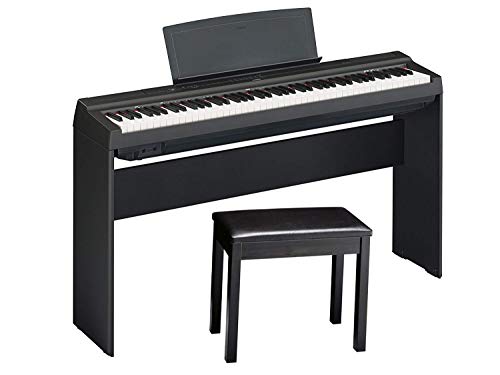
- Best for: All-round home piano practice, students, and returning players who want a complete setup.
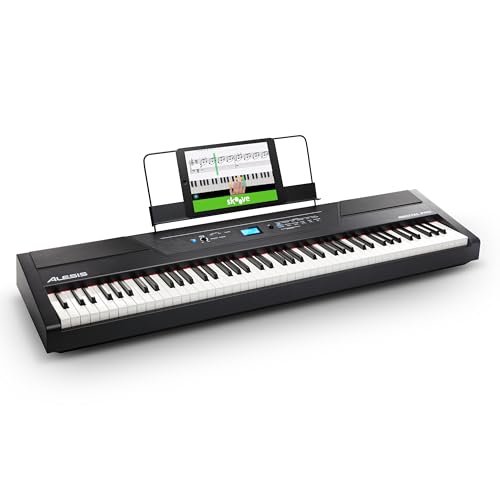
- Best for: Beginners and students who want hammer-action keys, built-in lessons, and strong built-in speakers.

- Best for: Home studios, DAW-based production, and players who want 88 semi-weighted keys for virtual instruments.
All 3 Picks at a Glance
| Product | Specs | Action |
|---|---|---|
| 1. Yamaha P-125 Home Bundle |
| Check price on Amazon |
| 3. Alesis Recital Pro |
| Check price on Amazon |
| 4. M-Audio Keystation 88 MK3 |
| Check price on Amazon |
Key takeaways
- Find the best 88 key keyboards for piano practice, gigs, and studio work. Compare weighted actions, sounds, portability, and connectivity before you buy.
The best 88 key keyboards give you the full range of a grand piano in a single instrument you can carry, plug in, and play anywhere. With all 88 notes under your fingers, you never run out of keys in the middle of a piece, and you can move between classical repertoire, jazz voicings, and modern production work without compromise. Whether you are returning to piano after years away, setting up a home studio, or choosing a first serious instrument for a student, a full-size keyboard is the most versatile starting point.
An 88-key keyboard is not just a bigger version of a smaller one. The full range changes how you practice, because your hands learn the real geography of the piano from day one. It also changes what you can play: two-handed arrangements, wide chord voicings, and pieces that use the lowest bass notes and the highest treble notes all become possible.
How to Choose an 88 Key Keyboard
Before comparing models, it helps to know which features matter most for your situation. The right keyboard depends less on brand loyalty than on how and where you will use it.
Key Action: Weighted, Semi-Weighted, or Hammer Action
Key action is the single most important difference between 88-key keyboards. Fully weighted and hammer-action keys mimic the resistance of an acoustic piano, with heavier keys in the bass and lighter keys in the treble. This graded feel builds finger strength and technique that transfers directly to a real piano, which is why teachers usually recommend it for students and returning players.
Semi-weighted keys are lighter and faster. They feel closer to a synthesizer than a piano, which suits players who trigger virtual instruments on a computer, play fast synth lines, or switch between many sounds in a session. If your main goal is piano practice, choose weighted or hammer action. If your main goal is controlling software instruments, semi-weighted is a legitimate and often better choice.
Built-In Sounds vs. MIDI Control
Some 88-key keyboards are self-contained instruments with built-in speakers and a library of sounds, so you can switch them on and play immediately. Others are MIDI controllers with no sounds of their own: they send your playing to a computer, where software instruments produce the sound. A digital piano is the better pick if you want to sit down and play without a computer nearby. A MIDI controller is the better pick if you already work in a DAW and want maximum control over virtual instruments.
Polyphony and Sound Quality
Polyphony is the number of notes an instrument can sound at once. A figure of 128 notes or more is comfortable for most playing, and 192-note polyphony gives extra headroom when you hold the sustain pedal through dense passages or layer two sounds. For sound quality, listen for a detailed grand piano voice with natural decay, and check whether the keyboard offers a small set of genuinely useful extra voices — electric piano, organ, strings — rather than hundreds of sounds you will never use.
Portability and Weight
An 88-key keyboard is a large object, and weight varies a lot. Slim portable models can weigh around 25 pounds, while fuller models with heavier actions and bigger speakers can weigh 35 pounds or more. If you plan to carry the keyboard to lessons, rehearsals, or gigs, weight and depth matter as much as sound. Battery power is a bonus for outdoor playing, though most players will use the included power adapter at home.
Connectivity
Check the connections before you buy. A USB-to-host port lets you connect to a computer or tablet for recording and learning apps. A sustain pedal input is essential for expressive piano playing, and a three-pedal unit is a plus for advanced repertoire. Bluetooth audio and MIDI are useful for playing along with songs from a phone, and a headphone jack makes silent practice possible at any hour.
Speakers, Stand, and Accessories
Built-in speakers mean you can play without extra gear, which matters in a living room or practice space. If the keyboard has no speakers — as with most MIDI controllers — budget for headphones or studio monitors. Many listings are sold as bundles that include a stand, bench, and sustain pedal. A bundle can be good value if you need all three, but check that the included stand is sturdy enough for the weight of the keyboard.
Top Picks
1. Yamaha P-125 Home Bundle
- Best for: All-round home piano practice, students, and returning players who want a complete setup.
All-round home piano practice, students, and returning players who want a complete setup.
The Yamaha P-125 is one of the most widely recommended 88-key digital pianos for good reason: it pairs a convincing piano feel with a compact body that fits in rooms where a full console piano would not. Its Graded Hammer Standard action is heavier in the low keys and lighter in the high keys, just like an acoustic piano, so beginners build correct technique and experienced players feel at home immediately. The Pure CF Sound Engine reproduces the tone of a Yamaha concert grand, and with 192-note polyphony and 24 voices, it handles sustained passages and layered sounds without notes dropping out.
This listing is the home bundle, which adds a furniture stand and a wooden bench to the piano itself, along with the power supply and sustain pedal. That makes it a complete setup in one box. USB-to-host connectivity supports MIDI and audio transfer to a computer or tablet, and the Smart Pianist app gives you an easy way to control voices, rhythms, and settings from a phone. Dual headphone jacks let a student and teacher listen together, which is a thoughtful touch for lessons.
The P-125 suits a household where one instrument has to serve practice, lessons, and occasional performance. It is light enough to move between rooms, yet substantial enough to feel like a real piano under the hands. If you want a single purchase that covers the instrument, the stand, and the bench, this bundle is a strong place to start.
2. Casio Privia PX-S1100 Bundle
The Casio Privia PX-S1100 is the slimmest 88-key digital piano in this roundup, and it is built for players who are short on space but unwilling to give up a real hammer action. At barely deeper than the keys themselves and weighing under 25 pounds, it fits on a small desk or a narrow stand, and it can even run on six AA batteries, which opens up playing in places with no power outlet nearby. The Smart Scaled Hammer Action keyboard reproduces the individual character of each of the 88 keys, with textured ebony and ivory style surfaces that stay comfortable in any climate.
Sound comes from Casio’s Multi-Dimensional Morphing AiR engine, with 18 tones led by a German concert grand piano with damper and string resonance. The included WU-BT10 Bluetooth adapter handles both audio streaming and MIDI, so you can play along with songs from your phone or connect wirelessly to learning apps. Two headphone jacks, a USB port, and the free Casio Music Space app round out a modern, connected instrument. This bundle adds a furniture stand, a three-pedal system, a bench, and learning materials, turning the slim piano into a proper home setup.
Best for: Small spaces, portable playing, and anyone who wants the slimmest full-size piano available.
3. Alesis Recital Pro
- Best for: Beginners and students who want hammer-action keys, built-in lessons, and strong built-in speakers.
Beginners and students who want hammer-action keys, built-in lessons, and strong built-in speakers.
The Alesis Recital Pro is a full-featured 88-key digital piano aimed squarely at learners and intermediate players who want a lot of instrument for their money. Its 88 full-sized hammer-action keys have adjustable touch response, so you can set the sensitivity to match your playing style, and the 12 premium built-in voices cover acoustic piano, electric piano, organ, strings, and more. Two 20-watt built-in speakers fill a room with clear sound, and 128-note polyphony keeps sustained chords intact.
Where the Recital Pro really earns its place is in its learning features. Lesson Mode splits the keyboard into two identical zones so a student and teacher can play together without taking turns, and a built-in record function lets you capture a performance and listen back to it. The included Skoove and Melodics trial subscriptions add structured online lessons to the package. Connectivity includes a headphone output for private practice, a sustain pedal input, and stereo outputs for connecting to a recorder, mixer, or amplifier, plus USB for use as a MIDI controller with a computer.
The Recital Pro can run on its included power supply or on six D-cell batteries, which makes it flexible for rooms without a nearby outlet. It is a straightforward, honest instrument: a solid hammer action, useful voices, and teaching tools that genuinely help beginners progress. For a first full-size piano in a family home or a classroom, it is a sensible and capable choice.
4. M-Audio Keystation 88 MK3
- Best for: Home studios, DAW-based production, and players who want 88 semi-weighted keys for virtual instruments.
Home studios, DAW-based production, and players who want 88 semi-weighted keys for virtual instruments.
The M-Audio Keystation 88 MK3 is the one pick here that is not a standalone piano — it is a MIDI controller, and for studio work that is exactly the point. With 88 full-size, velocity-sensitive, semi-weighted keys, it gives you the full piano range for playing virtual instruments in your DAW, while pitch and modulation wheels, a volume slider, transport buttons, and octave controls put the most-used functions under your hands. It connects over USB, draws power from the same cable, and works with the major DAWs on Mac and Windows.
Because it has no built-in sounds or speakers, the Keystation 88 MK3 is lighter and simpler than a digital piano, and every part of your budget goes toward the keybed and the controls. The semi-weighted action is fast and responsive, which suits synth parts, string lines, and drum programming as well as piano-style playing. The bundled software gets you started with virtual instruments, and the MIDI output port lets you connect hardware synthesizers and sound modules as well as a computer.
Comparison Table
| Keyboard | Type | Key Action | Built-In Sounds | Polyphony | Standout Feature |
|---|---|---|---|---|---|
| Yamaha P-125 Home Bundle | Digital piano | Graded hammer standard | 24 voices | 192 notes | Complete setup with stand and bench |
| Casio Privia PX-S1100 Bundle | Digital piano | Smart Scaled Hammer Action | 18 tones | 192 notes | Slimmest design, battery power, Bluetooth |
| Alesis Recital Pro | Digital piano | Hammer action, adjustable touch | 12 voices | 128 notes | Lesson Mode and learning subscriptions |
| M-Audio Keystation 88 MK3 | MIDI controller | Semi-weighted | None, controls software instruments | N/A | Full DAW control with transport buttons |
Choosing Between a Digital Piano and a MIDI Controller
The choice comes down to one question: do you want the instrument to make sound by itself? A digital piano like the Yamaha P-125, Casio PX-S1100, or Alesis Recital Pro is a complete instrument. Switch it on, and you can play, practice, and perform with no other equipment. That independence is valuable for lessons, for family use, and for anyone who finds computers a distraction from practice.
A MIDI controller like the M-Audio Keystation 88 MK3 is a different tool. It makes no sound on its own, but it gives you practical control of any software instrument you own, from orchestral libraries to vintage synthesizers. If you already spend your musical time in a DAW, a controller is the more flexible and usually more affordable way to get 88 keys. Many musicians eventually own both: a digital piano in the living room and a controller in the studio.
Weight and action also differ. Digital pianos carry speakers, amplifiers, and heavier actions, so they tend to weigh more. Controllers skip all of that, so they are lighter and easier to move. On the other hand, a weighted piano action builds technique that a semi-weighted controller cannot. If you are learning piano seriously, the weighted action matters more than the extra features a controller offers.
FAQ
Do I really need 88 keys, or is 61 enough?
For serious piano study, 88 keys is the standard, because piano music is written for the full range and your hands learn the real layout of the instrument. A 61-key keyboard can work for synth playing, songwriting, and travel, but you will run out of keys on many pieces, and you will have to shift octaves mid-performance. If piano is your main goal, 88 keys is worth it.
What is the difference between weighted and semi-weighted keys?
Weighted keys use a hammer mechanism to mimic the resistance of an acoustic piano, with heavier bass keys and lighter treble keys. Semi-weighted keys are lighter and springier, closer to a synthesizer. Weighted action builds piano technique; semi-weighted action is faster for synth lines and DAW work. Choose based on whether you are mainly playing piano or mainly controlling software.
Can I use an 88-key keyboard as a MIDI controller?
Yes. Most modern digital pianos, including the Yamaha P-125, Casio PX-S1100, and Alesis Recital Pro, send MIDI over USB, so they can control virtual instruments in a DAW as well as playing their own sounds. A dedicated controller like the M-Audio Keystation 88 MK3 is designed purely for that job and adds transport controls and assignable knobs, but a digital piano covers the basics.
How much space does an 88-key keyboard need?
An 88-key keyboard is typically around 52 inches wide, so you need a stand and a clear space of roughly that width plus room for the bench. Slim models like the Casio PX-S1100 are only about 9 inches deep, while fuller models are closer to 12 or 14 inches deep. Measure your space before ordering, and check the depth of the stand as well as the keyboard itself.
Do I need a sustain pedal?
Yes, for piano playing a sustain pedal is essential — it lets notes ring and blend the way they do on an acoustic piano, and most piano music assumes you have one. The Yamaha and Casio bundles here include a pedal, and a standard sustain pedal is an inexpensive addition for any keyboard that does not include one. Advanced players may later add a three-pedal unit for soft and sostenuto functions.
Conclusion
The best 88 key keyboards are the ones that match how you play. The Yamaha P-125 home bundle is the most complete all-round choice, arriving with a stand and bench for a ready-to-play home piano. The Casio Privia PX-S1100 is the pick for small spaces and portable playing, packing a real hammer action into the slimmest body here. The Alesis Recital Pro is the strongest value for learners, with teaching features and powerful built-in speakers. And the M-Audio Keystation 88 MK3 is the right tool for studio work, giving you 88 semi-weighted keys of direct control over your virtual instruments.
Whichever you choose, the full 88-note range is an investment in your playing: it removes the limits of a smaller keyboard and lets you grow into any repertoire. Check the key action, the connectivity, and the space you have available, then pick the instrument that fits your daily routine — the one you will actually sit down at every day is the best one.
Disclosure: As an Amazon Associate, we earn from qualifying purchases.
FAQ
Do I really need 88 keys, or is 61 enough?
What is the difference between weighted and semi-weighted keys?
Can I use an 88-key keyboard as a MIDI controller?
How much space does an 88-key keyboard need?
Do I need a sustain pedal?
More from Amazon
Programs that pair well with the guide above. Offers and eligibility are set by Amazon and may change.
Free shipping on eligible items, Prime Video and more. Eligible new members can start with a free trial.
Start a Prime free trialA Prime membership for ages 18-24 with a trial period. Eligibility is set by Amazon.
See Prime for Young AdultsAudiobooks and podcasts to listen to on the go. Eligible new members can start with a free trial.
Try Audible freeAd-free music streaming. Eligible new subscribers can start with a free trial.
Try Music Unlimited freeAs an Amazon Associate we earn from qualifying purchases.