Our Short List of 3
All 3 Picks at a Glance
| Product | Specs | Action |
|---|---|---|
 1. Canon EOS R7 — Best Overall Value for Wildlife | Check price on Amazon | |
 2. Nikon Z8 — Best Full-Frame All-Rounder | Check price on Amazon | |
 3. OM SYSTEM OM-1 Mark II — Best Lightweight Field Kit | Check price on Amazon |
Key takeaways
- Find the best cameras for wildlife photography with fast animal autofocus, high burst rates, and weather sealing. Compare four proven mirrorless bodies here.
The best cameras for wildlife photography share a short list of traits: autofocus that locks onto an animal’s eye and stays there, a burst rate fast enough to catch a wingbeat, and a body tough enough to keep working in rain, dust, and cold. Megapixels matter less than most people think. What matters is whether the camera can find the subject, hold focus while it moves, and deliver a sharp frame at the exact moment the action peaks.
Wildlife photography is unforgiving in ways studio and landscape work are not. Subjects move without warning, light changes by the minute, and you rarely get a second chance at the same moment. A camera that hunts for focus in low light or buffers out after a short burst will cost you shots no lens can recover. The four cameras below were chosen because they solve those specific problems, each at a different size, weight, and budget tier. All four are mirrorless bodies, and all four are sold on Amazon US.
How to Choose a Wildlife Photography Camera
Before comparing models, it helps to know which specifications actually change your keeper rate in the field.
Animal Autofocus and Subject Detection
Modern mirrorless cameras use deep-learning subject detection to recognise birds, mammals, and other animals, then track the eye as the subject moves. This is the single most important feature for wildlife work. Look for cameras that offer dedicated bird and animal detection modes, eye autofocus for animals, and tracking that survives brief obstructions such as branches passing in front of the subject. A camera with strong subject detection lets you concentrate on composition and timing instead of fighting the focus system.
Burst Rate and Buffer Depth
Wildlife action happens in fractions of a second. A burst rate of 15 frames per second or higher gives you a much better chance of catching the decisive moment, whether that is a heron striking the water or a fox mid-leap. Just as important is buffer depth: how many frames the camera can shoot in one burst before it slows down. A camera that shoots 30 frames per second but stalls after two seconds is less useful than one that sustains 15 frames per second for much longer. Check the buffer rating for RAW files, since that is the format most wildlife photographers use.
Sensor Size and Reach
A full-frame sensor delivers the best low-light performance and the most room to crop, but an APS-C or Micro Four Thirds sensor gives you extra effective reach from the same lens. A 400mm lens behaves like a 600mm lens on an APS-C body and like an 800mm lens on a Micro Four Thirds body, thanks to the crop factor. That extra reach is a real advantage when your subject is distant and you cannot move closer. The trade-off is slightly reduced low-light performance and less cropping headroom, so weigh reach against image quality for the subjects you shoot most.
Weather Sealing and Build
Wildlife photography means shooting in rain, snow, dust, and humidity. A weather-sealed magnesium alloy body protects your investment and keeps you shooting when conditions turn rough. Check whether the sealing covers the card doors, battery compartment, and lens mount, and remember that a sealed body only reaches its full potential when paired with a sealed lens.
Battery Life and Card Slots
Long days in the field punish small batteries. A camera rated for several hundred shots per charge is a starting point, and carrying one or two spares is standard practice. Dual card slots matter too: writing RAW files to both cards at once gives you an instant backup of images that may be impossible to recreate.
Weight and Handling
A wildlife kit is carried for hours, often while hiking. A lighter body leaves more room in your bag and more energy in your legs for a heavy telephoto lens. At the same time, a body that is too small can feel unbalanced with a large lens attached. The right balance depends on the lenses you plan to use.
Top Picks
1. Canon EOS R7 — Best Overall Value for Wildlife
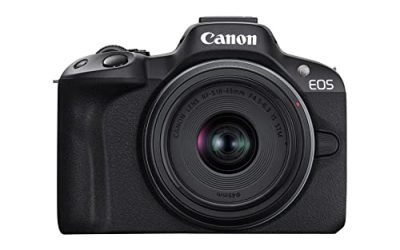
The Canon EOS R7 is the most affordable way into serious wildlife photography, and it earns its place through a combination of reach, speed, and autofocus that punches well above its class. Its 32.5-megapixel APS-C sensor gives every lens an effective 1.6x crop, so a 400mm telephoto frames like a 640mm lens. That extra reach is a genuine advantage for birds and distant mammals, and the high resolution leaves plenty of room to crop further when the subject still fills only part of the frame.
Canon’s Dual Pixel CMOS AF II covers nearly the full frame with up to 651 autofocus zones and includes dedicated animal detection that tracks birds, dogs, cats, and horses, locking onto the eye and holding it as the subject moves. The R7 shoots up to 15 frames per second with the mechanical shutter and up to 30 frames per second with the electronic shutter, and its RAW burst mode includes half a second of pre-shooting, which captures frames from just before you fully press the shutter. That feature alone has saved countless shots of birds taking off.
Five-axis in-body image stabilisation provides up to seven stops of shake correction, working together with stabilised RF lenses to steady long telephoto shots at slower shutter speeds. The body is weather sealed, uses dual UHS-II SD card slots, and records 4K video at up to 60 frames per second for photographers who also shoot video of wildlife behaviour. At around 1.1 pounds for the body, it is light enough to carry all day, and the RF mount gives access to Canon’s growing range of telephoto lenses, including the compact RF 100-400mm.
The R7 is best suited to photographers who want maximum reach and speed without stepping up to a full-frame flagship budget. Its main limitation is low-light performance: the smaller APS-C sensor produces more noise at very high ISO settings than a full-frame body, so dawn and dusk shooting demands a faster lens or careful noise handling in post-processing.
2. Nikon Z8 — Best Full-Frame All-Rounder
The Nikon Z8 packs the core of Nikon’s flagship Z9 into a body that is roughly 30 percent smaller, making it one of the most capable wildlife cameras available. Its 45.7-megapixel full-frame stacked CMOS sensor delivers superb detail and generous cropping room, while the EXPEED 7 processor drives autofocus subject detection built on deep learning. The system recognises people, pets, and birds, and its 3D tracking holds focus on fast, erratic subjects such as birds in flight. Eye autofocus works down to very low light levels, which matters for the dawn and dusk hours when wildlife is most active.
Speed is where the Z8 truly separates itself. It shoots 20 frames per second in RAW for up to 1,000 shots, and offers 30, 60, and even 120 frames per second in JPEG for moments when sheer frame count matters. Pre-Release Capture records frames from before you press the shutter, catching the instant a bird leaves its perch. The silent, all-electronic shutter fires up to 1/32000 of a second with virtually no rolling shutter distortion, so you can shoot without disturbing skittish animals.
The body is built from Seerebo carbon fibre and magnesium alloy with premium weather sealing, and a sensor shield protects the sensor during lens changes in dusty conditions. Dual card slots take one CFexpress Type B card and one SD card, and the camera records 8K video at 60 frames per second alongside 4K at 120 frames per second. The Z mount gives access to Nikon’s excellent telephoto lenses, including the lightweight 400mm f/4.5 and the 600mm f/6.3, both of which pair well with a body of this size.
The Z8 is best suited to photographers who want flagship-level autofocus and burst performance in a body they can carry all day. Its full-frame sensor also gives the cleanest high-ISO files in this roundup. The main trade-offs are its larger size and weight compared with the crop-sensor options, and the cost of CFexpress memory cards.
3. OM SYSTEM OM-1 Mark II — Best Lightweight Field Kit
The OM SYSTEM OM-1 Mark II takes a different approach to wildlife photography: instead of a bigger sensor, it uses a smaller one to make the entire kit dramatically lighter. Its 20-megapixel stacked Micro Four Thirds sensor applies a 2x crop factor, so a compact 300mm lens frames like a 600mm full-frame lens, and the 100-400mm zoom reaches an effective 800mm while remaining small enough to handhold all day. For photographers who hike long distances or shoot handheld from a kayak or a hide, that weight saving changes what is possible.
Despite its size, the OM-1 Mark II is a serious speed camera. Its Cross Quad Pixel autofocus system includes AI subject detection for birds, animals, and other subjects, and it shoots up to 120 frames per second with fixed autofocus, or 50 frames per second with continuous autofocus tracking. Pro Capture mode records frames from before the shutter is fully pressed, and the camera’s computational features include handheld high-resolution shooting and Live ND for creative long exposures without filters.
Weather sealing is a standout: the OM-1 Mark II is rated to IP53 standards for dust and splash resistance and is built to keep working in rain, snow, and freezing temperatures. Five-axis in-body stabilisation is rated up to 8.5 stops with compatible lenses, which helps enormously when shooting long lenses handheld at slow shutter speeds. Dual UHS-II SD card slots, a fully articulating touchscreen, and a long battery life round out a body designed for long days outdoors.
The OM-1 Mark II is best suited to photographers who prioritise mobility, reach, and handholdability above all else, including bird photographers who walk miles of trail with their kit. The main trade-off is the smaller sensor: high-ISO files show more noise than full-frame rivals, and the 20-megapixel resolution leaves less room to crop than the 45-megapixel cameras in this roundup.
4. Canon EOS R5 Mark II — Best High-Resolution Full-Frame
The Canon EOS R5 Mark II is the high-resolution flagship for photographers who want maximum detail and the most advanced autofocus Canon offers. Its 45-megapixel full-frame stacked sensor pairs with the DIGIC X processor and a dedicated DIGIC Accelerator chip, which powers Dual Pixel Intelligent AF with subject detection for people, animals, and vehicles. The system includes Action Priority mode, which anticipates the key moment in sports and wildlife action and shifts focus to the subject most likely to be the centre of the action.
Burst shooting reaches 30 frames per second with the electronic shutter, and the camera’s in-camera upscaling can enlarge images while preserving detail, which is useful when a distant subject fills only a small part of the frame. Five-axis in-body stabilisation works with RF lenses for up to 8.5 stops of correction, and the weather-sealed magnesium body is built for professional field use. Dual card slots accept one CFexpress Type B card and one SD card, and the camera records 8K RAW video at up to 60 frames per second for hybrid shooters.
The R5 Mark II also offers a pre-continuous shooting mode that captures frames before the shutter press, and its improved heat management allows longer video recording than the original R5. The RF mount provides access to Canon’s full range of L-series telephoto lenses, from the portable RF 100-500mm to the super-telephoto primes used by professional wildlife photographers.
The R5 Mark II is best suited to photographers who want the highest image quality Canon offers in a general-purpose body, including those who print large or crop heavily. It is the most expensive camera in this roundup, and its full-frame sensor means you need longer, heavier lenses to match the effective reach of the crop-sensor options.
Comparison Table
| Camera | Sensor | Resolution | Max Burst | Animal AF | Weather Sealing | Best For |
|---|---|---|---|---|---|---|
| Canon EOS R7 | APS-C | 32.5 MP | 30 fps | Yes, bird and animal eye AF | Yes | Best value and extra reach |
| Nikon Z8 | Full-frame stacked | 45.7 MP | 120 fps | Yes, bird and animal eye AF | Yes | Best all-round flagship performance |
| OM SYSTEM OM-1 Mark II | Micro Four Thirds stacked | 20 MP | 120 fps | Yes, AI bird and animal detection | Yes, IP53 rated | Lightest kit and longest effective reach |
| Canon EOS R5 Mark II | Full-frame stacked | 45 MP | 30 fps | Yes, with Action Priority | Yes | Highest resolution and latest Canon AF |
Which Camera Should You Choose?
If budget is the deciding factor, the Canon EOS R7 delivers the best balance of reach, speed, and autofocus for the money, and its APS-C crop factor is a real advantage for distant subjects. If you want one camera that does everything at the highest level, the Nikon Z8 is hard to beat: flagship autofocus, huge burst depth, and a 45.7-megapixel sensor in a body that is genuinely portable.
Choose the OM SYSTEM OM-1 Mark II if weight and mobility matter most to you, or if you shoot handheld for long hours and want the longest effective reach from the smallest lenses. Choose the Canon EOS R5 Mark II if you want Canon’s most advanced autofocus and the highest-resolution files, and you are willing to invest in longer telephoto lenses to match the reach of the crop-sensor cameras.
Whichever body you choose, remember that the lens matters at least as much as the camera. A sharp, fast telephoto lens on a mid-range body will outperform a flagship body paired with a mediocre lens. Budget for glass first, then choose the body that makes the most of it.
Frequently Asked Questions
What is the most important feature in a camera for wildlife photography?
Autofocus is the most important feature. A camera with reliable animal and bird eye detection and fast subject tracking will produce more sharp images than a camera with more megapixels but weaker autofocus. Burst rate comes second, because wildlife action is brief and a high frame rate increases your chance of capturing the decisive moment.
Is a full-frame or crop-sensor camera better for wildlife photography?
Both have advantages. A crop-sensor camera gives you extra effective reach from the same lens, which helps with distant subjects, and crop-sensor bodies are usually lighter and less expensive. A full-frame camera delivers cleaner images in low light and more room to crop. Many wildlife photographers use both: a crop-sensor body for extra reach and a full-frame body for low light.
How many megapixels do I need for wildlife photography?
Twenty megapixels is enough for most uses, including large prints and heavy cropping at moderate sizes. Cameras with 32 to 45 megapixels give you more cropping flexibility, which is useful when the subject is far away. Beyond that, resolution matters less than autofocus accuracy, lens sharpness, and technique.
Do I need a very long lens for wildlife photography?
A lens reaching at least 400mm is a good starting point for birds and distant mammals, and 500mm to 600mm is better for small or shy subjects. On an APS-C body, a 100-400mm zoom behaves like a 160-640mm lens, and on a Micro Four Thirds body it reaches an effective 800mm. Fieldcraft matters too: learning to approach animals quietly and use hides and blinds can matter more than extra focal length.
Can I use my existing camera for wildlife photography?
Yes, if it has reasonably fast autofocus and a burst rate of at least 8 to 10 frames per second. Older cameras can still produce excellent wildlife images, especially with good technique and a sharp telephoto lens. The cameras in this guide offer a meaningful step up in autofocus reliability and burst speed, but they are not a requirement for getting started.
Conclusion
The best cameras for wildlife photography are the ones that find the subject fast, hold focus while it moves, and keep shooting through the decisive moment. The Canon EOS R7 offers the best value and the most reach for the money. The Nikon Z8 delivers flagship speed and autofocus in a portable full-frame body. The OM SYSTEM OM-1 Mark II builds the lightest, most mobile kit with the longest effective reach. The Canon EOS R5 Mark II brings Canon’s most advanced autofocus and highest resolution to the field.
Start by deciding how much weight you are willing to carry and how much reach you need, then choose the body that fits your lenses and your budget. The right camera will not make the animals appear, but it will make sure you are ready when they do.
Disclosure: As an Amazon Associate, we earn from qualifying purchases.
FAQ
Which Camera Should You Choose?
What is the most important feature in a camera for wildlife photography?
Is a full-frame or crop-sensor camera better for wildlife photography?
How many megapixels do I need for wildlife photography?
Do I need a very long lens for wildlife photography?
Can I use my existing camera for wildlife photography?
More from Amazon
Programs that pair well with the guide above. Offers and eligibility are set by Amazon and may change.
Free shipping on eligible items, Prime Video and more. Eligible new members can start with a free trial.
Start a Prime free trialA Prime membership for ages 18-24 with a trial period. Eligibility is set by Amazon.
See Prime for Young AdultsAudiobooks and podcasts to listen to on the go. Eligible new members can start with a free trial.
Try Audible freeAd-free music streaming. Eligible new subscribers can start with a free trial.
Try Music Unlimited freeAs an Amazon Associate we earn from qualifying purchases.