Our Short List of 3


All 4 Picks at a Glance
| Product | Specs | Action |
|---|---|---|
 1. Sony ZV-1 — Best Small Camera for Vlogging | Check price on Amazon | |
| 2. Canon PowerShot G7 X Mark III — Best Small Camera for Photos and Video Balance | Check price on Amazon | |
| 3. Ricoh GR III — Best Small Camera for Street and Travel Photography | Check price on Amazon | |
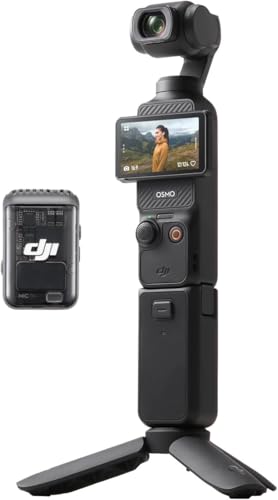 4. DJI Osmo Pocket 3 Creator Combo — Best Small Camera for Smooth Video | Check price on Amazon |
Key takeaways
- The best small cameras for travel, vlogging, and everyday photos — compact picks with big sensors, 4K video, and pocket-friendly designs compared side by side.
The best small cameras prove that you do not need a bulky body and a bag full of lenses to take great photos and video. Modern compacts pack large sensors, fast autofocus, and 4K video into bodies that slip into a jacket pocket or a small daypack. Whether you want a travel companion, a vlogging camera, or a pocketable street shooter, the right small camera is the one you will actually carry everywhere — and the one that is ready the moment a shot appears.
This guide compares four of the best small cameras you can buy right now. Each one is a different answer to the same question: how much image quality can fit in how little space? We cover what to look for before you buy, then break down each pick in detail, so you can match the camera to the way you shoot.
How to Choose a Small Camera
Sensor Size Matters Most
The sensor is the single biggest factor in image quality. A 1-inch sensor, found in several of the best small cameras, gathers far more light than a phone sensor and delivers cleaner images in dim restaurants, at dusk, and indoors. An APS-C sensor, like the one in the Ricoh GR III, goes further still, with noticeably better depth of field control and low-light performance. Bigger sensors usually mean bigger bodies, so the sweet spot is the largest sensor you are willing to carry every day.
Lens: Zoom or Prime?
A zoom lens, such as the 24-70mm equivalent on the Sony ZV-1 or the 24-100mm on the Canon G7 X Mark III, covers wide landscapes and tight portraits without swapping glass. A fixed prime lens, like the 28mm on the Ricoh GR III, forces you to move your feet — but it is sharper, faster, and lets the camera stay truly pocket-flat. If you shoot a bit of everything, choose zoom. If you shoot mostly street, travel, and everyday moments, a prime can be liberating.
Video Features
If you plan to vlog or record video, look for 4K recording, a flip-out or tilting screen you can see while facing the camera, reliable eye autofocus, and a microphone input or at least a good built-in mic. Stabilization matters too: walking footage from a camera without it looks shaky, while a gimbal camera like the DJI Osmo Pocket 3 solves the problem mechanically.
Size, Weight, and Battery
A small camera only earns its place if it is genuinely portable. Check the weight and whether it fits in the pocket you actually use — a jeans pocket, a jacket pocket, or a small bag. Also check battery life honestly: compact cameras have small batteries, and most deliver a few hundred shots or under an hour of continuous video per charge. A spare battery is one of the best accessories you can buy.
Connectivity and Ease of Use
Wi-Fi and Bluetooth make it easy to transfer photos to your phone for quick sharing, and a touchscreen speeds up focusing and menu navigation. Beginners should also weigh how much manual control they want: fully automatic modes are fine for casual shooting, but aperture priority and manual modes grow with you as your skills improve.
Top Picks
1. Sony ZV-1 — Best Small Camera for Vlogging
The Sony ZV-1 is the camera that made vlogging cameras a category of their own, and it remains one of the best small cameras for anyone who films themselves. It pairs a 20.1 megapixel 1-inch sensor with a bright 24-70mm equivalent f/1.8-2.8 ZEISS lens, so it handles low light far better than a phone and produces natural background blur without any editing tricks.
What sets the ZV-1 apart is how deliberately it is built for creators. The side flip-out 3-inch touchscreen lets you frame yourself perfectly, Real-Time Eye Autofocus locks onto your face and stays there, and the Product Showcase setting snaps focus from your face to an object you hold up — ideal for unboxings and gear demos. The forward-directional onboard microphone with its detachable windscreen captures clear voice audio outdoors, and a 3.5mm mic jack and hot shoe leave room to grow. It records 4K HDR video with picture profiles including S-Log3 for color grading, and it can double as a webcam for live streaming.
For stills, the ZV-1 is no slouch either: 24 frames per second continuous shooting, fast hybrid autofocus, and solid JPEG and RAW output. The trade-offs are familiar for this class — battery life is modest, there is no built-in flash, and the 24-70mm zoom range is shorter than some rivals. But for travel vlogs, YouTube, and everyday video, the ZV-1 is the most complete small camera package in its class, and it weighs just 294 grams.
2. Canon PowerShot G7 X Mark III — Best Small Camera for Photos and Video Balance
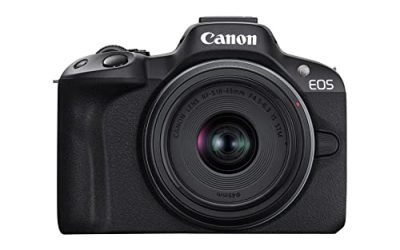
The Canon PowerShot G7 X Mark III is the classic pocket camera, refined over generations into a tool that does almost everything well. Its 20.1 megapixel 1-inch stacked CMOS sensor and DIGIC 8 processor deliver clean, colorful images, while the 24-100mm equivalent f/1.8-2.8 lens offers more reach than the Sony ZV-1 — useful for portraits, details, and subjects you cannot walk closer to.
Video is a genuine strength here: uncropped 4K at 30 frames per second, Full HD at 120 frames per second for smooth slow motion, and a vertical video mode made for social feeds. The 3-inch tilt touchscreen flips up for selfies and vlogging, the camera can live stream directly to YouTube, and it works as a high-quality webcam through Canon software or a clean HDMI output. A built-in flash, panorama mode, and microphone input round out a feature list that few compacts can match.
Where the G7 X Mark III wins over its rivals is versatility. It is equally at home shooting family photos, travel landscapes, and video clips, and its controls feel natural whether you shoot fully automatic or take manual control. Autofocus uses contrast detection rather than the phase detection found in some competitors, so it can hunt a little in very low light, and the battery is good for roughly 235 shots per charge — carry a spare for long days. At 304 grams, it disappears into a jacket pocket and is ready in seconds.
3. Ricoh GR III — Best Small Camera for Street and Travel Photography
The Ricoh GR III is the purest expression of the small camera idea: a fixed-lens compact built around a 24.2 megapixel APS-C sensor — the same sensor size found in many interchangeable-lens cameras — in a body that weighs just 257 grams and slides into a jeans pocket. Its 28mm equivalent f/2.8 lens is sharp across the frame, and the combination produces images with a depth and character that no phone and few compacts can match.
Street photographers love the GR III for its speed and discretion. Snap focus lets you preset a focus distance and shoot instantly without waiting for autofocus, the touchscreen is responsive, and the magnesium alloy body feels solid despite its size. In-body shake reduction helps in low light, the sensor has no anti-aliasing filter for extra detail, and it shoots 14-bit RAW files for serious editing. Built-in Wi-Fi and Bluetooth make phone transfers quick.
The GR III is deliberately specialized, and that is both its charm and its limitation. There is no zoom — 28mm is all you get, with a digital crop mode if you need a tighter frame. Video tops out at Full HD 1080p, so it is not a vlogging camera. Autofocus is slower than the Sony or Canon, and the battery is small. But if your priority is still photography — travel, street, and everyday moments — and you want the best image quality in the smallest possible package, nothing else on this list comes close.
4. DJI Osmo Pocket 3 Creator Combo — Best Small Camera for Smooth Video
The DJI Osmo Pocket 3 is not a traditional camera at all — it is a tiny handheld gimbal camera — and that is exactly why it belongs on a list of the best small cameras. A 1-inch CMOS sensor, a 20mm equivalent f/2.0 lens, and a 3-axis mechanical gimbal produce buttery-smooth 4K video at up to 120 frames per second, the kind of footage that normally requires a stabilizer rig. At 179 grams, it is the lightest option here by a wide margin.
The Creator Combo adds the accessories that turn the Pocket 3 into a complete vlogging kit: the DJI Mic 2 wireless microphone transmitter for clear voice audio, a battery handle for longer shoots, a mini tripod, and a carrying case. Face and object tracking keep you centered in frame while you walk, the 2-inch rotatable touchscreen makes framing easy, and the camera slips into a pocket or clips to a bag when you are done.
There are real compromises. The fixed 20mm wide-angle lens is not ideal for portraits or distant subjects, still photos are good but not as rich as those from the Ricoh or Canon, and the tiny controls take some getting used to. But for travel video, walking tours, and creators who want professional-looking stabilized footage from a device smaller than a candy bar, the Osmo Pocket 3 Creator Combo is in a class of its own.
Comparison Table
| Camera | Sensor | Lens | Video | Weight | Best For |
|---|---|---|---|---|---|
| Sony ZV-1 | 1-inch, 20.1 MP | 24-70mm f/1.8-2.8 zoom | 4K HDR | 294 g | Vlogging and YouTube |
| Canon G7 X Mark III | 1-inch, 20.1 MP | 24-100mm f/1.8-2.8 zoom | 4K 30p, FHD 120p | 304 g | All-round photos and video |
| Ricoh GR III | APS-C, 24.2 MP | 28mm f/2.8 prime | Full HD 1080p | 257 g | Street and travel photography |
| DJI Osmo Pocket 3 Creator Combo | 1-inch, 9.4 MP | 20mm f/2.0, gimbal | 4K 120p | 179 g | Smooth stabilized video |
Which Small Camera Should You Buy?
Start with how you shoot. If video and vlogging come first, the Sony ZV-1 and the DJI Osmo Pocket 3 are the two to compare: the ZV-1 is the better all-rounder with a zoom lens and stronger stills, while the Pocket 3 wins outright on stabilization and portability. If you want one camera that handles photos and video equally well on trips and family outings, the Canon G7 X Mark III is the safest pick — its longer zoom and built-in flash cover more situations than any rival here.
If still photography is your passion and you love the look of a wide prime lens, the Ricoh GR III rewards you with the best image quality of the four. It asks you to give up zoom and 4K video, but in return it delivers APS-C image quality from a camera that fits in a jeans pocket — a trade many photographers happily make.
Budget and carrying habits matter too. All four of these cameras are premium compacts, so think about which one you will actually take everywhere. The best small camera is not the one with the longest spec sheet; it is the one that is in your pocket when the moment happens.
Frequently Asked Questions
Are small cameras still worth buying when phones are so good?
Yes, for many people. A 1-inch or APS-C sensor gathers far more light than a phone sensor, which means cleaner low-light shots, real background blur, and more detail to work with when editing. Phones win on convenience and computational tricks, but a dedicated small camera still produces noticeably better raw image quality — and it keeps you focused on shooting instead of notifications.
What is the best small camera for travel?
For most travelers, the Canon PowerShot G7 X Mark III is the best all-round choice: a versatile 24-100mm zoom, 4K video, a flip-up screen, and a pocketable body. If your travel is mostly street and documentary photography, the Ricoh GR III offers better image quality in an even smaller body. Vloggers traveling light should look at the Sony ZV-1 or the DJI Osmo Pocket 3.
Can a small camera shoot professional-quality video?
Yes. The Sony ZV-1 and DJI Osmo Pocket 3 both record 4K video good enough for YouTube, client work, and social content, with features like log profiles, high frame rates, and external microphone support. Lighting, audio, and editing matter as much as the camera itself, so invest in a small microphone and learn basic color grading.
How long does the battery last on a small camera?
Compact cameras typically deliver 200 to 300 still photos or 45 to 80 minutes of continuous video per charge, depending on the model and how much you use the screen. That is enough for a morning of sightseeing but not a full day of heavy shooting. A spare battery and a USB power bank are cheap insurance on travel days.
Do I need extra accessories for a small camera?
At minimum, a memory card, a protective case or pouch, and a spare battery. Vloggers will also want a small tripod or grip and an external microphone. Beyond that, keep it simple — the point of a small camera is that it stays small, and a bag full of accessories defeats the purpose.
Conclusion
The best small cameras in this guide cover every way people actually shoot: the Sony ZV-1 for vlogging, the Canon G7 X Mark III for all-round travel, the Ricoh GR III for serious still photography, and the DJI Osmo Pocket 3 Creator Combo for silky stabilized video. Each one fits in a pocket and each one outperforms a phone where it counts — sensor size, lens quality, and control.
Pick the one that matches your main use, pack a spare battery and a memory card, and start carrying it everywhere. The camera you have with you will always take better photos than the one you left at home.
Disclosure: As an Amazon Associate, we earn from qualifying purchases.
FAQ
Lens: Zoom or Prime?
Which Small Camera Should You Buy?
Are small cameras still worth buying when phones are so good?
What is the best small camera for travel?
Can a small camera shoot professional-quality video?
How long does the battery last on a small camera?
Do I need extra accessories for a small camera?
More from Amazon
Programs that pair well with the guide above. Offers and eligibility are set by Amazon and may change.
Free shipping on eligible items, Prime Video and more. Eligible new members can start with a free trial.
Start a Prime free trialA Prime membership for ages 18-24 with a trial period. Eligibility is set by Amazon.
See Prime for Young AdultsAudiobooks and podcasts to listen to on the go. Eligible new members can start with a free trial.
Try Audible freeAd-free music streaming. Eligible new subscribers can start with a free trial.
Try Music Unlimited freeAs an Amazon Associate we earn from qualifying purchases.