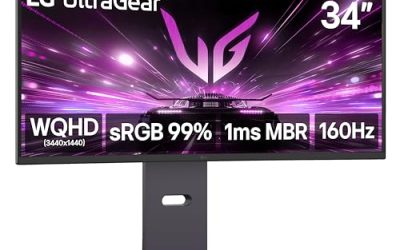
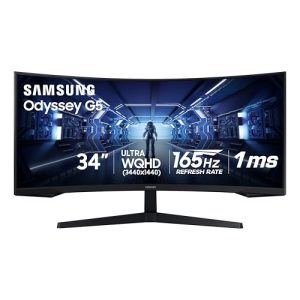
Our Short List of 3
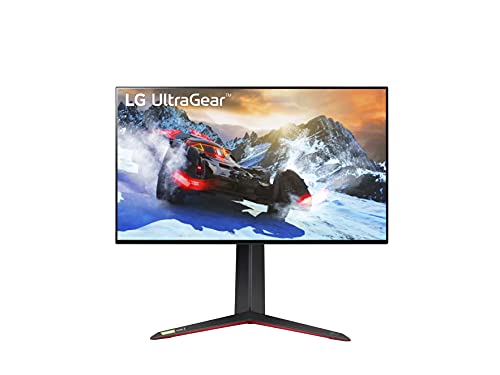
- Best for: Bright-room HDR gaming and movies with vivid color, where strong peak brightness and a wide color range make highlights stand out clearly.
- 27-inch Nano IPS panel, 3840 x 2160 (4K) resolution
- VESA DisplayHDR 600 certification
- Color coverage: 98% DCI-P3
- 144Hz refresh rate, 1ms response time

- Best for: Smooth 4K gaming on PC and console with HDR highlights, where a high refresh rate and a larger screen keep fast scenes crisp and immersive.
- 28-inch IPS panel, 3840 x 2160 (4K) resolution
- HDR400 support
- 144Hz refresh rate, 1ms response time
- HDMI 2.1 and DisplayPort inputs

- Best for: Dark-room movies and fast games where true blacks matter most, with vivid OLED color and a rapid refresh rate for smooth, striking motion.
- 26.7-inch QD-OLED panel, 3840 x 2160 (4K) resolution
- VESA DisplayHDR True Black 400 certification
- 240Hz refresh rate, 0.03ms response time
- Dolby Vision support
All 3 Picks at a Glance
| Product | Specs | Action |
|---|---|---|
| LG 27GP950-B |
| Check price on Amazon |
| Samsung Odyssey G7 G70B |
| Check price on Amazon |
| Alienware AW2725Q |
| Check price on Amazon |
Key takeaways
- Find the best hdr monitors for bright highlights, deep blacks and vivid color. Compare HDR600, HDR400 and OLED panels for movies, games and editing now.
HDR promises brighter highlights, deeper shadows, and colors that look closer to real life. On a monitor, the promise only holds when the panel can actually deliver the brightness and contrast the label claims. A certified HDR600 panel and an OLED with true blacks produce very different images, even though both carry an HDR badge. Understanding the certification, the panel type, and the brightness figure matters more than the badge itself. Brightness alone tells only part of the story.
This guide is for movie watchers building a desk cinema, gamers who want vivid worlds, and photo editors who judge images by highlight detail. The three monitors below were chosen from the names and specifications on their Amazon listings, comparing HDR certification, panel technology, resolution, and refresh rate before any recommendation was made. A bright panel suits a sunny desk, while an OLED suits a dim room, and the right choice depends on where the monitor sits and what plays on it most often.
Quick Picks
As an Amazon Associate we earn from qualifying purchases
| Product | Best for | Key spec from title |
|---|---|---|
| LG 27GP950-B | Bright HDR gaming and movies in lit rooms | 27-inch 4K Nano IPS, HDR600, 144Hz |
| Samsung Odyssey G7 G70B | Smooth 4K HDR gaming on PC and console | 28-inch 4K IPS, HDR400, 144Hz |
| Alienware AW2725Q | Deep blacks and vivid OLED color in dark rooms | 27-inch 4K QD-OLED, True Black 400, 240Hz |
How to Choose
What HDR Certification Actually Means
HDR certifications describe a minimum brightness and contrast the panel must reach. DisplayHDR 400 asks for modest peak brightness and suits entry-level HDR, while DisplayHDR 600 demands brighter highlights and better local dimming. OLED panels use a different scale, True Black 400, which measures near-perfect blacks rather than peak brightness. A higher number usually means a more visible HDR effect, but the panel technology decides how the image actually looks. Read the certification, not just the HDR label on the box. Local dimming also matters, since it dims dark zones behind bright objects, and a panel with more dimming zones shows cleaner contrast around subtitles and bright windows.
Panel Type: IPS or OLED
IPS panels show bright, consistent color across wide viewing angles, and they handle bright rooms well. Their blacks stay grayish in dark scenes, since the backlight never fully switches off. OLED panels switch each pixel off individually, which produces true black and striking contrast in dark rooms, along with vivid color that pops in movies and games. OLED costs more and needs care against static images, while IPS suits bright offices and mixed use. Choose the panel for the room and the content, not for the specification sheet alone. A matte coating cuts reflections in bright rooms, while a glossy OLED finish deepens blacks but shows more glare from windows.
Resolution and Refresh Rate
Resolution decides how sharp the image looks, and 4K is the standard for HDR content, since movies and games are mastered at that size. Refresh rate decides how smooth motion feels: 60Hz suits movies, 144Hz smooths games, and 240Hz serves competitive play. A higher refresh rate only helps when the graphics card can deliver the frames, so match the monitor to the computer driving it. For movie watching, resolution and contrast matter more than refresh rate. Color accuracy also matters for editors, since a panel covering most of the DCI-P3 range shows films the way they were graded, and a calibrated mode keeps skin tones natural instead of oversaturated.
Ports and Console Compatibility
HDMI 2.1 carries 4K at high refresh rates from modern consoles and graphics cards, while older HDMI ports cap the signal lower. DisplayPort serves PCs best, and USB-C adds laptop docking for monitors that double as work screens. Check the port list against the devices that will connect, since a monitor with the wrong ports needs an adapter that may limit HDR or refresh rate. Console players should confirm the monitor supports the console’s HDR output mode before buying. A monitor with a built-in USB hub also reduces desk clutter, since a keyboard, mouse, and headset can connect through the screen instead of reaching around to the computer case.
The 3 Best Options
LG 27GP950-B
- Best for: Bright-room HDR gaming and movies with vivid color, where strong peak brightness and a wide color range make highlights stand out clearly.
- 27-inch Nano IPS panel, 3840 x 2160 (4K) resolution
- VESA DisplayHDR 600 certification
- Color coverage: 98% DCI-P3
- 144Hz refresh rate, 1ms response time
Bright-room HDR gaming and movies with vivid color, where strong peak brightness and a wide color range make highlights stand out clearly.
IPS blacks stay grayish in a fully dark room, so night scenes lose some depth compared with an OLED panel showing true black.
The LG 27GP950-B pairs a 27-inch 4K Nano IPS panel with VESA DisplayHDR 600 certification, which brings visibly brighter highlights to movies and games. Its 144Hz refresh rate and 1ms response time keep fast motion smooth, while HDMI 2.1 connects modern consoles and graphics cards at full speed. The Nano IPS panel covers a wide color range, so sunsets and neon scenes look rich without oversaturation. G-Sync compatibility and FreeSync Premium Pro keep frames tearing-free during demanding games. The wide color range also suits photo work, since hues keep edited images true to life, and the response time keeps menus and motion free of smearing during play.
Samsung Odyssey G7 G70B
- Best for: Smooth 4K gaming on PC and console with HDR highlights, where a high refresh rate and a larger screen keep fast scenes crisp and immersive.
- 28-inch IPS panel, 3840 x 2160 (4K) resolution
- HDR400 support
- 144Hz refresh rate, 1ms response time
- HDMI 2.1 and DisplayPort inputs
Smooth 4K gaming on PC and console with HDR highlights, where a high refresh rate and a larger screen keep fast scenes crisp and immersive.
HDR400 is the entry tier, so highlights are milder than HDR600 panels and bright scenes show less punch in direct side-by-side comparison.
The Samsung Odyssey G7 G70B is a 28-inch 4K HDR monitor built for smooth gaming, with a 144Hz IPS panel and HDR400 support. Its larger screen fills the desk nicely, and the 1ms response time keeps fast scenes crisp. HDMI 2.1 and DisplayPort cover consoles and PCs alike, while G-Sync compatibility and FreeSync Premium Pro smooth out frame delivery. The Ultrawide Game View mode adjusts the aspect ratio for supported titles, and the height-adjustable stand sets the screen at eye level for long sessions. The screen also suits split-screen work, with the wider view keeping a browser beside a game without crowding either side.
Alienware AW2725Q
- Best for: Dark-room movies and fast games where true blacks matter most, with vivid OLED color and a rapid refresh rate for smooth, striking motion.
- 26.7-inch QD-OLED panel, 3840 x 2160 (4K) resolution
- VESA DisplayHDR True Black 400 certification
- 240Hz refresh rate, 0.03ms response time
- Dolby Vision support
Dark-room movies and fast games where true blacks matter most, with vivid OLED color and a rapid refresh rate for smooth, striking motion.
Static menus and taskbars should not sit on screen for hours, since fixed images left in place can leave a retained image on OLED panels.
The Alienware AW2725Q is the OLED choice, a 27-inch 4K QD-OLED monitor with a 240Hz refresh rate and DisplayHDR True Black 400 certification. Each pixel switches off on its own, so dark scenes show true black instead of gray, and the QD-OLED panel delivers vivid color that makes movies and games glow. The 0.03ms response time removes blur from fast motion, and Dolby Vision support adds depth to supported films. A 3-year burn-in warranty backs the panel for long-term use. The flat panel keeps straight lines true for editing, and the vivid color makes films glow, so an evening of movies feels closer to a cinema screen.
Which One Fits Your Situation
Movie Nights in a Dark Room
For movies in a dark room, the Alienware AW2725Q leads. Its OLED panel shows true blacks in night scenes, and Dolby Vision adds depth to supported films. The LG 27GP950-B is the alternative when the room has some light, since its brighter panel cuts through ambient glow better. The Samsung Odyssey G7 G70B suits casual movie watching mixed with gaming, where its larger screen fills the view. Dim the lights first.
HDR Gaming on PC or Console
Gamers should weigh refresh rate against HDR strength. The Alienware AW2725Q offers 240Hz and true blacks for competitive play in dark rooms. The LG 27GP950-B pairs HDR600 brightness with 144Hz, which suits bright-room gaming where highlights matter. The Samsung Odyssey G7 G70B covers console gaming well with HDMI 2.1 and a larger screen. Connect by HDMI 2.1 for consoles and DisplayPort for PCs to unlock the full refresh rate.
Photo and Video Editing
Editors judging highlight detail need brightness they can trust. The LG 27GP950-B leads here with HDR600 certification and wide color coverage, which keeps edited highlights consistent. The Alienware AW2725Q suits color grading in dark rooms, where its OLED contrast reveals shadow detail other panels hide. The Samsung Odyssey G7 G70B handles general editing but its HDR400 tier shows less highlight range than the other two. Compare the three side by side before committing.
A Bright Room Setup
Bright rooms favor IPS panels with strong peak brightness. The LG 27GP950-B handles sunlight best, since its HDR600 panel pushes highlights well above ambient light. The Samsung Odyssey G7 G70B also copes with daylight, though its HDR400 ceiling shows less punch. The Alienware AW2725Q works in bright rooms too, but OLED shines brightest when the lights stay low, so reserve it for evening viewing or a shaded desk. A shaded desk helps too.
Common Mistakes
- Buying an HDR400 monitor and expecting the same highlights as an HDR600 panel, since the entry tier peaks far lower and bright scenes stay muted.
- Connecting by an old HDMI cable that caps the signal below 4K or below high refresh rates, which wastes the monitor’s HDR and motion performance.
- Choosing OLED for a bright office and then fighting glare all day, when an IPS panel with stronger peak brightness would suit the room better.
- Ignoring the graphics card, which must deliver enough frames for a refresh rate, or the monitor will never reach its smoothest motion in games.
- Leaving static menus on an OLED screen for hours, which risks image retention and a faint ghost of the menu lingering over films and games.
Frequently Asked Questions
Is HDR400 good enough for movies?
HDR400 adds a modest improvement over standard dynamic range, with brighter highlights and slightly better contrast. It suits casual movie watching and gaming, but the effect is subtle next to HDR600 or OLED. Viewers who want an HDR impact should step up to a brighter panel or an OLED, where the difference is obvious in the first scene.
Do I need HDR content to benefit from an HDR monitor?
Yes, the monitor needs HDR video or games to show the wider range. Standard content plays normally, and the monitor cannot invent highlight detail that is not there. Streaming services, games, and UHD discs carry HDR versions, so the benefit appears whenever that content plays. Without it, the monitor behaves like a standard display.
Can an OLED monitor handle everyday office work?
It can, but office work needs care. Static taskbars, icons, and menus left on screen can cause image retention on OLED panels. Hiding the taskbar, using a dark theme, and letting the screen sleep during breaks all reduce the risk. Many owners use OLED for mixed work and play, yet office use suits IPS better.
What cable do I need for 4K HDR at high refresh rates?
HDMI 2.1 or DisplayPort 1.4 handles 4K at high refresh rates with HDR. Older HDMI versions cap the signal at lower refresh rates or lower resolution, which wastes the monitor. Use the cable supplied in the box, and replace it only with one that lists the needed bandwidth and HDR support.
FAQ
Is HDR400 good enough for movies?
Do I need HDR content to benefit from an HDR monitor?
Can an OLED monitor handle everyday office work?
What cable do I need for 4K HDR at high refresh rates?
More from Amazon
Programs that pair well with the guide above. Offers and eligibility are set by Amazon and may change.
Free shipping on eligible items, Prime Video and more. Eligible new members can start with a free trial.
Start a Prime free trialA Prime membership for ages 18-24 with a trial period. Eligibility is set by Amazon.
See Prime for Young AdultsAudiobooks and podcasts to listen to on the go. Eligible new members can start with a free trial.
Try Audible freeAd-free music streaming. Eligible new subscribers can start with a free trial.
Try Music Unlimited freeAs an Amazon Associate we earn from qualifying purchases.