Our Short List of 3

- Best for: Detailed tracking for two users who measure often.
- Upper-arm cuff, 9 to 17 inch fit range
- Bluetooth sync to Omron Connect app
- Stores 200 readings for two users
- TruRead mode averages three readings
- Best for: Simple everyday tracking for one person.
- Upper-arm cuff, 9 to 17 inch fit range
- Bluetooth sync to Omron Connect app
- Stores 60 readings
- Advanced Accuracy technology

- Best for: Phone-first tracking with automatic sync and a long record.
- Upper-arm cuff
- Wi-Fi and Bluetooth sync
- Color LED feedback on the device
- Unlimited readings stored in the Withings app
All 4 Picks at a Glance
| Product | Specs | Action |
|---|---|---|
| Omron 10 Series BP7450 |
| Check price on Amazon |
| Omron 5 Series BP7250 |
| Check price on Amazon |
| Withings BPM Connect |
| Check price on Amazon |
 iHealth Track KN-550BT |
| Check price on Amazon |
Our Top Picks
- iHealth Track Smart Upper Arm Blood Pressure Monitor1 Count (Pack of 1)3.9 x 3.9 x 1.6 inches1 poundsCheck on Amazon
A home blood pressure monitor turns a number you hear once a year at a checkup into a regular habit you can track over time. The best ones are simple to use, fit your arm properly, store readings so you can see patterns, and sync to a phone app when you want a longer record. The real decision is not the brand on the box but the cuff fit, the display you can read easily, and whether the monitor stores enough readings for the conversations you have with your clinician.
This guide is written for adults who want to track readings at home between checkups, including people whose clinician asked them to keep a log. Each monitor below was picked from the details shown on its own Amazon listing, with cuff size, memory and sync features checked against the page. Readings from a home monitor are for tracking and discussion with a clinician, not for diagnosis or changing medication on your own.
Quick Picks
As an Amazon Associate we earn from qualifying purchases
| Product | Best for | Key spec from title |
|---|---|---|
| Omron 10 Series BP7450 | Detailed tracking for two users | 200-reading memory, Bluetooth |
| Omron 5 Series BP7250 | Simple everyday tracking | 60-reading memory, Bluetooth |
| Withings BPM Connect | Phone-first tracking | Wi-Fi and Bluetooth sync |
| iHealth Track KN-550BT | Clear display, easy setup | 99-reading memory, Bluetooth |
How to Choose
Cuff Fit and Arm Size
Cuff fit decides whether a reading is useful, so measure your arm before you buy. Most upper-arm cuffs in this guide fit arms from 9 to 17 inches, which covers most adults, yet a cuff that is too loose or too tight gives unreliable results. Wrap a tape measure around the middle of your upper arm and compare it with the range listed on the product page. A well-fitting cuff also stays put when you measure alone. A wide-range D-ring cuff, offered by the Omron models below, adjusts easily and stays in place without help, which matters when you measure alone.
Ease of Use and Display
Ease of use decides whether you actually measure regularly, so favor a monitor that works with one button press. A large, backlit display helps you read results without glasses, and clear symbols for irregular heartbeat detection keep the screen simple to understand. One-touch operation matters most for older users and for morning readings when you are still waking up. Check the button layout on the listing photos, and confirm the display shows the numbers you need without scrolling through menus. A memory button that recalls the last reading helps you compare mornings.
Memory and App Sync
Memory and app sync decide how useful your readings become over weeks and months. A monitor that stores readings on the device lets you review recent numbers without a phone, while Bluetooth or Wi-Fi sync builds a longer record you can share with a clinician. The Omron 10 Series stores 200 readings for two users, which suits households sharing one monitor, while the Withings model stores unlimited readings in its app. Pick the memory size that matches how often you measure and whether anyone else uses the same device. Exporting the log also makes it easy to print for a clinician visit.
Safety and When to Ask a Clinician
Safety starts with treating home readings as tracking data rather than a diagnosis. A home monitor cannot tell you what your numbers mean on their own, so share your log with a clinician and ask what range they want you to watch. If readings look unusually high or low, or you feel unwell, contact a clinician promptly rather than waiting for the next routine visit. Never change medication based on a home reading alone. A reading taken after rest reflects your usual state better than one taken in a rush. A monitor that flags irregular heartbeats is a prompt to ask a clinician, not a diagnosis by itself.
The 4 Best Options
Omron 10 Series BP7450
- Best for: Detailed tracking for two users who measure often.
- Upper-arm cuff, 9 to 17 inch fit range
- Bluetooth sync to Omron Connect app
- Stores 200 readings for two users
- TruRead mode averages three readings
Detailed tracking for two users who measure often.
The extra modes take a few minutes to learn, so read the guide first.
The Omron 10 Series BP7450 is the most complete tracker in this group, built for households that measure often and want a detailed record. Its wide-range D-ring cuff fits arms from 9 to 17 inches, and it stores 200 readings across two users so a couple can share one device. Bluetooth sync moves readings to the Omron Connect app, and a TruRead mode averages three consecutive readings for a steadier result. Irregular heartbeat detection flags readings worth mentioning to a clinician, and the large display stays easy to read.
Watch out for: The extra modes take a few minutes to learn, so read the guide first.
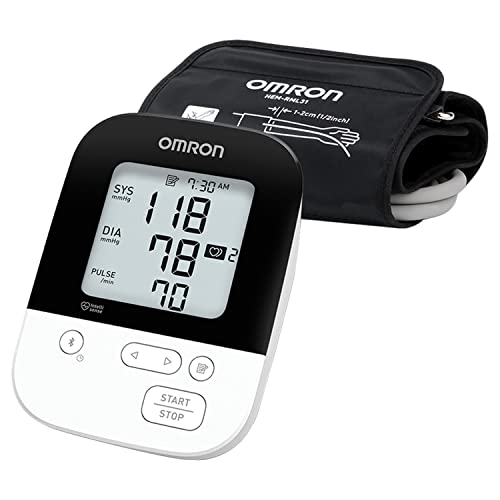
Omron 5 Series BP7250
- Best for: Simple everyday tracking for one person.
- Upper-arm cuff, 9 to 17 inch fit range
- Bluetooth sync to Omron Connect app
- Stores 60 readings
- Advanced Accuracy technology
Simple everyday tracking for one person.
The 60-reading memory fills faster than the 10 Series, so sync regularly.
The Omron 5 Series BP7250 is the simpler Omron pick for one person who wants reliable tracking without extra modes. Its wide-range cuff fits arms from 9 to 17 inches, and it stores 60 readings on the device for a useful recent history. Bluetooth sync sends results to the Omron Connect app when you want a longer record, and Advanced Accuracy technology is listed as a feature of the device. Irregular heartbeat detection and a morning hypertension indicator add context to each reading without complicating the screen.
Watch out for: The 60-reading memory fills faster than the 10 Series, so sync regularly.
Withings BPM Connect
- Best for: Phone-first tracking with automatic sync and a long record.
- Upper-arm cuff
- Wi-Fi and Bluetooth sync
- Color LED feedback on the device
- Unlimited readings stored in the Withings app
Phone-first tracking with automatic sync and a long record.
The LED feedback is brief, so check the app for the full reading.
The Withings BPM Connect suits phone-first users who want readings to appear in an app without extra steps. It syncs over Wi-Fi and Bluetooth, so results reach the Withings app even when your phone is in another room, and the app stores unlimited readings for a long-term record. A color LED on the device gives quick feedback after each measurement, and the rechargeable battery is rated for up to 6 months between charges. The upper-arm cuff and one-button operation keep each reading simple.
Watch out for: The LED feedback is brief, so check the app for the full reading.
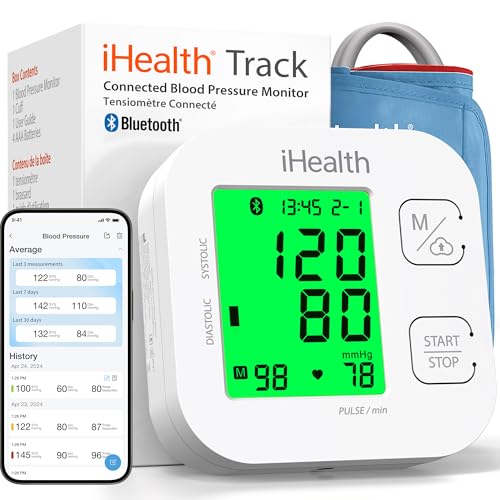
iHealth Track KN-550BT
- Best for: Clear display and easy setup for everyday tracking.
- Upper-arm cuff
- Bluetooth sync to iHealth app
- Stores 99 readings on the device
- Irregular heartbeat detection
Clear display and easy setup for everyday tracking.
It runs on AAA batteries, so keep spares on hand.
The iHealth Track KN-550BT is the straightforward choice for buyers who want a clear display and a simple setup. Its large backlit display shows readings in big numbers, and Bluetooth sync sends results to the iHealth app for a longer record. The device stores 99 readings on its own, so you can review recent numbers without a phone nearby. Irregular heartbeat detection flags readings to discuss with a clinician, and the upper-arm cuff fits most adults. Four AAA batteries power the device, so there is no charging cable to keep track of.
Watch out for: It runs on AAA batteries, so keep spares on hand.
Which One Fits Your Situation
Two people sharing one monitor
Households where two people share one monitor should choose the Omron 10 Series BP7450, since it stores 200 readings across two users and keeps each person’s record separate. Set up a user profile for each person, measure at the same time of day for comparable results, and sync to the app weekly so nothing is lost. A shared monitor saves space and money, yet separate profiles keep each log clean for the next clinician visit.
Simple daily tracking
Adults who want a quick daily reading without extra modes should pick the Omron 5 Series BP7250 or the iHealth Track, both of which measure with one button press and show results clearly. Keep the monitor on a bedside table or kitchen counter where you will actually use it, and measure at the same time each day. A simple routine you keep beats a feature-rich device you avoid, so favor the monitor you reach for without thinking.
Phone and app records
Users who like a long digital record should choose the Withings BPM Connect, which syncs over Wi-Fi and Bluetooth and stores unlimited readings in its app. Open the app once a week to review trends, and bring the phone to your next checkup so you can show the log to your clinician. Automatic sync removes the chore of writing numbers down, which makes it easier to keep a complete record over months.
Older users and clear displays
Older users and anyone who reads results without glasses should favor the iHealth Track or the Omron 10 Series, both of which use large, clear displays. Sit down, rest your arm on a table at heart height, and wait a few minutes before measuring so the reading reflects a calm state. A big display and one-button operation remove the small frustrations that make people skip measurements.
Common Mistakes
- Using a cuff that does not fit your arm and trusting the result anyway.
- Measuring right after coffee, exercise or a stressful call instead of resting first.
- Changing medication based on a home reading without asking a clinician.
- Measuring once and worrying, instead of tracking a pattern over weeks.
- Storing the monitor in a drawer where you forget to use it.
Frequently Asked Questions
How often should I measure my blood pressure at home?
Most clinicians suggest measuring once or twice a day at the same time, often in the morning and evening. Sit down, rest for five minutes, and keep your feet flat and your arm supported at heart height. Ask your clinician how often they want you to measure, since the right schedule depends on your situation and their guidance.
Does cuff size really matter?
Yes, cuff size matters, since a cuff that is too small or too large gives readings that do not reflect your actual blood pressure. Measure around the middle of your upper arm and compare it with the range listed on the product page before buying. The monitors here fit arms from 9 to 17 inches, so confirm your measurement first.
Can I trust a home monitor as much as a clinic reading?
A validated home monitor used correctly gives readings useful for tracking, though a single home reading is not the same as a clinical assessment. Technique matters: rest first, sit properly, and use the right cuff size. Bring your monitor to a checkup and compare it with the clinic device, then ask your clinician about the numbers.
What should I do if a reading looks very high or low?
Stay calm, rest for a few minutes, and take the reading again with the cuff positioned correctly. If the number stays unusually high or low, or you feel unwell, contact a clinician promptly rather than waiting for your next routine visit. Do not change medication on your own based on one reading.
FAQ
How often should I measure my blood pressure at home?
Does cuff size really matter?
Can I trust a home monitor as much as a clinic reading?
What should I do if a reading looks very high or low?
More from Amazon
Programs that pair well with the guide above. Offers and eligibility are set by Amazon and may change.
Free shipping on eligible items, Prime Video and more. Eligible new members can start with a free trial.
Start a Prime free trialA Prime membership for ages 18-24 with a trial period. Eligibility is set by Amazon.
See Prime for Young AdultsAudiobooks and podcasts to listen to on the go. Eligible new members can start with a free trial.
Try Audible freeAd-free music streaming. Eligible new subscribers can start with a free trial.
Try Music Unlimited freeAs an Amazon Associate we earn from qualifying purchases.