Our Short List of 3

- Best for: players building a Logitech G desk who want deep macros and profiles that travel.
- Sensor: HERO 25K optical
- DPI range: 100 to 25,600
- Tracking speed: 400 IPS
- Buttons: 11 programmable
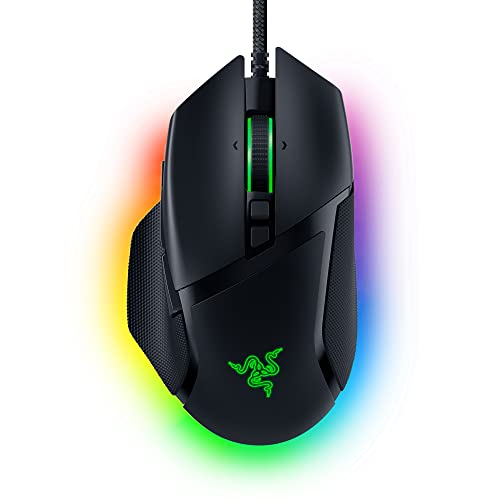
- Best for: macro-heavy players who want HyperShift layers and full Chroma lighting control.
- Sensor: Razer Focus+ optical
- DPI range: up to 26,000
- Buttons: 11 programmable
- Switches: Razer Optical Gen-2, rated 70 million clicks

- Best for: genre-hopping players who want profiles that switch automatically per game.
- Sensor: SteelSeries TrueMove Air optical
- CPI range: 100 to 18,000
- Tracking speed: 400 IPS, 40G acceleration
- Buttons: 9 programmable
All 5 Picks at a Glance
| Product | Specs | Action |
|---|---|---|
| Logitech G502 HERO |
| Check price on Amazon |
| Razer Basilisk V3 |
| Check price on Amazon |
| SteelSeries Rival 5 |
| Check price on Amazon |
 Corsair M65 RGB Ultra |
| Check price on Amazon |
 HyperX Pulsefire Haste 2 |
| Check price on Amazon |
Key takeaways
- Compare gaming mouse software from Logitech G HUB, Razer Synapse, SteelSeries GG, Corsair iCUE and HyperX NGENUITY for macros, DPI and RGB control.
Two gaming mice can share a sensor class and similar shapes yet feel completely different once their software gets involved. The companion app decides how many DPI stages you can save, whether macros live on the mouse or on one PC, how lighting syncs with the rest of a desk, and whether settings survive a move to a second computer. For many buyers, the software is now the real product decision.
This guide compares five gaming mice through the software each one depends on: Logitech G HUB, Razer Synapse, SteelSeries GG, Corsair iCUE and HyperX NGENUITY. Macro editors, spreadsheet-heavy MMO players, RGB-focused builders and minimalists who want one small utility will each find a different ecosystem that fits, and each pick below is judged first on what its app does well.
Quick Picks
As an Amazon Associate we earn from qualifying purchases.
| Product | Best for | Key spec from title |
|---|---|---|
| Logitech G502 HERO | Logitech G HUB all-round control | HERO 25K sensor, 11 programmable buttons |
| Razer Basilisk V3 | Synapse macros and Chroma lighting | Focus+ 26K sensor, HyperScroll tilt wheel |
| SteelSeries Rival 5 | GG per-game profiles and Sonar audio | TrueMove Air sensor, 18,000 CPI |
| Corsair M65 RGB Ultra | iCUE system-wide lighting sync | MARKSMAN 26,000 DPI, 8,000Hz polling |
| HyperX Pulsefire Haste 2 | NGENUITY in a light, simple package | 53g shell, 8,000Hz polling rate |
How to Choose
Macro depth and button remapping
The first question is how far the macro editor goes. Some suites record simple key sequences, while others add delays, loops, secondary functions on a shift layer and per-button text blocks. Count the programmable buttons on the mouse itself, then check whether the software lets every one of them hold a macro, a media command or a DPI shift. Players who bind push-to-talk, pings and ability rotations to the mouse will run out of room quickly on a basic editor, so depth here matters more than headline DPI for MMO and MOBA play.
Profiles and onboard memory
Profiles decide whether settings travel. A suite with onboard memory lets the mouse carry DPI stages, lighting and button maps to another computer with no app installed, which suits tournament PCs and shared family machines. Cloud-only or app-only profiles are fine on a single desk but break down at a LAN or office. Check how many profiles the mouse stores, whether the software auto-switches profiles when a game launches, and whether a stored profile keeps macros or only basic settings such as DPI and lighting.
Lighting control and ecosystem sync
RGB is where ecosystems separate. A mouse-only lighting editor is enough for a single device, but suites such as iCUE, Synapse and G HUB can sync effects across keyboards, headsets, fans and cases from the same brand, and some react to in-game events in supported titles. Look at how many lighting zones the mouse exposes, whether effects can be layered, and whether the app syncs with third-party hardware. The trade-off is reach: the widest sync usually means committing to one brand across the whole setup.
Software weight and update behaviour
A companion app runs in the background, so its footprint matters. Some suites are a single lightweight utility, while others bundle audio tools, capture features, storefronts and streaming extras into one large download. Check whether the software needs an account, how often it updates, and whether the mouse keeps working with full features when the app is closed. Players who value a clean system tray often prefer a smaller tool, even if it gives up cloud profiles or an integrated audio mixer.
The 5 Best Options
Logitech G502 HERO
- Best for: players building a Logitech G desk who want deep macros and profiles that travel.
- Sensor: HERO 25K optical
- DPI range: 100 to 25,600
- Tracking speed: 400 IPS
- Buttons: 11 programmable
players building a Logitech G desk who want deep macros and profiles that travel.
G HUB replaces the older Logitech Gaming Software, and settings do not carry over automatically.
The G502 HERO is the natural front door to Logitech G HUB, the suite most players measure the rest against. G HUB handles eleven programmable buttons with macros, DPI shift and a G-Shift layer that doubles the command set, and it saves up to five profiles to the mouse’s onboard memory so settings travel without the app. LIGHTSYNC lighting syncs with other Logitech G gear, and the HERO 25K sensor’s full range is set in the same window. The cost is an app that rewards a little patience during setup.
Razer Basilisk V3
- Best for: macro-heavy players who want HyperShift layers and full Chroma lighting control.
- Sensor: Razer Focus+ optical
- DPI range: up to 26,000
- Buttons: 11 programmable
- Switches: Razer Optical Gen-2, rated 70 million clicks
macro-heavy players who want HyperShift layers and full Chroma lighting control.
Synapse is a large suite and asks for attention during install and updates.
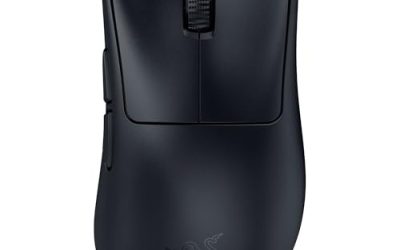
The Basilisk V3 exists to show off Razer Synapse. Eleven programmable buttons pair with the HyperShift layer, which temporarily remaps every button while held, effectively doubling the command set for macro-heavy games. Synapse also drives the eleven Chroma RGB zones, syncs lighting with other Chroma devices and supported games, and manages the HyperScroll tilt wheel’s switch between tactile and free-spin modes, including Smart-Reel behaviour. The Focus+ sensor settings, polling rate steps and lift-off calibration all live in the same app, making this the deepest single-brand toolbox here.
SteelSeries Rival 5
- Best for: genre-hopping players who want profiles that switch automatically per game.
- Sensor: SteelSeries TrueMove Air optical
- CPI range: 100 to 18,000
- Tracking speed: 400 IPS, 40G acceleration
- Buttons: 9 programmable
genre-hopping players who want profiles that switch automatically per game.
GG bundles audio and capture tools alongside the mouse editor, so the download is bigger than a mouse-only utility.
The Rival 5 runs on SteelSeries GG, the bundle that combines the Engine device editor with Sonar audio tools, Moments capture and per-game configuration apps. Engine lets each of the nine buttons hold macros or media commands, sets five CPI stages between 100 and 18,000, and paints ten PrismSync RGB zones that can react across SteelSeries gear. The standout is app-based profiles: GG can apply a saved configuration when a specific game launches, so an FPS layout and an MMO layout swap without manual clicks. The TrueMove Air sensor keeps tracking honest underneath.
Corsair M65 RGB Ultra
- Best for: Corsair desk owners who want one app running mouse, lighting and system gear together.
- Sensor: Corsair MARKSMAN optical
- DPI: 26,000 native
- Tracking speed: 650 IPS, 50G acceleration
- Polling rate: up to 8,000Hz with AXON hyper-processing
Corsair desk owners who want one app running mouse, lighting and system gear together.
iCUE is the heaviest suite here, and its full feature set only pays off inside the Corsair ecosystem.
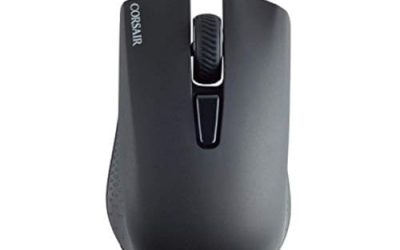
The M65 RGB Ultra is built around Corsair iCUE, the suite that treats the mouse as one node in a whole-system lighting and monitoring network. iCUE remaps buttons, records macros, sets DPI stages and syncs RGB effects across Corsair keyboards, headsets, fans and cases in real time. It also unlocks this mouse’s unusual extras: AXON hyper-processing lifts polling to 8,000Hz, and Sensor Fusion uses the built-in gyroscope and accelerometer for tilt gestures that trigger commands. The aluminum frame and tunable weight system, adjustable between 97g and 115g, give the software a solid FPS shell to work with.
HyperX Pulsefire Haste 2
- Best for: players who want a featherweight mouse and a small, simple configuration tool.
- Sensor: HyperX 26K optical
- DPI range: up to 26,000
- Tracking speed: 650 IPS
- Polling rate: 8,000Hz
players who want a featherweight mouse and a small, simple configuration tool.
NGENUITY is deliberately basic next to Synapse or iCUE, with fewer lighting layers and profile tricks.
The Pulsefire Haste 2 makes the case for restraint through HyperX NGENUITY. The software covers the essentials cleanly: custom DPI levels for the HyperX 26K sensor, macros and binds across six programmable buttons, and RGB adjustment, all in a utility that stays out of the way. The mouse itself is a 53g wired shell with an 8,000Hz polling rate and a flexible HyperFlex 2 cable, aimed at players who set their preferences once and rarely reopen the app. NGENUITY also serves HyperX keyboards and headsets, so a small HyperX setup still gets one shared control panel.
Which One Fits Your Situation
You play MMOs and live on macros
Choose the ecosystem with the deepest editor. The Basilisk V3 with Synapse and its HyperShift layer gives the largest effective command set, while the G502 HERO counters with eleven physical buttons and five onboard profiles. Either way, prioritise macro recording with delays and a second function layer over headline sensor numbers, because ability rotations fail on shallow software long before they fail on tracking.
You switch between a home desk and another PC
Onboard memory decides this one. The G502 HERO stores up to five full profiles on the mouse, so DPI, lighting and button maps arrive intact on a work laptop or tournament machine with no software installed. Suites that keep profiles in the app or cloud leave a borrowed computer running default settings, which is a poor trade for anyone who regularly plays away from their main desk.
Your whole desk runs one brand of RGB
Match the mouse to the gear already on the desk. iCUE syncs the M65 RGB Ultra with Corsair keyboards, fans and cases, Synapse does the same across the Chroma range, and G HUB unifies Logitech G mice, keyboards and headsets. A mixed-brand desk cannot sync fully through any single suite, so the mouse software matters less there and raw editor quality should lead the decision instead.
You want the software to disappear
Pick the lightest tool. NGENUITY on the Pulsefire Haste 2 covers DPI, binds and lighting in a compact utility that suits a set-and-forget approach, and the mouse itself is a 53g wired shell that asks nothing further. Players who resent background apps, account prompts and bundled extras will find this pairing the least intrusive of the five, even though it gives up cloud profiles and layered lighting effects.
Common Mistakes
- Choosing a mouse by sensor specs alone and discovering the software lacks the macro depth or profile handling the games actually need.
- Ignoring onboard memory, then finding every saved setting stranded on one PC when the mouse moves to a laptop or a second desk.
- Mixing brands across a desk and expecting one app to sync lighting and profiles across all of them.
- Leaving the companion app uninstalled and missing firmware updates, full DPI ranges and button features that only unlock through the software.
- Stacking several heavy suites at once, so multiple background apps compete for resources and overwrite each other’s lighting control.
Frequently Asked Questions
Does a gaming mouse need its software installed to work?
No. Every mouse here works as a basic pointing device the moment it is plugged in, with default DPI stages and button layouts. The software is needed to change DPI steps, record macros, remap buttons, adjust lighting and save custom profiles. Settings stored in onboard memory, where offered, keep working on computers that do not have the app installed at all.
Can one app control mice from different brands?
Generally no. G HUB, Synapse, GG, iCUE and NGENUITY each manage only their own brand’s devices, and lighting sync stays inside that brand’s ecosystem. A mixed desk means running several suites or accepting per-device defaults. Third-party utilities can remap buttons at the operating-system level, but they cannot reach firmware features such as onboard profiles, sensor calibration or per-zone lighting inside the mouse.
What is the difference between onboard memory and cloud profiles?
Onboard memory stores profiles inside the mouse itself, so the settings travel to any computer with no software or account involved. Cloud profiles live in the vendor’s app and follow the user between machines only where that app is installed and signed in. App-based profiles, such as the per-game configurations in SteelSeries GG, add automatic switching by title but still depend on the suite running in the background.
Does mouse software affect game performance?
The editors themselves are light, but large suites that bundle capture, audio processing and overlays use more memory and can add background processes. Polling rate is the setting with a real in-game footprint: options such as 8,000Hz polling on the M65 RGB Ultra or Pulsefire Haste 2 increase CPU load slightly on older systems. Closing unneeded suite modules keeps the mouse features while trimming the overhead.
FAQ
Does a gaming mouse need its software installed to work?
Can one app control mice from different brands?
What is the difference between onboard memory and cloud profiles?
Does mouse software affect game performance?
More from Amazon
Programs that pair well with the guide above. Offers and eligibility are set by Amazon and may change.
Free shipping on eligible items, Prime Video and more. Eligible new members can start with a free trial.
Start a Prime free trialA Prime membership for ages 18-24 with a trial period. Eligibility is set by Amazon.
See Prime for Young AdultsAudiobooks and podcasts to listen to on the go. Eligible new members can start with a free trial.
Try Audible freeAd-free music streaming. Eligible new subscribers can start with a free trial.
Try Music Unlimited freeAs an Amazon Associate we earn from qualifying purchases.