Our Short List of 3

- Best for: Travellers and hobby filmmakers who want the strongest all-round camera drone in a pocketable size.
- 4K camera
- Under 249 g takeoff weight
- 34-minute maximum flight time
- 20 km maximum video transmission range

- Best for: Pilots who want the longest flying sessions and a full bundle of batteries in one box.
- 4K/30fps HDR video
- 8K still photos
- Under 249 g takeoff weight
- Three-axis gimbal
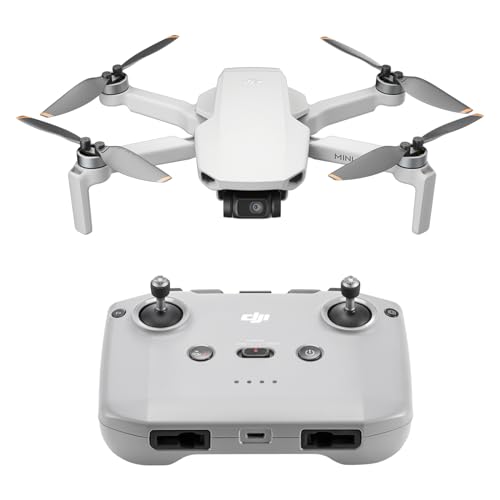
- Best for: First-time buyers who want a proper DJI camera drone with a stabilised 4K camera at the lowest entry point.
- 4K UHD video
- 12MP still photos
- Three-axis gimbal
- Under 249 g takeoff weight
All 4 Picks at a Glance
| Product | Specs | Action |
|---|---|---|
| DJI Mini 4 Pro (DJI RC 2) |
| Check price on Amazon |
| Potensic ATOM 2 Fly More Combo |
| Check price on Amazon |
| DJI Mini 4K |
| Check price on Amazon |
 Holy Stone HS175D |
| Check price on Amazon |
Key takeaways
- The 5 best drones with cameras for sharp aerial photos and steady video, from sub-249 g minis to long-flight bundles — compare specs and pick yours.
A camera drone is only worth owning if the footage it brings home looks good on a big screen, not just on a phone. That means the real choice is not between brands or box art, it is between a stabilised camera that holds a steady frame in wind and a shaky one that turns every flight into a salvage job. Sensor size, gimbal quality, flight time, and obstacle sensing decide whether a drone earns its place in your bag or gathers dust after two weekends.
This guide is for first-time flyers who want a forgiving starter, travellers who need a pocketable drone for holidays, hobby photographers chasing sharper stills from the air, and anyone upgrading from a toy quadcopter to a real flying camera. Every pick below is a camera drone with a genuine Amazon listing, chosen from the specifications on its product page, so you can compare what each one actually offers before you buy.
Quick Picks
As an Amazon Associate we earn from qualifying purchases.
| Product | Best for | Key spec |
|---|---|---|
| DJI Mini 4 Pro (DJI RC 2) | All-round flying and filming | 4K camera, omnidirectional vision sensing, 34-minute flight |
| DJI Mini 3 Pro (DJI RC) | High-resolution aerial stills | 48MP photo, 4K video, under 249 g |
| Potensic ATOM 2 Fly More Combo | Long sessions with extra batteries | 4K/30fps HDR video, 96-minute total flight, 3-axis gimbal |
| DJI Mini 4K | First drone on a modest budget | 4K UHD video, 3-axis gimbal, 31-minute flight |
| Holy Stone HS175D | Learning to fly with GPS help | 4K video, 2 batteries, 46-minute total flight |
How to Choose
Start with the camera, not the drone
The camera decides whether your footage is usable, so read its details before anything else. A 4K label alone tells you little: check whether the lens sits on a three-axis gimbal, which keeps the horizon level when the drone tilts, and whether the stills resolution suits the way you plan to share images. A drone with electronic stabilisation only can still wobble in a gust, while a mechanical gimbal smooths the same move. If you plan to print or crop aerial photos, a higher megapixel count matters; if you mostly shoot short clips for family and friends, steady 4K video matters more than raw resolution.
Check the weight and the rules where you fly
Most of the drones in this guide weigh under 249 grams, and that threshold matters because it changes what registration and paperwork apply in many places. A sub-249 g drone is easier to carry, easier to launch from a trailhead or a beach, and generally simpler to fly legally as a recreational pilot. Heavier drones are not automatically a bad choice, but they bring more obligations and often need a larger bag. Before your first flight, look up the rules for your country and your flying spot, since parks, coastlines, and built-up areas often carry their own restrictions.
Match flight time to how you actually shoot
Advertised flight time is a maximum measured in calm air, so treat it as a ceiling rather than a promise. A single battery that lasts around half an hour is enough for a casual outing, but photographers who wait for light or scout several angles will want either a longer single flight or a bundle with spare batteries. Fly More style kits that include two or three batteries and a charging hub change the experience completely, because you stop rationing minutes and start flying until you have the shot. Always keep a reserve for the return journey.
Do not ignore obstacle sensing and return-to-home
Beginners crash most often when a drone drifts sideways into a branch or a wall, so obstacle sensing is worth more than a slightly sharper camera for a first purchase. Omnidirectional sensing watches in every direction, while simpler systems guard only the front or the ground. GPS return-to-home is the other safety net that matters: if the signal drops or the battery runs low, the drone should fly itself back to its launch point instead of landing wherever it happens to be. Test this feature in an open field before trusting it near trees, water, or rooftops.
The 5 Best Options
DJI Mini 4 Pro (DJI RC 2)
- Best for: Travellers and hobby filmmakers who want the strongest all-round camera drone in a pocketable size.
- 4K camera
- Under 249 g takeoff weight
- 34-minute maximum flight time
- 20 km maximum video transmission range
Travellers and hobby filmmakers who want the strongest all-round camera drone in a pocketable size.
The standard kit includes one battery, so plan on a spare battery or a charging hub if you fly for more than a short session.
The Mini 4 Pro is the most complete small camera drone in this guide, and it suits anyone who wants strong footage without carrying a heavy aircraft. Its omnidirectional vision sensing gives new pilots a margin for error that cheaper drones simply do not provide, and the included DJI RC 2 controller has a built-in screen, so there is no need to mount a phone. It stays under 249 grams while delivering a 4K camera and a long flight time, which makes it an easy travel companion for holidays, hikes, and road trips alike.
Watch out for: The standard kit includes one battery, so plan on a spare battery or a charging hub if you fly for more than a short session.
DJI Mini 3 Pro (DJI RC)
The Mini 3 Pro is the pick for anyone who cares as much about still photographs as video. Its 48MP photo mode captures far more detail than most drones in this size class, which makes it a strong choice for landscapes, property shots, and prints. It shares the Mini 4 Pro’s sub-249 g body and 34-minute flight time, and it comes with the DJI RC controller, so the flying experience feels just as polished. Obstacle sensing and return-to-home are included, which keeps it approachable for pilots who are still building confidence.
Specs
- 4K video recording
- 48MP still photos
- Under 249 g takeoff weight
- 34-minute maximum flight time
- Obstacle sensing
- Return to home
- FAA Remote ID compliant
- Includes DJI RC controller
Best for: Hobby photographers who want high-resolution aerial stills from a small, travel-friendly drone.
Watch out for: Its obstacle sensing is more limited than the Mini 4 Pro’s omnidirectional system, so fly with extra care around branches and wires.
Potensic ATOM 2 Fly More Combo
- Best for: Pilots who want the longest flying sessions and a full bundle of batteries in one box.
- 4K/30fps HDR video
- 8K still photos
- Under 249 g takeoff weight
- Three-axis gimbal
Pilots who want the longest flying sessions and a full bundle of batteries in one box.
Confirm the listing is the Fly More Combo with three batteries, since a standard single-battery version of the same model is sold separately.
The ATOM 2 Fly More Combo is built for pilots who hate cutting a session short. With three batteries in the box, it offers up to 96 minutes of total flight time, which is enough to scout a location, wait for better light, and still have power left for a second pass. The camera records 4K HDR video on a three-axis gimbal, and it can shoot 8K still photos and vertical video for social feeds. AI tracking follows a moving subject, and the whole aircraft stays under 249 grams despite the generous bundle.
Watch out for: Confirm the listing is the Fly More Combo with three batteries, since a standard single-battery version of the same model is sold separately.
DJI Mini 4K
- Best for: First-time buyers who want a proper DJI camera drone with a stabilised 4K camera at the lowest entry point.
- 4K UHD video
- 12MP still photos
- Three-axis gimbal
- Under 249 g takeoff weight
First-time buyers who want a proper DJI camera drone with a stabilised 4K camera at the lowest entry point.
The DJI Fly app is not on Google Play, so Android users need to download it from the DJI website before their first flight.
The Mini 4K is the most affordable way into the DJI ecosystem, and it is the right starting point for anyone who wants a genuine flying camera rather than a toy. Its three-axis gimbal keeps 4K footage steady in a way that budget drones with electronic stabilisation cannot match, and the 12MP stills are more than enough for sharing online and printing at modest sizes. At under 249 grams with a 31-minute flight time and GPS return-to-home, it covers the fundamentals well, and the DJI Fly app adds one-tap takeoff and landing plus automated QuickShots moves.
Watch out for: The DJI Fly app is not on Google Play, so Android users need to download it from the DJI website before their first flight.
Holy Stone HS175D
- Best for: Beginners who want GPS flight modes and a two-battery kit at a modest outlay.
- 4K video capture
- 12MP still photos
- 110-degree wide-angle lens
- Camera adjusts up to 90 degrees
Beginners who want GPS flight modes and a two-battery kit at a modest outlay.
Its camera is not mounted on a three-axis gimbal, so footage in gusty wind will not be as smooth as the DJI picks in this guide.
The HS175D is a practical alternative for beginners who want GPS-assisted flying and two batteries without spending on a premium brand. Its 4K camera sits on a mount that adjusts up to 90 degrees, and the 110-degree wide-angle lens takes in broad landscapes in a single frame. Two batteries give 46 minutes of total flight time, and the brushless motors run quieter and last longer than the brushed motors found in cheaper drones. GPS features such as follow me, waypoint flight, and circle fly do much of the piloting work while you concentrate on framing the shot.
Watch out for: Its camera is not mounted on a three-axis gimbal, so footage in gusty wind will not be as smooth as the DJI picks in this guide.
Which One Fits Your Situation
You are buying your first camera drone
Start with the DJI Mini 4K if you want the simplest path to good footage, since its three-axis gimbal and GPS return-to-home cover the two things beginners get wrong most often. If your budget stretches further, the DJI Mini 4 Pro adds omnidirectional sensing that forgives the sideways drifts that cause most first crashes. Either way, fly your first dozen flights in an open field before attempting anything near trees or water.
You travel light and shoot on holiday
Pick the DJI Mini 4 Pro or the DJI Mini 3 Pro, both of which fold into a jacket pocket at under 249 grams and need no phone mount when bought with their screen controllers. The Mini 4 Pro is the safer traveller because its sensing watches in every direction, which matters when you launch from unfamiliar ground. Pack a spare battery and a small charging hub so a single charge never decides your day.
You want the best aerial photographs
Choose the DJI Mini 3 Pro for its 48MP stills, which give you room to crop and print in a way the other picks cannot match. The Potensic ATOM 2 is the alternative if you also want 8K stills and vertical shooting for social feeds, plus three batteries for long sessions at a single location. Whichever you choose, shoot in good light and keep the drone still for a moment before each frame.
You want long sessions without recharging
Take the Potensic ATOM 2 Fly More Combo, whose three batteries add up to 96 minutes of total flight, or the Holy Stone HS175D, which gives 46 minutes from two batteries. The ATOM 2 is the stronger camera of the two thanks to its three-axis gimbal and HDR video, while the HS175D is the simpler, lower-cost route to a two-battery kit. Land with reserve power on every battery, and never fly a low battery out over water.
Common Mistakes
- Buying on the 4K label alone without checking whether the camera has a real gimbal, since electronic stabilisation cannot fix shaky footage in wind.
- Ignoring the 249 g threshold and the registration and flying rules that apply above it in your country.
- Flying a single battery until it is nearly empty, leaving no reserve for the return flight or a gusty headwind.
- Trusting return-to-home before testing it in an open field, where you can see exactly where the drone lands.
- Launching near trees, wires, or water on a first flight, when a sideways drift is the most likely mistake a new pilot makes.
Frequently Asked Questions
Do I need to register a drone under 249 g?
In many countries, recreational drones under 249 grams face lighter registration requirements than heavier aircraft, which is one reason the sub-249 g models in this guide are popular. The exact rules still depend on where you live and where you fly. Check your national aviation authority before your first flight, and follow local rules for parks, coastlines, and built-up areas.
Is 4K video enough, or should I look for a higher resolution?
For most buyers, steady 4K video matters far more than a higher number on the box. A stabilised 4K camera on a three-axis gimbal produces footage that looks clean on a television, while an unstabilised higher-resolution camera still shows every wobble. Higher stills resolution helps if you crop or print, which is why the 48MP Mini 3 Pro stands out, but for video, gimbal quality comes first.
How long can I really fly on one battery?
Treat the advertised flight time as a maximum measured in calm air with no wind. In real flying, expect a few minutes less, especially on a breezy day or when you fly fast and change direction often. A drone listed at 34 minutes typically gives a comfortable 25 to 28 minutes of shooting before you should head home. Bundles with spare batteries are the practical answer for long sessions.
What should I check before my first flight?
Charge every battery fully, update the firmware and the companion app, and calibrate the compass in an open area away from metal and power lines. Check the local flying rules for your spot, look for people, animals, and obstacles nearby, and keep the drone within sight at all times. Fly a short test first, practise the return-to-home function, and land with battery to spare.
FAQ
Do I need to register a drone under 249 g?
Is 4K video enough, or should I look for a higher resolution?
How long can I really fly on one battery?
What should I check before my first flight?
More from Amazon
Programs that pair well with the guide above. Offers and eligibility are set by Amazon and may change.
Free shipping on eligible items, Prime Video and more. Eligible new members can start with a free trial.
Start a Prime free trialA Prime membership for ages 18-24 with a trial period. Eligibility is set by Amazon.
See Prime for Young AdultsAudiobooks and podcasts to listen to on the go. Eligible new members can start with a free trial.
Try Audible freeAd-free music streaming. Eligible new subscribers can start with a free trial.
Try Music Unlimited freeAs an Amazon Associate we earn from qualifying purchases.