Our Short List of 3

- Best for: Everyday use with a large screen, a capable camera and long software support.
- 6.7-inch AMOLED display
- 128GB storage with 4GB RAM
- Expandable storage up to 1.5TB with a microSD card
- 50MP main camera with 5MP ultrawide and 2MP macro rear lenses

- Best for: Simple daily use, first phones and anyone who wants long battery life above all else.
- 6.5-inch HD+ display with 90Hz refresh rate
- Snapdragon 680 processor
- 4GB RAM with 64GB storage
- Expandable storage up to 1TB with a microSD card

- Best for: Bright AMOLED viewing, 5G connectivity and generous storage in a mid-size handset.
- 6.5-inch AMOLED display with 1080 x 2340 resolution
- 128GB storage with 4GB RAM
- Expandable storage up to 1TB with a microSD card
- AMOLED display with Vision Booster for outdoor viewing
All 4 Picks at a Glance
| Product | Specs | Action |
|---|---|---|
| Samsung Galaxy A16 5G |
| Check price on Amazon |
| Motorola Moto G Play 2024 |
| Check price on Amazon |
| Samsung Galaxy A15 5G |
| Check price on Amazon |
 Motorola Moto G 5G 2024 |
| Check price on Amazon |
Key takeaways
- Compare four affordable smartphones with big screens, long battery life and 5G. Find the right balance of screen, storage and camera for everyday use.
An affordable smartphone is not about finding the lowest number on a shelf. It is about deciding which trade-offs you can live with every day: a dimmer screen, a slower chip, a camera that struggles after dark, or a battery that fades before dinner. Get those trade-offs right and a modest handset can carry calls, messages, maps, streaming and photos for years. Get them wrong and the phone becomes a daily frustration, no matter how little it seemed to ask of you at checkout.
This guide is for first-time buyers, parents equipping a teenager, and anyone replacing a tired handset without chasing flagship features. Every phone below was picked from its Amazon listing, using the name and specifications shown there, so you can compare screen, storage, battery and camera on the same terms before you choose.
Quick Picks
As an Amazon Associate we earn from qualifying purchases.
| Product | Best for | Key spec from title |
|---|---|---|
| Samsung Galaxy A16 5G | Everyday use with a large, vivid screen | Large AMOLED Display |
| Motorola Moto G Play 2024 | Simple daily use with long battery life | 50MP Camera |
| Samsung Galaxy A15 5G | Bright AMOLED viewing with 5G | AMOLED Display |
| Motorola Moto G 5G 2024 | Everyday multitasking with room to grow | 50MP Camera |
How to Choose
Start With the Screen You Will Live With
The screen is the part you touch and look at most, so it deserves the first decision. An AMOLED panel shows deeper blacks and stronger contrast than a standard LCD, so video and reading look better. Size matters too: a display of 6.5 inches or more gives text, maps and video room to breathe, but one-handed use gets harder. Refresh rate is the third factor, because a higher refresh rate makes scrolling smoother. Before choosing, check the screen size, panel type and resolution in the listing, then match it to your routine: a commuter who reads on a train needs a different screen from someone who mostly takes calls at home.
Storage, Memory and Room to Grow
Storage decides how many apps, photos and videos your phone can hold before it starts asking you to delete things. A handset with 128GB of built-in storage gives most people comfortable headroom, while 64GB fills up faster once apps, offline maps and a camera roll accumulate. Memory, listed as RAM, decides how smoothly the phone switches between apps; 4GB is workable for calls, messaging, browsing and light games, but heavy multitaskers will feel its limits. Expandable storage changes the maths entirely. A microSD slot lets you add room for photos and media later, which is one of the most useful features on an affordable phone. Check both figures in the listing before you choose.
Battery Life and Charging Habits
A big battery is the most practical luxury an affordable phone can offer, because a handset that dies mid-afternoon is useless at any tier. Look for a battery capacity of 5,000mAh, which appears across most of the phones in this guide and generally carries a full day of calls, messages, browsing and streaming. Charging speed matters almost as much as capacity: fast charging turns a short stop at home into enough charge for the evening, while slow charging punishes anyone who forgets to plug in overnight. Also check what arrives in the box, since some handsets ship with a cable only. Match the battery and charging combination to your habits.
Cameras, Updates and the Details That Age First
Cameras on affordable phones are good in daylight and weaker after dark, so read the listing with that in mind. A 50MP main camera sounds impressive, but the sensor size, the extra lenses and the software matter just as much as the megapixel count. An ultrawide lens adds group shots and landscapes, while a macro lens is a niche extra most people rarely use. Software support ages a phone faster than hardware does, so a model with several years of promised Android updates will stay secure and compatible far longer than one abandoned early. Confirm the camera setup, the update promise and the carrier list before you commit.
The 4 Best Options
Samsung Galaxy A16 5G
- Best for: Everyday use with a large screen, a capable camera and long software support.
- 6.7-inch AMOLED display
- 128GB storage with 4GB RAM
- Expandable storage up to 1.5TB with a microSD card
- 50MP main camera with 5MP ultrawide and 2MP macro rear lenses
Everyday use with a large screen, a capable camera and long software support.
The listing describes a large AMOLED display, so confirm the exact screen size and refresh rate in the listing for your chosen colour before ordering.
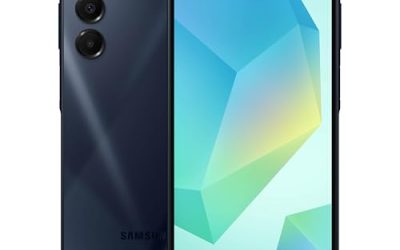
The Galaxy A16 5G is the most well-rounded phone in this guide, and the natural first pick for someone who wants a large, vivid screen without stepping into flagship territory. Its 6.7-inch AMOLED display makes reading, video and maps comfortable, while the triple rear camera covers everyday photos, group shots and close-ups. The 5,000mAh battery carries a full day of mixed use, and the IP54 dust and splash resistance is a layer of protection that many handsets at this tier skip. With 128GB of storage, expandable memory and several years of software support, it is built to stay useful long after the novelty fades.
Watch out for: The listing describes a large AMOLED display, so confirm the exact screen size and refresh rate in the listing for your chosen colour before ordering.
Motorola Moto G Play 2024
- Best for: Simple daily use, first phones and anyone who wants long battery life above all else.
- 6.5-inch HD+ display with 90Hz refresh rate
- Snapdragon 680 processor
- 4GB RAM with 64GB storage
- Expandable storage up to 1TB with a microSD card
Simple daily use, first phones and anyone who wants long battery life above all else.
The 64GB of built-in storage fills up faster than the 128GB models in this guide, so plan on a microSD card if you keep many photos or apps.
The Moto G Play 2024 is the simplest phone here, and that simplicity is its strength. It covers the essentials without fuss: a 6.5-inch display that is large enough for video and reading, a 50MP camera for daylight photos, and a 5,000mAh battery that keeps going through long days. The Snapdragon 680 processor and 4GB of RAM handle calls, messaging, browsing and light apps without drama, and the microSD slot adds up to 1TB of extra room for photos and media. As an unlocked handset it works with major US carriers and prepaid networks alike, which makes it a sensible choice for a first phone or a gift.
Watch out for: The 64GB of built-in storage fills up faster than the 128GB models in this guide, so plan on a microSD card if you keep many photos or apps.
Samsung Galaxy A15 5G
- Best for: Bright AMOLED viewing, 5G connectivity and generous storage in a mid-size handset.
- 6.5-inch AMOLED display with 1080 x 2340 resolution
- 128GB storage with 4GB RAM
- Expandable storage up to 1TB with a microSD card
- AMOLED display with Vision Booster for outdoor viewing
Bright AMOLED viewing, 5G connectivity and generous storage in a mid-size handset.
The listing shows conflicting figures for the processor and the refresh rate, so confirm those two details with the seller before ordering, and check what charging accessories arrive in the box.
The Galaxy A15 5G suits buyers who want the AMOLED advantage in a slightly smaller handset. Its 6.5-inch AMOLED display shows strong contrast and stays readable outdoors thanks to the Vision Booster mode described in the listing, which makes it a pleasant screen for streaming and reading. The 128GB of storage, expandable by up to 1TB, gives plenty of room for apps and photos, while Knox Security adds a layer of protection for personal data. It is an unlocked US version with 5G, so it fits buyers who want faster mobile data and a brighter screen without moving to a larger or more complex handset.
Watch out for: The listing shows conflicting figures for the processor and the refresh rate, so confirm those two details with the seller before ordering, and check what charging accessories arrive in the box.
Motorola Moto G 5G 2024
- Best for: Everyday multitasking with 5G, generous storage and a battery that lasts the day.
- 6.6-inch display
- Snapdragon 4 Gen 1 octa-core processor
- 4GB RAM with 128GB storage
- Expandable storage up to 1TB with a microSD card
Everyday multitasking with 5G, generous storage and a battery that lasts the day.
The 6.6-inch display is an LCD panel rather than AMOLED, so colours and contrast will look flatter than on the Samsung models in this guide.
The Moto G 5G 2024 is the pick for buyers who want 5G speed and more storage without a complicated handset. Its Snapdragon 4 Gen 1 processor pairs with 4GB of RAM and 128GB of storage, which keeps everyday apps, browsing and streaming running smoothly, and the microSD slot adds up to 1TB more room when the camera roll grows. The 50MP camera handles daylight photos well, and the 5,000mAh battery with TurboPower charging carries a full day and refuels quickly. The vegan leather back gives it a distinctive feel, and the unlocked design works across major US carriers, so switching networks later is straightforward.
Watch out for: The 6.6-inch display is an LCD panel rather than AMOLED, so colours and contrast will look flatter than on the Samsung models in this guide.
Which One Fits Your Situation
You Want the Biggest Screen and the Longest Support
Choose the Samsung Galaxy A16 5G. Its 6.7-inch AMOLED display is the largest and most vivid in this guide, and the 5,000mAh battery, IP54 dust and splash resistance and 128GB of expandable storage make it the most complete everyday handset here. The long software support also means it should stay secure and compatible for years, which matters if you keep a phone for a long time.
You Want the Simplest Phone Possible
Choose the Motorola Moto G Play 2024. It does the essentials well: a large display, a capable daylight camera and a battery that lasts through long days, without extra features to learn or manage. The 64GB of storage is the tightest in this guide, so add a microSD card if you store many photos, but for calls, messages and video it is the most straightforward choice.
You Want an AMOLED Screen and 5G
Choose the Samsung Galaxy A15 5G. It pairs a bright 6.5-inch AMOLED display with 5G, 128GB of storage and expandable memory, giving you faster data and a better screen in a handset that stays easy to carry. Just confirm the processor and refresh rate figures with the seller first, since the listing shows conflicting numbers for those two details.
You Want 5G and Room for Apps and Photos
Choose the Motorola Moto G 5G 2024. The Snapdragon 4 Gen 1 chip, 128GB of storage and microSD expansion give it the most headroom for apps, photos and multitasking among the Motorola picks here. The 5,000mAh battery and TurboPower charging cover long days, and the unlocked design keeps your carrier options open.
Safety Notes
All four phones in this guide use a built-in lithium-ion battery, and the Galaxy A16 5G listing states that one lithium-ion battery is included. Charge with the cable and adapter supplied in the box, or with a manufacturer-approved equivalent, and keep the handset away from water, damp and direct heat while charging. Stop using the phone and seek advice from the manufacturer or seller if the battery swells, the handset becomes unusually hot, or the case shows damage. When a phone reaches the end of its life, take it to an e-waste recycling point rather than throwing it away with household waste.
Common Mistakes
- Buying a locked handset when you need an unlocked one, then discovering it will not work with your carrier.
- Choosing 64GB of storage and skipping the microSD card, then running out of room for photos and apps within months.
- Judging a camera by megapixels alone, without checking the sensor, the extra lenses and low-light performance.
- Ignoring software support, so the phone stops receiving security updates long before the hardware wears out.
- Assuming every handset ships with a charging adapter in the box, when some listings include a cable only.
Frequently Asked Questions
What separates an affordable smartphone from a poor one?
An affordable smartphone covers the essentials well: a clear screen, enough storage, a battery that lasts the day and a camera that works in daylight. A poor handset cuts those basics, so it frustrates daily. The difference shows in the listing details, such as the display type, the storage, the battery capacity and the software support, rather than in any single feature.
Is 128GB of storage enough for everyday use?
For most people, yes. It holds apps, messages, offline maps and a large photo library with room to spare. It only becomes tight if you record long videos or download many large games. A microSD slot removes most of that worry, since you can add storage later for photos and media without replacing the handset.
Do I need 5G in an affordable phone?
It depends on where you live and how you use mobile data. 5G helps with streaming, video calls and downloads in areas with good coverage, and it keeps the handset relevant as networks develop. If your area has weak 5G coverage or you mostly use Wi-Fi, a 4G handset such as the Moto G Play 2024 covers daily needs without any practical drawback.
How long should an affordable smartphone last?
A well-chosen affordable phone should serve for several years of everyday use. The battery will age first, and software support usually ends before the hardware fails, so a model with several years of promised updates lasts longer in practice. Look after the battery, keep storage from filling completely, and use a case and screen protector to protect the handset.
FAQ
What separates an affordable smartphone from a poor one?
Is 128GB of storage enough for everyday use?
Do I need 5G in an affordable phone?
How long should an affordable smartphone last?
More from Amazon
Programs that pair well with the guide above. Offers and eligibility are set by Amazon and may change.
Free shipping on eligible items, Prime Video and more. Eligible new members can start with a free trial.
Start a Prime free trialA Prime membership for ages 18-24 with a trial period. Eligibility is set by Amazon.
See Prime for Young AdultsAudiobooks and podcasts to listen to on the go. Eligible new members can start with a free trial.
Try Audible freeAd-free music streaming. Eligible new subscribers can start with a free trial.
Try Music Unlimited freeAs an Amazon Associate we earn from qualifying purchases.