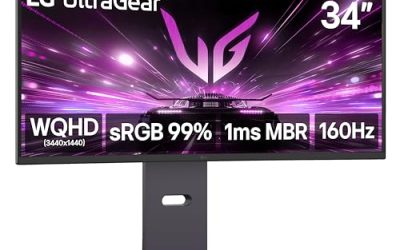
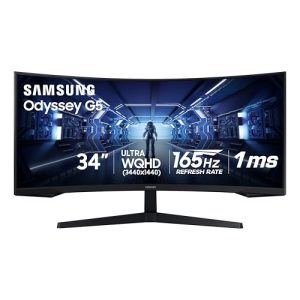
Our Short List of 3

- Best for: PS5 players who want 4K at 144Hz on a sensible desk setup.
- 28-inch 4K UHD IPS panel
- 144Hz refresh rate
- 1ms response time
- HDMI 2.1 ports
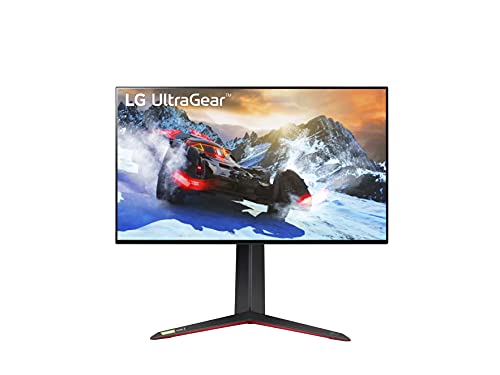
- Best for: Single-player games where colour depth and smooth motion matter most.
- 27-inch 4K UHD Nano IPS panel
- 144Hz refresh rate, 160Hz with overclock
- 1ms GtG response time
- HDMI 2.1 ports

- Best for: PS5 owners who want a screen that works with the console with no setup fuss.
- 27-inch 4K IPS panel
- 144Hz refresh rate
- 1ms GtG response time
- HDMI 2.1 ports
All 4 Picks at a Glance
| Product | Specs | Action |
|---|---|---|
| Gigabyte M28U |
| Check price on Amazon |
| LG UltraGear 27GP950-B |
| Check price on Amazon |
| Sony INZONE M9 |
| Check price on Amazon |
 Samsung Odyssey OLED G7 |
| Check price on Amazon |
Key takeaways
- Compare the best 4k monitors for ps5 with sharp 4K panels, fast refresh rates and HDMI 2.1 ports. Find the console screen that fits your room and play style.
A PlayStation 5 can only show what the screen in front of it allows, so the monitor choice shapes every session more than most buyers expect. The console renders at up to 4K resolution with smooth frame rates, and a screen that cannot keep up hides that detail behind blur, tearing or washed-out colour. Picking the right panel means matching resolution, refresh rate and connection type to the way you actually play, rather than chasing the biggest number on the box.
This guide is written for PS5 owners building a desk setup, players moving from a living-room television to a dedicated screen, and anyone who wants a monitor that also serves a PC or a work laptop. Every monitor below was chosen from the name and specifications shown on its Amazon page, with panel type, refresh rate and port layout checked against the listing before it earned a place here. We also note where a newer model replaces an older one, so check before ordering.
Quick Picks
As an Amazon Associate we earn from qualifying purchases
| Product | Best for | Key spec from title |
|---|---|---|
| Gigabyte M28U | Console play at 144Hz | 28-inch 4K 144Hz IPS |
| LG UltraGear 27GP950-B | Colour-rich single-player games | 27-inch 4K 144Hz Nano IPS |
| Sony INZONE M9 | Living-room style PS5 setups | 27-inch 4K 144Hz HDR |
| Samsung Odyssey OLED G7 | Deep blacks and fast motion | 32-inch 4K QD-OLED 165Hz |
How to Choose
Match the Refresh Rate to Your Games
The PlayStation 5 supports 120Hz output in supported titles, so a 120Hz panel is the practical floor for anyone who plays fast shooters or racing games. A 144Hz or 165Hz screen adds headroom when the same monitor also serves a PC, where higher frame rates are common. Refresh rate alone does not make a game look better, but it keeps motion readable when the camera turns quickly, and it pairs with variable refresh rate support to smooth out frame dips. Check that the high refresh rate works over HDMI, not only over DisplayPort, because the console has no DisplayPort output.
Check the Ports Before You Buy
HDMI 2.1 is the single most important port on a PS5 monitor, because it carries 4K at 120Hz while older HDMI 2.0 tops out at 4K and 60Hz. A monitor with only HDMI 2.0 will still show a sharp picture, yet it locks the console to half the frame rate in 120Hz modes. Look for at least two HDMI ports so the console and a streaming stick or second device can stay connected at once. A DisplayPort input adds value for PC use, and a USB hub or KVM switch helps when one desk hosts both a console and a computer.
Panel Type Sets the Look
Panel technology decides how the picture feels in a dark room and at an angle. IPS panels give wide viewing angles and steady colour, which suits a desk where you sit straight in front of the screen. VA panels offer stronger native contrast, so dark scenes hold more depth, though colours can shift when viewed from the side. QD-OLED panels deliver the deepest blacks and the fastest pixel response of the three, with vivid colour that makes single-player worlds stand out. HDR support varies widely, so treat the HDR label as a starting point and weigh peak brightness and local dimming before trusting it.
Size, Distance and Desk Space
A 27-inch or 28-inch screen fits a typical desk and keeps 4K pixels dense enough that text and fine detail stay crisp at arm’s length. A 32-inch panel suits a deeper desk or a setup where you sit further back, and it makes split-screen play and movie watching more comfortable. Measure the desk depth before ordering, because a deep stand can push a large screen too close to your eyes. A VESA mount frees desk space and lets you set the height exactly, which matters during long sessions when neck strain creeps in unnoticed.
The 4 Best Options
Gigabyte M28U
- Best for: PS5 players who want 4K at 144Hz on a sensible desk setup.
- 28-inch 4K UHD IPS panel
- 144Hz refresh rate
- 1ms response time
- HDMI 2.1 ports
PS5 players who want 4K at 144Hz on a sensible desk setup.
The built-in speakers are thin, so plan on headphones or separate speakers.
The Gigabyte M28U is the straightforward pick for PS5 owners who want 4K and 144Hz without paying for a flagship panel. Its 28-inch IPS screen keeps colours steady from the centre to the edges, and the HDMI 2.1 ports let the console run its 120Hz modes at full resolution. A built-in KVM switch is a genuine bonus for a desk that also hosts a laptop, letting one keyboard and mouse serve both machines. The stand is simple and the speakers are basic, yet the panel itself covers the console essentials well. It handles HDR highlights capably in supported games.
Watch out for: The built-in speakers are thin, so plan on headphones or separate speakers.
LG UltraGear 27GP950-B
- Best for: Single-player games where colour depth and smooth motion matter most.
- 27-inch 4K UHD Nano IPS panel
- 144Hz refresh rate, 160Hz with overclock
- 1ms GtG response time
- HDMI 2.1 ports
Single-player games where colour depth and smooth motion matter most.
Contrast in very dark scenes is weaker than on VA or OLED panels.
The LG UltraGear 27GP950-B suits players who care about colour as much as speed. Its Nano IPS panel covers a wide colour range, so open-world games look rich without any calibration work, and the 144Hz refresh rate keeps fast motion clean. HDMI 2.1 support means the PS5 can use its 120Hz modes, while the overclock option lifts the rate further for PC play. The stand adjusts for height, tilt and pivot, which helps when the same desk serves both gaming and work. It is a well-rounded screen that asks for few compromises.
Watch out for: Contrast in very dark scenes is weaker than on VA or OLED panels.
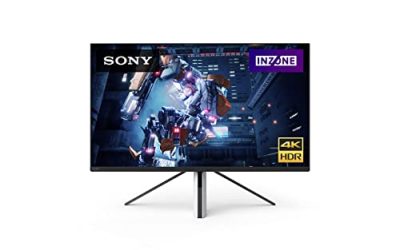
Sony INZONE M9
- Best for: PS5 owners who want a screen that works with the console with no setup fuss.
- 27-inch 4K IPS panel
- 144Hz refresh rate
- 1ms GtG response time
- HDMI 2.1 ports
PS5 owners who want a screen that works with the console with no setup fuss.
A newer INZONE model is replacing this one, so check the listing before ordering.
The Sony INZONE M9 feels made for the PS5, with auto picture modes that switch the screen settings when the console powers on. Its 27-inch 4K IPS panel pairs a 144Hz refresh rate with full-array local dimming, which lifts HDR highlights without washing out the rest of the image. Two HDMI 2.1 ports cover the console and a second device, and the built-in speakers are usable for casual play. The design is clean and compact, fitting a living-room shelf or a tidy desk equally well. It also pairs well with a soundbar.
Watch out for: A newer INZONE model is replacing this one, so check the listing before ordering.
Samsung Odyssey OLED G7
- Best for: Dark-room gaming and cinematic single-player titles where contrast matters most.
- 32-inch 4K QD-OLED panel
- 165Hz refresh rate
- 0.03ms response time
- HDMI 2.1 ports
Dark-room gaming and cinematic single-player titles where contrast matters most.
The 32-inch size needs a deep desk, and the panel costs more than IPS rivals.
The Samsung Odyssey OLED G7 is the pick for players who want the most dramatic picture in the group. Its 32-inch QD-OLED panel produces true blacks that make night scenes and space games look genuinely dark, while the 165Hz refresh rate and near-instant pixel response keep fast motion free of smearing. HDMI 2.1 support covers the console’s 120Hz modes, and the large screen suits a deeper desk or a lean-back setup. It costs more than the IPS options here, yet the image quality gap is visible the moment a dark game loads.
Watch out for: The 32-inch size needs a deep desk, and the panel costs more than IPS rivals.
Which One Fits Your Situation
For Competitive Multiplayer
If ranked matches and fast shooters fill your evenings, the Gigabyte M28U is the natural choice. Its 144Hz panel and HDMI 2.1 ports keep the PS5 running at its smoothest, and the 28-inch size keeps the whole screen inside your field of view. The KVM switch is a bonus when a laptop shares the desk, and the IPS panel holds colour steady during long sessions. High refresh rates also steady the picture when frame rates dip.
For Story-Driven Single-Player Games
Players who spend their time in open worlds and narrative adventures should look at the LG UltraGear 27GP950-B or the Sony INZONE M9. The LG panel renders wide colour that makes landscapes and character models look rich, while the Sony screen adds local dimming that gives HDR scenes more depth. Either one makes a slow evening of exploration feel more immersive.
For a Desk That Also Hosts a PC
A shared desk rewards the Gigabyte M28U and the LG UltraGear 27GP950-B, because both carry DisplayPort alongside HDMI 2.1 and handle high refresh rates from a graphics card. The M28U adds a KVM switch for one keyboard and mouse across two machines, while the LG stand adjusts further for long work days. Both switch between console and PC without cable swapping.
For a Dark Room and Movie Nights
The Samsung Odyssey OLED G7 owns the dark-room use case. Its QD-OLED panel shows true black where IPS screens show grey, so horror games and night scenes carry real tension. The 32-inch size also suits streaming and films from a chair set back from the desk, turning one screen into both a gaming monitor and a small home cinema.
Common Mistakes
- Buying a 4K monitor with only HDMI 2.0 and losing the PS5 120Hz modes.
- Choosing a 32-inch screen for a shallow desk where it sits too close to your eyes.
- Trusting an HDR label without checking brightness and local dimming.
- Ignoring the stand, then discovering the screen cannot reach a comfortable height.
- Skipping the audio plan and relying on thin built-in speakers for every session.
Frequently Asked Questions
Does the PS5 need HDMI 2.1 on a monitor?
Yes, for 4K at 120Hz the monitor needs an HDMI 2.1 port, because older HDMI 2.0 tops out at 4K and 60Hz. A screen without it still shows a sharp 4K picture, yet the console cannot use its 120Hz modes. If you play fast-paced games, confirm the HDMI version on the listing before buying. Variable refresh rate support helps too.
Is a 27-inch or 32-inch monitor better for PS5?
A 27-inch or 28-inch screen suits a standard desk, keeping 4K pixels dense and the whole picture inside your view. A 32-inch panel works better on a deep desk or when you sit further back, and it suits movie watching. Measure your desk depth first, since a large screen placed too close causes eye strain.
Do I need a 144Hz monitor if the PS5 tops out at 120Hz?
No, a 120Hz panel covers everything the console can output. A 144Hz or 165Hz screen adds value only when the same monitor also serves a PC, where higher frame rates are common. For console-only play, spend the difference on panel quality or HDR instead of extra refresh rate.
Can one monitor serve both a PS5 and a PC?
Yes, and most 4K gaming monitors are built for exactly that. Look for HDMI 2.1 for the console and DisplayPort for the PC, plus a USB hub or KVM switch to share a keyboard and mouse. Switching inputs takes a button press, so both machines can stay connected permanently.
FAQ
Does the PS5 need HDMI 2.1 on a monitor?
Is a 27-inch or 32-inch monitor better for PS5?
Do I need a 144Hz monitor if the PS5 tops out at 120Hz?
Can one monitor serve both a PS5 and a PC?
More from Amazon
Programs that pair well with the guide above. Offers and eligibility are set by Amazon and may change.
Free shipping on eligible items, Prime Video and more. Eligible new members can start with a free trial.
Start a Prime free trialA Prime membership for ages 18-24 with a trial period. Eligibility is set by Amazon.
See Prime for Young AdultsAudiobooks and podcasts to listen to on the go. Eligible new members can start with a free trial.
Try Audible freeAd-free music streaming. Eligible new subscribers can start with a free trial.
Try Music Unlimited freeAs an Amazon Associate we earn from qualifying purchases.