Our Short List of 3

- Best for: Players who want a simple, driverless wired mouse with a proven shape and no software to manage.

- Best for: Players who want the highest polling rate here and an ambidextrous wired mouse with buttons on both sides.

- Best for: Players who want a wireless mouse with an ergonomic shape and the option to add weight.
All 3 Picks at a Glance
| Product | Specs | Action |
|---|---|---|
| BenQ Zowie EC2-C |
| Check price on Amazon |
| Razer Viper 8KHz ESL Edition |
| Check price on Amazon |
| Logitech G703 HERO |
| Check price on Amazon |
Key takeaways
- Find the best gaming mouse for FPS games with precise tracking and fast clicks. Compare four esports picks by sensor, weight, shape and polling rate.
First-person shooters live and die on aim. A flick to a peeking enemy, a track on a strafing target, a micro-adjustment before a headshot: all of these depend on a mouse that reports exactly what your hand does, with no delay and no surprise. The best gaming mouse for FPS games pairs a clean, accurate sensor with a light shell, a shape that fits your grip, and a connection fast enough that you never think about it. This guide compares four mice built for that job, from a driverless wired classic to two wireless flagships and a high-polling ambidextrous pick.
At a Glance
| Product | Best for | Key specification |
|---|---|---|
| BenQ Zowie EC2-C | Driverless wired classic | 73 g, 3360 sensor, up to 3,200 DPI |
| Razer Viper 8KHz ESL Edition | Highest polling rate | 71 g, Focus+ 20K sensor, 8,000 Hz polling |
| Logitech G703 HERO | Wireless with weight tuning | HERO 25K sensor, up to 25,600 DPI, 95 g plus 10 g weight |
| SteelSeries Aerox 3 Wireless | Light wireless with long battery | 66 g, TrueMove Air sensor, up to 18,000 CPI |
How to Choose
Sensor accuracy
In an FPS, the sensor is the most important part of the mouse. A good sensor tracks without smoothing, angle snapping or acceleration, so the crosshair follows your hand exactly. Look for a sensor with a high tracking speed, measured in inches per second, and a high maximum sensitivity. The headline sensitivity number matters less than clean tracking at the sensitivity you actually use, which for most FPS players sits between 400 and 1,600 DPI.
Polling rate
Polling rate is how often the mouse reports its position. At 1,000 Hz, the mouse reports once every millisecond, which has been the competitive standard for years. At 8,000 Hz, it reports eight times as often, which can make tracking feel smoother and reduce the time between your hand moving and the cursor moving. The difference is subtle, and a higher rate uses more power on a wireless mouse, but it is a real advantage for players chasing the lowest possible input latency.
Weight
Light mice change direction faster and cause less fatigue during long sessions. Most competitive FPS players use mice between 50 and 80 grams. A heavier mouse can feel more planted and steady, especially for players who aim with the whole arm, but the trend in esports is firmly toward lighter shells. If you play low sensitivity with big arm movements, weight matters even more.
Shape and grip style
Shape decides comfort and control more than any spec. Right-handed ergonomic shells support the palm and suit players who rest their hand on the mouse. Symmetrical shells suit claw and fingertip grips and work for either hand. Before you buy, think about how you hold the mouse: palm players need height and length, claw players need a defined hump, and fingertip players need a light, compact shell.
Wired or wireless
Wired mice never need charging and have no wireless signal to manage, which some players still prefer for peace of mind. Modern wireless gaming mice use a dedicated 2.4 GHz link with latency that matches a wired connection, so the choice is now about habit and convenience rather than performance. If you go wireless, check battery life and whether the mouse charges over USB-C.
Click feel and switches
FPS games reward fast, consistent clicks. Optical switches actuate with light and register the click without a mechanical debounce delay. Mechanical switches give a more traditional tactile click. Either can work well; the important thing is that the click feels the same every time and does not double-click or miss inputs.
Cable quality
On a wired mouse, the cable is part of the feel. A stiff cable drags against the desk and pulls at the mouse during wide swipes. A flexible paracord-style cable stays out of the way and feels closer to wireless. If you use a wired mouse, give the cable room to move and consider a cable holder.
Buttons and scroll wheel
Two side buttons cover most FPS needs, such as melee or a push-to-talk key. A scroll wheel with a clear, defined step helps with weapon swaps, and a wheel that is too loose can skip past the weapon you wanted. Extra buttons are useful only if you can reach them without shifting your grip.
BenQ Zowie EC2-C
- Best for: Players who want a simple, driverless wired mouse with a proven shape and no software to manage.
Players who want a simple, driverless wired mouse with a proven shape and no software to manage.
The BenQ Zowie EC2-C is the wired classic in this guide, and it earns its place by doing less. There is no software to install and no driver to configure; you plug the mouse in and it works, with DPI and polling rate set from buttons on the underside. The 3360 sensor tracks up to 3,200 DPI with clean, unfiltered tracking, and the mouse weighs 73 grams with a flexible paracord cable that stays out of the way during wide swipes.
The EC2-C is a medium, right-handed ergonomic shell with a raised back that fills the palm, which suits palm and claw grips. The 24-step scroll wheel gives a clear, defined click for each weapon swap, and the mouse runs at 1,000 Hz polling. The shell has a smooth matte coating that stays grippy, and the mouse carries five buttons: two main clicks, a wheel click and two side buttons.
Considerations: The maximum sensitivity of 3,200 DPI is lower than the flagship sensors here, though it is more than enough for the low sensitivities most FPS players use. The mouse has no RGB lighting and no wireless option, and the side buttons are fixed on the left side only.
Razer Viper 8KHz ESL Edition
- Best for: Players who want the highest polling rate here and an ambidextrous wired mouse with buttons on both sides.
Players who want the highest polling rate here and an ambidextrous wired mouse with buttons on both sides.
The Razer Viper 8KHz ESL Edition is the high-polling pick in this guide. Its Focus+ 20K optical sensor tracks up to 20,000 DPI, and the mouse reports its position at 8,000 Hz, eight times the standard rate. That high rate reduces the delay between your hand moving and the cursor moving, which can make tracking a strafing target feel smoother and more connected. At 71 grams, the ambidextrous shell stays light enough for fast flicks.
Gen-2 optical switches actuate with light and register clicks without a debounce delay, and the mouse carries eight programmable buttons, including side buttons on both sides for left-handed players. The Chroma RGB lighting can be set to match a setup or switched off, and the mouse uses a flexible Speedflex cable that reduces drag during wide swipes. On-board memory stores your settings on the mouse.
Considerations: The 8,000 Hz polling rate draws more power and processor time than a standard rate, and the difference is subtle enough that some players will not notice it. The symmetrical shape is less supportive for a full palm grip than the ergonomic mice in this guide.
Logitech G703 HERO
- Best for: Players who want a wireless mouse with an ergonomic shape and the option to add weight.
Players who want a wireless mouse with an ergonomic shape and the option to add weight.
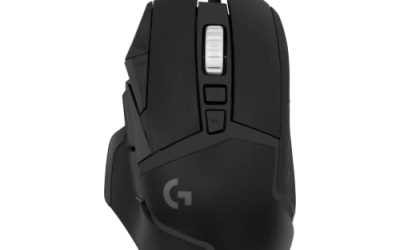
The Logitech G703 HERO is the wireless pick for players who like a little weight. Its HERO 25K sensor tracks from 100 up to 25,600 DPI with no smoothing or acceleration, and LIGHTSPEED wireless keeps latency in line with a wired connection. The mouse weighs 95 grams and ships with a removable 10 gram weight, so you can tune the feel heavier or lighter to taste. Battery life runs up to 35 hours with lighting on, or up to 60 hours with lighting off.
The right-handed ergonomic shell suits palm and claw grips, with a sculpted thumb rest and textured side grips. Six programmable buttons cover the essentials, and the mouse stores settings in on-board memory. The G703 HERO also works with the POWERPLAY wireless charging system, which keeps the mouse charged while you play if you use a compatible pad. The LIGHTSYNC RGB lighting can be set to match a setup or switched off to stretch battery life.
Considerations: At 95 grams before the extra weight, this is the heaviest mouse in this guide, and that weight shows in fast flicks. The battery life is shorter than the other wireless mice here, so players who forget to charge may want a charging pad or a USB-C top-up between sessions.
SteelSeries Aerox 3 Wireless
The SteelSeries Aerox 3 Wireless is the light wireless pick in this guide. At 66 grams, its honeycomb shell keeps the weight down without giving up a full-size shape, and the TrueMove Air sensor tracks up to 18,000 CPI with a top speed of 400 inches per second. The mouse connects over a 2.4 GHz wireless link or Bluetooth, and battery life runs up to 80 hours on the wireless gaming connection, or up to 200 hours over Bluetooth.
The shell is built to IP54 water and dust resistance, which protects the mouse from spills and sweat during long sessions. The mouse has six programmable buttons, a lightweight USB-C charging cable, and a 1,000 Hz polling rate on the gaming connection. The honeycomb design also lets air flow through the shell, which keeps the hand cooler during extended play.
Best for: Players who want a light wireless mouse with very long battery life and spill resistance.
Considerations: The honeycomb shell lets dust in more easily than a solid shell, so it needs occasional cleaning. The TrueMove Air sensor tops out at 18,000 CPI, which is lower than the flagship sensors here, though it is well above what most FPS players use.
Which One Is Right for You?
If you want a simple wired mouse with no software and a shape that competitive players have used for years, the BenQ Zowie EC2-C is the pick. Its driverless setup and paracord cable keep everything out of the way.
If you want the lowest input latency and a wired ambidextrous mouse, the Razer Viper 8KHz ESL Edition is the pick. Its 8,000 Hz polling rate and light shell are built for fast tracking.
If you want a wireless mouse with an ergonomic shape and the option to tune the weight, the Logitech G703 HERO is the pick. Its HERO 25K sensor and LIGHTSPEED connection are proven, and the removable weight lets you dial in the feel.
If you want a light wireless mouse that runs for weeks between charges, the SteelSeries Aerox 3 Wireless is the pick. Its 66 gram shell and long battery life make it easy to live with day to day.
Frequently Asked Questions
What DPI should I use for FPS games?
Most competitive FPS players use a setting between 400 and 1,600 DPI combined with an in-game sensitivity that gives a comfortable turn speed. A common starting point is 800 DPI with an in-game sensitivity that lets you turn 180 degrees with one comfortable arm swipe. Pick a setting you can control and stick with it.
Is 8,000 Hz polling worth it?
It can make tracking feel slightly smoother and reduces the delay between your hand and the cursor, but the difference is subtle. A stable 1,000 Hz connection is enough for almost every player. A higher polling rate matters most to players who already have their aim dialled in and want to remove every last bit of latency.
Does mouse weight really matter?
Yes, especially at low sensitivity. A lighter mouse changes direction with less effort and causes less fatigue over a long session. The difference between 60 and 95 grams is easy to feel in fast flicks. That said, some players aim better with a slightly heavier mouse because it feels more planted, so weight is partly a matter of habit.
Wired or wireless for competitive FPS?
Both work well now. Modern wireless gaming mice match wired latency closely, so the choice comes down to whether you want to manage a battery and a receiver or a cable. Wired mice never need charging; wireless mice never drag a cable. Pick the one that fits how you play.
How important is the scroll wheel in an FPS?
More than most players think. A wheel with a clear, defined step makes weapon swaps reliable, while a loose wheel can skip past the weapon you wanted. If you use the wheel to swap weapons, look for a mouse with a firm, tactile scroll step.
Bottom Line
The best gaming mouse for FPS games is the one that disappears in your hand: a clean sensor, a light shell, a shape that fits your grip, and a connection you never have to think about. The BenQ Zowie EC2-C keeps things simple and driverless. The Razer Viper 8KHz ESL Edition pushes polling to the limit. The Logitech G703 HERO brings wireless freedom with weight tuning. The SteelSeries Aerox 3 Wireless pairs a light shell with a battery that lasts for weeks. Pick the one that matches your grip and your connection preference, then spend your practice time on aim rather than on settings.
Disclosure: As an Amazon Associate, this site earns from qualifying purchases.
FAQ
Which One Is Right for You?
What DPI should I use for FPS games?
Is 8,000 Hz polling worth it?
Does mouse weight really matter?
Wired or wireless for competitive FPS?
How important is the scroll wheel in an FPS?
More from Amazon
Programs that pair well with the guide above. Offers and eligibility are set by Amazon and may change.
Free shipping on eligible items, Prime Video and more. Eligible new members can start with a free trial.
Start a Prime free trialA Prime membership for ages 18-24 with a trial period. Eligibility is set by Amazon.
See Prime for Young AdultsAudiobooks and podcasts to listen to on the go. Eligible new members can start with a free trial.
Try Audible freeAd-free music streaming. Eligible new subscribers can start with a free trial.
Try Music Unlimited freeAs an Amazon Associate we earn from qualifying purchases.