
Key takeaways
- Searching for the best smartphones for photography? Compare 3 camera phones with pro lenses, big sensors and smart editing for stunning shots in any light.
The best camera is the one you carry, and for most people that is now a phone. Modern camera phones pack large sensors, optical zoom, and software that cleans up a shot before you even see it, so the gap between a phone and a dedicated camera has narrowed to the point where the phone wins for everyday shooting. The trick is picking the phone whose camera strengths match the photos you actually take, rather than the one with the biggest number on the box. Sensor size, zoom range, and software matter far more than the headline megapixel count, and this guide explains how to weigh each one.

This guide compares three camera phones chosen from the sensor sizes, lens setups, and zoom ranges printed on their Amazon pages. One leads on zoom, one on computational photography, and one on value, so whether you shoot portraits, landscapes, or family moments, the right pick is in this short list. All three are still sold new on Amazon US.
Quick Picks
As an Amazon Associate we earn from qualifying purchases
| Product | Best for | Key spec from title |
|---|---|---|
| Google Pixel 8 Pro | Computational photos | 50MP triple camera, 5x zoom |
| Samsung Galaxy S24 Ultra | Long zoom | 200MP camera, 100x Space Zoom |
| Google Pixel 8 | Everyday value | 50MP camera, Tensor G3 |
How to Choose
Main Sensor and Megapixels
Megapixels alone do not make a good photo, but the sensor behind them does. A larger main sensor gathers more light, which means cleaner images in dim rooms and less noise when you crop. A 50MP main sensor gives you room to crop a landscape or straighten a tilted horizon without losing detail, while a 200MP sensor adds even more cropping headroom at the cost of larger files. Read the listing for the sensor size and the main lens aperture rather than the headline megapixel count, since a wide aperture lets in more light than a small sensor with more pixels ever will. A wide aperture also blurs backgrounds gently for portraits, which flatters faces.
Zoom and Telephoto Lenses
Optical zoom is the feature that separates a camera phone from a phone with a camera. A dedicated telephoto lens at 5x magnification captures a distant subject with real detail, while digital zoom simply crops the main sensor and enlarges what is left. Check whether the listing names a separate telephoto lens and its optical magnification, and be wary of zoom figures that blend optical and digital ranges into one impressive number. For portraits, a 3x or 5x telephoto also flattens faces more naturally than the wide main lens. Portraits benefit too, as do distant subjects. A phone with only digital zoom crops the main sensor, so distant subjects turn soft and noisy.
Low Light and Night Mode
Most memorable photos happen after sunset, so low-light performance matters more than daylight sharpness. A large sensor, a wide aperture, and a night mode that stacks several exposures together decide whether an evening shot looks clean or grainy. Stabilisation matters most at night, when exposures run longer. A phone that holds a longer exposure without blur captures far more detail after sunset. Look for a night mode in the listing’s camera features and check the main lens aperture figure, since a wider aperture gathers more light in every frame. Optical image stabilisation helps too, because it lets the phone hold a longer exposure without your hands blurring the shot.
Editing and Software
The software behind the camera shapes the final photo as much as the hardware does. Computational photography stacks frames, removes noise, and balances highlights automatically, which is why two phones with similar sensors can produce very different images. Look for editing tools on the listing, such as magic eraser features, portrait lighting, and RAW capture for manual editing later. Cloud backup also matters, since edited files take up real space. Check whether the editing app is free or needs a subscription, since some features hide behind a paywall. A phone that shoots RAW gives you a file you can adjust in an editor without the baked-in processing of a standard JPEG.
The 3 Best Options
Google Pixel 8 Pro
The Google Pixel 8 Pro is the computational photography pick, with a 50MP main camera, a 48MP ultrawide, and a 48MP telephoto that reaches 5x optical zoom and 30x Super Res Zoom. Its Tensor G3 chip powers the software features that define the Pixel line, from night sight to magic eraser, and the 6.7-inch Super Actua display shows your shots in bright, accurate color. A 5050mAh battery keeps the camera running through a long day of shooting, and the 24-hour battery claim means you rarely think about charging mid-shoot at all. Night Sight comes built in. The Super Actua display stays readable in bright sunlight, which helps when shooting outdoors.
Specs
- 6.7-inch Super Actua OLED display, 120 Hz
- Tensor G3 processor, 12GB RAM
- 50MP main, 48MP ultrawide, 48MP telephoto
- 5x optical zoom, 30x Super Res Zoom
- 5050mAh battery, 24-hour battery life
- 128GB storage, Bay finish
- Night Sight and Magic Eraser included
Best for: Photographers who want the smartest software and the cleanest night shots in any light.
Watch out for: The 128GB storage fills quickly with large photo files, so plan for cloud backup before you travel.
ASIN: B0CGT9MH6F
Samsung Galaxy S24 Ultra
The Samsung Galaxy S24 Ultra is the zoom pick, built around a 200MP main camera and a quad-lens system that reaches 100x Space Zoom. Its 50MP telephoto handles 5x optical zoom for portraits and distant subjects, while the 12MP ultrawide covers landscapes and the 10MP 3x telephoto fills the gap between them. The 6.8-inch QHD+ Dynamic AMOLED display renders photos with vivid color, and the S Pen lets you annotate or sketch on a shot without opening another app. It is the most versatile camera system in this group by far. The 200MP sensor crops well too. The S Pen lets you annotate a photo without another app.
Specs
- 6.8-inch QHD+ Dynamic AMOLED 2X display, 120 Hz
- 200MP main camera, 50MP 5x telephoto, 12MP ultrawide, 10MP 3x telephoto
- 100x Space Zoom
- S Pen included
- Snapdragon 8 Gen 3 processor
- 5000mAh battery, 512GB storage
- 120 Hz adaptive refresh rate
Best for: Shooters who want the longest zoom and the most flexible lens set for any subject.
Watch out for: Many S24 Ultra listings are Renewed, so confirm this listing is the new US version, not a Renewed one, before ordering.
ASIN: B0FB9MDSZY
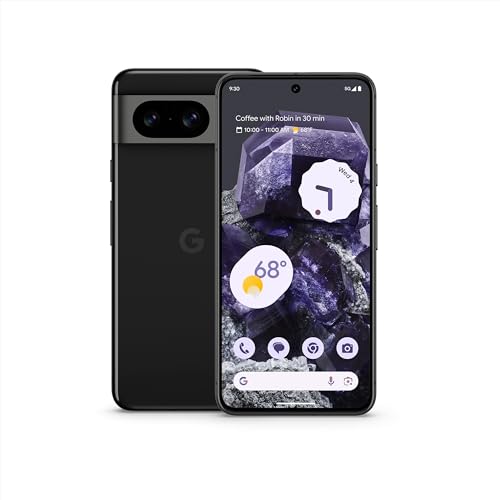
Google Pixel 8
The Google Pixel 8 is the value pick, with the same 50MP main camera approach as its Pro sibling in a smaller, lighter body. Its 6.2-inch Actua OLED display refreshes at 120 Hz, the Tensor G3 chip runs the same computational photography features, and the 12MP ultrawide handles landscapes and group shots. A 4575mAh battery with 24-hour battery life covers a full day of shooting, and the compact size fits a pocket or a small bag more easily than the larger flagships in this group today. It is the easiest phone here to carry everywhere. It is the phone to carry when you want flagship images without flagship bulk.
Specs
- 6.2-inch Actua OLED display, 120 Hz
- Tensor G3 processor
- 50MP main camera, 12MP ultrawide
- 4575mAh battery, 24-hour battery life
- 128GB storage, Obsidian finish
- Unlocked for all carriers
- Night Sight and Magic Eraser included
Best for: Everyday photographers who want Pixel camera quality in a smaller phone that fits any pocket.
Watch out for: There is no dedicated telephoto lens, so distant subjects rely on digital zoom alone.
ASIN: B0CGTD5KVT
Which One Fits Your Situation
Everyday Photographers
Everyday photographers should pick the Google Pixel 8, because it delivers the Pixel camera experience in the smallest and most affordable package here. The 50MP main camera handles family photos, food, and street scenes with minimal effort, and the Tensor G3 software cleans up the shots automatically. Its compact size means you actually carry it everywhere, which matters more than any spec sheet when a moment appears without warning. It is always with you, ready to shoot.
Zoom Lovers
Zoom lovers need the Samsung Galaxy S24 Ultra, whose 100x Space Zoom and 5x optical telephoto reach subjects the other two phones simply cannot. A distant landmark, a player on a field, or a bird on a wire all become usable photos instead of tiny specks. The 200MP main sensor also gives you room to crop a zoomed shot and still keep enough detail to share, which is where a high megapixel count finally earns its keep today.
Portrait Shooters
Portrait shooters should choose the Pixel 8 Pro, whose 5x telephoto lens flatters faces by compressing features gently, and whose portrait mode separates the subject from the background with convincing blur. The larger sensor and Tensor G3 processing keep skin tones natural rather than over-smoothed, and the 6.7-inch display makes it easy to check a portrait quickly on the spot. For people photos, the Pro’s lens set and software work together better than raw zoom range alone can.
Budget-Conscious Buyers
Budget-conscious buyers get the most from the Pixel 8, which costs less than the flagships while keeping the camera features that matter: the 50MP main sensor, night sight, and magic eraser. You give up the telephoto lens and the largest battery, but for everyday shooting those trade-offs rarely show. The savings buy accessories instead. Spend the savings on a small tripod or a cloud storage plan, and the whole photography setup improves more than a pricier phone would.
Common Mistakes
- Choosing a phone by megapixels alone while ignoring sensor size, aperture, and low-light performance in real use.
- Trusting a big zoom number that blends optical and digital zoom into one figure on the box without checking the details.
- Forgetting that 128GB fills fast when every photo is a large file and video is larger still over time.
- Skipping RAW capture and losing the ability to fix exposure later in an editor after the shot.
- Buying a phone with a great camera but a battery that dies before the day ends on a long shoot away from power.
Frequently Asked Questions
Do more megapixels mean better photos?
Not on their own. Megapixels decide how large you can print or crop an image, but sensor size, lens quality, and software decide how clean that image looks. A 50MP photo from a large sensor beats a 200MP photo from a tiny one in low light. Treat megapixels as a cropping tool, not a quality score. Sensor size is the number that matters most.
Can a phone replace a dedicated camera?
For everyday shooting it already has, because the phone is always with you and its software fixes most mistakes automatically. A dedicated camera still wins for fast action, extreme zoom, and large prints, where a bigger sensor and a real lens matter for specialist work. Most people find the phone covers family photos, travel, and social sharing completely. Specialist work needs a camera.
What is RAW capture and should I use it?
RAW capture saves the unprocessed sensor data instead of a finished JPEG, which gives you far more room to adjust exposure, white balance, and shadows in an editor. RAW suits photos you plan to work on rather than quick snapshots. If you enjoy editing, turn RAW on for important shots and leave it off for the rest. RAW files take space.
How important is optical zoom for photography?
Optical zoom matters whenever your subject is far away, because it uses a real lens to magnify the scene without losing detail. Digital zoom only crops the image and enlarges what remains, which quickly turns a photo soft and noisy. A 3x or 5x optical telephoto is the single most useful extra lens on a camera phone, especially for portraits and travel today.
FAQ
Do more megapixels mean better photos?
Can a phone replace a dedicated camera?
What is RAW capture and should I use it?
How important is optical zoom for photography?
More from Amazon
Programs that pair well with the guide above. Offers and eligibility are set by Amazon and may change.
Free shipping on eligible items, Prime Video and more. Eligible new members can start with a free trial.
Start a Prime free trialA Prime membership for ages 18-24 with a trial period. Eligibility is set by Amazon.
See Prime for Young AdultsAudiobooks and podcasts to listen to on the go. Eligible new members can start with a free trial.
Try Audible freeAd-free music streaming. Eligible new subscribers can start with a free trial.
Try Music Unlimited freeAs an Amazon Associate we earn from qualifying purchases.









