Our Short List of 3
- Display: 6.3-inch Super Retina XDR OLED, adaptive refresh up to 120Hz
- Chip: Apple A19 Pro with vapor chamber cooling
- Cameras: 48MP main, 48MP ultra wide, 48MP telephoto with 4x optical zoom, 18MP front
- Build: aluminum unibody, Ceramic Shield 2 front, IP68 sealing

- Display: 6.9-inch QHD+ Dynamic AMOLED 2X, adaptive refresh from 1Hz to 120Hz
- Chip: Snapdragon 8 Elite for Galaxy
- Cameras: 200MP main, 50MP ultra wide, 50MP telephoto with 5x optical zoom, 10MP telephoto with 3x optical zoom, 12MP front
- Build: titanium frame, Gorilla Armor 2 front glass, IP68 sealing, built-in S Pen

- Display: 6.8-inch Super Actua LTPO OLED, adaptive refresh from 1Hz to 120Hz
- Chip: Google Tensor G5
- Cameras: 50MP main, 48MP ultra wide, 48MP telephoto with 5x optical zoom, 42MP front
- Build: polished aluminum frame, Gorilla Glass Victus 2, IP68 sealing
All 5 Picks at a Glance
| Product | Specs | Action |
|---|---|---|
| Apple iPhone 17 Pro |
| Check price on Amazon |
| Samsung Galaxy S25 Ultra |
| Check price on Amazon |
| Google Pixel 10 Pro XL |
| Check price on Amazon |
 Samsung Galaxy Z Fold 7 |
| Check price on Amazon |
 OnePlus 13 |
| Check price on Amazon |
Key takeaways
- Compare the best quality smartphones with premium builds, bright displays, pro cameras and long update support from Apple, Samsung, Google and OnePlus.
Quality in a smartphone shows up in the things that still feel right two or three years after purchase: a frame that resists flex and scratches, a display that stays readable in harsh sunlight, cameras that handle low light without falling apart, and software support that keeps the phone secure long after cheaper models are abandoned. The premium tier is where manufacturers spend on titanium, hardened glass, polished aluminum and their most capable camera hardware, and it is also where update pledges run longest.
This guide rounds up five flagship phones that earn their place on build and engineering rather than on gimmicks. Each pick pairs top-shelf materials with a leading display, a serious camera system and a multi-year update commitment, and each one covers a different strength: the most refined all-rounder, the most complete Android hardware, the smartest camera software, a folding design with genuine craftsmanship behind it, and the fastest charging in the class. Every model below is a current unlocked US listing on Amazon.
As an Amazon Associate, we earn from qualifying purchases.
Quick answer
The Apple iPhone 17 Pro is the pick for most buyers, pairing an aluminum unibody, a bright 120Hz display and three 48MP cameras with years of iOS updates. The Galaxy S25 Ultra counters with a titanium frame and S Pen, the Pixel 10 Pro XL leads on AI photography, the Galaxy Z Fold 7 folds open into a tablet, and the OnePlus 13 charges faster than any rival.
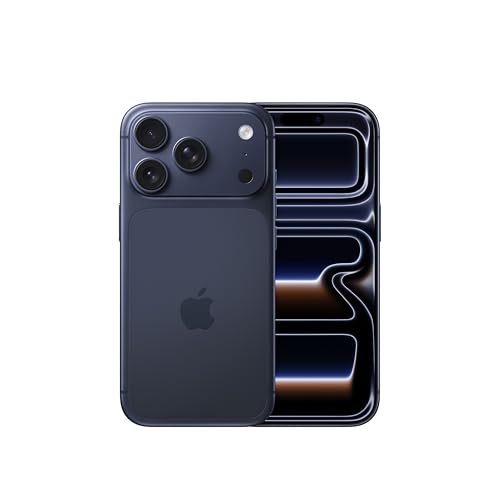
Apple iPhone 17 Pro
- Display: 6.3-inch Super Retina XDR OLED, adaptive refresh up to 120Hz
- Chip: Apple A19 Pro with vapor chamber cooling
- Cameras: 48MP main, 48MP ultra wide, 48MP telephoto with 4x optical zoom, 18MP front
- Build: aluminum unibody, Ceramic Shield 2 front, IP68 sealing
The iPhone 17 Pro is the benchmark for fit and finish in this group. Apple machines the body from a single piece of aluminum, adds a vapor chamber to keep the A19 Pro chip cool under sustained load, and protects the front with Ceramic Shield 2, which Apple rates as its toughest smartphone glass yet. The back panel uses Ceramic Shield as well, a step up in durability from the glass backs of earlier generations.
The 6.3-inch Super Retina XDR display runs an adaptive refresh rate up to 120Hz and reaches very high peak brightness outdoors, which keeps maps and photos legible in direct sun. All three rear cameras are 48MP units, including a telephoto with 4x optical zoom, and the front camera is an 18MP Center Stage unit that reframes group selfies automatically. Video remains an Apple strength, with ProRes recording and strong stabilization.
Longevity is the quiet advantage. Apple supports its phones with iOS updates for many years, the battery is rated for a high cycle count, and the IP68 sealing covers immersion in fresh water. The listing covered here is the unlocked US version in Deep Blue with 256GB of storage, model MG7M4LL/A.
Key specs
Samsung Galaxy S25 Ultra
- Display: 6.9-inch QHD+ Dynamic AMOLED 2X, adaptive refresh from 1Hz to 120Hz
- Chip: Snapdragon 8 Elite for Galaxy
- Cameras: 200MP main, 50MP ultra wide, 50MP telephoto with 5x optical zoom, 10MP telephoto with 3x optical zoom, 12MP front
- Build: titanium frame, Gorilla Armor 2 front glass, IP68 sealing, built-in S Pen
The Galaxy S25 Ultra is the most complete piece of Android hardware in this roundup. Its frame is titanium, the front glass is Corning Gorilla Armor 2 with an anti-reflective finish that genuinely cuts glare, and the built-in S Pen still sets it apart from every other slab phone. Samsung rates the body IP68, and the fit of the panels and buttons reflects flagship-grade assembly.
The 6.9-inch Dynamic AMOLED 2X panel pairs a QHD+ resolution with an adaptive refresh rate that scales from 1Hz to 120Hz, saving power on static content and staying fluid in games. The camera system is the most versatile here: a 200MP main sensor, a 50MP ultra wide, a 50MP periscope telephoto with 5x optical zoom and a 10MP telephoto with 3x optical zoom. Few phones cover as many focal lengths with this level of hardware.
Samsung backs the S25 series with seven years of Android upgrades and seven years of security patches, matching the longest commitments in the industry. The 5,000 mAh battery, Snapdragon 8 Elite for Galaxy processor and 12GB of memory round out a phone built to stay fast for the long haul. The listing covered here is the unlocked US model in Titanium Gray with 256GB of storage and a US warranty.
Key specs
Google Pixel 10 Pro XL
- Display: 6.8-inch Super Actua LTPO OLED, adaptive refresh from 1Hz to 120Hz
- Chip: Google Tensor G5
- Cameras: 50MP main, 48MP ultra wide, 48MP telephoto with 5x optical zoom, 42MP front
- Build: polished aluminum frame, Gorilla Glass Victus 2, IP68 sealing
The Pixel 10 Pro XL makes its quality case through a mix of polished hardware and the most thoughtful camera software in the group. The polished aluminum frame and Gorilla Glass Victus 2 panels give it a dense, well-finished feel, and Google seals the body to IP68. It is the largest Pixel in the current line, built around a 6.8-inch Super Actua display.
That display is an LTPO OLED with an adaptive refresh rate from 1Hz to 120Hz and peak brightness rated up to 3,300 nits, among the brightest panels fitted to any phone. The Tensor G5 chip drives a camera system built on a 50MP main sensor, a 48MP ultra wide and a 48MP telephoto with 5x optical zoom, plus a 42MP front camera. Computational features such as Night Sight and Pro Res Zoom do the heavy lifting in difficult light, and the hardware gives them clean data to work with.
Google promises seven years of OS, security and feature updates for the Pixel 10 series, which keeps this phone current longer than most rivals. The 5,200 mAh battery supports fast wired charging and magnetic Qi2 wireless charging through the Pixelsnap system. The listing covered here is the unlocked model in Obsidian with 256GB of storage.
Key specs
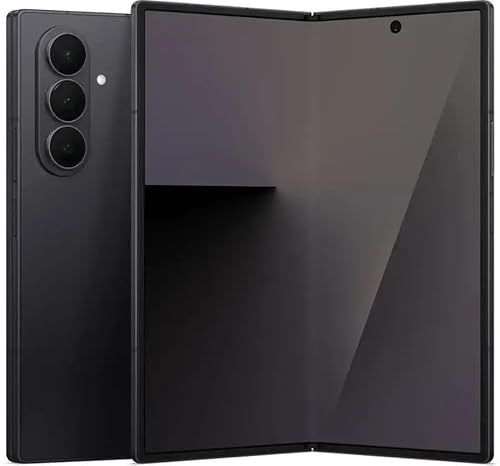
Samsung Galaxy Z Fold 7
- Display: 8.0-inch foldable Dynamic AMOLED 2X main display, 6.5-inch cover display, adaptive refresh up to 120Hz
- Chip: Snapdragon 8 Elite for Galaxy
- Cameras: 200MP main, 12MP ultra wide, 10MP telephoto with 3x optical zoom
- Build: Armor Aluminum frame, Gorilla Glass Ceramic 2 cover glass, IP48 sealing, 215 g
The Galaxy Z Fold 7 is the craftsmanship pick. Folding phones live or die by hinge engineering and panel durability, and this generation is the thinnest and lightest book-style foldable Samsung has produced, at 215 grams with a folded thickness under nine millimetres. The frame uses advanced Armor Aluminum, the cover display is protected by Corning Gorilla Glass Ceramic 2, and the whole device carries an IP48 rating, a meaningful step for a folding handset.
Unfolded, the 8.0-inch main display gives you a small tablet for reading, split-screen work and photo editing, while the 6.5-inch cover display is wide enough to use one-handed without feeling like a compromise. Both panels are Dynamic AMOLED 2X units with adaptive refresh up to 120Hz. Camera hardware steps up to a 200MP main sensor this generation, supported by a 12MP ultra wide and a 10MP telephoto with 3x optical zoom.
Performance comes from the Snapdragon 8 Elite for Galaxy with 12GB of memory, and Samsung applies the same seven-year update commitment as its slab flagships. The 4,400 mAh battery is the smallest in this group, the honest trade-off of the folding format. The listing covered here is the unlocked US model in JetBlack with 512GB of storage and a US warranty.
Key specs
OnePlus 13
- Display: 6.82-inch LTPO AMOLED, QHD+ resolution, adaptive refresh up to 120Hz
- Chip: Snapdragon 8 Elite
- Cameras: 50MP main with optical stabilization, 50MP ultra wide, 50MP periscope telephoto with 3x optical zoom
- Build: metal frame, Ceramic Guard front glass, IP68 and IP69 ratings
The OnePlus 13 delivers flagship hardware with an emphasis on speed: the fastest charging here, a large silicon-carbon battery and a bright, high-resolution display. Build quality is a genuine step up for the brand, with IP68 and IP69 ratings that cover high-pressure water exposure as well as immersion, plus a Ceramic Guard front glass on a metal frame. The Midnight Ocean finish uses a microfibre vegan leather back that resists fingerprints and adds grip.
The 6.82-inch LTPO AMOLED display runs at a QHD+ resolution with an adaptive 120Hz refresh rate. The Hasselblad co-developed camera system uses three 50MP sensors: a main camera with optical stabilization, an ultra wide, and a periscope telephoto with 3x optical zoom. Keeping the same resolution across all three lenses means zooming and cropping stay consistent in a way mixed-resolution systems cannot match.
The 6,000 mAh battery is the largest in this roundup, and 80W wired charging refills it in a fraction of the time rival flagships need, with 50W wireless charging on top. OnePlus commits to four generations of Android updates and six years of security patches. The listing covered here is the unlocked US model in Midnight Ocean with 512GB of storage and 16GB of RAM.
Key specs
How to choose
Decide which quality signal matters most to you, because each phone in this group leads on a different one. If long software support is the priority, the Samsung and Google flagships carry seven-year update pledges, and Apple has a long record of extended iOS support. If physical durability leads, compare frame materials and glass: titanium on the Galaxy S25 Ultra, Ceramic Shield 2 on the iPhone 17 Pro, and dual IP68 and IP69 ratings on the OnePlus 13.
Display quality splits by use. The Pixel 10 Pro XL and OnePlus 13 push the highest peak brightness figures for outdoor readability, while the Galaxy Z Fold 7 trades a single slab for a tablet-sized inner screen. For cameras, the Galaxy S25 Ultra covers the widest range of focal lengths with dedicated hardware, the Pixel relies on computational processing, and the OnePlus keeps one resolution across all three rear lenses.
Finally, check the practical details before ordering. Confirm the listing is the unlocked US model rather than an international variant, since band support and warranty terms differ. Pick storage with headroom, because none of these phones accepts a memory card. And weigh charging speed against battery size: the OnePlus 13 pairs the biggest battery with the fastest refill, while the folding Z Fold 7 asks for more frequent top-ups in exchange for its format.
Who should skip
Skip this tier entirely if your current phone still receives security updates and handles your daily routine well, because the honest gains here are refinement and longevity rather than new capability. Buyers who mainly message, browse and take casual photos will not feel the difference that titanium frames and periscope zooms make, and a mid-range phone covers that use at a far lower cost of ownership.
Also skip the premium shelf if you are hard on phones and replace them often, since a flagship only pays back its price when kept for years, or if you need a memory card slot or a headphone jack, neither of which appears anywhere in this group. The Galaxy Z Fold 7 in particular is the wrong choice for anyone who works around dust and grit daily, because its IP48 rating is a step below the full immersion sealing of the slab phones here.
Frequently Asked Questions
How long will these phones keep receiving updates?
Samsung and Google both pledge seven years of OS and security updates for the flagships in this guide. Apple does not publish a fixed figure but supports its Pro models with iOS releases for many years. OnePlus commits to four Android generations and six years of security patches for the OnePlus 13.
Does build quality actually differ between flagships and cheaper phones?
Yes, mainly in materials and sealing. These phones use titanium, hardened ceramic-infused glass or polished aluminum frames with IP68 or better sealing, while cheaper models typically use plainer glass and plastic frames with lower water resistance ratings. The difference shows up in scratch resistance, rigidity and how well the phone survives years of daily handling.
Which of these phones has the best camera?
It depends on the kind of photography. The Galaxy S25 Ultra offers the most hardware versatility, with a 200MP main sensor and two dedicated telephoto lenses. The Pixel 10 Pro XL leans on computational processing for low-light and zoom shots. The iPhone 17 Pro is the strongest all-rounder for video, and the OnePlus 13 keeps a consistent 50MP resolution across all three rear lenses.
Are unlocked US models better than international versions on Amazon?
For US buyers, generally yes. Unlocked US models are built for US carrier bands, carry a US manufacturer warranty and avoid the network limitations that affect some international variants, which may miss key 5G bands or CDMA-network compatibility. Always confirm the model and warranty wording on the listing before ordering.
Final verdict
Quality at this level is about how a phone ages, and all five picks are engineered to age well. The iPhone 17 Pro is the safest recommendation for most people: refined materials, three matched cameras, strong video and years of software support in a manageable size. The Galaxy S25 Ultra is the pick for buyers who want the most hardware in one device, the Pixel 10 Pro XL for camera software and display brightness, the Galaxy Z Fold 7 for a folding format executed with real care, and the OnePlus 13 for battery capacity and charging speed that no rival here matches.
Product and ASIN Reference
| Product | ASIN |
|---|---|
| Apple iPhone 17 Pro, 256GB, Deep Blue, Unlocked | B0FQFMB4BG |
| Samsung Galaxy S25 Ultra, 256GB, Titanium Gray, Unlocked (US model) | B0DP3GDTCF |
| Google Pixel 10 Pro XL, 256GB, Obsidian, Unlocked | B0FW4LT2G3 |
| Samsung Galaxy Z Fold 7, 512GB, JetBlack, Unlocked (US model) | B0F7K9LFCL |
| OnePlus 13, 512GB, Midnight Ocean, Unlocked (US model) | B0DP8KZ2WM |
FAQ
How long will these phones keep receiving updates?
Does build quality actually differ between flagships and cheaper phones?
Which of these phones has the best camera?
Are unlocked US models better than international versions on Amazon?
More from Amazon
Programs that pair well with the guide above. Offers and eligibility are set by Amazon and may change.
Free shipping on eligible items, Prime Video and more. Eligible new members can start with a free trial.
Start a Prime free trialA Prime membership for ages 18-24 with a trial period. Eligibility is set by Amazon.
See Prime for Young AdultsAudiobooks and podcasts to listen to on the go. Eligible new members can start with a free trial.
Try Audible freeAd-free music streaming. Eligible new subscribers can start with a free trial.
Try Music Unlimited freeAs an Amazon Associate we earn from qualifying purchases.