Key takeaways
- Compare the best left handed wireless gaming mouse options, from true left-hand shapes to ambidextrous models with swappable thumb buttons today.
Left-handed gamers have always had the smallest shelf in the mouse aisle. Most flagship mice are sculpted for a right hand, with side buttons placed exactly where a left thumb cannot reach them. Flip one into your left hand and your ring finger lands on the buttons, the shape pushes your wrist outward, and long sessions tire your hand for reasons unrelated to the game.
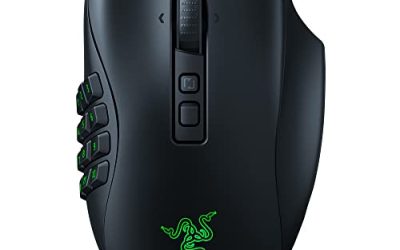
Wireless narrows the search further. The best-known true left-handed mouse from a major brand, the Razer Naga Left-Handed Edition, is wired, so it does not belong here. What remains is one genuinely mirrored left-hand wireless shape from Pulsar, plus symmetrical ambidextrous mice whose side buttons can be moved or swapped to your thumb side. That distinction matters more than any sensor headline.
As an Amazon Associate we earn from qualifying purchases.
Quick Picks
If you want the short version first, these are the five wireless mice that genuinely work in a left hand, and what each one does best.
| Product | ASIN | Best For |
|---|---|---|
| Logitech G PRO 2 LIGHTSPEED | B0CJ4TPLRM | Most left-handed gamers overall |
| Pulsar X3 LHD CrazyLight Mini | B0FQV4HTN2 | True left-hand shape and ultralight FPS play |
| Corsair M75 WIRELESS | B0CTN26P3Z | Swappable buttons plus Bluetooth flexibility |
| Logitech G903 LIGHTSPEED | B07NSVMT22 | Bigger hands and long battery life |
| Logitech G305 LIGHTSPEED | B07CMS5Q6P | Simple, long-running AA battery setup |
How to Choose
Start with the shape question, then work through buttons, weight, and connection, because for a left-handed buyer those choices interact more than they do for right-handers.
True left-hand shape versus ambidextrous shape
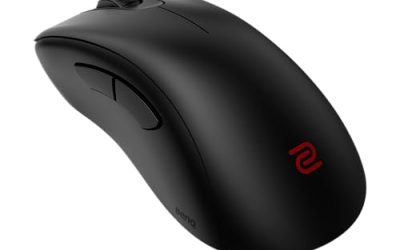
A true left-handed mouse mirrors a right-handed ergonomic mouse: the palm hump leans the other way, and the thumb buttons sit on the right flank, under your left thumb. The Pulsar X3 LHD CrazyLight is built that way. An ambidextrous mouse uses a symmetrical shell instead. Symmetry is safe, but it gives up sculpted palm support, especially for larger palm-grip hands. Decide this first, because no sensor upgrade compensates for a shape your hand dislikes after an hour.
Where the side buttons actually sit
Your left thumb rests against the right side of the mouse, so that is where buttons need to be. The strongest designs let you move them: the G PRO 2 uses magnetic buttons fitted to either flank, both, or removed and covered, the Corsair M75 uses swappable buttons, and the G903 lets you configure buttons on both sides or blank one off. A mouse with buttons fixed on the left flank only, like the G305, still works for aiming and clicking, but treat those buttons as unavailable and judge it on its main clicks and wheel.
Weight and grip style
Very light mice, such as the 43 gram Pulsar, are easy to flick and stop and reduce wrist strain, but can feel less planted for palm grip. Midweight mice around 80 to 89 grams, like the G PRO 2 and M75, balance speed with a grounded feel. Heavier mice above 100 grams, like the G903, suit deliberate movement and a substantial palm fill. Claw and fingertip grips tolerate flatter, lighter shells; palm grip benefits from a higher, longer hump, mirrored for the left hand.
Sensor, DPI, and polling rate in perspective
What matters is clean tracking at the DPI you actually use, commonly in the hundreds to low thousands, without smoothing or acceleration changing your input. Maximum DPI, tracking speed, and acceleration mainly confirm the sensor will not spin out on a fast swipe, and all five picks clear that bar. Polling at 1,000 Hz is the long-standing competitive standard. Higher rates, up to 8,000 Hz on the Pulsar and available on the G PRO 2 through a separate receiver, bring a subtle benefit and usually raise battery drain, so treat them as a bonus, not a deciding factor.
Wireless connection and battery approach
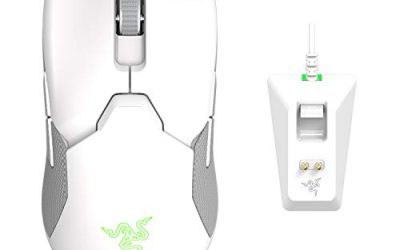
For gaming, use the dedicated 2.4 GHz receiver connection, whether called LIGHTSPEED or SLIPSTREAM: it is the low-latency link designed for play. Bluetooth, offered by the M75, suits a laptop or second computer. Rechargeable mice such as the G PRO 2, G903, M75, and Pulsar plug in over USB and can usually keep playing while charging. The G305 instead uses a single AA battery, removing charging cables but requiring a spare cell.
Switches, buttons, and software
Optical and hybrid switches, used in the Pulsar, Corsair, and G PRO 2, register clicks with light, intended to keep feel consistent over a long rated lifespan; mechanical switches on the G305 and G903 still feel familiar and crisp. Count buttons you will really map: MOBA players may want several thumb buttons, shooter players often prefer two and a clean flank. Logitech uses G HUB, Corsair uses iCUE, and Pulsar leans toward on-device adjustment, so onboard settings deserve credit if you dislike background apps.
Size and hand fit
The G PRO 2, at 125 mm long, and the larger, taller G903 suit medium to large hands. The Pulsar Mini, at 119.6 mm long, suits smaller to medium hands and relaxed claw grip. Measure your hand, note your grip, and compare both against the dimensions below, especially as the range of suitable left-hand mice is already so small.
5 Best Options
Each pick below is a wireless gaming mouse that a left-handed player can genuinely use, listed with the listing specifications that matter and an honest limitation for each.
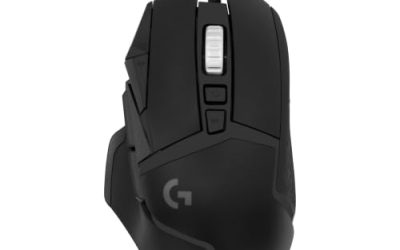
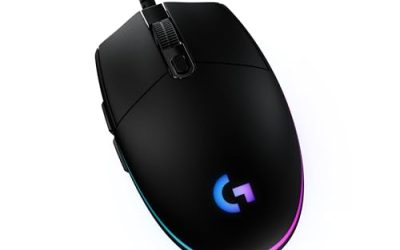
Logitech G PRO 2 LIGHTSPEED

Specs
- Sensor: HERO 2 optical, 100 to 44,000 DPI
- Tracking: over 888 IPS, over 88 G acceleration
- Connectivity: LIGHTSPEED 2.4 GHz wireless, USB-C wired while charging
- Switches: LIGHTFORCE hybrid optical-mechanical
- Buttons: up to 4 removable magnetic side buttons, 4 to 8 programmable in total
- Battery: up to 95 hours with lighting off, around 60 hours with default lighting
- Weight and size: 80 g, 125 x 63.5 x 40 mm
- ASIN: B0CJ4TPLRM
Best for: Most left-handed gamers who want one mouse for shooters, MOBAs, and everyday play. The magnetic side buttons are the real feature: they fit the right flank where a left thumb rests, both sides, or can be removed and covered. With the HERO 2 sensor, hybrid switches, and long battery life, it is the most complete left-handed setup here.
Watch out for: The included receiver reports at 1,000 Hz, and the higher polling path needs a separate receiver, so the fastest advertised configuration is not the out-of-box one. At 80 grams it is also not an ultralight mouse, and full customisation runs through Logitech’s software, which you will need if you change profiles often.
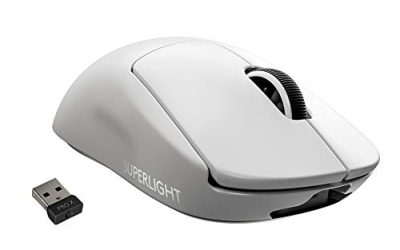
Pulsar X3 LHD CrazyLight Mini

Specs
- Sensor: Pulsar XS-1 flagship optical, 32,000 DPI
- Tracking: 750 IPS, 50 G acceleration
- Polling rate: 1,000 Hz standard, up to 8,000 Hz with the included 8K dongle listed in the specification sheet
- Switches: Pulsar optical switches, rated for 100 million clicks
- Shape: hybrid ergonomic true left-hand shape, for palm and relaxed claw grip
- Weight and size: 43 g with dot skates, 119.6 x 67.1 x 41 mm
- ASIN: B0FQV4HTN2
Best for: Shooter players who want a shell actually moulded for a left hand, not a symmetrical compromise. The hybrid shape blends palm and claw support, thumb buttons sit on the correct flank by design, and at 43 grams it is by far the lightest mouse here, making fast flicks and quick stops feel effortless.
Watch out for: The Mini sizing is real: large hands or a full palm grip may find it too small and low, and a medium version exists in the same family, so check dimensions first. Extreme lightness also feels less planted, and high polling rates shorten time between charges.
Corsair M75 WIRELESS

Specs
- Sensor: CORSAIR MARKSMAN optical, 26,000 DPI
- Tracking: 650 IPS, up to 50 G acceleration
- Connectivity: SLIPSTREAM WIRELESS 2.4 GHz, Bluetooth, and USB wired
- Switches: optical switches, rated for 100 million clicks
- Buttons: swappable side buttons for left- or right-hand use
- Weight: 89 g
- ASIN: B0CTN26P3Z
Best for: Players who split time between a gaming PC and another device, with thumb buttons properly placed. Swappable buttons sit under a left thumb, and three connection modes cover a receiver gaming setup, a Bluetooth laptop, and wired play while charging. The MARKSMAN sensor and optical switches give it proper FPS credentials.
Watch out for: At 89 grams it is the heavier of the two midweight picks here, so ultralight fans should look at the Pulsar or G PRO 2 first. Customisation, lighting, and button remapping run through Corsair’s iCUE software, which is a substantial application to keep around for a mouse alone. The swappable buttons are also small parts, so keep the set you remove somewhere safe.
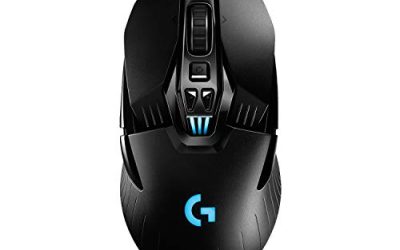
Logitech G903 LIGHTSPEED

Specs
- Sensor: HERO 25K optical, 100 to 25,600 DPI
- Tracking: 400 plus IPS, with zero smoothing, filtering, or acceleration stated in the listing
- Connectivity: LIGHTSPEED 2.4 GHz wireless, POWERPLAY wireless charging compatible
- Buttons: up to 11 programmable, with configurable side buttons for either hand
- Battery: up to 140 hours with lighting on, up to 180 hours with lighting off, per the listing
- Weight: 107 g, with an optional 10 g weight
- ASIN: B07NSVMT22
Best for: Larger hands wanting a substantial mouse and the longest stated battery life here. The shell is bigger and taller than the G PRO 2, side buttons configure for left-hand use or can be covered, and the extra programmable buttons suit players who bind many actions. POWERPLAY compatibility adds a charge-while-you-play route with the matching pad.
Watch out for: At 107 grams, and more with the optional weight, it is far heavier than ultralight designs and may tire shooter players who lift and reset constantly. It is also an older design than the G PRO 2, and small hands or fingertip grips will likely find the tall shell bulky.
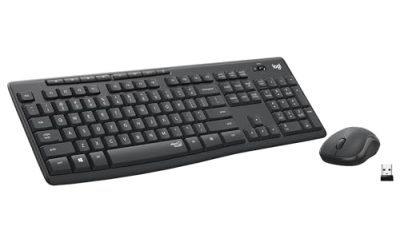
Logitech G305 LIGHTSPEED

Specs
- Sensor: HERO optical, 200 to 12,000 DPI
- Tracking: over 400 IPS, 1 ms report rate over LIGHTSPEED wireless
- Connectivity: LIGHTSPEED 2.4 GHz wireless via USB receiver, stored inside the mouse
- Buttons: 6 programmable buttons, onboard memory for profiles
- Battery: up to 250 hours of continuous play on a single AA battery
- Weight: 99 g with battery fitted
- ASIN: B07CMS5Q6P
Best for: Players who want a simple wireless mouse with no charging routine. The symmetrical shell sits comfortably in a left hand, the HERO sensor tracks cleanly, and a single AA battery lasting up to 250 hours in performance mode means it is always ready, with its receiver stored inside the body.
Watch out for: The side button caveat is decisive here: both buttons are fixed on the left flank, the pinky side for a left-handed grip, so judge this as a main-clicks-and-wheel mouse, not a thumb-button mouse. There is no Bluetooth or rechargeable battery, and its 12,000 DPI ceiling, while ample in practice, is the lowest here.
Which One Fits You
- Competitive shooter player who wants a true left-hand shell: choose the Pulsar X3 LHD CrazyLight Mini, provided your hand suits the Mini size, because it is the only mirrored ergonomic shape here and the lightest by a wide margin.
- All-round left-handed gamer who wants proper thumb buttons: choose the Logitech G PRO 2 LIGHTSPEED, whose magnetic buttons move to your thumb side and whose sensor and battery suit every genre.
- Player switching between a gaming PC and a laptop: choose the Corsair M75 WIRELESS, because its receiver, Bluetooth, and wired modes cover all three situations in one mouse.
- Large-handed player who likes a solid, heavy mouse and many buttons: choose the Logitech G903 LIGHTSPEED, with its bigger shell, configurable buttons on both sides, and the longest stated battery life here.
- Player who hates charging and wants the simplest setup: choose the Logitech G305 LIGHTSPEED, accept that its side buttons are not placed for a left thumb, and enjoy long stretches of play from AA batteries.
Common Mistakes
- Assuming ambidextrous means buttons on both sides. Many symmetrical mice still place their only side buttons on the left flank, which suits a right thumb; always confirm button placement, removability, or swappability before buying for left-hand use.
- Buying a wired left-handed mouse by accident. The best-known true left-handed model names appear in many left-handed roundups without their connection type being clear; if wireless is the requirement, verify the listing says wireless before anything else.
- Choosing on maximum DPI alone. All five sensors here track far beyond typical in-game settings, so shape, button placement, and weight will change your play far more than a higher DPI ceiling will.
- Ignoring size because the shape is finally left-handed. A true left-hand shell in the wrong size is still the wrong mouse; compare length and height with your hand and grip, especially with Mini models.
- Running high polling rates without a battery plan. Pushing toward 8,000 Hz where supported increases how often you will need to charge, so players who value long intervals between charges should stay at standard polling for everyday play.
FAQ
Is a true left-handed mouse better than an ambidextrous one?
It depends on grip and hand size. A true left-handed ergonomic shell, like the Pulsar X3 LHD CrazyLight, offers sculpted palm support and thumb buttons placed by design, while an ambidextrous mouse with movable buttons, like the G PRO 2, offers flexibility and more size options. Neither is automatically better; the one that fits your hand and grip will feel better over a long session.
Can left-handed players use side buttons on ambidextrous mice?
Yes, when the buttons are designed for it. Models with magnetic or swappable side buttons, such as the G PRO 2 and the Corsair M75, let you place buttons under your left thumb or remove the ones you do not want. On a symmetrical mouse with fixed left-flank buttons, those buttons sit under your ring finger or pinky instead, and most left-handed players simply leave them unbound.
Do I need 8,000 Hz polling for competitive play?
No. A stable 1,000 Hz connection has been the competitive standard for years and is what most of these mice provide from their included receiver. Higher polling can reduce the interval between reports, but the practical difference is small for most players, and it typically increases battery drain, so it should not outweigh shape and button fit when choosing.
Why is the Razer Naga Left-Handed Edition not in this guide?
Because this guide is specifically about wireless mice, and the Naga Left-Handed Edition is a wired mouse. It remains a notable option for left-handed MMO players who are happy with a cable and want its large thumb grid, but including it here would break the wireless requirement that defines this shortlist.
Closing
For most left-handed players, the G PRO 2 LIGHTSPEED is the safest recommendation: its buttons move to your thumb, and its shape, battery, and sensor suit most hands and games. If you want a shell actually moulded for your hand, the Pulsar X3 LHD CrazyLight Mini answers that, while the other three solve device switching, a larger heavier fit, or never charging. Start with shape and thumb buttons, and the right choice becomes obvious.
FAQ
Is a true left-handed mouse better than an ambidextrous one?
Can left-handed players use side buttons on ambidextrous mice?
Do I need 8,000 Hz polling for competitive play?
Why is the Razer Naga Left-Handed Edition not in this guide?
More from Amazon
Programs that pair well with the guide above. Offers and eligibility are set by Amazon and may change.
Free shipping on eligible items, Prime Video and more. Eligible new members can start with a free trial.
Start a Prime free trialA Prime membership for ages 18-24 with a trial period. Eligibility is set by Amazon.
See Prime for Young AdultsAudiobooks and podcasts to listen to on the go. Eligible new members can start with a free trial.
Try Audible freeAd-free music streaming. Eligible new subscribers can start with a free trial.
Try Music Unlimited freeAs an Amazon Associate we earn from qualifying purchases.