Our Short List of 3

- Best for: A first wired keyboard on a fixed Windows desk where simple setup matters most.
- Full-size 104-key QWERTY layout with number pad and function row
- USB wired connection with plug-and-play setup, no software installation
- Spill-resistant design built to handle up to 60 ml of liquid under limited conditions
- Deep-profile keys built for up to 10 million keystrokes, excluding the Num Lock key

- Best for: A first wireless desk setup where one purchase covers both keyboard and mouse.
- Full-size keyboard with 104 keys plus a compact ambidextrous mouse
- 2.4 GHz wireless connection with a range of up to 33 ft
- 8 multimedia and shortcut keys
- Keyboard battery life of up to 36 months and mouse battery life of up to 12 months

- Best for: Quiet everyday typing on a slim desk where a low, soft key feel matters.
- Full-size layout with 104 chiclet-style keys
- USB wired connection with plug-and-play setup
- Multimedia hotkeys for volume, mute, play and pause, and track navigation
- Compatible with Windows 10
All 4 Picks at a Glance
| Product | Specs | Action |
|---|---|---|
| Logitech K120 |
| Check price on Amazon |
| Logitech MK270 |
| Check price on Amazon |
| Dell KB216 |
| Check price on Amazon |
 Logitech K380 |
| Check price on Amazon |
Key takeaways
- Find a first keyboard that is simple to set up and easy to type on. Compare four beginner-friendly keyboards with full-size layouts and simple setup.
Buying a first keyboard should feel simple, yet the shelves are crowded with models that assume you already know about switch types, polling rates, and software suites. A beginner does not need any of that. The real decision is whether the keyboard lets you sit down, plug it in or pair it, and start typing without a manual, a download, or a second purchase.
This guide is for people setting up a first home computer, students typing their very first essays, and anyone replacing a laptop keyboard with something roomier and more comfortable. Every pick below was chosen from its Amazon listing for a full-size or clearly labelled layout, quiet keys, and setup that takes minutes rather than an afternoon.
Quick Picks
As an Amazon Associate we earn from qualifying purchases.
| Product | Best for | Key spec |
|---|---|---|
| Logitech K120 | A first wired keyboard for a fixed desk | Full-size 104-key layout, USB plug-and-play |
| Logitech MK270 | A first wireless setup with a mouse included | Full-size keyboard plus mouse, one USB receiver |
| Dell KB216 | Quiet everyday typing on a slim desk | 104 chiclet keys, USB wired connection |
| Logitech K380 | Typing across a computer, tablet, and phone | Bluetooth pairing with up to 3 devices |
How to Choose
Start With a Full-Size Layout
A full-size layout puts every key where a new typist expects it: letters in the middle, a number pad on the right, arrow keys below it, and a function row along the top. Compact boards move or shrink those keys, which forces a beginner to relearn positions that most tutorials and school lessons assume. If your desk has room, a standard 104-key board removes a whole layer of confusion. Smaller layouts make sense later, once your fingers know the standard positions and you have a reason to trade keys for desk space.
Pick Quiet Keys You Can Feel
Beginners type better on keys that press down smoothly and spring back without a loud click. Deep-profile membrane and chiclet keys give a soft landing and a clear stopping point, so you can tell by touch that a key registered. Loud, clicky keys belong to a different kind of keyboard and can distract everyone nearby. Before buying, check the listing for words like quiet, low-profile, or membrane, and skip anything that talks about switch colours or actuation force, because those details matter far more to enthusiasts than to a first-time typist.
Decide Between Wired and Wireless Early
A wired keyboard draws power from the computer and works the moment you plug it in, which makes it the most dependable choice for a first desk. Nothing needs charging, pairing, or a replacement battery. A wireless keyboard frees up the desk and works with laptops and tablets, but it adds batteries, a receiver, or a Bluetooth pairing step. Choose wired if the keyboard will stay in one place, and choose wireless only if you will move it between devices or rooms often enough for the extra setup to pay off.
Check the Labeling and the Extras
Clear, high-contrast legends on each key help a new typist find symbols, numbers, and shortcuts without hunting. A spill-resistant design is worth having on a shared desk, and adjustable tilt legs let you set a comfortable angle instead of typing flat. Extras such as a number pad, media keys for volume, and indicator lights for Caps Lock and Num Lock all help a beginner. Skip backlighting, programmable keys, and macro software at this stage, since they add menus and settings that a first keyboard does not need.
The 4 Best Options
Logitech K120
- Best for: A first wired keyboard on a fixed Windows desk where simple setup matters most.
- Full-size 104-key QWERTY layout with number pad and function row
- USB wired connection with plug-and-play setup, no software installation
- Spill-resistant design built to handle up to 60 ml of liquid under limited conditions
- Deep-profile keys built for up to 10 million keystrokes, excluding the Num Lock key
A first wired keyboard on a fixed Windows desk where simple setup matters most.
There is no backlight, so typing in a dark room is harder, and the fixed cable keeps the keyboard tied to one computer.
The Logitech K120 is the most straightforward first keyboard in this guide, and that is exactly why it leads the list. It plugs into a USB port and starts working with no software to install, so a new computer owner can be typing within a minute of opening the box. The deep-profile keys have a springy, responsive feel with a full-size layout, a number pad, and a curved space bar, while the spill-resistant design and anti-fade keys forgive the accidents that happen on a busy desk.
Watch out for: There is no backlight, so typing in a dark room is harder, and the fixed cable keeps the keyboard tied to one computer.
Logitech MK270
- Best for: A first wireless desk setup where one purchase covers both keyboard and mouse.
- Full-size keyboard with 104 keys plus a compact ambidextrous mouse
- 2.4 GHz wireless connection with a range of up to 33 ft
- 8 multimedia and shortcut keys
- Keyboard battery life of up to 36 months and mouse battery life of up to 12 months
A first wireless desk setup where one purchase covers both keyboard and mouse.
The receiver needs a free USB-A port, and the mouse battery runs out sooner than the keyboard battery, so keep spare AA batteries on hand.
The Logitech MK270 suits a beginner who needs a keyboard and a mouse in one box, with no extra shopping trip. A single tiny USB receiver connects both pieces, and the full-size keyboard includes eight multimedia hotkeys for volume, play and pause, email, and the internet. The compact mouse fits either hand, and the long battery life means a new user can go months before thinking about replacements. Setup is a matter of plugging in the receiver and switching both devices on.
Watch out for: The receiver needs a free USB-A port, and the mouse battery runs out sooner than the keyboard battery, so keep spare AA batteries on hand.
Dell KB216
- Best for: Quiet everyday typing on a slim desk where a low, soft key feel matters.
- Full-size layout with 104 chiclet-style keys
- USB wired connection with plug-and-play setup
- Multimedia hotkeys for volume, mute, play and pause, and track navigation
- Compatible with Windows 10
Quiet everyday typing on a slim desk where a low, soft key feel matters.
There is no built-in USB hub or palm rest, so a separate wrist support may help during long sessions.
The Dell KB216 is a slim, quiet wired keyboard that fits a small desk without crowding it. Its chiclet-style keys sit low and press softly, which suits long typing sessions and shared rooms where loud keys would carry. The full layout keeps the number pad and multimedia hotkeys within reach, and the USB connection means there is nothing to charge or pair. It is a plain, dependable board for everyday home or office computing, and its simple shape blends into almost any workstation.
Watch out for: There is no built-in USB hub or palm rest, so a separate wrist support may help during long sessions.
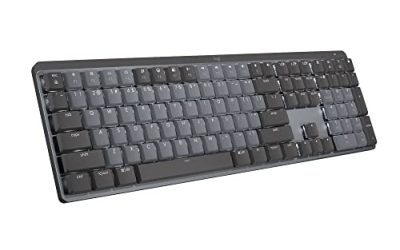
Logitech K380
- Best for: A beginner typing on more than one device who wants one small keyboard for all of them.
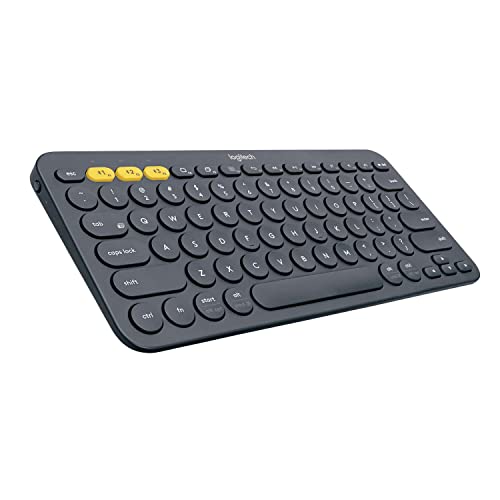
- Bluetooth connection with Easy-Switch pairing for up to 3 devices
- Compatible with PC, Mac, Android, and Apple iOS
- 2-year battery life on the included batteries
- 2 AAA batteries required
A beginner typing on more than one device who wants one small keyboard for all of them.
There is no number pad, so heavy spreadsheet work feels cramped, and the first Bluetooth pairing needs a few minutes on each device.
The Logitech K380 is the pick for a beginner whose typing moves between a computer, a tablet, and a phone. Its Easy-Switch keys connect to up to three devices at once, and a short press jumps from one to another without re-pairing. The compact board has round, clearly spaced keys and a slim shape that slips into a bag, while the long battery life means it can sit ready for months. It works across Windows, Mac, Chrome OS, Android, and iOS, which makes it a forgiving first keyboard for a mixed-device household.
Watch out for: There is no number pad, so heavy spreadsheet work feels cramped, and the first Bluetooth pairing needs a few minutes on each device.
Which One Fits Your Situation
Your First Home Computer Desk
Pick the Logitech K120. A fixed desk rewards the simplest option, and a wired keyboard never needs charging, pairing, or a receiver hunt. The full-size layout matches what typing tutorials show, the spill-resistant body forgives a knocked-over drink, and the deep-profile keys give a beginner clear feedback on every press. It is the lowest-fuss way to get a first computer up and running.
A Laptop User Who Wants a Real Keyboard
Pick the Logitech MK270. A laptop keyboard can feel cramped for long essays or office work, and this combo adds a full-size board plus a mouse in one purchase. The wireless receiver frees the setup from cables, and the eight hotkeys put volume and media controls within easy reach. When the work is done, the receiver stores inside the mouse so nothing small gets lost.
A Student on a Small Desk
Pick the Dell KB216. Dorm desks and shared tables leave little room, and this slim wired board takes up less depth than most full-size keyboards while keeping all 104 keys. The quiet chiclet keys suit late-night typing without waking a roommate, and the USB connection works the moment it is plugged in. It is a practical board for essays, email, and everyday coursework.
Typing on a Phone, Tablet, and Computer
Pick the Logitech K380. One keyboard that jumps between three devices saves a beginner from buying and learning three separate boards. The Easy-Switch keys make the jump a single press, the compact shape travels well, and the long battery life means it is ready whenever a tablet or phone needs a proper keyboard. It is the most flexible pick in this guide.
Common Mistakes
- Buying a mechanical keyboard first, then discovering the loud keys and switch choices add confusion a beginner does not need.
- Choosing a compact layout to save space, then struggling because the number pad and arrow keys sit somewhere unexpected.
- Picking a keyboard that needs software or drivers before it works, instead of one that types straight out of the box.
- Ignoring battery and charging needs on a wireless board, so the keyboard dies in the middle of a first assignment.
- Forgetting to check the operating system and connection type, then finding the keyboard needs a port or a system the computer does not have.
Frequently Asked Questions
Do beginners need a mechanical keyboard?
No. A beginner types best on a simple membrane or chiclet keyboard with quiet keys and a standard layout. Mechanical boards add switch choices, louder keys, and often software, none of which helps someone who is still learning where the keys are. Start with a plain board, and consider a mechanical keyboard later once your typing habits and preferences are settled.
Is a wired or wireless keyboard better for a first keyboard?
A wired keyboard is better for most beginners because it works the moment it is plugged in, with no batteries, pairing, or receiver to manage. Wireless suits people who move between devices or rooms, or who want a cable-free desk. If the keyboard will stay on one desk, wired is the simpler and more dependable choice.
What layout should a beginner keyboard have?
A full-size 104-key layout is the best starting point, because it matches the layout used in typing lessons, school computers, and most offices. It includes a number pad, arrow keys, and a function row in their usual places. Compact boards can wait until a beginner knows the standard layout well enough to adapt to missing or moved keys.
How much setup does a beginner keyboard need?
Very little. A wired keyboard needs only a free USB port, while a wireless combo needs its receiver plugged in and its batteries installed. A Bluetooth keyboard like the K380 needs a short pairing step on each device, done once. None of the keyboards in this guide need downloaded software before you can start typing.
FAQ
Do beginners need a mechanical keyboard?
Is a wired or wireless keyboard better for a first keyboard?
What layout should a beginner keyboard have?
How much setup does a beginner keyboard need?
More from Amazon
Programs that pair well with the guide above. Offers and eligibility are set by Amazon and may change.
Free shipping on eligible items, Prime Video and more. Eligible new members can start with a free trial.
Start a Prime free trialA Prime membership for ages 18-24 with a trial period. Eligibility is set by Amazon.
See Prime for Young AdultsAudiobooks and podcasts to listen to on the go. Eligible new members can start with a free trial.
Try Audible freeAd-free music streaming. Eligible new subscribers can start with a free trial.
Try Music Unlimited freeAs an Amazon Associate we earn from qualifying purchases.