
Our Short List of 3
All 5 Picks at a Glance
| Product | Specs | Action |
|---|---|---|
 Edifier R1280T Powered Bookshelf Speakers | Check price on Amazon | |
 ELAC Debut 2.0 B6.2 Bookshelf Speakers | Check price on Amazon | |
 Klipsch R-51M Bookshelf Speakers | Check price on Amazon | |
 Polk Signature Elite ES20 Bookshelf Speakers | Check price on Amazon | |
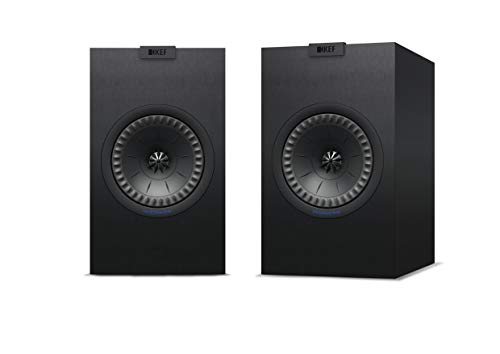 KEF Q150 Bookshelf Speakers | Check price on Amazon |
Key takeaways
- Compare the best bookshelf speakers for desks and small rooms, from powered Edifier pairs to passive ELAC, Klipsch, Polk, and KEF models for music at home.
As an Amazon Associate we earn from qualifying purchases.
Bookshelf speakers are the easiest way to get real stereo sound at home without giving up floor space to tower speakers. A good pair sits on a desk, a media console, or a pair of stands, fills a bedroom or living room with music, and still leaves room for everything else in the space. The catch is that the category covers two very different kinds of products. Some pairs are powered, with amplifiers built in, so they connect straight to a phone, laptop, or turntable. Others are passive, which means they need a separate amplifier or AV receiver to make any sound at all. Choosing between those two paths is the first and most important decision in this guide.
This roundup covers five pairs that represent the main lanes buyers actually shop in. There is a compact powered pair for desks, two passive pairs built around larger woofers for fuller sound in medium rooms, a high-sensitivity passive pair that plays loud with modest power, and a concentric-driver passive pair for listeners who care most about imaging and a wide sweet spot. Every pick is a true bookshelf speaker designed for indoor music listening, not a portable Bluetooth speaker and not an outdoor model. Specifications below come from listings and manufacturer details, so the focus stays on what each design offers on paper and how those choices map to real rooms and real systems.
How to Choose the Best Bookshelf Speakers
Passive vs. powered: decide your system first
Passive speakers such as the ELAC, Klipsch, Polk, and KEF picks in this guide contain drivers and a crossover, but no amplifier. You connect them with speaker wire to a stereo amplifier, an AV receiver, or a compact desktop amp. That adds a box and a bit of setup, but it also means the amplifier can be repaired, upgraded, or reused with different speakers later. Passive pairs also scale better into home theater use, because the same receiver can later drive a center channel and surrounds from the same family.
Powered speakers such as the Edifier pick build the amplifier into one of the cabinets. You run a power cable to the wall and an audio cable from your source, and the second speaker connects to the first with a supplied cable. There is no receiver to buy and no speaker wire to cut. The trade-offs are just as clear. If the built-in amplifier fails, the whole system is affected, and there is no easy path to adding a center channel later. Powered pairs also vary widely in inputs, so check whether you need Bluetooth, optical for a TV, or a subwoofer output before choosing a model, because those features differ even within a single brand.
For a first desk setup, powered is usually the sensible default. For a living-room system you expect to grow, passive is usually the better foundation.
Woofer size and what it means for bass
Woofer diameter is the quickest shorthand for how a bookshelf speaker will handle low frequencies and volume. A compact design with a woofer around four inches, like the Edifier in this guide, is voiced for nearfield listening. At a desk, where the speakers are an arm’s length away, that is plenty of cone area, and the smaller cabinet is easier to place without crowding a monitor or keyboard. Move that same pair across a living room, though, and it will sound thin at higher volumes because a small woofer has to move a long way to produce bass.
Pairs with woofers in the five-and-a-quarter to six-and-a-half inch range are the mainstream sweet spot. They produce more low-end weight and play louder with less strain from a sofa. The trade-off is size: a larger speaker needs a sturdy stand or deep console, plus clearance behind it. Measure your space first, and remember a subwoofer can be added later.
Sensitivity and amplifier pairing
Sensitivity tells you how loud a passive speaker plays with a given amount of power, usually expressed as a decibel figure measured with a standard input at one meter. A difference of a few decibels matters more than it looks, because power requirements do not scale in a straight line. A higher-sensitivity design like the Klipsch pick can reach satisfying volume with a modest amplifier, which makes it forgiving for compact amps and older receivers. A lower-sensitivity design like the KEF and ELAC picks asks for more power to reach the same volume, so pairing them with a very small, low-output amp can leave them sounding restrained in a larger room.
Impedance matters too. Most passive picks here are six or eight ohms, a comfortable load for mainstream amplifiers. Confirm the amplifier rating on the product pages, and favor some headroom over the bare minimum, so voices stay clean when a recording gets busy.
Placement near walls and on desks
Where a bookshelf speaker sits changes its sound as much as which model you buy. Rear-ported designs need space behind them, because the port contributes to bass output and can sound boomy if the cabinet is pushed hard against a wall. Front-ported designs are more forgiving in tight placements, which is one reason the front-port front-port approach in this guide is worth noting for console setups. If you have no choice but to place speakers close to a wall, look for models supplied with port plugs and be ready to use them.
Height matters too. Tweeters should sit roughly at ear level. On a desk, small stands or angled pads lift compact speakers toward your ears. In a living room, dedicated stands usually beat an actual bookshelf, which can add resonances. Add some toe-in toward the listening position, keep the pair symmetric, and avoid a corner for one speaker only.
Inputs, sources, and future plans
Finally, work backward from your sources. A turntable without a built-in phono stage needs a phono preamp somewhere in the chain. A TV is happiest with an optical or ARC connection, which many stereo products lack, so check the input list rather than assuming. Buy the speaker that fits the sources you use today, with one eye on your most likely next upgrade.
The Picks at a Glance
| Pick | Type | Woofer | Sensitivity / Power | Best for |
|---|---|---|---|---|
| Edifier R1280T | Powered | 4-inch | Built-in amplification, 42 watts RMS total per listing | Desks and first stereo setups |
| ELAC Debut 2.0 B6.2 | Passive | 6.5-inch aramid fiber | 87 dB, 6 ohms, up to 120 watts per listing | Balanced music listening in medium rooms |
| Klipsch R-51M | Passive | 5.25-inch | 93 dB, 8 ohms per manufacturer sheet | Loud, lively sound with modest amplifiers |
| Polk Signature Elite ES20 | Passive | 6.5-inch | Hi-Res certified design with Power Port per listing | Music and movies with stronger bass presence |
| KEF Q150 | Passive | 5.25-inch Uni-Q array | 86 dB, 8 ohms, 10 to 100 watts per listing | Imaging and a wide listening sweet spot |
Edifier R1280T Powered Bookshelf Speakers
The Edifier R1280T is the simplest route into this roundup because it removes the amplifier question entirely. This is a powered two-way pair with a four-inch bass driver and a small silk dome tweeter in a wooden enclosure, with built-in amplification rated at forty-two watts RMS in total according to the listing. Two RCA inputs let you connect two wired sources at once, for example a laptop through an adapter cable and a turntable with a built-in phono stage, without swapping cables every time you change what you are listening to.
Controls are part of the appeal. Bass, treble, and volume dials sit on the side of the active speaker, and a small remote handles volume and mute from across a desk or a small room. That makes the R1280T easy to live with as a computer speaker upgrade, a bedroom system, or a first vinyl setup in a compact space. The frequency response in the manufacturer details starts well above the deepest bass notes, which is normal for a cabinet and woofer of this size. At desk distances that limitation is rarely a problem for speech, acoustic music, and everyday listening, but listeners who want weight for electronic music or films should set expectations accordingly or plan for a different, larger pick.
Placement is straightforward. The compact cabinets fit on most desks, and the design is intended for nearfield use, so lifting the tweeters near ear level with small stands or pads is the main setup step. There is no Bluetooth and no digital input on this model, which keeps it simple but rules it out if wireless streaming or a direct TV connection is a must-have. As a wired, no-fuss starting point, the R1280T covers the basics cleanly: real stereo separation, tone controls, a remote, and no separate amplifier to buy or wire.
ELAC Debut 2.0 B6.2 Bookshelf Speakers
The ELAC Debut 2.0 B6.2 is a passive two-way pair built around a six-and-a-half-inch woven aramid-fiber woofer and a one-inch cloth dome tweeter with a wide-dispersion waveguide. Manufacturer and retailer specifications list a frequency response extending from the mid-forties hertz up to thirty-five kilohertz, a sensitivity of eighty-seven decibels, a nominal impedance of six ohms, and a maximum power input of one hundred twenty watts. In practical terms, that describes a speaker aimed at listeners who want a balanced presentation and enough bass output to stand on its own in a medium room without immediately needing a subwoofer.
The front-firing port is a meaningful placement advantage. Many speakers in this class vent to the rear and need breathing room behind the cabinet, while the B6.2 can sit closer to a wall or on a console with fewer penalties, within reason. The cabinet itself is not small. Retailer dimensions put each speaker at roughly fourteen and three-quarter inches tall and over eleven inches deep, with a weight above sixteen pounds per speaker. That bulk is part of how it achieves its low-end reach, but it also means flimsy shelves and shallow bookcases are a poor match. Stands or a deep, stable console are the right home for this pair.
Eighty-seven decibels of sensitivity is mainstream, so most amplifiers and receivers drive the B6.2 without difficulty, though very low-powered amps run out of headroom sooner than with the Klipsch below. Confirm your amplifier handles six-ohm speakers. For a first serious passive system for music first and movies second, the B6.2 is the steady, even-handed option in this group.
Klipsch R-51M Bookshelf Speakers
The Klipsch R-51M takes the opposite approach to efficiency. Its manufacturer specification sheet lists a sensitivity of ninety-three decibels, which is high for a bookshelf speaker, alongside a frequency response from sixty-two hertz to twenty-one kilohertz, an eight-ohm nominal impedance, and power handling of eighty-five watts continuous. The design pairs a one-inch aluminum tweeter loaded by a square Tractrix horn with a five-and-a-quarter-inch spun-copper woofer. That horn-loaded tweeter is the visual and technical signature of the model, and it is central to why the speaker plays loud with relatively little amplifier power.
For buyers with a modest receiver, a compact stereo amp, or an older amplifier they want to keep, that efficiency is a genuine practical benefit. Dialogue and vocals project clearly at low and moderate volumes, which also makes the R-51M a plausible fit for TV-adjacent stereo setups in smaller rooms where a full surround system is not planned. The cabinet is more compact than the larger-woofer picks here, at about thirteen inches tall per the specification sheet, so it fits consoles and stands with less drama than the ELAC or Polk pairs.
There are placement notes to respect. The R-51M is a rear-ported design, so it appreciates some clearance from the wall behind it, and the horn tweeter rewards careful aiming toward the listening position. Listeners who prefer a laid-back presentation at close desk distances may find a horn design more forward than they want, while listeners in a living room who value energy and clarity tend to be exactly the audience for it. As with every passive pick here, there is no amplifier inside, so budget and space for amplification and speaker wire are part of the purchase. Judged as an efficient, lively passive pair for small to medium rooms, the R-51M earns its place by doing the one thing the other passive picks do not: asking the least of your amplifier.
Polk Signature Elite ES20 Bookshelf Speakers
The Polk Signature Elite ES20 is a passive pair built around a six-and-a-half-inch woofer and a one-inch tweeter, positioned by the manufacturer as a high-resolution certified design for both music and home theater use. Listing details highlight Polk’s Power Port bass technology, which is intended to smooth airflow from the rear port and produce cleaner, less distorted bass than a plain port of similar size. For buyers who split time between records, streaming, and films, and who want a bookshelf pair with a fuller low end as front speakers or as part of a growing surround system, that brief is directly on target.
The ES20 is a substantial cabinet, in the same physical league as the ELAC pick, so the same placement advice applies: stands or a solid console, some space behind the rear port, and tweeters at ear height. Within the Polk lineup, the ES20 also has the advantage of matching center and surround models in the same Signature Elite family, which matters if a two-channel setup today is likely to become a home theater over the next few years. Timbre matching across the front stage is much easier when the center channel was designed alongside the left and right speakers.
Amplifier needs are conventional for a large passive design. Pair it with a mainstream receiver or stereo amplifier, confirm the pairing on the specification pages, and it will serve in rooms where a compact four-inch design would work too hard. That makes the ES20 the natural shortlist entry for buyers whose listening is as much movies and games as albums.
KEF Q150 Bookshelf Speakers
The KEF Q150 is built around KEF’s Uni-Q driver array, which places a one-inch vented aluminum dome tweeter at the acoustic center of a five-and-a-quarter-inch aluminum woofer. Because high and midrange frequencies radiate from effectively the same point, the speaker is designed to disperse sound more evenly and keep its character more consistent as you move around the room. Retailer and manufacturer specifications list a frequency response of fifty-one hertz to twenty-eight kilohertz within a three-decibel window, sensitivity of eighty-six decibels, eight-ohm nominal impedance, and recommended amplifier power from ten to one hundred watts.
That point-source idea is the reason to choose the Q150. Where listeners spread across a sofa, or shift position at a desk, even dispersion is a real benefit. The cabinet, at roughly twelve inches tall, is also more compact than the ELAC or Polk options. Foam port plugs are included for tuning bass near a wall.
The sensitivity figure is the one number to plan around. At eighty-six decibels, the Q150 wants a competent amplifier with real headroom, especially in a larger room or at higher volumes. That is not a flaw; it is simply the trade that comes with this design, and a mainstream stereo amplifier or receiver in its rated range handles it without issue. For listeners who prioritize imaging, coherence, and a wide sweet spot over maximum efficiency or maximum bass extension, the Q150 is the most distinctive design in this roundup and the easiest to justify as a long-term keeper pair.
Which Bookshelf Speakers Should You Buy?
Start with the system question. If you want the fewest boxes and the fastest setup at a desk or in a bedroom, the powered Edifier R1280T is the clear answer in this group. If you already own an amplifier or receiver, or want a system that can grow, the four passive picks separate by priority. Choose the ELAC Debut 2.0 B6.2 for a balanced, front-ported all-rounder in a medium room. Choose the Klipsch R-51M if your amplifier is modest and you value lively, efficient sound. Choose the Polk Signature Elite ES20 if movies share equal billing with music and a matching center channel may follow. Choose the KEF Q150 if you listen from more than one seat and care most about imaging and even dispersion.
Whichever pair you choose, budget attention for the details that decide how it sounds at home: stands or pads for ear-level tweeters, clearance behind rear ports, and an amplifier with honest headroom for passive models. Confirm current specifications and accessories on the live listing before purchase.
Disclosure
Disclosure: This article contains affiliate links. If you buy through those links, a commission may be earned at no additional cost to you. Product information was taken from the listings and manufacturer details available at the time of writing, and specifications should be confirmed on the live listing before purchase.
FAQ
Which Bookshelf Speakers Should You Buy?
More from Amazon
Programs that pair well with the guide above. Offers and eligibility are set by Amazon and may change.
Free shipping on eligible items, Prime Video and more. Eligible new members can start with a free trial.
Start a Prime free trialA Prime membership for ages 18-24 with a trial period. Eligibility is set by Amazon.
See Prime for Young AdultsAudiobooks and podcasts to listen to on the go. Eligible new members can start with a free trial.
Try Audible freeAd-free music streaming. Eligible new subscribers can start with a free trial.
Try Music Unlimited freeAs an Amazon Associate we earn from qualifying purchases.









