Our Short List of 3

- Dimensions: 124 x 68 x 43 mm
- Weight: 95 g, plus an optional 10 g weight
- Sensor: PixArt PMW3366 optical, 200-12,000 DPI
- Polling rate: 1,000 Hz over Lightspeed wireless or USB

- Dimensions: 128 x 68 x 44 mm
- Weight: 55 g
- Sensor: Razer Focus X 26K optical, up to 26,000 DPI
- Polling rate: 1,000 Hz standard, up to 8,000 Hz with HyperPolling dongle

- Dimensions: 128.8 x 68.2 x 42.9 mm
- Weight: 85 g
- Sensor: SteelSeries TrueMove Air optical, 100-18,000 CPI
- Polling rate: 1,000 Hz wired
All 5 Picks at a Glance
| Product | Specs | Action |
|---|---|---|
| 1. Logitech G703 Lightspeed |
| Check price on Amazon |
| 2. Razer DeathAdder V3 HyperSpeed |
| Check price on Amazon |
| 3. SteelSeries Rival 5 |
| Check price on Amazon |
 4. Logitech G502 X Lightspeed |
| Check price on Amazon |
 5. Corsair Ironclaw RGB Wireless |
| Check price on Amazon |
Key takeaways
- Five large-shell FPS gaming mice for big hands, with full dimensions, grip fit, sensor and switch details to help wide palms aim in comfort.
If your hand measures 19.5 cm or more from wrist crease to middle fingertip, most gaming mice are simply built too small for you. Fingers spill past the front of the shell, the pinky drags on the pad, and a palm grip turns into an awkward hover that tires your forearm during long sessions. Shooter players feel it worst of all: a shell that is too short forces a cramped claw, and every flick shot starts from a grip that never quite settles.
This guide collects five FPS gaming mice with genuinely large shells, meaning bodies around 124 mm long or longer, with the width and hump height to support a broad palm. Each pick below lists its full dimensions so you can compare them against your own hand, and each one pairs that bigger frame with a sensor and switch package that holds up in competitive shooters. Whether you want an ultralight ergonomic shape or a wide, planted palm mouse, one of these five should finally feel like it was made in your size.
Disclosure: As an Amazon Associate, we earn from qualifying purchases made through links on this page, at no extra cost to you.
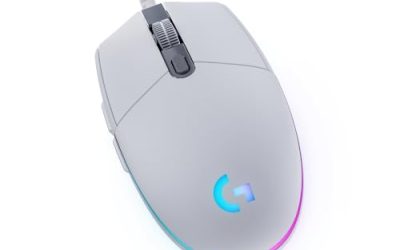
1. Logitech G703 Lightspeed
- Dimensions: 124 x 68 x 43 mm
- Weight: 95 g, plus an optional 10 g weight
- Sensor: PixArt PMW3366 optical, 200-12,000 DPI
- Polling rate: 1,000 Hz over Lightspeed wireless or USB
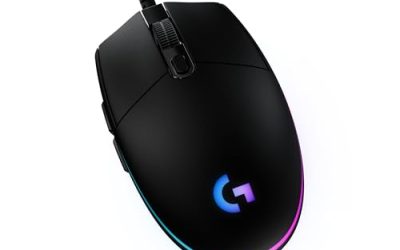
The G703 has been a refuge for large-handed players for years because its shell ignores the shrink-everything trend. At 124 mm long, 68 mm wide and 43 mm tall, it carries a high, rounded rear hump that gives a long palm somewhere solid to rest, and the sides wear rubber grip panels that keep the mouse planted during wide arm sweeps. It suits palm and relaxed claw grips in hands that feel lost on compact esports shapes.
Inside, the PMW3366 optical sensor remains a benchmark for clean tracking, with no smoothing or acceleration across its 200 to 12,000 DPI range. Lightspeed wireless reports at 1,000 Hz with a wired USB fallback, and the mechanical switches are rated for 50 million clicks. An optional 10 g weight drops into the rear compartment if you prefer a touch more inertia for low-sensitivity aiming.
That tall hump also changes how the mouse behaves during lift-off. Because your palm stays in contact longer as you raise the rear of the mouse, repositioning sweeps feel controlled rather than tippy, which suits the wide, flat arm movements that tactical shooter players make between angles. The scroll wheel steps are firm and clearly defined, so weapon swaps land on the slot you intended, and the two thumb buttons sit high enough that a long thumb reaches them without shifting the whole grip.
2. Razer DeathAdder V3 HyperSpeed
- Dimensions: 128 x 68 x 44 mm
- Weight: 55 g
- Sensor: Razer Focus X 26K optical, up to 26,000 DPI
- Polling rate: 1,000 Hz standard, up to 8,000 Hz with HyperPolling dongle
The DeathAdder shape is the classic large ergonomic shell, and the V3 HyperSpeed trims it down to just 55 g without shrinking the footprint. The body runs 128 mm long and 68 mm wide, so long fingers get full contact along the primary buttons instead of hanging over the front lip, and the gentle right-handed curve fills the palm without forcing a claw.
Razer fits its Focus X 26K optical sensor with on-the-fly sensitivity stages, Gen-3 optical switches rated for 90 million clicks, and HyperSpeed wireless that can step up to true 8,000 Hz polling with the separate HyperPolling dongle. Battery life reaches up to 100 hours on the standard receiver, which makes this the rare big-shell mouse you can forget to charge for weeks of ranked play.
3. SteelSeries Rival 5
- Dimensions: 128.8 x 68.2 x 42.9 mm
- Weight: 85 g
- Sensor: SteelSeries TrueMove Air optical, 100-18,000 CPI
- Polling rate: 1,000 Hz wired
The Rival 5 stretches a wired FPS frame to 128.8 mm and shapes it for all three grip styles, which makes it a flexible landing spot for big hands that switch between palm for tracking and claw for flicks. Its side panel packs five buttons, including a tight sniper button and a two-way thumb paddle, so a long thumb gets extra commands without reaching awkwardly across the shell.
The TrueMove Air sensor delivers 18,000 CPI with 400 IPS tracking and 40G acceleration, tuned with tilt tracking for the angled slams that happen when a large hand lifts and resets a mouse mid-fight. Golden Micro switches carry an IP54 dust and splash seal and an 80 million click lifespan, and the whole mouse weighs only 85 g despite its size.
4. Logitech G502 X Lightspeed
- Dimensions: 131.4 x 79.6 x 41.1 mm
- Weight: 102 g
- Sensor: Logitech HERO 25K optical, 100-25,600 DPI
- Polling rate: 1,000 Hz over Lightspeed wireless
The longest shell in this roundup belongs to the G502 X Lightspeed. At 131.4 mm long and 79.6 mm across the thumb rest, it gives the biggest hands a full platform, complete with a sculpted thumb ledge that stops your thumb from dragging on the pad during low-sensitivity sweeps. Thirteen programmable controls include the dual-mode scroll wheel and a removable DPI shift button that sits right where a long thumb lands.
Logitech pairs the frame with the HERO 25K sensor, LIGHTFORCE hybrid optical-mechanical switches for crisp, fast actuation, and updated Lightspeed wireless with up to 140 hours of constant-motion battery life. It is POWERPLAY compatible, so the mouse can charge on the matching pad while you play, and USB-C handles wired charging when you need it.
5. Corsair Ironclaw RGB Wireless
- Dimensions: 130 x 80 x 45 mm
- Weight: 130 g
- Sensor: PixArt PMW3391 optical, native 18,000 DPI in 1 DPI steps
- Polling rate: up to 1,000 Hz over Slipstream wireless
Corsair designed the Ironclaw shell specifically for palm grips and larger hands, and it shows in the numbers: 130 mm long, a full 80 mm wide, and 45 mm tall, the widest body in this guide. That broad, contoured frame lets a big palm spread out instead of cupping, with textured rubber sides and a deep thumb rest keeping the grip secure through fast turns.
The custom PixArt PMW3391 sensor tracks at a native 18,000 DPI and adjusts in single-DPI steps, so you can fine-tune sensitivity more precisely than most rivals allow. Ten programmable buttons, Omron switches rated for 50 million clicks, and three connection modes round it out: sub-1ms Slipstream wireless, low-latency Bluetooth, or a wired USB link, with up to 50 hours of play over Bluetooth.
How to Choose a Large FPS Mouse
Start with your hand, not the product page. Measure from the crease of your wrist to the tip of your middle finger, then across the knuckles at the widest point. Hands at 19.5 to 21.5 cm long generally pair well with shells between 124 and 132 mm, and anything beyond 21.5 cm should look at the longest bodies in this guide. A useful rule of thumb is a mouse length near 60 percent of your hand length for claw grips and closer to 65 percent for palm grips.
Width matters as much as length. A wide palm on a narrow mouse forces your ring finger and pinky to pinch inward, which builds tension that shows up as shaky micro-corrections. If your hand measures 9.5 cm or more across the knuckles, prioritise shells with a grip width above 62 mm, and look for a thumb rest or flared base if your thumb tends to drag.
Match the hump to your grip. Palm players want a tall, rear-set hump that fills the arch of the hand, like the G703 and Ironclaw shapes. Claw players with big hands do better with a lower, centred hump and a shorter rear, where the DeathAdder V3 HyperSpeed and Rival 5 sit. Fingertip players with large hands are the hardest to serve; a long but low shell keeps your fingers from feeling crowded while still leaving room to steer with the fingertips.
Weight is a preference, not a contest. A 55 g shell rewards fast arm aiming and reduces fatigue across long sessions, while a 100 g plus mouse adds stability for slow, deliberate tracking and can feel calmer in the hand. Big hands often tolerate heavier mice better because the grip itself is stronger, so choose by aiming style rather than chasing the lightest number.
Finally, check the sensor and switch basics: a flawless optical sensor with at least 400 IPS tracking, 1,000 Hz polling or better, and switches rated for 50 million clicks or more will keep any of these shells competitive for years. Wireless latency on modern 2.4 GHz links matches a cable, so pick wired or wireless based on how you like your desk, not on response fears.
Do not overlook feet and pad pairing. A large shell spreads its weight across a bigger contact patch, so wide PTFE feet glide more evenly and wear more slowly than the small skates on compact mice. Pair a big mouse with a large pad as well: if your hand and mouse together cover more of the surface, you need the extra room for the low-sensitivity sweeps that large-handed players tend to run, and a pad at least 450 mm wide keeps the mouse from running off the edge mid-fight.
FAQ
What hand size counts as large for a gaming mouse?
Most makers treat hands longer than about 19.5 cm, or wider than 9.5 cm across the knuckles, as large. If your fingers extend well past the front buttons of a standard mouse or your palm cannot rest flat on its hump, you are in large-hand territory and should shop for shells at least 124 mm long.
Is palm or claw grip better for big hands in FPS games?
Neither is universally better. Palm grip on a tall, long shell gives relaxed, stable tracking and suits low-sensitivity arm aiming. Claw grip on a slightly lower shell gives faster fingertip corrections for flicks. Big hands often settle into a relaxed claw hybrid, so a mid-height hump around 42 to 44 mm is the safest starting point.
Does a heavier mouse slow down aim in shooters?
It changes feel rather than limiting skill. Heavier mice add inertia, which smooths out small hand tremors during tracking but takes more effort to start and stop on flicks. Lighter mice feel quicker and tire the arm less. Plenty of strong players use both, so match the weight to your sensitivity and play style instead of assuming lighter always wins.
Should big-handed players pick wired or wireless?
Modern 2.4 GHz wireless links from Logitech, Razer and Corsair report at 1,000 Hz with latency on par with a cable, so performance no longer decides this. Wireless frees a large hand from cable drag during wide sweeps, while wired removes charging from your routine. Pick whichever keeps your desk setup simpler.
More from Amazon
Programs that pair well with the guide above. Offers and eligibility are set by Amazon and may change.
Free shipping on eligible items, Prime Video and more. Eligible new members can start with a free trial.
Start a Prime free trialA Prime membership for ages 18-24 with a trial period. Eligibility is set by Amazon.
See Prime for Young AdultsAudiobooks and podcasts to listen to on the go. Eligible new members can start with a free trial.
Try Audible freeAd-free music streaming. Eligible new subscribers can start with a free trial.
Try Music Unlimited freeAs an Amazon Associate we earn from qualifying purchases.