Our Short List of 3

- Weight: 60 g
- Shape: Right-handed asymmetrical
- Sensor: HERO 2 optical, up to 44,000 DPI
- Tracking: Up to 888 IPS, 88 G acceleration

- Weight: 57 g
- Shape: Right-handed ergonomic
- Sensor: Razer Focus Pro 45K Optical Sensor Gen-2, up to 45,000 DPI
- Tracking: Up to 900 IPS, 85 G acceleration

- Weight: 60 g
- Shape: Right-handed asymmetrical
- Sensor: HERO 2 optical, up to 44,000 DPI
- Tracking: Up to 888 IPS, 88 G acceleration
All 5 Picks at a Glance
| Product | Specs | Action |
|---|---|---|
| 1. Logitech G Pro X Superlight 2 DEX (White) |
| Check price on Amazon |
| 2. Razer DeathAdder V4 Pro (White) |
| Check price on Amazon |
| 3. Logitech G Pro X Superlight 2 DEX SE (Black) |
| Check price on Amazon |
 4. Pulsar X2H Mini Limited Edition (Red) |
| Check price on Amazon |
 5. Lamzu Inca (White) |
| Check price on Amazon |
Key takeaways
- Compare the best esports gaming mouse picks for competitive play: ultralight shells, flagship sensors, 8K polling and pro shapes for every grip style.
Tournament play leaves no room for hardware that hesitates. An esports gaming mouse has to track fast flicks without spin-outs, register clicks with almost no delay, and stay light enough that hours of aim training never turn into wrist fatigue. The five mice in this guide are the shapes and sensors that dominate professional stages right now: ultralight shells under 65 grams, flagship optical sensors, polling rates up to 8,000 Hz, and optical or hybrid switches that remove the debounce delay of older designs.
The picks below cover the main pro preferences. There are two versions of Logitech’s right-handed DEX shell for players who aim with a relaxed claw or fingertip grip, Razer’s newest ergonomic DeathAdder for palm and palm-claw players, a compact high-hump Pulsar built for aggressive claw grips, and a 40-gram Lamzu that sits at the extreme end of the ultralight trend. Every model here runs a sensor that far exceeds what human aim can outpace, so the real decision comes down to shape, weight, and how the clicks feel under your fingers.
Disclosure: As an Amazon Associate, we earn from qualifying purchases made through links on this page, at no extra cost to you.
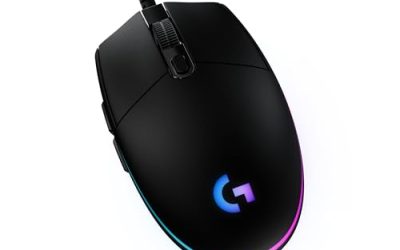
1. Logitech G Pro X Superlight 2 DEX (White)
- Weight: 60 g
- Shape: Right-handed asymmetrical
- Sensor: HERO 2 optical, up to 44,000 DPI
- Tracking: Up to 888 IPS, 88 G acceleration
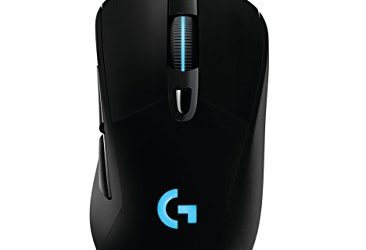
The DEX takes the Superlight formula that filled pro lobbies for years and reshapes it for right-handed players. The shell is asymmetrical, with a sculpted right side that gives the ring and pinky fingers a defined ledge, which helps claw and fingertip players lock the mouse in during wide swipes. At 60 grams it stays firmly in ultralight territory while keeping a solid, creak-free shell.
Inside, the HERO 2 sensor tracks at up to 888 IPS with 88 G of acceleration tolerance, and LIGHTSPEED wireless supports polling up to 8,000 Hz for players who want the freshest possible cursor updates. The LIGHTFORCE hybrid switches pair an optical actuation point with a mechanical feel, so clicks register fast while keeping the crisp break that mechanical switches are known for. Battery life stretches to roughly 95 hours per charge, and the USB-C port up top doubles as the wired connection for tournament desks that require a cable. Five programmable buttons keep the layout focused: two side buttons, a clickable wheel, and nothing else to hit by accident mid-round.
2. Razer DeathAdder V4 Pro (White)
- Weight: 57 g
- Shape: Right-handed ergonomic
- Sensor: Razer Focus Pro 45K Optical Sensor Gen-2, up to 45,000 DPI
- Tracking: Up to 900 IPS, 85 G acceleration
The DeathAdder name has been on pro desks since the wired era, and the V4 Pro is the lightest, fastest version Razer has built. The ergonomic shell keeps the tall, supportive hump that palm players rely on, yet the white edition weighs only 57 grams, which puts it in the same weight class as symmetrical ultralights. That combination of a full ergonomic shape and a featherweight build is rare, and it is the main reason this mouse anchors so many professional loadouts.
The Focus Pro 45K Optical Sensor Gen-2 tracks up to 900 IPS, and HyperSpeed Wireless Gen-2 pairs with the included HyperPolling dongle for true 8,000 Hz wireless polling. Razer’s Gen-4 optical switches are rated for 100 million clicks and actuate with light rather than metal contacts, which removes debounce delay and the double-click faults that wear into mechanical switches over time. Even the scroll wheel is optical, so every notch registers without contact wear. Battery life reaches up to 150 hours at the standard 1,000 Hz polling rate, and dropping to lower polling for practice sessions stretches a charge across weeks of play.
3. Logitech G Pro X Superlight 2 DEX SE (Black)
- Weight: 60 g
- Shape: Right-handed asymmetrical
- Sensor: HERO 2 optical, up to 44,000 DPI
- Tracking: Up to 888 IPS, 88 G acceleration
The DEX SE is the value-engineered sibling of the DEX, built on the same 60-gram asymmetrical shell and the same HERO 2 sensor, with a few trims that keep the shape and tracking identical while simplifying the package. For players who already know the DEX shape fits their hand, the SE delivers the same aim feel in a black finish with a more straightforward feature set.
The key difference sits in the wireless link. The SE polls at 1,000 Hz out of the box, which remains the rate most tournaments and most pro settings still use, and it can step up to 8,000 Hz when paired with Logitech’s PRO LIGHTSPEED receiver, sold separately. LIGHTFORCE hybrid switches carry over from the main DEX, as do the five programmable buttons and the PTFE feet. Battery life is rated at up to 88 hours, and like its sibling the SE charges over USB-C and can be played wired while it charges. Players who compete at 1,000 Hz and never plan to chase higher polling get the full DEX experience here; players who want 8K on day one should look at the standard DEX above.
4. Pulsar X2H Mini Limited Edition (Red)
- Weight: 52 g
- Shape: Symmetrical, high rear hump, mini size
- Sensor: PixArt PAW3395 optical, up to 26,000 DPI
- Tracking: Up to 650 IPS, 50 G acceleration
Pulsar built the X2H Mini for one grip above all: an aggressive claw on a small hand. The shell is short, and the hump sits high and toward the back, so the palm’s rear edge rests on the curve while the fingers stay arched and ready to pull the mouse down into the pad for micro-corrections. At 52 grams, it is light enough that those constant small adjustments never feel like work, and this limited edition red finish stands apart from the usual black and white pro gear.
The PAW3395 sensor inside is a proven flagship, tracking 650 IPS with on-the-fly DPI steps up to 26,000. Stock polling is 1,000 Hz, and the shell accepts Pulsar’s separate 4K wireless dongle for players who want the faster report rate. Optical switches rated for 90 million clicks keep actuation consistent, and the Pulsar Blue encoder gives the wheel defined, tactile steps for weapon swaps and ability cycling. Battery life reaches up to 100 hours at the standard polling rate, which means the mini shell still goes a full tournament weekend and then some on one charge.
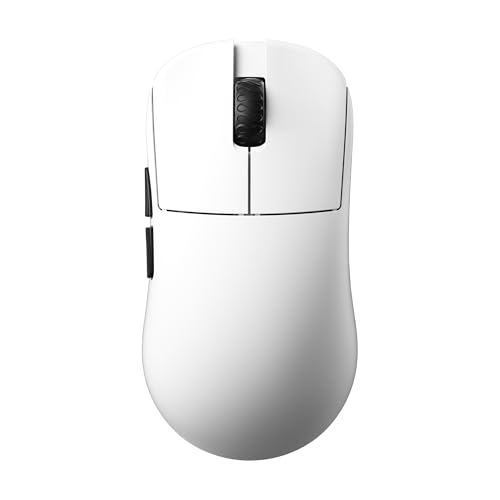
5. Lamzu Inca (White)
- Weight: 40 g
- Shape: Symmetrical, high hump
- Sensor: PixArt PAW3950 optical, up to 30,000 DPI
- Tracking: Up to 750 IPS, 50 G acceleration
The Inca is the extreme ultralight of this group at just 40 grams, a figure that changes how a mouse feels in the hand: swipes start and stop with almost no inertia, and fingertip players can steer the cursor with finger movement alone. The shape is a symmetrical high-hump design aimed at claw grips, with a wide rear that fills the palm’s base and a narrow waist that fingers can pinch for lift-offs.
Lamzu pairs that shell with a top-tier parts list. The PixArt PAW3950 sensor tracks up to 750 IPS, the Nordic 52840 MCU keeps the wireless link stable, and the included 8K dongle unlocks wireless polling up to 8,000 Hz without a separate purchase. Omron optical switches handle the main clicks, and a TTC encoder gives the wheel crisp, dust-resistant steps. The box also includes grip tape, spare PTFE feet, and a velvet carry bag, small touches that suit players who travel to LAN events. For competitors who have been waiting to try a genuinely sub-45-gram mouse with no compromises in the sensor or the polling rate, the Inca is the one to shortlist.
How to Choose an Esports Gaming Mouse
Shape comes first, because no sensor can rescue a shell that fights your grip. Palm players who rest the whole hand on the mouse usually settle on an ergonomic shape like the DeathAdder V4 Pro, where the hump supports the arch of the hand. Claw players should look at where the hump sits: a high rear hump, as on the X2H Mini and the Inca, gives arched fingers leverage for pull-down corrections. Fingertip players benefit most from short, light shells and a defined right-side ledge, which is exactly what the DEX shape provides.
Weight shapes aim style more than most players expect. Mice in the 50 to 65 gram band are the current pro standard because they balance low inertia with enough presence to feel controlled during slow tracking. Dropping to 40 grams, as the Inca does, makes micro-adjustments nearly effortless, but some players find very light mice harder to stop precisely until they adapt. If possible, judge weight alongside size: a 60-gram large mouse feels lighter in motion than a 60-gram mini.
Polling rate is the third factor. A 1,000 Hz mouse reports its position every millisecond, which already matches or beats the refresh of most monitors. Rates of 4,000 and 8,000 Hz smooth the cursor path further and can shave a fraction of a millisecond of delay, gains that matter most on 240 Hz and faster displays. Higher polling also drains batteries faster and uses more CPU, so many pros practice at 1,000 Hz and raise the rate only for matches.
Finally, look at switches and feet. Optical and hybrid switches actuate without metal contact bounce, so they resist the accidental double-clicks that develop in mechanical switches after heavy use, and their click latency is consistently low. Pure PTFE feet keep glide consistent across a cloth pad, and every mouse in this guide ships with them. Pair any of these mice with a large, low-friction pad and a DPI setting in the 400 to 1,600 range, and the hardware side of your aim is fully covered.
FAQ
What polling rate do most esports players use?
Most professionals still compete at 1,000 Hz because it is stable in every title and gentle on battery life. Players on high-refresh monitors increasingly move to 4,000 or 8,000 Hz for the smoother cursor path, and every mouse in this guide can reach those rates either out of the box or with a compatible receiver or dongle.
Is a lighter mouse always better for competitive play?
Not automatically. Lighter mice reduce the effort of starting and stopping a swipe, which helps low-sensitivity arm aimers and fingertip players. Some players, though, overshoot targets on very light shells until their muscle memory adjusts, and palm players often prefer the planted feel of a slightly heavier ergonomic shape. The right weight is the one that disappears during a match.
Which of these mice suits a claw grip best?
The Pulsar X2H Mini and the Lamzu Inca are the claw specialists here, thanks to their high rear humps that support arched fingers. The DEX and DEX SE also work well for a relaxed claw, since the sculpted right side gives the outer fingers a ledge to pull against during fast corrections.
Can these mice be used wired during a match?
Yes. Every model in this guide connects over USB-C and can be played while plugged in, which is how many tournament stations are set up. Wired play also removes any concern about wireless interference in a crowded arena and keeps the mouse charging between maps.
Final Word
Each mouse here tracks flawlessly at speeds no player can exceed, so the honest deciding factors are shape, weight, and switch feel. Ergonomic palm players should start with the DeathAdder V4 Pro, claw players with the X2H Mini or the Inca, and DEX-curious players can pick between the full DEX and the SE based on how much polling headroom they want on day one. Match the shell to your grip, set a sensible DPI, and the mouse stops being a variable in your results.
FAQ
What polling rate do most esports players use?
Is a lighter mouse always better for competitive play?
Which of these mice suits a claw grip best?
Can these mice be used wired during a match?
More from Amazon
Programs that pair well with the guide above. Offers and eligibility are set by Amazon and may change.
Free shipping on eligible items, Prime Video and more. Eligible new members can start with a free trial.
Start a Prime free trialA Prime membership for ages 18-24 with a trial period. Eligibility is set by Amazon.
See Prime for Young AdultsAudiobooks and podcasts to listen to on the go. Eligible new members can start with a free trial.
Try Audible freeAd-free music streaming. Eligible new subscribers can start with a free trial.
Try Music Unlimited freeAs an Amazon Associate we earn from qualifying purchases.