
Our Short List of 3
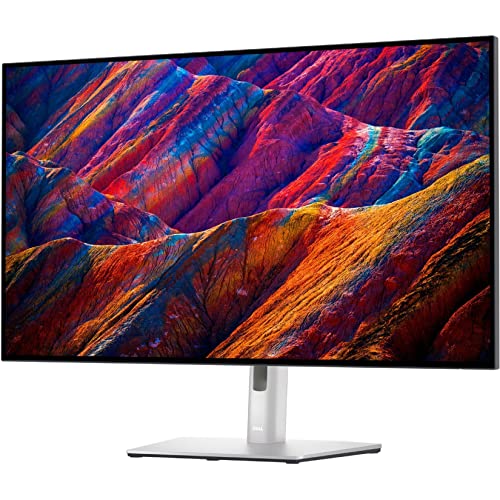
- Specs:
- 31.5-inch IPS Black panel
- 3840 x 2160 resolution
- 60 Hz refresh rate

- Specs:
- 31.5-inch IPS panel
- 3840 x 2160 resolution
- HDR10 compatibility

- Specs:
- 31.5-inch SS IPS panel
- 3840 x 2160 resolution
- 144 Hz refresh rate
All 3 Picks at a Glance
| Product | Specs | Action |
|---|---|---|
| Dell UltraSharp U3223QE |
| Check price on Amazon |
| LG UltraFine Ergo 32UN880-B |
| Check price on Amazon |
| Gigabyte M32U |
| Check price on Amazon |
Key takeaways
- Compare the best 32 4k monitors for work and play, with IPS panels, USB-C hubs, and high refresh rates for editing, gaming, and everyday desk setups at home.
A 32-inch 4K monitor changes a desk in a way a smaller screen cannot. The same 3840 by 2160 pixels spread across a wider panel makes text larger, timelines longer, and windows roomier, so work and play both feel less cramped. Yet the three monitors in this guide take different paths to the same size: one anchors a creator desk with a full USB-C hub, one moves freely on an ergonomic arm for small rooms, and one adds a 144 Hz refresh rate for gaming after work. The right pick depends on whether your desk serves editing, office work, or play most often.
This guide compares three 32-inch 4K monitors for buyers who want one large screen to do everything. Each model was selected from the panel type, resolution, refresh rate, colour coverage, and connectivity printed on its Amazon listing, so you can weigh the hub, the stand, and the refresh rate against each other and choose the screen that fits your desk.
Quick Picks
As an Amazon Associate we earn from qualifying purchases
| Product | Best for | Key spec from title |
|---|---|---|
| Dell UltraSharp U3223QE | Creator desk with one cable | 31.5-inch IPS Black, USB-C 90W |
| LG UltraFine Ergo 32UN880-B | Small desks and flexible positioning | 31.5-inch IPS, Ergo C-clamp stand |
| Gigabyte M32U | 4K gaming and work hybrid | 31.5-inch IPS, 144Hz, HDMI 2.1 |
How to Choose
Panel Type and Colour Accuracy
Panel type decides how the screen looks from your chair and from the side. All three monitors here use IPS panels, which keep colours steady at wide viewing angles, and two of them use IPS Black, which deepens contrast beyond standard IPS. Colour coverage matters for photo and video work: the Dell and BenQ-style creator screens list 98 percent DCI-P3, while the LG lists 95 percent, and all three cover the full sRGB range. Check the factory calibration claim as well, because a monitor calibrated to a Delta E under two needs less adjustment before serious editing work. Wider gamut also helps printed photos match the screen.
Resolution, Size, and Text Clarity
A 32-inch 4K panel spreads 3840 by 2160 pixels across 31.5 inches, which makes interface text larger and easier to read than the same resolution on a 27-inch screen. Two documents sit side by side without constant switching, and video timelines stretch long enough to see the whole project. Scaling settings in your operating system control how large text appears, so check that your system handles 4K scaling well before you buy. A larger screen also needs a deeper desk, because sitting too close to a 32-inch panel forces constant head movement. A 32-inch screen also suits split-screen editing, keeping the preview and timeline visible together.
Refresh Rate and Gaming
Refresh rate separates the work monitors from the gaming hybrid in this guide. The Dell and LG run at 60 Hz, which suits office work, editing, and video playback perfectly, while the Gigabyte M32U reaches 144 Hz for smoother motion in games. High refresh rates need a graphics card and cable that support them: DisplayPort 1.4 carries 4K at 144 Hz on a PC, and HDMI 2.1 carries 4K at 120 Hz on modern consoles. Response time matters too, with the M32U listing one millisecond, while the 60 Hz screens suit slower-paced games and general use. Adaptive sync steadies frame pacing when a game cannot hold its target rate.
USB-C Hub, Ports, and Ergonomics
Connectivity turns a monitor into a desk hub. The Dell leads here with USB-C carrying video, data, and 90 watts of laptop charging over one cable, plus DisplayPort in and out, HDMI, Ethernet, and five USB-A ports with a KVM switch. The LG offers USB-C with 60 watts of power delivery, which suits ultrabooks better than large laptops, and its Ergo stand clamps to the desk edge and swings the screen out of the way. The Gigabyte adds a Type-C KVM and HDMI 2.1 for consoles. Measure your desk depth and check your laptop’s charging needs before you choose. Monitor arms free desk space yet need sturdy support.
The 3 Best Options
Dell UltraSharp U3223QE
- Specs:
- 31.5-inch IPS Black panel
- 3840 x 2160 resolution
- 60 Hz refresh rate
The Dell U3223QE is the creator-desk pick, built around an IPS Black panel and a USB-C hub. Its 31.5-inch screen shows 3840 by 2160 pixels with a 2000 to 1 contrast ratio, 400 nits of brightness, and DisplayHDR 400 support, while colour coverage reaches 100 percent sRGB, 100 percent Rec.709, and 98 percent DCI-P3 with a Delta E under two. The USB-C hub carries video, data, and 90 watts of power delivery over one cable, and DisplayPort 1.4 in and out supports a second 4K screen. HDMI 2.0, RJ45 Ethernet, five USB-A ports, and a KVM switch complete a desk needing only one laptop cable.
LG UltraFine Ergo 32UN880-B
- Specs:
- 31.5-inch IPS panel
- 3840 x 2160 resolution
- HDR10 compatibility
The LG 32UN880-B is the flexible-positioning pick, built for small or shared home desks where the monitor must move out of the way. Its 31.5-inch IPS panel shows 3840 by 2160 pixels with HDR10 support, 350 nits of brightness, and 95 percent DCI-P3 coverage, while the matte anti-glare finish cuts reflections in bright rooms. The Ergo stand clamps to the desk edge and extends, retracts, swivels, and pivots, so the screen pulls close for focused work and pushes back when the desk is needed for something else. USB-C carries video and 60 watts of power delivery, and two HDMI ports plus three USB ports cover the rest of the desk.
Gigabyte M32U
- Specs:
- 31.5-inch SS IPS panel
- 3840 x 2160 resolution
- 144 Hz refresh rate
The Gigabyte M32U is the gaming hybrid in this guide, pairing a 144 Hz refresh rate with a screen that still works well for daytime office tasks. Its 31.5-inch SuperSpeed IPS panel shows 3840 by 2160 pixels at 144 Hz with a one-millisecond response time, and FreeSync Premium Pro keeps fast motion smooth. Colour coverage reaches 90 percent DCI-P3 and 123 percent sRGB with DisplayHDR 400 support, so photo work stays credible between gaming sessions. Two HDMI 2.1 ports carry 4K at 120 Hz from consoles, DisplayPort 1.4 serves the PC, and a Type-C KVM switch lets one keyboard and mouse control two machines without replugging cables each time.
Which One Fits Your Situation
The Creator With a Laptop Desk
If your desk centres on a laptop and creative work, the Dell U3223QE is the anchor. One USB-C cable carries the picture, charges the laptop at 90 watts, and connects peripherals through the hub, while the KVM switch shares the keyboard with a machine. The IPS Black panel and colour coverage suit photo and video editing, and calibration keeps colours honest. Keep the desk deep enough for a 32-inch screen.
The Small or Shared Desk
If your desk is small or shared, the LG 32UN880-B solves the space problem. The Ergo stand clamps to the edge and swings the screen away when you need the surface, then pulls it back for work. The 4K IPS panel stays sharp for documents and video, and USB-C keeps cables to one. Check that your desk edge suits a C-clamp, since the 60-watt charging fits ultrabooks best.
The Gamer Who Also Works
If your screen serves spreadsheets by day and games by night, the Gigabyte M32U covers both. The 144 Hz refresh rate and HDMI 2.1 ports keep console and PC games smooth at 4K, while the IPS panel and colour coverage suit office work and photo editing. Use DisplayPort for the PC, and connect the console through HDMI 2.1. The KVM switch shares one keyboard and mouse between two machines.
The Buyer Choosing Between 60 Hz and 144 Hz
If you are torn between the 60 Hz screens and the faster M32U, decide by the games you play. Fast shooters and racing games benefit from 144 Hz, while strategy games and office work look identical at 60 Hz. A 144 Hz screen needs a graphics card able to push high frame rates at 4K, so check your hardware. When in doubt, the M32U covers both worlds.
Common Mistakes
- Buying a 32-inch screen for a shallow desk and sitting too close to it, which strains the neck and forces constant head movement across the wide panel all day long.
- Choosing a USB-C monitor without checking whether it charges your laptop fully, so the battery drains slowly during long work sessions instead of holding its charge through the day.
- Paying for 144 Hz without a graphics card that reaches high frame rates at 4K, leaving the faster panel idle during everyday gaming and office work alike, with no visible benefit.
- Ignoring colour coverage and discovering the screen cannot show accurate reds, which matters most when editing photos or grading video for clients who expect faithful colour on screen every time.
- Forgetting VESA mount compatibility when planning an arm or wall setup, then finding the monitor cannot attach to the mount already bought for the desk, leaving the setup half finished.
Frequently Asked Questions
Is a 32-inch 4K monitor too big for a desk?
A 32-inch 4K monitor suits desks around 60 centimetres deep or more, since extra depth keeps viewing comfortable. Text stays large, and two windows fit side by side. Measure your depth first, since shallow desks feel cramped. The LG Ergo stand helps by moving the screen closer or further back.
Do I need a USB-C hub monitor for a laptop?
A USB-C hub monitor simplifies a laptop desk to a single cable for video, charging, and peripherals, which helps when you dock daily. Check power delivery against your laptop: the Dell supplies 90 watts for most laptops, while the LG supplies 60 watts for ultrabooks. A laptop needing more power will drain slowly during heavy work.
Can a 4K 144 Hz monitor work with a console?
Yes, the Gigabyte M32U carries 4K at 120 Hz from modern consoles through its HDMI 2.1 ports, which covers the fastest console output. Variable refresh rate also smooths frame drops in demanding games. Connect the console directly to the monitor, since extra devices in the chain can limit the refresh rate.
What does IPS Black mean on a monitor?
IPS Black is an IPS variant with a higher contrast ratio than standard IPS, listed at 2000 to 1 on the Dell against 1000 to 1 on the LG. Deeper contrast keeps dark scenes detailed instead of washing out to grey. The difference shows in dim rooms, though it does not reach OLED black levels.
FAQ
Is a 32-inch 4K monitor too big for a desk?
Do I need a USB-C hub monitor for a laptop?
Can a 4K 144 Hz monitor work with a console?
What does IPS Black mean on a monitor?
More from Amazon
Programs that pair well with the guide above. Offers and eligibility are set by Amazon and may change.
Free shipping on eligible items, Prime Video and more. Eligible new members can start with a free trial.
Start a Prime free trialA Prime membership for ages 18-24 with a trial period. Eligibility is set by Amazon.
See Prime for Young AdultsAudiobooks and podcasts to listen to on the go. Eligible new members can start with a free trial.
Try Audible freeAd-free music streaming. Eligible new subscribers can start with a free trial.
Try Music Unlimited freeAs an Amazon Associate we earn from qualifying purchases.









