Key takeaways
- Find the best tablets for PDF reading with sharp roomy screens, smooth page turns, long battery life, and storage for large document libraries.
Reading a PDF on the wrong screen turns simple work into constant pinching, zooming, and scrolling. A dense contract, a scanned textbook chapter, or a technical manual with small diagrams needs width, sharp text, and enough room to show a full page without shrinking the type to an unreadable size. The best tablets for PDF reading solve that problem first, and everything else they do comes second.
This guide focuses on four tablets that handle documents well for different reasons. One offers a tall, sharp display and a mature reading app ecosystem, another pairs a fast refresh rate with split-screen multitasking, a third adds a folio case and a pen-friendly screen for study, and the fourth keeps the setup simple with long battery life and expandable storage. Each pick below is a full tablet, not a dedicated e-reader, so each one can also open cloud drives, email attachments, and browser downloads alongside local files.
As an Amazon Associate, we earn from qualifying purchases.
How to Choose a Tablet for PDF Reading
Screen size and aspect ratio matter more for PDFs than for almost any other task. Most documents are created in a portrait page format, so a tablet held upright needs enough width to render that page clearly. A display around ten to eleven inches is the practical sweet spot for most readers. Smaller screens force frequent zooming on letter-size pages, while much larger screens add weight that becomes tiring during long reading sessions on a couch, train, or job site. Resolution matters alongside size. A sharper panel keeps small footnotes, table entries, and diagram labels legible without enlarging the page.
Aspect ratio shapes how much of a page fits at once. A taller display shows more lines in portrait orientation, which helps with reports and ebooks converted to PDF. A wider display can feel better for two-page spreads, landscape manuals, and side-by-side work, such as reading a document while taking notes in a second app. Neither shape is right for everyone, so match the screen to the documents handled most often. Students working through textbooks, field staff reading manuals, and office readers reviewing contracts will each lean a different way.
Performance needs for PDF reading are modest for simple files and higher for complex ones. A basic text document opens easily on almost any modern tablet. A large scanned file, an illustrated textbook, or a manual with many embedded images asks more of the processor and memory, especially when pages are flipped quickly or searched for a keyword. Smooth page turns, fast text search, and quick rendering after a zoom are signs that a tablet has enough headroom for heavier files. Storage also counts, because a library of textbooks, manuals, and archived reports grows quickly, and expandable storage gives that library room to grow without constant cleanup.
Battery life and comfort decide whether a tablet actually gets used for long documents. A reader who settles in for a chapter or a full report needs a battery that lasts through extended sessions and a body that stays comfortable to hold or prop on a stand. Weight, thickness, and case design all play a part. A folio case that doubles as a stand can matter as much as a specification, because reading at a desk, on a workbench, or in a vehicle is easier when the screen holds its own angle.
Software is the final piece. Good PDF apps allow annotation, highlighting, bookmarking, text search, and easy import from cloud storage and email. Some tablets support a stylus for marking up pages by hand, which suits editors, students, and anyone who reviews drafts. Think about whether marking up documents is part of the routine or whether clean reading is the priority, then choose accordingly.
Apple iPad 11-Inch With A16 Chip
The Apple iPad with the A16 chip is the strongest all-around choice in this group for readers who want sharp text and a deep library of document apps. Its eleven-inch Liquid Retina display renders pages at a resolution that keeps small print crisp, and the taller screen shape suits portrait documents well. A full letter-size page fits comfortably, and zooming into a diagram or a dense table stays clean because the panel has plenty of detail to draw on. True Tone support adjusts the display to ambient light, which helps during long sessions that move between a bright office and a dimmer room.
Performance is a clear strength. The A16 chip handles large files, rapid page turns, and keyword searches across long documents without the hesitation that breaks concentration. Switching between a PDF, a notes app, and a browser reference is smooth, which suits readers who work through material rather than simply consuming it. Storage starts at a generous level for document libraries, and the USB-C port makes moving files from a computer or external drive straightforward. Support for Apple Pencil models adds a natural way to highlight, underline, and write margin notes directly on a page, a feature that students and reviewers tend to use daily once it becomes part of the routine.
For PDF reading specifically, the iPad benefits from a wide choice of mature reader and annotation apps, strong cloud drive integration, and reliable handling of files received by email or downloaded from the web. The tablet is light enough for extended handheld reading and works well propped in a case at a desk. Readers invested in other Apple devices will also appreciate how easily documents move between phone, computer, and tablet.
Specs
| Specification | Detail |
|---|---|
| Display | 11-inch Liquid Retina display, 2360 by 1640 resolution, True Tone |
| Processor | Apple A16 chip |
| Storage | 128GB |
| Connectivity | Wi-Fi 6, Bluetooth 5.3, USB-C connector |
| Cameras | 12MP front camera, 12MP back camera |
| Security | Touch ID |
| Weight | 1.05 pounds |
| Stylus support | Apple Pencil USB-C and Apple Pencil first generation |
| ASIN | B0DZ75TN5F |
Who It Suits
This iPad suits students, professionals, and frequent readers who annotate documents, search long files often, and want the widest choice of polished PDF apps. It also suits readers who plan to use the tablet heavily beyond documents, since the processor leaves ample headroom for other work. Readers who prefer expandable storage cards or the Android app ecosystem should look at the other picks in this guide instead.
Samsung Galaxy Tab A9 Plus
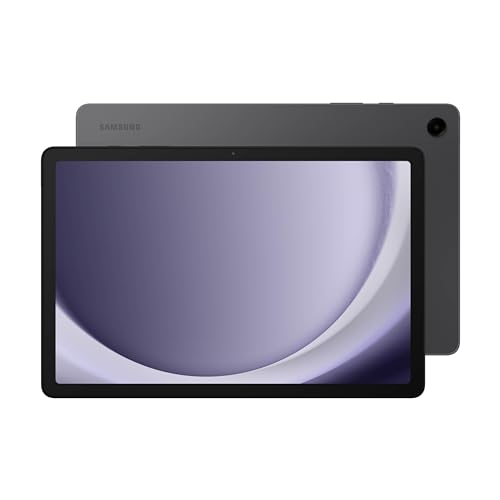
The Samsung Galaxy Tab A9 Plus takes a different approach, pairing an eleven-inch display with a refresh rate of up to ninety hertz. That faster refresh makes scrolling through long documents and flipping between pages feel noticeably smooth, which matters when moving quickly through a report to find a section. The screen resolution keeps text clear in portrait orientation, and the sixteen-to-ten shape works well for reading a document on one side of the screen while keeping notes, a dictionary, or a reference page open on the other side.
Multi-window support is a genuine advantage for document work. A reader can keep a PDF open beside a notes app during study, or beside an email draft when pulling figures from a report. The Snapdragon processor and the memory fitted to this configuration handle everyday document tasks comfortably, including illustrated files and moderate libraries. Storage is expandable through a microSD card, so a growing archive of manuals, textbooks, and saved reports does not have to compete with apps and photos for internal space.
The Tab A9 Plus also brings quad speakers with Dolby Atmos, which is useful for readers who switch between documents and recorded lectures or audiobooks. The build is slim and light for its screen size, making it practical to carry between home, office, and site visits. For Android readers who want smooth page movement and practical multitasking without stepping into a flagship tier, this tablet covers the PDF basics well and adds useful flexibility around them.
Specs
| Specification | Detail |
|---|---|
| Display | 11-inch LCD display, 1920 by 1200 resolution, up to 90Hz refresh rate |
| Processor | Qualcomm Snapdragon 695 |
| Memory | 8GB RAM |
| Storage | 128GB, expandable with microSD support |
| Speakers | Quad speakers with Dolby Atmos |
| Battery | 7040 mAh capacity |
| Cameras | 8MP rear camera, front camera |
| Model number | SM-X210NZAEXAR |
| ASIN | B0CLF2DNMV |
Who It Suits
The Tab A9 Plus suits Android readers who move quickly through long documents, study with two apps open at once, and want expandable storage for a large file library. It also suits households sharing one tablet between reading, lectures, and entertainment. Readers who need stylus annotation as a central feature should note that this model focuses on touch reading and multitasking rather than pen input, and should weigh the Lenovo and Apple picks if handwriting on pages is essential.
Lenovo Tab M11
The Lenovo Tab M11 is built around an eleven-inch display with a ninety-hertz refresh rate in its panel specification and a focus on portable entertainment and study. For PDF reading, the important points are the screen size, the clear full high-definition resolution, and the included folio case on this configuration. That case protects the tablet in a bag and props it at a reading angle on a desk or table, which is exactly how many people work through long documents. An ambient light sensor helps the screen adapt to changing room light during a session.
The MediaTek Helio G88 octa-core processor and the fitted memory handle standard documents, textbooks, and manuals comfortably. Page turns on text-heavy files are straightforward work for this hardware, and illustrated documents remain manageable for study and reference use. Storage on this configuration gives room for a solid personal library, and the tablet keeps a slim, grab-and-go feel that suits students moving between classes or staff moving between rooms with a set of manuals in hand.
Lenovo positions this model as a portable everyday tablet, and that positioning fits PDF reading well. It does not chase flagship performance, and it does not need to. For readers whose documents are mainly textbooks, reports, guides, and saved articles, the combination of a roomy screen, a protective folio, and straightforward Android document apps covers the job. Buyers considering pen input should confirm the exact bundle, since configurations vary by listing, and the folio case configuration described here is the one tied to the ASIN in the reference table.
Specs
| Specification | Detail |
|---|---|
| Display | 11-inch display, 1920 by 1200 resolution |
| Processor | MediaTek Helio G88 octa-core |
| Memory | 4GB RAM |
| Storage | 128GB |
| Battery life | Up to 10 hours |
| Included accessory | Folio case |
| Sensors | Ambient light sensor |
| Color | Luna Grey |
| Model number | ZADA0043US |
| ASIN | B0CQMGKBK9 |
Who It Suits
The Tab M11 suits students and everyday readers who want a roomy screen and a case included from the start, without paying for performance they will not use on documents. It also suits readers who carry manuals or course packs between locations and value a protected, stand-ready setup. Readers who regularly open very large scanned archives or who want the fastest text search across huge files may prefer the iPad in this guide for its stronger processor.
Amazon Fire HD 10 Tablet, 13th Generation
The Amazon Fire HD 10 keeps PDF reading simple. Its display measures just over ten inches with a full high-definition resolution that shows documents clearly, and the strengthened aluminosilicate glass is designed for everyday wear. Held in portrait orientation, the screen handles ebooks, reports, and manuals at a readable size, and the Kindle app ecosystem gives readers an easy path for documents sent to their library alongside purchased books.
Battery life is the headline strength here. Amazon rates the tablet for up to thirteen hours of reading, browsing, and media use, which supports long study sessions, travel days, and work shifts without watching the charge level. The octa-core processor and three gigabytes of memory handle standard PDFs, downloaded manuals, and reading apps comfortably. Storage can be expanded substantially with a microSD card, so a large offline library for travel or field work is easy to maintain even on the base storage configuration.
The Fire HD 10 runs within the Amazon app environment rather than the full Android app store on the Samsung and Lenovo picks. Readers who mainly open PDFs through the Kindle app, a browser, or email will find the setup direct and uncluttered. Readers who depend on a specific annotation app should confirm its availability in the Amazon Appstore before choosing this tablet.
Specs
| Specification | Detail |
|---|---|
| Display | 10.1-inch Full HD display, 1920 by 1200 resolution, 224 ppi |
| Processor | Octa-core processor, up to 2.05 GHz |
| Memory | 3GB RAM |
| Storage | 32GB, expandable up to 1TB with microSD card |
| Battery life | Up to 13 hours of reading, browsing, video, and music |
| Cameras | 5MP front and rear cameras with 1080p video recording |
| Size and weight | 9.69 by 6.49 by 0.34 inches, 15.29 ounces |
| Ports | USB-C 2.0 connector, microSD slot |
| Generation | 13th generation, 2023 release |
| ASIN | B0BHZT5S12 |
Who It Suits
The Fire HD 10 suits readers who want long battery life, a clear screen, and a simple library experience for PDFs and ebooks, especially for travel, commuting, and reading away from a charger. It also suits households that already use Amazon services heavily. Readers who need a specific annotation workflow, stylus input, or a particular app from another store should choose one of the other tablets in this guide instead.
Frequently Asked Questions
What screen size works best for reading PDFs?
A display around ten to eleven inches works best for most people because it shows a standard page at a readable size in portrait orientation without constant zooming. Smaller tablets can handle text-based documents, but small print, tables, and diagrams become tiring. Much larger tablets show pages beautifully on a desk, yet the added weight makes handheld reading less comfortable over long sessions.
Is an e-reader better than a tablet for PDFs?
A dedicated e-reader is gentle on the eyes for novels, but most models render PDFs slowly and make zooming, searching, and annotation awkward. A tablet handles the full range of PDF files, including scanned pages, color diagrams, and documents from cloud drives and email. Readers whose files include manuals, textbooks, or illustrated reports are generally better served by a tablet, while readers focused on plain reflowable ebooks may still prefer an e-reader.
How much storage does a PDF library need?
A single text document is small, but scanned textbooks, illustrated manuals, and archived reports add up quickly, and a serious library can grow into many gigabytes. A tablet with generous internal storage handles that growth easily, and a microSD slot adds a simple way to expand later. Readers who keep only a handful of active documents will manage on modest storage, while students and field staff with full archives should prioritize capacity or expansion.
Can these tablets annotate and highlight PDFs?
Annotation depends on the tablet and the app. The iPad supports Apple Pencil input for handwriting and markup in compatible apps, and Android tablets support highlighting and commenting through many document apps even without a pen. The Fire HD 10 covers basic reading and library features, with markup depending on the app used. Anyone who reviews drafts daily should choose based on the annotation workflow first and the hardware second.
Final Verdict
For most readers, the Apple iPad with the A16 chip is the top pick among the best tablets for PDF reading, thanks to its sharp tall display, strong performance on large files, and deep choice of annotation apps. The Samsung Galaxy Tab A9 Plus is the better fit for Android readers who want smooth scrolling and split-screen study with expandable storage. The Lenovo Tab M11 makes sense for students and everyday readers who value an included folio case and a roomy screen for course packs and manuals. The Amazon Fire HD 10 is the simple, long-lasting choice for readers who live in the Kindle and Amazon ecosystem and read far from a charger. Match the pick to the documents handled most often, and any of these four will make PDF reading easier than a phone or a small, dim screen ever could.
Product and ASIN Reference
| Product | ASIN |
|---|---|
| Apple iPad 11-Inch With A16 Chip, 128GB, Blue | B0DZ75TN5F |
| Samsung Galaxy Tab A9 Plus, 128GB, Graphite | B0CLF2DNMV |
| Lenovo Tab M11, 128GB, With Folio Case, Luna Grey | B0CQMGKBK9 |
| Amazon Fire HD 10 Tablet, 13th Generation, 32GB, Lilac | B0BHZT5S12 |
FAQ
What screen size works best for reading PDFs?
Is an e-reader better than a tablet for PDFs?
How much storage does a PDF library need?
Can these tablets annotate and highlight PDFs?
More from Amazon
Programs that pair well with the guide above. Offers and eligibility are set by Amazon and may change.
Free shipping on eligible items, Prime Video and more. Eligible new members can start with a free trial.
Start a Prime free trialA Prime membership for ages 18-24 with a trial period. Eligibility is set by Amazon.
See Prime for Young AdultsAudiobooks and podcasts to listen to on the go. Eligible new members can start with a free trial.
Try Audible freeAd-free music streaming. Eligible new subscribers can start with a free trial.
Try Music Unlimited freeAs an Amazon Associate we earn from qualifying purchases.