Most vehicle seats are designed around safety compliance and mass-market average body profiles, which frequently leaves the lower spine unsupported during long commutes. Factory lumbar adjustments—when present at all—often consist of a rigid internal plate that pushes against the mid-back rather than cradling the natural arch of your lower spine. Adding an aftermarket cushion can transform your driving posture, but picking the wrong size or material usually leads to neck strain, hip misalignment, or uncomfortable slouching behind the wheel.
In 2026, the car accessory market is flooded with ergonomic claims, geometric cutouts, and hyper-marketed cooling gels that promise instant back relief. Evaluating what actually works requires understanding seat geometry, foam resilience under fluctuating cabin temperatures, and proper physical anchoring. This guide breaks down the critical specifications, compatibility nuances, and common purchasing traps so you can select a lumbar cushion that delivers genuine comfort without compromising your driving position.
As an Amazon Associate we earn from qualifying purchases at no extra cost to you.
Core Material and Density: Foam Types That Last
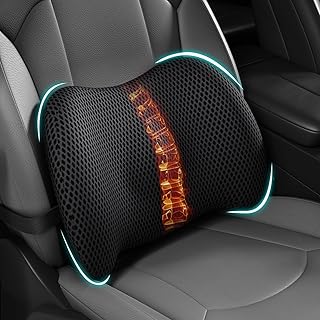
The internal core material dictates how well a cushion maintains lower back support over prolonged driving sessions. High-density memory foam remains the gold standard because it slow-molds to your body weight, distributing pressure across the entire lumbar arch. However, standard memory foam responds heavily to ambient cabin temperatures; it stiffens in freezing winter weather and turns soft under high summer heat. To combat this, look for temperature-neutral memory foam or open-cell polyurethane formulations that preserve their structural integrity regardless of the climate inside your vehicle.
Gel-infused foams and pure silicone gel grids offer an alternative for drivers who run notoriously warm. While gel alone lacks the deep structural support needed for acute spinal alignment, gel-layered memory foam creates a balanced middle ground: structural firmness underneath with immediate heat dispersion on the surface. Inflatable air-bladder cushions represent another niche option, preferred by drivers who share a vehicle and require quick firmness adjustments on the fly, though they lack the contoured side-bolstering provided by shaped foam.
Thickness and Profile: Avoiding the “Pushed Forward” Effect
The single most common mistake buyers make is choosing a lumbar cushion that is far too thick. A pillow that exceeds three to four inches in depth will force your lower torso forward, stripping away upper back contact with the seatback and thrusting your neck toward the headrest. This creates severe upper thoracic strain and disrupts your ideal driving reach to the steering wheel and foot pedals.
For standard sedan and crossover bucket seats, a depth profile between 2.5 and 3.5 inches at the thickest point of the lumbar curve provides sufficient spinal support while keeping your shoulder blades comfortably resting against the seat. Vehicles with aggressive side bolsters, such as sports coupes, demand a narrower cushion design that fits neatly between the bolsters without riding up on the lateral pads. Conversely, flat bench seats in older trucks or commercial vans benefit from wider, contoured pillows that provide their own integrated lateral stability.
Strapping Mechanisms and Anchoring Systems
A lumbar cushion that migrates every time you shift weight or exit the vehicle is worse than useless. Effective anchoring systems rely on dual adjustable elastic straps equipped with durable quick-release buckles. Single-strap designs invariably slide down toward the seat crease over time, causing the support bulge to press against the sacrum rather than the lumbar spine.
Look for straps that can be routed either horizontally around the seatback or vertically over the headrest and under the seat base. If your car features integrated headrests or full-back seat covers without passthrough gaps, ensure the cushion utilizes a high-friction, non-slip rubberized mesh backing. This textured backing prevents migration on leather, vinyl, and smooth synthetic fabrics without relying on wrap-around straps that might interfere with seat-mounted side airbags.
Cover Fabrics, Heat Management, and Maintenance
Vehicle interiors endure extreme temperature swings and high friction, making cover selection vital for long-term usability. 3D spacer mesh and honeycomb polyester covers provide superior airflow, preventing sweat accumulation on hot days. Smooth velvet or plush microfiber covers feel soft to the touch, but they trap body heat rapidly and degrade quickly under daily abrasive contact with heavy clothing like denim or work jackets.
Hygiene is another key consideration, as automotive fabrics absorb ambient dust, sweat, and spilled drinks. Always choose a lumbar pillow equipped with a removable, machine-washable outer cover secured by a smooth, low-profile zipper. Ensure the zipper pull is tucked into a fabric garage so it does not scratch or wear down your car’s original upholstery over time.
When to Spend More: Evaluating Premium Features
Entry-level lumbar pillows cover the basic mandate of filling space behind your lower back, but investing in higher-tier options buys structural longevity and specialized ergonomics. Premium cushions incorporate multi-density foam cores—using firmer foam at the lower edge to cradle the pelvis and softer foam at the top to transition seamlessly into the upper back. This prevents sharp pressure ridges that plague single-density, mass-produced foam blocks.
Spending extra is also justified if you need targeted features like adjustable lumbar inserts or integrated strap extensions designed for extra-large captain’s chairs. Higher-end models use commercial-grade strap hardware that resists stretching out after months of exposure to cabin heat, whereas budget straps often lose elasticity within a single season. If you log over 15,000 miles a year, the structural resilience of premium foam easily justifies the added cost.
Common Compatibility and Sizing Traps
Before committing to a lumbar support pillow, carefully inspect your current driver’s seat configuration. Active headrests, power lumbar mechanisms, and seat ventilation systems can all impact how an aftermarket cushion performs. If your car seat already features built-in power lumbar controls, fully retract the internal support mechanism before fitting an external pillow to avoid pushing your spine into excessive curvature.
Additionally, verify whether your vehicle’s seat covers or factory upholstery feature side-impact airbags integrated into the seat frame. Wrapping thick, unyielding elastic straps across the upper seat bolster can obstruct airbag deployment pathways in a side-impact collision. In such setups, opt for strap-free cushions with non-slip backings or models specifically engineered with safety-tested breakaway straps.
Related Guides
For broader recommendations on keeping your cabin comfortable and fully functional, check out our roundup of the best lumbar support pillows for cars to find top-rated options for every seating style. If you are upgrading your interior tech alongside your seating ergonomics, read our guide on the top cassette adapters to keep older sound systems connected effortlessly. Finally, to keep your refreshed interior free of dirt and debris, take a look at our hands-on review of the tested handheld car vacuums.
FAQ
Can a car lumbar pillow cause back pain if positioned incorrectly?
Yes, placing a lumbar pillow too low presses against the sacrum, while setting it too high exaggerates upper spine curvature. The central swell of the cushion should nestle directly into the natural curve of your lower back, just above your belt line.
Will a lumbar pillow interfere with heated car seats?
While a dense foam cushion will slow down the transfer of warmth from seat heating elements, heat will eventually pass through thin mesh covers. However, the foam itself acts as an insulator, so it will retain your body heat naturally once warmed up.
How do I clean a memory foam car lumbar cushion?
Remove the outer fabric cover and wash it on a gentle machine cycle using mild detergent, then air dry. Never wash or submerge the inner memory foam core in water, as moisture breaks down the cellular structure and destroys the foam.
How long does a car lumbar support pillow usually last?
A quality high-density memory foam pillow typically retains its shape and supportive resilience for two to three years of daily driving. Cheaper low-density polyurethane foams often flatten out within six to twelve months, necessitating replacement.