Setting up deep, responsive low-end in a vehicle requires far more than picking the highest wattage number printed on a colorful box. Bass frequencies demand massive amounts of electrical power to push heavy subwoofer cones, making the amplifier the absolute critical link in your sound system. If you pair a high-excursion subwoofer with an underpowered or poorly engineered amplifier, you end up with muddy, distorted low notes, excessive heat, and the high risk of burning out your subwoofer voice coils through signal clipping.
For audio enthusiasts building a high-performance system in 2026, navigating power ratings, impedance stability, efficiency classes, and vehicle electrical demands can quickly become overwhelming. This decision guide cuts through the marketing noise to explain what technical specifications actually impact real-world bass performance, how to properly match your amp to your subwoofers, and where your money is best spent to achieve chest-thumping, clean low-end without damaging your vehicle electrical infrastructure.
As an Amazon Associate we earn from qualifying purchases at no extra cost to you.

Focus on RMS Power Over Peak Marketing Numbers
The single most common mistake made when shopping for a bass amplifier is relying on peak, dynamic, or maximum power ratings. Audio manufacturers frequently print exaggerated dynamic figures like 3,000 Watts on the chassis, but these numbers represent short power bursts measured for milliseconds under idealized laboratory conditions. Continuous RMS (Root Mean Square) power is the only specification that accurately reflects how much clean energy an amplifier can feed your subwoofers constantly without distortion.
When evaluating RMS ratings, pay close attention to the rated supply voltage. A quality amplifier might produce 1,000 Watts RMS at 14.4 Volts, but your car’s electrical system may fluctuate between 12.5 Volts and 13.8 Volts while playing heavy bass tracks. Look for amplifiers certified under CTA-2006 (formerly CEA-2006) standards. CTA-2006 compliance guarantees that an independent standard was used to measure RMS output and signal-to-noise ratio, ensuring you get the actual power output promised on the box.
Choose Class D Monoblocks for Dedicated Subwoofer Duty
While multi-channel amplifiers work well for door speakers, dedicated single-channel (monoblock) Class D amplifiers are the undisputed standard for powering low-end setups. Class D topology utilizes switching transistors that flip rapidly between fully open and fully closed states rather than operating linearly like traditional Class A/B amplifiers. This design results in significant performance benefits for subwoofers:
- High Power Efficiency: Class D amplifiers typically convert 80% to 90% of drawn electrical current into usable audio output, whereas Class A/B designs waste nearly half their input power as raw heat.
- Reduced Thermal Load: Because less energy is wasted as heat, Class D amplifiers can fit into compact chassis designs without thermal throttling during extended high-volume listening sessions.
- Subwoofer-Specific Processing: Monoblocks are manufactured exclusively for low-frequency sound, featuring dedicated low-pass filters, bass boost circuits, and low-impedance stability tailored for subwoofers.
Match Impedance and Power Output to Your Subwoofers
An amplifier does not produce a fixed amount of wattage; its output depends directly on the electrical resistance (impedance measured in ohms) presented by the connected subwoofers. Amplifiers yield higher wattage as resistance decreases, meaning an amplifier might output 500 Watts RMS into a 4-ohm load, 800 Watts RMS into a 2-ohm load, and 1,200 Watts RMS into a 1-ohm load.
Before buying an amplifier, determine the final wiring resistance of your subwoofer setup. If you plan to wire dual voice coil subwoofers in parallel down to 1 ohm, you must verify that the amplifier is explicitly rated 1-ohm stable. Running a non-1-ohm stable amplifier at low impedance forces excessive current draw, causing the amplifier to enter thermal protection mode or suffer permanent component failure. Match your subwoofers’ combined RMS handling directly to the amplifier’s RMS rating at your target final impedance.
Evaluate Your Vehicle’s Electrical Capacity
Heavy bass demands tremendous electrical current from your vehicle. Power calculation follows basic electrical physics: Watts divided by Volts equals Amps. Accounting for amplifier efficiency, a 1,500 Watt RMS Class D amplifier running at 13.8 Volts can draw well over 130 Amps of current during heavy bass drops. If your stock vehicle electrical system cannot maintain continuous current, you will experience severe voltage drops, dimming headlights, and amplifier thermal shutdown.
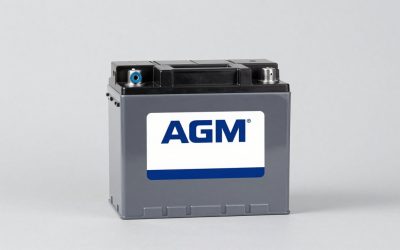
For systems producing under 1,000 Watts RMS, stock charging systems with a healthy AGM battery are usually sufficient. However, for setups exceeding 1,000 Watts RMS, budget for electrical supporting modifications. Upgrading key engine bay ground and power cables with 1/0 AWG oxygen-free copper (commonly known as “The Big 3 Upgrade”) reduces electrical resistance. For high-output builds pushing 2,000 Watts RMS or more, installing a high-output aftermarket alternator and secondary battery is mandatory to prevent voltage sag.
Prioritize Vital Signal Controls and Subsonic Filters
Power alone does not guarantee great low-end; precision signal control keeps your bass tight and protects your drivers from damage. When choosing a high-quality bass amplifier, verify that the control panel includes these crucial features:
- Subsonic (Infrasonic) Filter: Essential for ported (vented) subwoofer enclosures. A subsonic filter cuts out ultra-low frequencies below the enclosure’s tuning frequency, preventing the subwoofer cone from over-excursion and tearing itself apart on low frequencies you cannot hear anyway.
- Variable Low-Pass Filter (LPF): Allows you to dial in the upper frequency cutoff, typically between 50 Hz and 80 Hz, ensuring the subwoofer only plays low notes without attempting to reproduce vocal or midrange signals.
- Clipping Indicator Light: Premium amplifiers include a clipping LED indicator on the amp chassis or on the remote bass knob. This visual alert warns you immediately when the audio signal is distorting, allowing you to lower the gain before voice coils overheat.
When to Spend More: Build Quality and Internal Components
Budget amplifiers often cut corners on internal components, using lower-grade capacitors, small heat sinks, and restrictive wiring terminals. Higher-end bass amplifiers justify their price point through robust thermal management, thick double-sided circuit boards, and heavy aluminum heat sinks that dissipate heat rapidly during continuous play.
Higher-tier amplifiers also utilize heavy-gauge block terminals rather than cheap screw terminals, allowing direct connection of 1/0 AWG power and ground cables. Furthermore, spending more delivers cleaner power with lower total harmonic distortion (THD), higher damping factors (yielding tighter control over the speaker cone), and advanced protection circuitry against short circuits, thermal overload, and reverse polarity.
Related Guides
Once you understand the key specifications and electrical requirements for pushing heavy low-end, check out our top-tested recommendations in our guide to the best high quality car audio amplifier for bass lovers to find the perfect match for your vehicle build.
FAQ
What is the difference between gain control and volume control on an amplifier?
Gain control is not a volume knob; it matches the amplifier’s input sensitivity to the output signal voltage coming from your head unit. Setting the gain too high introduces signal distortion and clipping, which quickly overheats voice coils and can destroy subwoofers. Properly setting gain using a multimeter or oscilloscope ensures maximum clean output without risking equipment damage.
Can I connect a powerful monoblock amplifier to a factory car stereo?
Yes, you can integrate a monoblock amplifier with a factory head unit using a high-quality Line Output Converter (LOC) or an amplifier with built-in high-level speaker inputs. Advanced active LOCs step down high-voltage factory speaker signals into clean RCA preamp signals while restoring low-bass frequencies that factory systems often roll off to protect cheap factory door speakers.
Why does my car audio amplifier go into protection mode when the bass hits hard?
An amplifier enters protection mode during heavy bass notes primarily due to low voltage drop, incorrect speaker wiring impedance, or thermal overload. When heavy low frequencies demand high current, a weak factory battery or small gauge power wiring causes voltage to drop below the amp’s operational limit, forcing the system to shut down safely rather than suffer damage.
Do I need a capacitor for my high-powered bass amplifier?
Standard audio capacitors store a small charge to help buffer minor voltage spikes, but they are not a fix for an underpowered electrical system. If your headlights dim significantly when bass plays, your system requires larger gauge oxygen-free copper power cabling, a stronger AGM battery, or a high-output alternator to supply real, continuous current.