Key takeaways
- Backflush cleaner: Powder is economical; tablets are tidier and easier to dose.
- Descaler: Essential for machines without effective scale prevention, especially in hard-water areas.
- Blind basket: Necessary for backflushing a traditional machine, but unnecessary for many capsule and superautomatic models.
- Group brush: Nylon bristles are generally preferable to abrasive metal around the group gasket and shower screen.
- Steam-wand tool: Helpful for milk residue, but it does not replace soaking removable steam tips in appropriate cleaner.
- Water-hardness strips: Valuable for setting a descaling schedule instead of guessing.
- Microfiber cloth: Useful for wiping the group area and exterior, but keep a cloth used on milk equipment separate from one used on the machine body.
The best espresso machine cleaning kit for most home users is a two-part setup: a backflush cleaner such as Urnex Cafiza 2, plus a separate descaler such as Urnex Dezcal or Durgol Swiss Espresso; all-in-one bundles are convenient, but they rarely replace both products well.
Our top picks

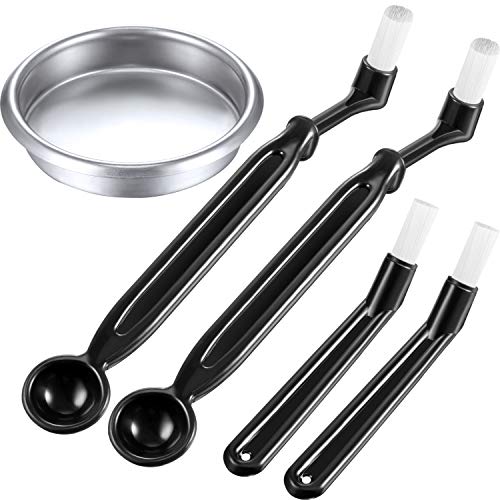


As an Amazon Associate we earn from qualifying purchases at no extra cost to you. Ratings are shown as listed on Amazon.
Best espresso machine cleaning kits by situation
| Situation | Best kit type | What it should contain | Typical cost | Why it suits the job |
|---|---|---|---|---|
| First-time owner | Starter bundle | Cleaning tablets or powder, descaler, blind basket, group brush, microfiber cloth | $20–$40 | Provides the basic tools without requiring separate purchases |
| Daily espresso drinker | Large powder-and-descaler setup | 566 g or larger backflush cleaner, multi-use descaler, durable brush | $25–$55 initially; about $1–$3 per month thereafter | Lowest ongoing cost and enough cleaner for regular maintenance |
| Pod, capsule, or superautomatic machine | Manufacturer-compatible tablet kit | Cleaning tablets, approved descaler, milk-system cleaner if applicable | $15–$45 | Reduces the risk of using a product that is unsuitable for internal valves or automatic milk circuits |
| Hard-water area | Descaling-focused kit | Several descaling doses, water-hardness test strips, cleaning tablets | $25–$60 | More useful than a brush-heavy kit when mineral buildup is the main problem |
| Small kitchen or travel setup | Compact tablet kit | Individually portioned tablets, small group brush, cloth | $15–$30 | Easy to store, measure, and carry without an open tub of powder |
Our leading picks
Best overall: Urnex Cafiza 2 plus Urnex Dezcal
This is the strongest general-purpose combination for a traditional pump espresso machine. Cafiza 2 is designed to remove coffee oils from the group head, portafilter, and three-way-valve system during backflushing. Dezcal addresses mineral scale, which coffee-oil cleaner cannot remove.
The important distinction is that these products do different jobs. Cafiza is used in the brew circuit during a cleaning cycle; Dezcal is mixed with water and circulated through the machine according to the machine maker’s descaling instructions. Buying a large tub of Cafiza powder and separate descaler usually costs less per cleaning than repeatedly buying small “complete” kits.
Choose tablets instead of powder if you want consistent dosing and cleaner storage. Choose powder if you make espresso frequently and want the lowest cost per cycle.
Best branded convenience option: a manufacturer-approved cleaning kit
For machines from Breville, De’Longhi, Gaggia, Jura, or similar manufacturers, an approved kit is often the least complicated choice. These kits commonly pair cleaning tablets with a brand-specific descaler and may include a water filter or cleaning accessory.
The premium is worthwhile when the machine has a complicated automatic program, an integrated grinder, or a milk system. Read the manual before substituting products: some superautomatic machines require a particular tablet size, a dedicated milk cleaner, or a descaler that the manufacturer has approved for its internal materials.
Best for traditional machines: a barista-style kit with Puly Caff or Cafiza
A traditional single-boiler, heat-exchanger, or dual-boiler machine benefits from a kit that includes a blind basket, group-head brush, steam-wand brush, and detergent. Puly Caff and Cafiza are established choices for removing coffee residue, but the accessories matter almost as much as the detergent.
Look for a group brush with a water-deflecting collar. Without one, rinse water can run down your hand while you scrub the gasket and shower screen. A narrow steam-tip brush is useful for clearing dried milk from the outside of the nozzle, although it should not be forced into blocked steam holes.
Best descaler-focused option: Durgol Swiss Espresso
Durgol Swiss Espresso is a practical choice when the main concern is mineral deposits rather than coffee oils. It is sold in pre-measured liquid doses, which avoids weighing powder and makes it convenient for occasional users.
It is not a substitute for backflush detergent. A machine can have a clean-looking water path while its group valve and shower screen are coated with rancid coffee oils. Pair a descaler with cleaning tablets or powder unless your machine does not support backflushing.
What should a worthwhile kit contain?
- Backflush cleaner: Powder is economical; tablets are tidier and easier to dose.
- Descaler: Essential for machines without effective scale prevention, especially in hard-water areas.
- Blind basket: Necessary for backflushing a traditional machine, but unnecessary for many capsule and superautomatic models.
- Group brush: Nylon bristles are generally preferable to abrasive metal around the group gasket and shower screen.
- Steam-wand tool: Helpful for milk residue, but it does not replace soaking removable steam tips in appropriate cleaner.
- Water-hardness strips: Valuable for setting a descaling schedule instead of guessing.
- Microfiber cloth: Useful for wiping the group area and exterior, but keep a cloth used on milk equipment separate from one used on the machine body.
A portafilter basket is not automatically a blind basket. A blind basket has no perforations and is required to create pressure during a conventional backflush. Some kits include one; others assume the machine already has one.
Compatibility: match the cleaner to the machine
| Machine type | Backflush detergent | Descaler | Brush and accessory priorities |
|---|---|---|---|
| Traditional pump machine | Usually appropriate, using a blind basket | Follow the manufacturer’s boiler and water-path procedure | Group brush, blind basket, steam-tip brush |
| Heat-exchanger or dual-boiler machine | Appropriate for the brew group if backflushing is supported | May require separate boiler or circuit instructions | Soft nylon group brush and accurate dosing |
| Superautomatic machine | Use the specified cleaning tablet; do not assume Cafiza powder is suitable | Use the approved liquid or tablet descaler | Milk-system cleaner, brew-unit brush, tablet storage |
| Capsule or pod machine | Often no conventional backflush cycle | Use the manual’s compatible descaling process | Spout brush, cloth, and water-tank cleaning tools |
| Lever machine | Depends on the group design; many do not use a three-way valve | Follow the specific service procedure | Group brush and careful manual rinsing |
Cleaning cost: tablets versus powder
Consider a daily user who backflushes once per week and descales four times per year. A 566 g tub of powder costing about $15–$25 might require roughly 3–5 g per backflush, producing approximately 113–188 cleaning doses. At four doses per month, the detergent portion costs about $0.32–$0.88 per month.
Pre-measured tablets may cost approximately $0.50–$1.25 per cleaning, depending on pack size. That can raise annual backflush cost to about $26–$65, compared with roughly $15–$30 for powder over the same 52 cycles. The difference is the price of convenience and consistent dosing. Always use the quantity and cycle specified by the machine and cleaner instructions rather than treating these figures as universal recipes.
Descaler cost is usually more significant for occasional users because each treatment can cost about $3–$10. A water filter, lower-mineral water, or a correctly configured hardness setting may reduce how often descaling is needed, but neither prevents the need for periodic cleaning.
A practical maintenance schedule
- After each use: Knock out the puck, rinse the basket, wipe and purge the steam wand immediately, and flush the group briefly.
- Weekly for frequent users: Remove the basket and shower screen if the manual permits, brush away grounds, and run the approved detergent cycle or backflush.
- Every one to four weeks: Soak the portafilter and metal basket in espresso cleaner, keeping plastic handles and coated parts out of hot detergent unless approved.
- Every one to three months: Descale when indicated by the manual, water-hardness setting, or machine warning. Hard water and high usage shorten the interval.
- When milk is involved: Run the machine’s milk-cleaning program at the stated frequency and clean removable milk parts separately.
Do not mix descaler and coffee-oil detergent in the same container or cleaning cycle. Rinse thoroughly between products. Avoid household vinegar unless the manufacturer specifically permits it: its odor can linger, and its cleaning behavior is less predictable than a purpose-made descaler.
Ownership realities: what wears out first?
Brush bristles flatten, group gaskets harden, steam-tip openings clog, and microfiber cloths eventually retain oily residue. A brush is usually worth replacing when its bristles no longer reach around the gasket; a worn brush can leave buildup behind even when the detergent is effective.
Cleaning products also lose value when stored poorly. Keep powder dry, close tablet packaging after use, and do not leave mixed descaler in the water tank. Never use abrasive pads on polished stainless steel or coated surfaces. The least expensive kit is not a bargain if it omits the blind basket, uses a harsh brush, or encourages an incorrect cleaning cycle.
Bottom line
For a conventional espresso machine, buy a kit—or assemble one—with Cafiza 2 or Puly Caff, a blind basket, a nylon group brush, and a separate descaler such as Urnex Dezcal or Durgol Swiss Espresso. For a superautomatic or capsule machine, prioritize the manufacturer’s tablet and descaler specifications over a universal bundle. Powder wins on ongoing cost, tablets win on dosing convenience, and the right descaler matters more than adding another decorative accessory to the box.