Key takeaways
- Glass-front or high-gloss acrylic: Use adhesive only; drilling will crack the material and voids most warranties.
- Particleboard or MDF: Pre-drill with a 5/64″ bit and avoid over-tightening. Screw pull-out is the first failure mode when a toddler yanks, not the lock itself.
- Corner lazy Susan or bi-fold doors: Most magnetic and strap locks will not align. A single adhesive anchor with an adjustable strap length of 6 to 8 inches is the only type that articulates around the angle.
The best baby proofing cabinet lock kits for most homes are adhesive strap locks for renters and screw-mounted magnetic locks for permanent childproofing, with adhesive U-shaped handle locks as a quick middle ground for double-door cabinets.
Our top picks

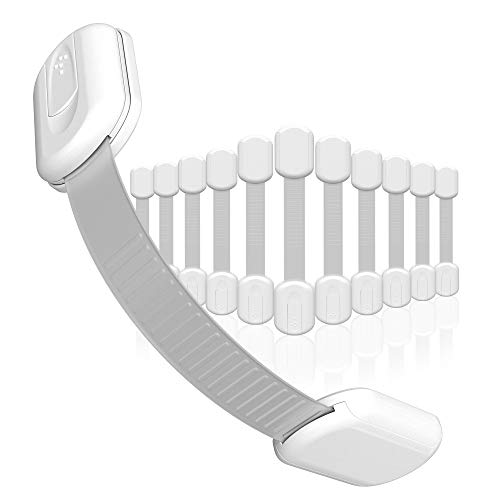
![[12-Pack] Invisible Baby Proofing Cabinet Locks - No Drill Child Safety Drawer Latches - Adhesive Childproof Latch for Cabinets, Kitchen & Furniture - Secure Toddler & Infant Safety No Tools Required](https://m.media-amazon.com/images/I/31eZCkmpTfL._SL500_.jpg)
As an Amazon Associate we earn from qualifying purchases at no extra cost to you. Ratings are shown as listed on Amazon.
Adhesive vs. Screw-Mounted: The Real Trade-Offs
Both styles keep cabinets closed against a toddler’s pull, but they differ in how they fail, how they look, and how they come off. Adhesive kits use 3M VHB or similar acrylic foam tape to bond to the cabinet surface. Screw-mounted kits anchor into the wood or particleboard with #6 or #8 wood screws and rely on mechanical strength. That single difference drives compatibility, adult convenience, and long-term durability.
| Feature | Adhesive Strap / Flexible Locks | Adhesive U-Shaped Handle Locks | Screw-Mounted Magnetic Locks | Screw-Mounted Spring Latch Locks |
|---|---|---|---|---|
| Typical Kit Contents | 6-12 straps + 6-12 extra adhesive pads | 4-6 U-locks | 4-12 locks + 1 magnetic key | 6-12 latches + screws |
| Attachment Method | 3M VHB pad, 25mm x 35mm to 32mm x 45mm | Compression fit, no adhesive or screw | 2 screws per lock, #6 x 5/8″ or M3.5 x 16mm | 2-3 screws per latch, #6 x 1/2″ |
| Pull Resistance | 18-25 lbs static hold per strap when cured 24 hrs | 12-18 lbs, limited by handle spacing | 28-40 lbs, limited by screw pull-out in particleboard | 20-30 lbs |
| Installation Time Per Lock | 3-5 minutes + 24-hour cure | 10 seconds, removable instantly | 8-12 minutes, requires drill and alignment jig | 5-8 minutes |
| Surface Compatibility | Flat, non-porous: laminate, painted wood, glass, metal. Poor on unfinished wood, textured vinyl, heavily grained oak | Only for adjacent handles/knobs 3″ to 6.5″ apart | Works on most cabinet walls 0.5″ to 1″ thick; needs 0.6″ clearance inside for housing | Needs frame and door overlap of at least 0.5″ |
| Adult Access | Press and peel button with one hand | Press sides and slide off | Touch magnetic key to outer surface | Press spring latch inside after opening slightly |
| Visibility | Visible strap on exterior, white/grey/clear | Highly visible on handles | Totally hidden from outside | Hidden when closed |
| Removal / Residue | Requires heat gun/hair dryer and dental floss; possible finish lift on lacquer if rushed | No residue | Leaves 2 screw holes per lock | Leaves 2-3 screw holes per latch |
| General Market Range (2026) | $12 – $24 for 6-pack | $10 – $18 for 4-pack | $22 – $45 for 8 locks + 2 keys | $14 – $26 for 12-pack |
Choosing by Cabinet Compatibility
Your cabinet construction matters more than brand marketing. Measure before you buy.
1. Frameless vs. Face-Frame Cabinets
Frameless (European-style) cabinets have doors that sit flush over the box edge with a 0.5″ to 0.75″ side panel. Magnetic locks fit easily inside this panel. Adhesive straps also fit well because the door and side panel are coplanar. Face-frame cabinets have a 1.5″ hardwood frame around the opening. Spring latches often need a spacer or longer screws to reach the frame, while magnetic locks need to be positioned on the frame itself, not the thin side panel. Check the inside depth: most magnetic housings are 18mm to 22mm deep and require at least 15mm of flat space to mount.
2. Double-Door and Pantry Cabinets
For two doors that meet in the middle without a center stile, single-point locks do not work. Use a U-shaped handle lock if handles are 75mm to 165mm apart, or use one adhesive strap bridging both doors at the top. For wide pantry doors, screw-mounted L-shaped latches mounted at the top interior offer higher resistance than a strap placed at adult knee height where leverage is greatest.
3. Drawers vs. Doors
Drawers need a lock that tolerates constant inward/outward force. Adhesive straps mounted vertically on the drawer front and cabinet frame last longer than horizontally mounted straps, which peel from repeated shear. Screw-mounted magnetic locks are ideal for heavy utensil drawers that hold 20-30 lbs of contents, because adhesive pads gradually creep under sustained load and heat from a nearby oven or dishwasher.
- Glass-front or high-gloss acrylic: Use adhesive only; drilling will crack the material and voids most warranties.
- Particleboard or MDF: Pre-drill with a 5/64″ bit and avoid over-tightening. Screw pull-out is the first failure mode when a toddler yanks, not the lock itself.
- Corner lazy Susan or bi-fold doors: Most magnetic and strap locks will not align. A single adhesive anchor with an adjustable strap length of 6 to 8 inches is the only type that articulates around the angle.
Installation Effort and Adult Access Compared
Adhesive installation looks easier, but the cure time is critical. Clean both surfaces with 70% isopropyl alcohol, not household cleaners that leave silicone residue. Apply at room temperature above 65F, press firmly for 30 seconds, and do not load for 24 hours. Full bond strength on 3M VHB reaches about 50% at 20 minutes, 90% at 24 hours, and 100% at 72 hours. Homes that open cabinets during the cure window see most adhesive failures.
Screw-mounted magnetic locks require a drill, a 3/32″ pilot bit, and the included alignment template. Plan 90 to 120 minutes to outfit a 10-cabinet kitchen, versus 25 to 40 minutes for an adhesive kit. The payoff is one-handed, eyes-free access: you hold the small magnetic key (typically 35mm to 45mm diameter, 2000-3000 Gauss) against the door exterior and the latch releases. Strap locks require two motions – press the side buttons and peel the strap – which is harder when holding a child or groceries.
For households with grandparents or caregivers with limited hand strength, magnetic keys are significantly easier than pinching small strap buttons. Keep one key mounted under a countertop overhang with adhesive and one in a high drawer so you are never locked out. Magnetic locks automatically re-engage when you close the door; strap locks must be manually re-secured, and leaving them dangling defeats the purpose.
Decision Matrix: Match Your Situation to the Right Kit
| Your Situation | Best Fit | Why |
|---|---|---|
| Renting, or cabinets are new/high-end lacquer | Adhesive strap locks + U-shaped handle locks | No holes, fully reversible. Replace pads instead of repairing wood filler. |
| Own your home, long-term baby-proofing for 2+ years | Screw-mounted magnetic locks (e.g., Safety 1st Magnetic Lock Set, Jambini Magnetic Cabinet Locks, Jool Baby Magnetic Locks) | Hidden, highest pull resistance, survives heat and humidity from dishwashers. |
| Mixed handles: knobs on some doors, bar pulls on others | Combination: magnetic locks for flat fronts, U-locks for handle pairs | One kit type rarely fits every cabinet. Buying a combo avoids unused pieces. |
| Need daily access to 2-3 cabinets (under sink, snacks) | Adhesive straps with a switch to keep unlocked mode, or magnetic with off-switch | Models with a manual disable toggle let you leave a cabinet in adult-only mode without removing the lock. |
| Particleboard cabinets in older apartment | Adhesive straps mounted high on door edge | Screws strip easily in swollen particleboard; adhesive on flat laminate holds better than screws in crumbly core. |
| Budget under $20 to cover whole kitchen | 12-pack adhesive straps (type-generic, Vmaisi or Eco-Baby style kits) | Lower cost per opening covered; expect to replace 2-3 pads in the first year. |
Durability and Ownership Realities
What wears out first is not the plastic housing but the interface to the cabinet. For adhesive locks, the failure pattern is edge peel in heat. Kitchens above a dishwasher or near a south-facing window can reach 110F inside the cabinet frame, softening acrylic adhesive. If your dishwasher vents at the top, mount straps at least 4 inches away from the vent seam. Wipe straps with warm water only; citrus degreasers and alcohol repeatedly applied degrade the strap’s flexible hinge and fade the printed release buttons within 6 to 9 months.
For screw-mounted locks, the weak point is screw loosening from seasonal wood movement. Check tension after the first 30 days and again at 6 months. Use the included #6 screws, not longer drywall screws, which can puncture through thin 1/2″ cabinet sides. Keep spare magnetic keys. The keys are not interchangeable across all brands – Safety 1st and Jambini keys have different magnet polarity and housing depth, so a key from one kit may not trigger another brand reliably through 3/4″ wood.
Common mistakes that shorten life:
- Installing adhesive on textured wood grain or dusty surfaces without degreasing. Even a thin cooking oil film cuts hold strength by 40%.
- Mounting straps within toddler reach at mid-door height. Toddlers get better leverage pulling at chest height; mounting at the top corner increases effective resistance and keeps the release out of sight.
- Over-tightening magnetic lock screws into MDF until the head strips the panel. Stop when snug, then give a quarter-turn.
- Not teaching older siblings. A 4-year-old who can demonstrate the strap release will show the toddler. Hidden magnetic locks avoid this social bypass.
Maintenance is minimal: vacuum the magnetic latch cavity every few months – crumbs prevent the spring plunger from seating – and replace any adhesive pad that shows yellowing or edge lift immediately rather than pressing it back down. Most kits include 30-50% extra pads for this reason.
What to Buy by Category in 2026
Rather than a single winner, think in system types that match your cabinets:
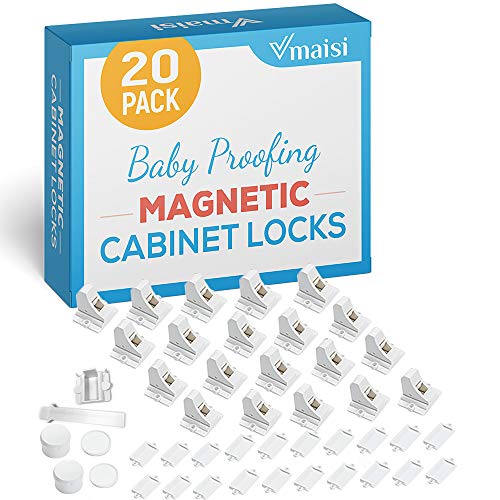
Best for invisible, long-term security: Screw-mounted magnetic kits with an alignment jig and toggle switch. The Safety 1st Magnetic Lock Set and similar Jambini and Jool Baby magnetic systems are widely available, include 8 to 12 locks per box, and allow you to disable locks when children are older without unscrewing. Expect to drill two pilot holes per lock and keep the key out of toddler reach.
Best for renters and quick installs: Adjustable adhesive strap kits such as Vmaisi or Eco-Baby style 6 to 12-packs. Look for straps with 3M VHB backing listed explicitly, strap length of 180mm to 200mm, and a two-button release rather than a single button, which toddlers open more easily. Kits that include alcohol wipes and extra pads add real value.
Best for handle-to-handle cabinets: U-shaped sliding locks. No adhesive or screws. They are the fastest to add and remove for travel or grandparents’ homes, but only work where handle spacing matches the lock’s 3″ to 6.5″ range. They are not suitable for knobs or single-pull doors.
For most families, a 4-pack of magnetic locks for lower kitchen drawers and cleaning-product cabinets combined with a 6-pack of adhesive straps for upper cabinets and bathrooms covers a full home without drilling every door.
How Many Kits Do You Need? A Quick Coverage Calculation
Count every opening at toddler height (under 48 inches), not just doors: drawers, appliance garages, and that one cabinet with the trash bin. A typical 10×12 kitchen has 12 to 16 openings. Add 2 bathrooms with 2 under-sink doors each.
Example: 14 kitchen openings + 4 bathroom doors = 18 openings. If you use a 12-pack of screw-mounted magnetic locks for the 10 most critical openings (cleaners, knives, heavy pots) and a 6-pack of adhesive straps for the remaining 8 low-risk doors, you cover the home with two boxes and have 2 to 4 spares for future replacement. Cost per opening ranges from about $2.00 to $3.50 for adhesive and $3.00 to $5.50 for magnetic when bought in 8 to 12-packs, so mixing types often lands between $45 and $75 total.
FAQ
Will adhesive locks damage cabinets when removed?
On factory-finished laminate, painted wood with cured catalyzed lacquer, and glass, damage is rare if you heat the pad to 120F to 140F with a hair dryer for 45 seconds and peel slowly with dental floss. On unfinished wood, oil-finished wood, or cabinets repainted with chalk paint without a topcoat, the finish can lift with the pad. Test one pad behind a door for 48 hours before committing.
Are magnetic locks safe if we lose the key?
The lock stays engaged without the key, so the cabinet remains secure, but you will be temporarily locked out. Store keys magnetically under a high shelf and in a junk drawer. Most magnetic keys work through material up to 1″ thick, so you can hold it against the outside of the door to release even if the door is stuck. Replacement keys are sold separately by type, but polarity varies by brand.
Do I need to baby-proof every cabinet?
Focus first on hazards: under-sink cleaners, medications, knives, and heavy cast iron that can fall when a drawer is pulled. General information only – this guide does not provide medical or safety certification advice. If you have concerns about poisoning risk or a child’s developmental stage, consult your pediatrician and your local poison control resources, and ensure locks meet ASTM or JPMA standards for your region.