Key takeaways
- Ear pads (12–24 months of regular use): Protein leather flakes and flattens first. Replacement pads for the models above run $10–$30 and take five minutes to swap. Factor this into total cost — a headphone with no available pads is disposable.
- Cables (varies wildly): Damage almost always happens at the jack or where the cable meets the cup. Coil your cable loosely, never wrap it around the headphones, and unplug from the controller before packing up rather than winding under tension.
- Hinges and swivels: The swivel mechanism is a wear point on any design. Check it when buying used — a crackling cup or floppy pivot usually means the hinge housing has cracked, which is rarely worth repairing on sub-$150 headphones.
- Headband padding: Rarely replaceable on budget models. A worn headband is uncomfortable but cosmetic; don’t let it be the reason you replace working headphones.
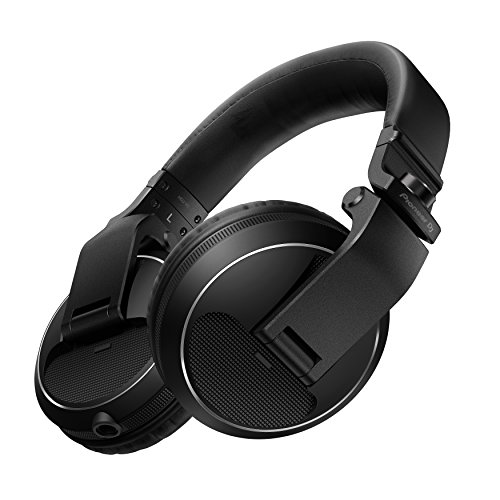
The best DJ headphones for beginners in 2026 are the Pioneer HDJ-X5 for most people, the Pioneer HDJ-CUE1 for tight budgets, and the Sennheiser HD 25 for anyone who wants a pair that will survive a decade of gigs. All three deliver what actually matters when you’re learning to beatmatch: strong isolation, a swiveling ear cup for one-ear monitoring, a coiled or replaceable cable, and enough low-end emphasis to hear the kick drum clearly in a loud room.
Our top picks


As an Amazon Associate we earn from qualifying purchases at no extra cost to you. Ratings are shown as listed on Amazon.
What Separates DJ Headphones from Regular Headphones
Studio headphones aim for flat, honest sound. DJ headphones are tuned differently on purpose: a boosted bass region so the kick cuts through ambient noise, elevated isolation so you can cue the next track while the current one plays at club volume, and a single-sided cable so the wire doesn’t tangle around your neck mid-mix.
The feature beginners underestimate most is the swiveling ear cup. DJing means constantly flipping one cup off your ear to hear the room while the other ear monitors the cued track. A cup that rotates 90 degrees (or a headband that twists, like the HD 25’s split design) turns this into a one-handed motion instead of a two-handed wrestle.
Quick Specs Compared
| Model | Weight | Driver | Impedance | Isolation type | Swivel | Replaceable cable | Typical price range |
|---|---|---|---|---|---|---|---|
| Pioneer HDJ-CUE1 | 215 g | 40 mm | 32 Ω | On-ear pads | 90° cups | Yes (bayonet lock) | $70–$100 |
| Pioneer HDJ-X5 | 269 g | 40 mm | 32 Ω | Over-ear | 90° cups | Yes (coiled + straight included) | $100–$140 |
| Sennheiser HD 25 | 140 g | ~30 mm | 70 Ω | On-ear, very high | Split headband, rotatable capsule | Yes (steel cable) | $150–$200 |
| Audio-Technica ATH-M50x | 285 g | 45 mm | 38 Ω | Over-ear, moderate | 90° cups | Yes (3 cables included) | $150–$170 |
| Reloop RHP-10 | ~250 g | 50 mm | 24 Ω | Over-ear | 90° cups | Yes | $60–$90 |
Two numbers deserve attention. Impedance under 70 Ω means any beginner controller’s headphone jack — including budget units like the Pioneer DDJ-200, DDJ-FLX4, or Numark Party Mix — can drive the headphones to comfortable volume without a separate amp. Weight matters too: anything over roughly 300 g starts pressing on your ears and jaw around the 90-minute mark, which is about how long a focused practice session runs.
How to Choose: The Criteria That Actually Matter
Isolation
Isolation is measured in how much ambient sound the cups block, and it’s what lets you cue at bedroom volume or booth volume. On-ear designs like the HD 25 clamp directly against the ear and block the most external noise, which is why they’ve been the standard in DJ booths for decades. Over-ear designs like the HDJ-X5 isolate slightly less but are gentler during long sessions. Avoid open-back headphones entirely — they leak sound out and let noise in, making them useless for cueing.
Comfort and clamping force
There’s a trade-off here. Strong isolation requires clamping pressure, and high clamping pressure causes ear fatigue. If you practice two-plus hours at a stretch, an over-ear model with softer pads wins. If you DJ in short bursts or value portability, on-ear is fine. One practical detail: velour or protein-leather pads that can be swapped out (HD 25, HDJ-X5, and M50x all support this) extend the usable life of the headphones by years, since pads are always the first thing to deteriorate.
Cables
The cable is the most common failure point on any DJ headphone — it gets caught on controller knobs, stepped on, and twisted constantly. A locking, user-replaceable cable (Pioneer’s bayonet system, Sennheiser’s steel cable, the M50x’s proprietary lock) means a $15–$30 fix instead of a new pair. Single-sided cabling also matters: dual-entry cables dangling from both cups snag on everything in a cramped setup.
Sound balance
For DJing, you want pronounced low-end and clear midrange where vocals and snares sit, with treble slightly restrained — hyped highs become painful at monitoring volume. The M50x is technically the most “hi-fi” option here, which is a double-edged sword: excellent detail, but its flatter bass makes beatmatching in loud environments marginally harder. The CUE1 and X5 have the scooped, bass-forward tuning that makes kick-to-kick alignment obvious to a beginner’s ear.
Controller compatibility
Every beginner controller outputs via a 1/8″ (3.5 mm) or 1/4″ (6.3 mm) jack — all headphones above ship with screw-on adapters, so compatibility is a non-issue. What matters is sensitivity: entry-level controllers have modest headphone amps, so a headphone rated around 100 dB/mW or higher (all models in the table qualify) reaches adequate volume. Avoid high-impedance studio headphones above 150 Ω for controller use.
Which Pair for Your Situation
| Your situation | Pick | Why |
|---|---|---|
| Under $100, learning on a DDJ-200/FLX4 or Numark controller | Pioneer HDJ-CUE1 | Proper DJ tuning and swivel at the lowest price from a brand that understands DJing; Bluetooth version exists but use wired for zero-latency cueing |
| $100–$150, want one pair for practice and first gigs | Pioneer HDJ-X5 | Metal-reinforced headband survives bag travel; inherits the tuning of Pioneer’s flagship HDJ-X10 |
| Plan to gig seriously, rough on gear | Sennheiser HD 25 | Every component is replaceable — pads, cable, capsules; parts availability has been continuous for 30+ years |
| Split time between DJing and music production | Audio-Technica ATH-M50x | Flatter response doubles as a reasonable mixing reference; heaviest of the group |
| Absolute minimum budget, occasional use | Reloop RHP-10 or similar 50 mm budget DJ model | Big drivers and DJ tuning for under $90; expect ear pads and headband padding to wear faster |
Ownership Realities: What Wears Out First
- Ear pads (12–24 months of regular use): Protein leather flakes and flattens first. Replacement pads for the models above run $10–$30 and take five minutes to swap. Factor this into total cost — a headphone with no available pads is disposable.
- Cables (varies wildly): Damage almost always happens at the jack or where the cable meets the cup. Coil your cable loosely, never wrap it around the headphones, and unplug from the controller before packing up rather than winding under tension.
- Hinges and swivels: The swivel mechanism is a wear point on any design. Check it when buying used — a crackling cup or floppy pivot usually means the hinge housing has cracked, which is rarely worth repairing on sub-$150 headphones.
- Headband padding: Rarely replaceable on budget models. A worn headband is uncomfortable but cosmetic; don’t let it be the reason you replace working headphones.
A realistic cost-per-use calculation: a $130 HDJ-X5 practiced with four times a week survives roughly four years before needing pads ($25), putting real ownership cost near $155 over ~830 sessions — about 19 cents per practice hour. Buying a $40 no-name pair that dies in six months costs more per hour, not less.
Common Beginner Mistakes
- Using Bluetooth for cueing: Even low-latency codecs introduce enough delay (30–100 ms) to break your timing. Bluetooth mode on the CUE1 BT is fine for casual listening; wire in for mixing.
- Buying audiophile headphones: Open-back designs like the Sennheiser HD 600 series are superb for home listening and useless for DJing — no isolation, sound leakage, no swivel.
- Monitoring at maximum volume: It’s tempting in loud rooms, but sustained high headphone volume is genuinely fatiguing and bad for your hearing over years of sessions. Better isolation beats higher volume.
- Ignoring the cue mix knob: Beginners crank headphone volume instead of balancing the cue/master blend on the controller. Keep master out of your ears when beatmatching.
Frequently Asked Questions
Do I need DJ-specific headphones to start learning?
Not strictly — any closed-back headphones work for bedroom practice. But you’ll quickly feel the limitations: no swivel means awkward one-ear monitoring, flat tuning makes kicks harder to isolate, and consumer cables aren’t replaceable. A proper DJ model under $100 pays for itself in frustration saved.
On-ear or over-ear for beginners?
Over-ear is more comfortable for long sessions and more forgiving on fit. On-ear (HD 25, CUE1) isolates better and packs smaller. If you mostly practice at home, over-ear; if you’ll carry them to gigs and parties, on-ear.
Will these work with my phone or laptop for casual listening?
Yes — all of them drive easily from phones and laptops, and DJ-tuned bass-forward sound suits electronic music listening well. Just note that models like the HD 25 clamp firmly, which some people find tight for long passive listening.
Bottom line: the HDJ-X5 hits the sweet spot of price, durability, and DJ-correct tuning for most beginners. Spend less only if budget demands it (CUE1), spend more only if longevity is the priority (HD 25). Everything else — including the highly regarded M50x — trades away some DJ-specific advantage in exchange for versatility.