Key takeaways
- Front dash cam: $30–$120 for the camera, $0–$25 for a memory card if one is not included, and roughly $10–$30 for a replacement card or mount over five years. A typical self-installed total is about $40–$175.
- Dual dash cam: $90–$250 for the camera, $15–$50 for a suitable memory card, and about $20–$60 for replacement cables, cards, or mounts over five years. A self-installed total is about $125–$360.
- Professional installation: Add approximately $75–$200 for either type, with dual systems usually toward the higher end because of rear-camera wiring.
What's inside
Choosing between a front dash cam and a dual dash cam is less about image quality alone and more about how much of your driving—and your household budget—you want protected. A front-only camera records the road ahead, while a dual system records both the road ahead and the area behind your vehicle. That second view can matter after a rear-end collision, while parked, or when another driver disputes what happened.
For many households, the decision comes down to three practical questions: How often is the vehicle used, where is it parked, and how much installation and maintenance are acceptable? A front camera is usually smaller, cheaper, and simpler. A dual dash cam costs more and takes longer to install, but it provides broader coverage. The best choice in 2026 is the one that matches your driving risks rather than the one with the longest feature list.
As an Amazon Associate we earn from qualifying purchases at no extra cost to you. Product prices and availability are accurate as of the date shown and are subject to change.



Quick Verdict
Choose a front dash cam if you want affordable evidence of what happens in front of your car, have a tight installation budget, or drive a compact vehicle where a rear camera feels unnecessary. A basic front model can cost about $30 to $80, use a small amount of windshield space, and be installed in roughly 15 to 30 minutes.
Choose a dual dash cam if you regularly commute, carry children or pets, park on busy streets, or want protection from rear-end and hit-and-run incidents. Dual systems generally cost about $90 to $250, and installation may take 30 to 90 minutes because the rear camera cable must be routed through the cabin.
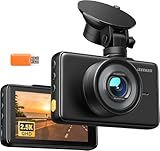
Among the reference products, the iZEEKER 2.5K front camera is listed at $29.99, while the galphi 4K front model with 5GHz WiFi and a 32GB card is $49.98. Dual-camera examples include the LHSYJ 4KUHD model at $109.99 and the ROVE R2-4K at $149.99 with a 128GB card. These prices illustrate the usual jump from basic front coverage to front-and-rear coverage.
Side by Side
| Factor | Front Dash Cam | Dual Dash Cam |
|---|---|---|
| Comfort | Less visual clutter and fewer cables | More hardware, but better peace of mind |
| Durability | One camera and one mount to maintain | Two cameras and a longer cable run |
| Price range | About $30–$120 | About $90–$250 |
| Maintenance | One lens, mount, and memory card to check | Two lenses, a rear cable, and more connections |
| Space needed | Usually about 2–4 inches of windshield width | Front unit plus a small rear unit, often 1.5–3 inches wide |
| Look | Cleaner and more discreet | More noticeable, especially at the rear window |
| Resale | Easy to remove and transfer to another car | Can add appeal, but rear wiring may not transfer easily |
| Coverage | Road ahead and sometimes a limited cabin view | Road ahead and behind the vehicle |
| Best for | Simple commuting and budget-conscious drivers | Frequent driving, family vehicles, and street parking |
Where Front Dash Cam Wins
The biggest advantage of a front dash cam is simplicity. The camera normally mounts behind the rearview mirror, with a single power cable running to a 12-volt outlet or USB adapter. There is no need to hide a video cable beneath door trim, along the headliner, or through the hatchback’s rubber wiring boot.
That simpler setup is useful for renters and households with multiple vehicles. A front camera can often be moved between cars without leaving a permanent installation. A compact unit typically weighs about 2 to 5 ounces, while the mount adds only a few ounces more. It is less likely to obstruct the driver’s view when positioned correctly.
Front cameras also offer the lowest entry price. A $30 to $50 model can provide loop recording, a basic display, and a memory card. The iZEEKER 2.5K front camera, listed at $29.99, fits the inexpensive end of the category. The galphi 4K front camera, listed at $49.98 and supplied with a 32GB card, represents a modest step up for buyers interested in higher-resolution recording and WiFi transfer.
Power use is usually modest. Most compact dash cams draw approximately 2 to 5 watts while recording, though the exact figure depends on the display, resolution, WiFi, and GPS. With a front-only camera, there are fewer heat-producing electronics and fewer points where a cable can loosen. That matters in cars exposed to summer sun, cold winters, or frequent vibration.
The limitation is coverage. If another driver hits your car from behind, a front camera may show the impact only indirectly. It also cannot document a vehicle approaching from the rear before a collision. For drivers who mainly want evidence of traffic lights, lane changes, and incidents ahead, that limitation may be acceptable.
Where Dual Dash Cam Wins
A dual dash cam adds a second camera aimed through the rear window. The front unit may use a separate screen or a compact body, while the rear camera connects with a video cable that commonly runs along the headliner or beneath interior trim. The result is a broader record of traffic, parking incidents, and events around the vehicle.
Rear coverage is especially valuable after a rear-end collision. It can show the following vehicle’s position, lane behavior, and whether the impact came from behind. It may also help document a hit-and-run in a crowded parking lot. A rear camera does not guarantee a readable license plate in every condition, however. Tinted glass, glare, rain, darkness, distance, and camera placement all affect the recording.
Dual systems are also a practical choice for family cars. A rear camera aimed through the back glass can show traffic behind the vehicle, but it should not be treated as a substitute for a dedicated child-monitoring camera. If the rear seat is occupied by children or pets, choose a system whose camera placement does not interfere with head restraints, visibility, or safety equipment.
The tradeoff is installation. Cable routing can take 30 to 90 minutes, particularly in an SUV, wagon, or vehicle with a liftgate. Leave enough slack near hinges and avoid routing wires across airbags. Professional installation commonly adds about $75 to $200, depending on the vehicle and whether parking-mode wiring is included.
The LHSYJ 4KUHD dual dash cam is listed at $109.99, while the ROVE R2-4K dual front-and-rear model is listed at $149.99 and includes a 128GB card. These examples show how a larger memory card, rear camera, and higher-resolution hardware can move the purchase well beyond the price of a basic front unit.
Cost Over 5 Years
Purchase price is only part of the ownership cost. A realistic five-year budget should include memory cards, replacement mounts or cables, and installation if you do not do the work yourself.
- Front dash cam: $30–$120 for the camera, $0–$25 for a memory card if one is not included, and roughly $10–$30 for a replacement card or mount over five years. A typical self-installed total is about $40–$175.
- Dual dash cam: $90–$250 for the camera, $15–$50 for a suitable memory card, and about $20–$60 for replacement cables, cards, or mounts over five years. A self-installed total is about $125–$360.
- Professional installation: Add approximately $75–$200 for either type, with dual systems usually toward the higher end because of rear-camera wiring.
Parking mode can add another cost. It often requires a hardwire kit priced around $20–$40 and professional installation if you do not want to work around the vehicle’s fuse box. Parking mode also increases the importance of a reliable memory card and a healthy car battery. If the vehicle is rarely parked in public or vulnerable areas, skip this expense.
Which One for Your Home
Small apartment
A front dash cam is usually the better fit for an apartment household. It is easier to remove when parking in a shared garage, easier to store in a drawer, and less conspicuous when the car is left overnight. Choose dual coverage instead if the vehicle is parked on a busy street or in a lot where rear impacts and vandalism are frequent.
Family with kids or pets
A dual dash cam is the stronger choice for a family vehicle that makes regular school, sports, and road-trip journeys. Rear coverage adds evidence in crowded traffic and parking lots. Keep the rear camera high enough to preserve visibility, secure all cables, and avoid placing equipment where it could become a projectile during a crash.
Rental
Start with a front dash cam unless the lease permits more involved installation. A suction or adhesive mount and a single power cable are easier to remove without marks. If you rent a vehicle for long periods, confirm that a rear cable can be routed safely and that removing adhesive will not damage trim or glass.
Long-term home
If your household plans to keep the same vehicle for several years, a dual dash cam can justify its higher cost. The installation effort is paid back through broader coverage over time, particularly if you commute, tow, travel, or park outside. For a rarely driven second car, a front model remains the more economical choice.
FAQ
Is a dual dash cam better than a front dash cam?
It is better for coverage, not automatically for every driver. Dual cameras record the road behind the vehicle, but they cost more, require more installation, and create another component that can fail or need adjustment. Choose based on your exposure to rear-end crashes, street parking, and frequent driving.
Does a front dash cam record inside the car?
Usually, no. A front dash cam points through the windshield. Some models include a cabin-facing lens or a wide viewing angle, but those are different designs. Check the camera’s lens direction and field of view before buying if interior recording is important.
Do I need a 128GB memory card?
Not necessarily. Capacity depends on resolution, frame rate, and whether the camera records from one or two lenses. A dual camera generally fills a card faster than a front-only model. Use the manufacturer’s recommended capacity and card type, and format the card in the camera regularly.
Can I install a dash cam myself?
Most front cameras are suitable for do-it-yourself installation. Dual cameras are also manageable, but routing the rear cable safely takes more care. Keep wires away from airbags, pedals, steering components, and hatch hinges. If you want parking mode or are unsure about fuse-box wiring, professional installation is the safer option.