Key takeaways
- Low purchase price. At roughly $15 for one 16-ounce bottle or $27 for a two-pack, it is far less expensive than professional ceramic coating installation, which can cost hundreds or even more than $1,000 depending on paint correction and vehicle size.
- Simple application. Most drivers can apply it by hand with microfiber towels. No polisher, compressor, special lighting, or extensive detailing experience is required.
- Improved water behavior. Treated paint commonly sheds water more readily and forms tighter beads. This can make rinsing and drying feel faster, although beading alone is not proof of superior long-term protection.
- More gloss on clean paint. A spray coating can make properly washed paint look slicker and more reflective. Dark colors often show the visual difference most clearly, while light colors may show it more subtly.
- Easier maintenance washes. Dirt and road film may release more easily from a smooth, recently treated surface. You still need proper washing; the coating does not make the vehicle self-cleaning.
- Useful as a top-up product. Owners of an existing ceramic coating can sometimes use a compatible spray product to refresh slickness between full maintenance applications. Check compatibility first.
- Flexible use. Depending on the label, ceramic sprays may be suitable for painted panels, clear coat, and sometimes exterior plastic or wheels. Avoid assuming every surface is approved.
- Easy to redo. If the finish becomes uneven or the coating wears away, you can wash the vehicle and apply another layer. That is more convenient than repairing a failed professional coating.
What's inside
The Short Answer
Yes, ceramic spray coating is worth it if you want easier washing, more gloss, and short-term water beading without paying for a professional ceramic coating. The condition is that you apply it to properly cleaned, cool paint and accept that a spray coating is temporary protection—not a permanent shield against scratches, rock chips, or harsh chemicals.
For most drivers, a ceramic spray product is best viewed as a maintenance coating. It can improve the appearance of a clean vehicle and make routine washing less frustrating, but it cannot correct neglected paint or replace careful washing. A $15 bottle may be useful, but its performance depends heavily on preparation and application.
As an Amazon Associate we earn from qualifying purchases at no extra cost to you. Product prices and availability are accurate as of the date shown and are subject to change.

What You Actually Get
A ceramic spray coating is usually a liquid product containing ceramic-related ingredients, commonly marketed around SiO2 or similar bonding technology. You spray it onto automotive paint, spread it with a microfiber towel, and buff away excess with a second clean towel. Some products are designed for wet application after washing; others work best on dry paint. Always follow the label for the specific formula.
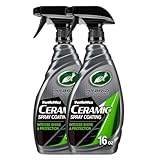
The Turtle Wax Hybrid Solutions Ceramic Spray Wax Coating is sold in a 16-ounce bottle. The single bottle is listed at about $15, while a two-pack is about $27, or approximately $13.50 per bottle. Exact coverage varies with vehicle size, paint condition, spray amount, and whether the product is used as a first application or a maintenance layer.
One 16-ounce bottle is more than enough for multiple applications on an average sedan when used sparingly. A midsize SUV, pickup truck, or vehicle with a large number of painted panels will use more product. Overspraying does not create a thicker, stronger coating; it mostly creates more residue to remove and increases the chance of streaking.
Unlike a professional coating, a spray product generally requires no polishing machine, curing lamp, or specialized installation bay. You need car-wash soap, clean water, several quality microfiber towels, and a shaded work area. The paint should be cool to the touch. Applying it in direct sun, on dusty panels, or immediately after driving can make the product flash too quickly and become difficult to level.
Pros
- Low purchase price. At roughly $15 for one 16-ounce bottle or $27 for a two-pack, it is far less expensive than professional ceramic coating installation, which can cost hundreds or even more than $1,000 depending on paint correction and vehicle size.
- Simple application. Most drivers can apply it by hand with microfiber towels. No polisher, compressor, special lighting, or extensive detailing experience is required.
- Improved water behavior. Treated paint commonly sheds water more readily and forms tighter beads. This can make rinsing and drying feel faster, although beading alone is not proof of superior long-term protection.
- More gloss on clean paint. A spray coating can make properly washed paint look slicker and more reflective. Dark colors often show the visual difference most clearly, while light colors may show it more subtly.
- Easier maintenance washes. Dirt and road film may release more easily from a smooth, recently treated surface. You still need proper washing; the coating does not make the vehicle self-cleaning.
- Useful as a top-up product. Owners of an existing ceramic coating can sometimes use a compatible spray product to refresh slickness between full maintenance applications. Check compatibility first.
- Flexible use. Depending on the label, ceramic sprays may be suitable for painted panels, clear coat, and sometimes exterior plastic or wheels. Avoid assuming every surface is approved.
- Easy to redo. If the finish becomes uneven or the coating wears away, you can wash the vehicle and apply another layer. That is more convenient than repairing a failed professional coating.
Cons
- Limited durability compared with a true coating. Spray formulas may last weeks or months rather than several years. Actual life depends on weather, washing frequency, chemical exposure, storage, and the product’s instructions.
- Preparation determines the result. A coating cannot hide oxidation, water spots, tree sap, embedded grit, or heavy swirl marks. Applying it over contamination can lock in a dull or uneven appearance.
- It does not prevent scratches or chips. Ceramic spray coating is not paint protection film. It will not stop shopping-cart damage, gravel impact, door dings, or deep scratches.
- Streaks are possible. Too much product, a hot panel, high humidity, or a dirty towel can leave smears and high spots. These may require additional wiping or another wash to remove.
- Beading can be misleading. Water behavior may decline before the surface looks visibly unprotected, and strong beading does not necessarily mean the paint has meaningful resistance to abrasion.
- It still requires maintenance. You must wash with suitable soap, use clean tools, and avoid abrasive automatic washes when possible. Neglect can quickly reduce the cosmetic benefit.
- Results vary by paint and technique. A careful user working panel by panel may get a much better finish than someone spraying heavily over an entire vehicle and waiting too long to buff.
- Not suitable for every surface. Glass, matte paint, textured trim, rubber, and interior materials may react differently. Use only where the label specifically permits.
Who Should Buy It
Buy a ceramic spray coating if you wash your own vehicle, want a visible gloss and slickness boost, and prefer spending under $30 rather than booking professional detailing. It is a strong fit for a newer vehicle with reasonably clean, healthy paint, especially if you can work in a garage or shaded driveway.
It also makes sense for drivers who want a repeatable seasonal routine. In 2026, a practical approach is to wash thoroughly, remove obvious contamination, apply the product in small sections, and refresh it as needed rather than expecting one application to last indefinitely. The two-pack is the better value if you maintain more than one vehicle or plan several applications during the year.
Who Should Skip It
Skip it if you want protection from rock chips, deep scratches, or vandalism. Paint protection film is the more appropriate product for impact protection, while a professional coating may be preferable if you want longer durability and are willing to pay for paint correction and installation.
You should also skip it if the vehicle has severely oxidized or damaged paint and you are unwilling to polish or correct the surface first. A ceramic spray can enhance clean paint, but it is not a restoration product. Owners who use automatic brush washes frequently may also see limited value because aggressive washing can remove or shorten the life of the coating.
Cheaper Alternatives
| Option | Cost | Trade-off |
|---|---|---|
| Traditional spray wax | $8–$15 | Usually cheaper and easy to use, but generally offers shorter-lasting water behavior and less ceramic-style marketing appeal. |
| Wash-and-wax car soap | $7–$15 | Combines washing and light gloss enhancement, but leaves less protection and requires use at every wash. |
| Paste or liquid carnauba wax | $10–$25 | Can provide warm gloss at a similar price, but application and removal usually take longer than a spray product. |
| Rinseless wash with polymer protection | $12–$25 | Efficient for careful maintenance washing, but requires the correct dilution, towels, and technique. |
| Professional ceramic coating | $500–$2,000+ | Potentially longer-lasting and more polished, but the price includes extensive preparation and professional labor. |
FAQ
How long does ceramic spray coating last?
There is no universal answer. Expect a spray product to last substantially less time than a professionally installed coating. Washing frequency, sun exposure, winter salt, cleaners, and application quality all matter. Treat advertised durability as a best-case guide rather than a guarantee. When water behavior and slickness noticeably decline, clean the paint and reapply according to the label.
Can ceramic spray coating remove scratches?
No. It may make clean paint look glossier, which can make minor defects less noticeable, but it does not remove scratches, swirl marks, oxidation, or etching. Light defects may require hand polishing, while heavier damage may need machine polishing or refinishing before coating.
How should I apply a ceramic spray coating?
Wash and dry the vehicle, then work in shade on cool panels. Apply a small amount to one section at a time, spread it evenly with one microfiber towel, and buff with a second dry towel before the residue becomes difficult to remove. Use less product than you think you need, turn towels frequently, and inspect the finish from several angles. Avoid rain, washing, and heavy contamination until the label’s recommended set time has passed.
Is the Turtle Wax single bottle or two-pack the better buy?
The single 16-ounce bottle at about $15 is the lower upfront commitment and is sensible for one vehicle or a first trial. The two-pack at about $27 lowers the per-bottle cost to roughly $13.50. Choose the two-pack if you maintain multiple vehicles, have a large SUV or truck, or want product available for future refreshes. Neither package changes the coating’s basic limitations: preparation and technique still matter more than buying extra product.