Key takeaways
- “All systems” without a coverage list: Demand confirmation for engine, ABS, airbag, transmission, and service functions separately.
- Vague live-data claims: Look for named parameters, graphing or recording details, and supported operating systems.
- Unclear update fees: A low purchase price can become expensive if essential features require a recurring subscription.
- Very short or fixed cables: A cable under about 3 feet may be awkward in some vehicles.
- Code clearing presented as a repair: Clearing a warning does not diagnose or correct the underlying fault.
- No return or warranty information: Avoid tools with no clear support channel, especially wireless models that depend on an app.
What's inside
Choosing an OBD2 scanner with live data is less about buying the tool with the longest feature list and more about matching its capabilities to your vehicle, comfort level, and repair plans. Many buyers make the same mistakes: they assume every OBD2 reader can diagnose every warning light, confuse “live data” with advanced bidirectional testing, or choose a Bluetooth model without checking phone compatibility. Others pay for professional functions they will never use, then discover that a budget reader would have handled their check-engine-light problem just as well.
The right scanner should connect reliably, display useful sensor readings clearly, and explain enough information to help you decide whether to keep driving, perform a simple repair, or visit a mechanic. The guide below focuses on what actually matters when comparing scanners in 2026.
As an Amazon Associate we earn from qualifying purchases at no extra cost to you. Product prices and availability are accurate as of the date shown and are subject to change.


Decide These 3 Things First
- What do you need to diagnose? If you only want to read and clear check-engine codes, a basic wired scanner may be enough. If you want to watch oxygen-sensor voltage, coolant temperature, fuel trims, or engine load, prioritize live-data graphing and a readable display.
- How much vehicle coverage do you need? Most cars and light trucks sold in the United States from 1996 onward use OBD2 for emissions-related diagnostics. That does not mean every scanner accesses airbags, ABS, transmission, body modules, or manufacturer-specific functions. Confirm coverage before buying.
- Do you prefer a cable or a phone? A wired unit starts immediately and avoids pairing issues. A Bluetooth scanner can offer better charts, reports, and software updates, but it depends on an app, phone, and operating-system support.
Size and Screen Layout
A compact scanner is easier to store in a glove box, but extremely small displays can make live data frustrating to read. For occasional code checks, a handheld unit measuring roughly 5 to 8 inches long and weighing under 1 pound is convenient. A display around 2.5 to 3.5 inches diagonally is generally more comfortable than a tiny one-line readout.
Pay attention to the cable as well as the reader. A cable between 3 and 6 feet gives you room to hold the scanner while sitting in the driver’s seat, although you should never handle it while driving. A longer cable can be useful when the diagnostic port is low under the dashboard, but excess length adds storage clutter.
For live data, screen organization matters more than sheer size. Look for the ability to view multiple parameters on one screen, switch between metric and U.S. units, and pause or save readings. A color screen is helpful, but it is not essential if the text is large and the menus are logical.
Materials and Exterior Protection
Most handheld OBD2 scanners use molded ABS plastic. That is appropriate for a tool that lives in a glove box, but the casing should feel solid around the buttons, cable connection, and screen. A rubberized edge or molded bumper can reduce damage from an occasional drop onto a garage floor.
Do not treat a plastic case as waterproof. OBD2 scanners are intended for a dry interior, not an engine bay, wet driveway, or toolbox exposed to solvents. A practical target is a casing that weighs about 8 to 16 ounces and has buttons large enough to press while wearing light work gloves. Avoid models with a loose-feeling connector or a cable that cannot be replaced if it becomes damaged.
Construction and Connection Reliability
Construction quality is especially important because the scanner receives power through the vehicle’s diagnostic port. The connector should fit firmly without requiring excessive force, and the screen should remain stable when the cable is moved. A scanner that repeatedly loses connection can produce incomplete data or interrupt a code-reading session.
Wired scanners are usually the simplest option: plug into the port, turn on the ignition, and follow the prompts. Wireless scanners add a small adapter, typically about 1.5 to 3 inches long, that remains in the diagnostic port. These adapters are convenient, but remove them after use if the manufacturer warns that they may draw power while the vehicle is parked.
Check whether the unit supports standard OBD2 protocols, including CAN. “All OBD2 vehicles” generally refers to emissions diagnostics, not unrestricted access to every control module. A scanner may work with the engine computer while lacking ABS or airbag coverage.
Comfort and Live-Data Performance
Live data is the feature that separates a useful diagnostic tool from a basic code reader. At minimum, look for engine speed, vehicle speed, coolant temperature, intake-air temperature, throttle position, calculated load, fuel trims, oxygen-sensor readings, and diagnostic monitor status. The exact list varies by vehicle, so no scanner can display a parameter your car does not provide.
Useful performance features include graphing, data playback, freeze-frame information, and the ability to select specific parameters rather than scroll through every available value. A refresh rate of approximately 1 to 10 readings per second can be adequate for many basic checks, but manufacturers do not always state this figure. Treat claims of “real-time” data as a starting point, not a guarantee of professional-level sampling.
Also distinguish code clearing from code repair. Erasing a code turns off the warning light temporarily, but it does not fix the cause. It can also reset emissions monitors, which may prevent a vehicle from being ready for an inspection until it has completed enough drive cycles.
Price Tiers: What You Actually Get
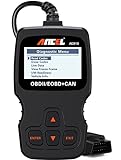
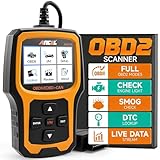
Budget, about $25 to $45: These scanners typically read and clear engine-related codes, show freeze-frame data, display basic live data, and check emissions-monitor readiness. The ANCEL AD310, listed at $29.99, and ANCEL AD410, listed at $39.99, represent this category. They are sensible choices for a household that wants to investigate a check-engine light before paying for a diagnostic visit.
Midrange, about $50 to $100: Expect a clearer screen, better live-data navigation, graphing on some models, and additional maintenance or battery-related features. The FOXWELL NT301 is listed at $69.99, while the Innova 5210 is listed at $79.96. These are more suitable for owners who regularly perform basic maintenance or want easier interpretation of sensor information.
Advanced, $100 and up: Higher-priced tools may add enhanced vehicle coverage, ABS and airbag access, service resets, battery registration, active tests, coding, and more frequent software updates. Before paying for these functions, verify that they work on your exact year, make, model, and engine. A more expensive scanner is not automatically better for a simple emissions code.
Warranty and Software Support
A warranty of at least 12 months is a reasonable minimum for a handheld scanner. More important than the headline length is the support process: look for a clear return period, readable instructions, firmware-update instructions, and a manufacturer contact method that is still active.
Software support matters most for Bluetooth models and advanced scanners. Check whether updates are free, limited by time, or tied to a subscription. Some tools continue reading generic OBD2 codes without updates, while manufacturer-specific functions may require current software. Keep the receipt and record the scanner’s serial number before storing it.
Delivery, Setup, and Storage
A wired scanner should be nearly plug-and-play, but allow 10 to 15 minutes to locate the diagnostic port, turn the ignition on without starting the engine, and read the instructions. Bluetooth models may require another 10 to 20 minutes for app installation, account creation, pairing, and permissions.
Before ordering, confirm that the package includes the scanner, cable or adapter, instructions, and any required app access. A zippered case is useful if you keep the tool with emergency supplies. Store it away from temperatures above roughly 120°F, moisture, and loose metal objects that could scratch the screen or damage the connector.
Spec Checklist
| Spec | Budget | Mid | Premium |
|---|---|---|---|
| Typical price | $25–$45 | $50–$100 | $100+ |
| Connection | Wired | Wired or Bluetooth | Wired, Bluetooth, or Wi-Fi |
| Core coverage | Generic OBD2 engine codes | Generic codes plus expanded live data | Generic and enhanced module coverage |
| Live data | Basic parameter lists | More parameters, possible graphing | Graphing, recording, and advanced tests |
| Display target | 2.5–3 inches | 3–4 inches or phone display | 4 inches or larger, or tablet app |
| Best for | Occasional check-engine-light checks | DIY maintenance and troubleshooting | Frequent repairs or multiple vehicles |
Red Flags
- “All systems” without a coverage list: Demand confirmation for engine, ABS, airbag, transmission, and service functions separately.
- Vague live-data claims: Look for named parameters, graphing or recording details, and supported operating systems.
- Unclear update fees: A low purchase price can become expensive if essential features require a recurring subscription.
- Very short or fixed cables: A cable under about 3 feet may be awkward in some vehicles.
- Code clearing presented as a repair: Clearing a warning does not diagnose or correct the underlying fault.
- No return or warranty information: Avoid tools with no clear support channel, especially wireless models that depend on an app.
FAQ
Does every OBD2 scanner show live data?
No. Many basic code readers show a limited list of sensor values, while others only read and clear trouble codes. Confirm that the product specifically lists live-data support and check whether it can graph or record readings if that is important to you.
Can an OBD2 scanner read ABS or airbag codes?
Not necessarily. Generic OBD2 primarily covers emissions-related engine diagnostics. ABS, airbag, transmission, and body-module access usually requires enhanced coverage that varies by vehicle and scanner.
Is wired or Bluetooth better?
Wired scanners are simpler, do not require pairing, and work without a separate phone. Bluetooth models can provide larger charts and easier report storage, but app compatibility, permissions, and software support become part of the buying decision.
What is the best choice for most car owners?
Choose a wired scanner in the $30 to $80 range with standard OBD2 coverage, a readable screen, freeze-frame data, readiness checks, and clearly labeled live-data functions. Move to a premium tool only when you need enhanced modules, service resets, active tests, or support for several vehicles.