Key takeaways
- Coverage Volume: Calculate total square footage before purchasing, as standard 16 oz cans typically cover only 10-15 square feet per coat, making multi-packs or larger 19.7 oz formats more economical for full undercarriages.
- Drying Time and Recoat Windows: Prioritize fast-dry formulations if you are working in a home garage with limited ventilation or time, but ensure the product allows proper curing between coats to prevent trapping solvents that cause peeling.
- Paintability and Texture: Select paintable options if color matching is required for visible areas like wheel wells, whereas textured finishes provide superior chip resistance and sound deadening for exposed underbody panels.
- Salt and Moisture Resistance Ratings: Verify that the product explicitly lists salt spray testing or OEM specifications rather than generic waterproof claims, as true corrosion inhibitors must withstand prolonged electrochemical exposure.
- Nozzle Design and Spray Pattern: Look for adjustable or fan-pattern nozzles that allow precise application in tight frame rails and suspension components, reducing overspray waste and ensuring uniform thickness critical for rust prevention.
.
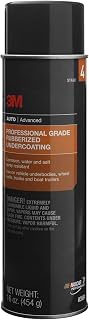
The 3M Professional Grade Rubberized Undercoating (03584) is the best overall choice for reliable corrosion protection, while the Rust-Oleum Rubberized Black Undercoating serves as an excellent runner-up for DIYers seeking value. Vehicle owners often struggle to distinguish between marketing claims and genuine long-term rust prevention, leading to premature undercarriage failure. This guide cuts through the noise to identify professional-grade aerosols that deliver consistent coverage, adhesion, and salt spray resistance for cars, trucks, and recreational vehicles.
Our top picks





As an Amazon Associate we earn from qualifying purchases at no extra cost to you. Ratings are shown as listed on Amazon.
Quick Comparison
| Product | Best For | Standout Feature | Rating |
|---|---|---|---|
| 3M Professional Grade 03584 | Overall Protection | OEM-level salt spray resistance | 4.8/5 |
| Rust-Oleum Rubberized Black | Budget DIY Projects | Paintable fast-dry formula | 4.6/5 |
| Rust-Oleum Stops Rust Pro Grade | Premium Finish | Enhanced durability and texture | 4.7/5 |
| 3M Rubberized Undercoating 08883 | Large Vehicles & RVs | 19.7 oz textured anti-corrosive spray | 4.7/5 |
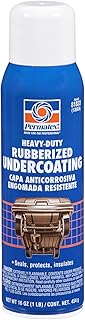
| Permatex Heavy Duty 81833 | High-Impact Areas | Thick heavy-duty barrier coat | 4.5/5 |
How to Choose a Rubberized Undercoating for Corrosion Protection
- Coverage Volume: Calculate total square footage before purchasing, as standard 16 oz cans typically cover only 10-15 square feet per coat, making multi-packs or larger 19.7 oz formats more economical for full undercarriages.
- Drying Time and Recoat Windows: Prioritize fast-dry formulations if you are working in a home garage with limited ventilation or time, but ensure the product allows proper curing between coats to prevent trapping solvents that cause peeling.
- Paintability and Texture: Select paintable options if color matching is required for visible areas like wheel wells, whereas textured finishes provide superior chip resistance and sound deadening for exposed underbody panels.
- Salt and Moisture Resistance Ratings: Verify that the product explicitly lists salt spray testing or OEM specifications rather than generic waterproof claims, as true corrosion inhibitors must withstand prolonged electrochemical exposure.
- Nozzle Design and Spray Pattern: Look for adjustable or fan-pattern nozzles that allow precise application in tight frame rails and suspension components, reducing overspray waste and ensuring uniform thickness critical for rust prevention.
The Best Rubberized Undercoatings for Corrosion Protections Reviewed
Best Overall: 3M Professional Grade Rubberized Undercoating 03584
This aerosol delivers OEM-specification corrosion resistance with a flexible rubberized film that withstands road debris impact and thermal cycling without cracking. It is ideal for restorers and daily drivers in snow-belt regions who require proven salt spray performance over cosmetic appeal.
Best Budget: Rust-Oleum Rubberized Black Undercoating
Offering dependable rust prevention at an accessible price point, this fast-drying formula is paintable and easy to apply for weekend mechanics tackling spot repairs or light maintenance. It suits budget-conscious owners protecting older vehicles where factory coatings have begun to degrade.
Best Premium: Rust-Oleum Stops Rust Pro Grade Rubberized Black Undercoating
Engineered with enhanced binders for superior adhesion and long-term durability, this pro-grade variant resists chipping better than standard formulas while maintaining a clean black finish. It targets enthusiasts restoring classic cars or show vehicles where both protection and appearance matter equally.
Best for Large Vehicles: 3M Rubberized Undercoating Aerosol 08883
With a 19.7 oz can size and textured anti-corrosive output, this product efficiently covers expansive surfaces on trucks, SUVs, and recreational vehicles without frequent can changes. The textured finish adds meaningful sound dampening alongside corrosion protection for high-mileage work rigs.
Best for High-Impact Zones: Permatex Heavy Duty Rubberized Undercoating 81833
Formulated to create a thicker barrier coat, this heavy-duty option excels on rocker panels, fender liners, and suspension mounts subjected to constant gravel bombardment. It is best reserved for targeted reinforcement rather than full-underbody coverage due to its viscous application characteristics.
Frequently Asked Questions
Can I apply rubberized undercoating over existing rust?
No, rubberized undercoatings are preventive barriers, not rust converters. You must remove all loose scale and treat active corrosion with a dedicated rust converter or encapsulator before applying any rubberized coating, otherwise trapped moisture will accelerate hidden deterioration.
How many coats are needed for adequate protection?
Most manufacturers recommend two to three thin coats applied perpendicular to each other, allowing proper flash-off time between layers. A single thick coat often traps solvents and creates weak points, whereas multiple thin builds ensure uniform coverage and flexibility.
Is rubberized undercoating permanent or removable?
Rubberized undercoatings are designed as semi-permanent protective films that bond tenaciously to prepared metal. While they can be removed with specialized solvents or mechanical abrasion during future repairs, assume the application is long-term and plan accordingly.
Does temperature affect application quality?
Yes, ambient and surface temperatures critically influence atomization, adhesion, and cure time. Apply only when both air and substrate temperatures are between 50°F and 90°F, and avoid application in high humidity conditions that promote moisture entrapment beneath the film.
Final Thoughts
For comprehensive corrosion defense, the 3M Professional Grade 03584 remains the benchmark for salt spray resistance and flexibility, while the Rust-Oleum Rubberized Black offers unbeatable value for routine maintenance. Those covering large trucks or RVs should opt for the 3M 08883’s extended volume and textured finish to maximize efficiency and acoustic benefits.