Our Top Picks

The choice between a conductance tester and a load tester is a choice about evidence. A conductance unit clips on, sends a small signal through the battery, and estimates cranking ability from internal resistance in seconds, without draining anything. A load tester takes the older, blunter route: it pulls a heavy current, typically for about fifteen seconds, and shows how far voltage falls while the battery is genuinely working. One method infers; the other demonstrates. Neither is automatically right, because the better proof depends on the battery in front of you and the question you are asking.
This comparison is for home mechanics choosing a toolbox tester, used-car shoppers who need a verdict in a driveway, and anyone maintaining several vehicles or a small fleet. The four products below, taken from their Amazon product pages, represent both camps: two digital conductance testers, one traditional carbon-pile load tester, and one digital unit whose listing says load tester while its method is electronic, a labeling habit worth understanding before you buy.
Quick Picks
As an Amazon Associate we earn from qualifying purchases.
| Product | Best for | Key spec from title |
|---|---|---|
| ANCEL BA101 | Conductance testing with a full health report | 12V, 100-2000 CCA, battery, cranking and charging tests |
| TOPDON BT100 | Conductance checks on cars and boats alike | 12V, 100-2000 CCA, alternator and charging system tester |
| Schumacher BT-100 | A true load test with a 100-amp draw | 100A load tester and voltmeter, batteries up to 1000 cranking amps |
| MOTOPOWER MP0515A | Digital readings from a “load tester” listing | 12V, 100-2000 CCA, cranking and charging system tester |
How to Choose
Understand what each method actually measures
A conductance tester measures internal resistance by passing a small alternating signal through the battery, then converts that into an estimated CCA figure and a state-of-health percentage. Nothing is discharged, and the battery can be tested in the vehicle in under a minute. A load tester instead connects a carbon pile or resistive element that draws a set current, commonly half the battery’s CCA rating or a fixed 100 amps, while you watch the voltmeter. The reading is not an estimate of work; it is the battery doing work, which is why the method has survived for decades.
Know what each result can and cannot prove
Conductance results are strongest as a screening verdict: they flag sulfation and aging, and they are repeatable enough to track the same battery over time. Their weakness is inference, because surface charge, cold, or a wrong rating entry can bend the estimate. A load test proves sustained output in the moment, which settles arguments about borderline batteries, but it says little about why a battery failed and nothing about the charging system. Treat conductance as a diagnosis aid and load as a confirmation test, and the two methods stop competing and start complementing each other.
Check the battery’s state before trusting either verdict
Both methods assume a reasonably charged battery, and both mislead when that assumption fails. A deeply discharged healthy battery can fail a load test it would pass after charging, and a conductance tester may report charge-and-retest rather than a health figure. Surface charge from a recent drive or charger inflates readings the other way, so let the battery rest or burn the charge off briefly with the headlights before testing. Temperature matters too: a cold-soaked battery delivers less, and honest testers on both sides expect you to judge results against the conditions.
Weigh speed and effort against heat and wear
A conductance test is gentle: no heat, no meaningful drain, safe to repeat on the spot, and quick enough to run on every vehicle in a yard. A load test is physical work for the battery and the tool. The carbon pile gets hot, the test must be timed, and the battery needs a rest or recharge afterward, so nobody load-tests twenty batteries in a row for fun. That effort buys certainty on a single questionable battery. Decide by volume: many quick checks favor conductance, one disputed battery favors load.
Safety Notes
With either tester type, connect red to positive first and black to negative or a grounded metal point second, removing them in reverse order, and keep clamps from touching each other. A load tester adds its own hazards: the carbon pile and cables get hot during the draw, so keep the timed test short, let the unit cool between tests, and keep hands and loose clothing clear. Batteries that have been charging can vent hydrogen, so avoid sparks near the caps and wear eye protection. Never test or charge a battery that is frozen, swollen, or cracked.
The 4 Best Options
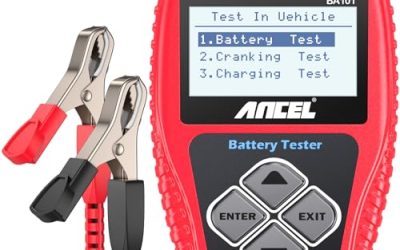
ANCEL BA101

The BA101 represents the conductance camp at its most complete for home use. It estimates measured CCA and state of health from resistance, then goes further than a basic health check by adding cranking and charging tests, so one clamp-on session covers the battery and the system around it. For a driver maintaining two or three family vehicles, that breadth is the argument: quick, drain-free checks you can repeat monthly and compare. What it cannot do is put the battery under a genuine sustained load, and its verdicts remain estimates, however well presented.
Specs
- Method: conductance (electronic) tester
- System voltage: 12V
- Test range: 100-2000 CCA, up to 220Ah
- Battery types: Regular Flooded, AGM Flat Plate, AGM Spiral, GEL, EFB
- Tests: Battery Test, Cranking Test, Charging Test
- Readings: state of health, state of charge, measured CCA, internal resistance, voltage
Best for: Routine health screening across several household vehicles without draining any battery.
Watch out for: Results depend on entering the correct CCA rating and battery type; a wrong entry skews the health figure.
ASIN: B01M0ARG3X
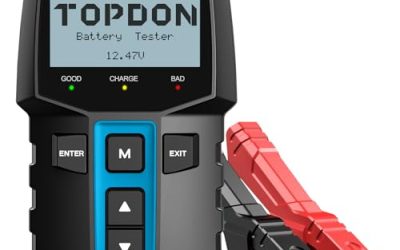
TOPDON BT100
The BT100 is the second conductance option, aimed at owners whose batteries live in more than cars. Its title spans trucks, motorcycles, ATVs, SUVs, boats, and yachts, and the test menu covers battery health, cranking performance, and charging output including ripple. Like the ANCEL it works by electronic measurement rather than draw, so it suits quick checks on equipment that sits idle, where pulling a battery for a bench load test is a chore. The trade-off is the same as any conductance unit: you get an informed estimate, delivered fast, rather than proof under load.
Specs
- Method: conductance (electronic) tester
- System voltage: 12V
- Test range: 100-2000 CCA
- Battery types: Regular Flooded, AGM Flat Plate, AGM Spiral, GEL, EFB
- Tests: Battery Test, Cranking Test, Charging Test
- Readings: voltage, internal resistance, health and aging status
Best for: Mixed fleets of cars, bikes, and boats that need fast, repeatable health checks.
Watch out for: A battery that has sat discharged needs charging before its health estimate means much.
ASIN: B07Z67MMGC
Schumacher BT-100

The BT-100 is the genuine load tester of this group, the traditional bench and toolbox pattern. It applies a fixed 100-amp draw through a carbon pile while its voltmeter shows how the battery holds up, and the same meter checks charging system output. There is no menu, no rating to enter, and no estimate: a battery that holds acceptable voltage under that draw has demonstrated something real. The costs are heat, time, and effort, plus a battery that needs recovery afterward. For confirming one borderline battery before a trip or a warranty argument, nothing here is more direct.
Specs
- Method: carbon-pile load tester with voltmeter
- Load: 100-amp draw
- Capacity: batteries up to 1000 cranking amps
- System voltage: 6V and 12V
- Function: load test plus charging system diagnosis via voltmeter
- Use cases in title: power sport, automotive, and marine batteries
Best for: Settling a borderline battery with a real, sustained current draw.
Watch out for: The unit heats up in use and the battery must be well charged first, or a healthy battery can look bad.
ASIN: B000AMBOI0
MOTOPOWER MP0515A

The MP0515A is included because its Amazon title says “Battery Load Tester,” yet the unit is a digital analyzer: it measures electronically and reports state of health, state of charge, resistance, and ripple, which is the conductance approach, not a carbon-pile draw. That makes it a useful product and a perfect illustration of this comparison’s central trap. Judged as a digital tester it is well equipped, with data storage and print functions and a color icon menu. Judged as a load tester, it is not one, whatever the listing headline claims, so buy it for the right reasons.
Specs
- Method: digital electronic analyzer (conductance type), despite “load tester” in the listing title
- System voltage: 12V
- Test range: 100-2000 CCA
- Battery types: Regular Flooded, AGM, GEL, EFB
- Functions: voltage test, cranking test, charging test, resistance test, ripple analysis
- Extras: data storage and data print, color screen
Best for: Buyers who want digital health data and records, and understand they are getting electronic measurement.
Watch out for: Do not buy it expecting a true current-draw load test; the title and the method are different things.
ASIN: B08K3885C4
Which One Fits Your Situation
A quick check in a seller’s driveway
Choose conductance, with the ANCEL BA101 or TOPDON BT100. You get a health verdict in about a minute, the battery is not drained in front of its owner, and the cranking test adds a real-world start to the evidence. A load test in someone else’s driveway is slow, hot, and hard to justify.
One borderline battery you must be sure about
Choose the Schumacher BT-100 and run a proper load test on a fully charged battery. When a conductance estimate lands in the gray zone, a sustained 100-amp draw with a voltmeter settles whether the battery can actually do its job, which is the answer a long trip or a warranty claim needs.
Many batteries to screen on a schedule
Choose conductance. A yard, a family with several cars, or a small fleet needs checks that are fast, cool, and repeatable, and that is exactly the conductance tester’s design brief. Reserve the load tester for the few batteries the screen flags, rather than dragging every battery through a full draw.
Certainty on the smallest toolbox budget
Choose the load method, in the BT-100’s simple form. It has no menus to learn and no ratings database to trust, and its verdict comes from the battery’s own performance under draw. The compromise is effort: you supply the judgment about charge state, timing, and cooling that a digital tester automates.
Common Mistakes
- Believing every product titled “load tester” applies a real load, when many are conductance analyzers.
- Load-testing a discharged battery and condemning it before it has been charged and rested.
- Entering the wrong CCA rating or battery type into a conductance tester and trusting the health figure anyway.
- Holding a load test too long, overheating the tester and draining the battery being judged.
- Treating one method’s verdict as final when the battery sits in the gray zone between pass and fail.
Frequently Asked Questions
Which method is more accurate, conductance or load?
They answer different questions. Conductance estimates cranking capacity from internal resistance and is excellent for fast, repeatable screening, but it infers rather than proves. A load test measures the battery under a real draw, which is more direct evidence of output, though it reveals nothing about cause and depends heavily on the battery being fully charged first.
Can a conductance tester replace a load tester entirely?
For routine maintenance checks, mostly yes: it catches aging and sulfation early without draining anything. The exception is the borderline battery, where an estimate in the gray zone deserves confirmation under load before you spend on a replacement or trust the vehicle on a long trip. Many careful owners use conductance first and load second.
Why does the same battery pass one test and fail the other?
Charge state and temperature explain most disagreements. A surface charge can flatter a conductance estimate, while a cold or partly discharged battery can sag under load despite being healthy. Charge the battery fully, let it rest, remove surface charge, and retest with both methods before deciding the battery is finished.
Is a load test bad for the battery?
A single correctly timed load test on a charged battery does it no harm; it mimics a long, hard engine start. Problems come from excess: repeated draws without recharge, holding the load past the specified seconds, or load-testing a battery that is already deeply discharged. Follow the timing, let the tester cool, and recharge afterward.
FAQ
Which method is more accurate, conductance or load?
Can a conductance tester replace a load tester entirely?
Why does the same battery pass one test and fail the other?
Is a load test bad for the battery?
More from Amazon
Programs that pair well with the guide above. Offers and eligibility are set by Amazon and may change.
Free shipping on eligible items, Prime Video and more. Eligible new members can start with a free trial.
Start a Prime free trialA Prime membership for ages 18-24 with a trial period. Eligibility is set by Amazon.
See Prime for Young AdultsAudiobooks and podcasts to listen to on the go. Eligible new members can start with a free trial.
Try Audible freeAd-free music streaming. Eligible new subscribers can start with a free trial.
Try Music Unlimited freeAs an Amazon Associate we earn from qualifying purchases.