Our Short List of 3
All 5 Picks at a Glance
| Product | Specs | Action |
|---|---|---|
 VIAIR 88P Portable Compressor Kit | Check price on Amazon | |
 EPAuto 12V DC Portable Air Compressor Pump | Check price on Amazon | |
 Fanttik X8 APEX Tire Inflator | Check price on Amazon | |
 AstroAI AIRUN H Tire Inflator | Check price on Amazon | |
 Kensun AC DC Digital Tire Inflator | Check price on Amazon |
Our Top Picks
- VIAIR 88P 00088 12V Portable Air Compressor KitStock9.8 x 3.2 x 5.6 inches4.75 poundsCheck on Amazon
A portable compressor for car tires turns a slow leak or a seasonal pressure drop from a trip to a service station into a short job on a driveway or in a parking lot. Most car tires run at the pressure printed on the driver door jamb placard, and that pressure falls as temperatures drop, after long parking periods, and through normal permeation over time. A compact inflator kept in the trunk lets a driver restore the placard pressure at home, check all four tires in one pass, and avoid driving on a soft tire that wears unevenly, hurts fuel economy, and runs hotter than it should.
The five inflators below cover the main ways drivers power a portable compressor. Three plug into a 12 volt vehicle outlet and stop automatically at a preset pressure, one clamps directly to the battery for stronger airflow, one runs on its own rechargeable battery with no cord at all, and one adds a household outlet option for garage use. Every pick is a portable tire inflator made for passenger car tires, rather than a shop compressor or a high volume unit built mainly for oversized off road tires. The sections that follow explain how to choose, then look at each model in turn.
As an Amazon Associate, we earn from qualifying purchases.
How to Choose a Portable Compressor for Car Tires
Start with the power source, because it shapes everything else. A 12 volt outlet model is the simplest option for most cars. It draws power from the vehicle socket, needs no charging, and is ready whenever the car is available. The trade off is current. A battery clamp model bypasses the socket limit by connecting straight to the battery terminals, which supports higher airflow, but it requires opening the hood and keeping the engine running during use, following the maker directions. A cordless model removes the cord entirely and works away from the car, yet it depends on keeping its internal battery charged.
Next, look at airflow rather than maximum pressure alone. Car tires need modest pressure, commonly in the low to mid thirties in PSI, so a high maximum rating matters less for a sedan than how quickly the unit moves air at normal car pressures. Airflow figures stated in liters per minute or cubic feet per minute give a better sense of waiting time. A faster unit is more pleasant when all four tires need attention, and it is less likely to overheat during a longer job.
Gauge type and auto shut off are the features that protect against overinflation. A digital gauge with a preset lets the driver set the target once, and the compressor stops on its own when that pressure is reached. That design is helpful at night, in cold weather, and for drivers who do not want to watch a needle while crouching beside a wheel. An analog gauge has no screen to fail and no preset, so the driver watches it and switches the unit off manually. Neither approach is automatically better, but a preset digital model reduces guesswork for routine top offs.
Cord and hose reach deserve a quick check before buying. The combined length of the power cord and air hose has to reach the farthest tire from the power source without pulling the unit across the ground.
Finally, consider size, weight, and the small extras that decide whether the inflator actually stays in the car. A unit that fits in a trunk side pocket or under a cargo floor is more likely to be there when a warning light appears. An LED light helps with valve caps after dark.
VIAIR 88P Portable Compressor Kit
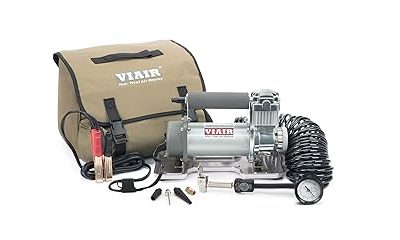
The VIAIR 88P takes the battery clamp route, and that choice gives it the strongest airflow in this guide. Instead of drawing through a dashboard socket, its alligator clamps connect directly to the vehicle battery, and the maker rates the unit for tires up to 33 inches. For a car driver, that headroom means standard sedan, hatchback, and crossover tires are well inside its working range, and the higher airflow shortens the time spent on each tire compared with a small socket powered pump. It uses an analog gauge, so there is no preset or automatic stop. The driver watches the gauge and controls the switch.
Drivers who want a set and forget preset should look at the digital models below instead, and anyone who dislikes opening the hood for a routine top off may find a socket model more convenient for weekly checks. For a driver who values fill speed and a durable, straightforward design over automation, the 88P is the heavy duty leaning pick in a still portable form.
Who It Suits
The VIAIR 88P suits drivers who want faster airflow than a socket model can offer, owners of larger cars and crossovers, and households that maintain several vehicles. It is less suited to drivers who want a digital preset, an automatic stop, or a unit that runs without opening the hood.
EPAuto 12V DC Portable Air Compressor Pump
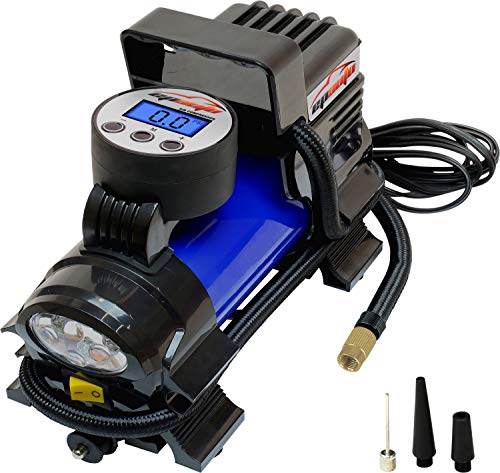
The EPAuto portable compressor is the simple digital socket model in this guide. It plugs into a 12 volt vehicle outlet, uses a digital display, and stops automatically when the preset pressure is reached. Its maker figures describe a compact pump built around car tires rather than heavy truck tires, and the listing states that limit plainly. For ordinary passenger cars, that focus is a strength. The controls stay simple, the unit stores easily, and the preset function handles the part of the job that most often goes wrong, which is stopping at the right pressure rather than guessing from a needle.
Alongside the digital preset, the EPAuto includes an LED flashlight for low light use and overheat protection that shuts the unit down at a stated temperature limit. That ease makes it a sensible first inflator for a new driver or a second car that mainly needs regular top offs around town.
Who It Suits
The EPAuto suits sedan, hatchback, and midsize crossover drivers who want a compact socket powered inflator with a digital preset and an automatic stop. It is not the pick for heavy truck tires, trailer tires, or drivers who need the faster airflow of a battery clamp compressor.
Fanttik X8 APEX Tire Inflator
The Fanttik X8 APEX is the cordless pick, and it changes the routine more than any other model here. There is no vehicle outlet to find and no cord to route around the car. The unit carries a built in rechargeable battery, shows both current and target pressure on a dual screen, and stops automatically at the preset. Its maker describes fast inflation for a standard car tire size, and the listed runtime supports a full round of top offs on one charge when the battery starts full. For apartment drivers, shared family cars, and anyone who inflates bicycle tires in a hallway as often as car tires in a lot, that independence is the main appeal.
The trade off is charge management. A cordless inflator that sits forgotten for months can be flat on the day it is needed, so the X8 APEX rewards a simple habit of topping up its battery after use and checking it before a long trip. Drivers who prefer a tool that is always ready from the car itself may lean toward a corded model, but for cord free convenience in a compact body, the X8 APEX stands apart.
Who It Suits
The Fanttik X8 APEX suits drivers who want cord free top offs, apartment and shared car households without easy outlet access, and anyone who also inflates bicycle tires and sports gear. It is less suited to drivers who know they will forget to recharge a battery powered tool between uses.
AstroAI AIRUN H Tire Inflator
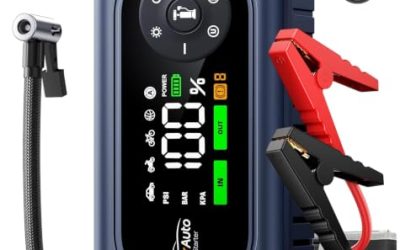
The AstroAI AIRUN H is a compact socket powered inflator built around speed for its size and a long enough cord for a normal car. The maker states a 120 watt motor with airflow that can bring a standard car tire from a slightly low reading to its target in under a minute under the stated test conditions, which places it among the quicker small units for routine top offs. It weighs about two pounds, so it fits the glove compartment and trunk storage brief that keeps an inflator in the car full time rather than on a garage shelf. A digital gauge, a preset, and an automatic stop handle accuracy, while an LED light covers early morning and roadside use.
Three button control keeps the interface simple, and the display can show pressure in PSI, kPa, BAR, and KG per CM units. A fuse in the plug and thermal protection are listed safety features, and the maker notes that the unit is made for tires and balls rather than high volume inflatables such as pool floats or air mattresses. For a driver whose main need is keeping one car at placard pressure with minimal fuss, the AIRUN H covers the brief in a small, light package.
Who It Suits
The AstroAI AIRUN H suits drivers who want a light, glovebox friendly socket inflator with a digital preset for one car used daily. It is less suited to filling large tires back to back or to inflating high volume items such as air mattresses and pool floats.
Kensun AC DC Digital Tire Inflator
The Kensun AC DC digital inflator solves a different problem. It can run from a 12 volt car outlet on the road and from a household AC outlet at home, with separate power paths for each source. That dual power design means pressure checks can happen in a garage or driveway without starting the car or sitting in the driver seat with a cord through the door, and the same unit still travels in the trunk for trips. A digital gauge with an automatic shut off brings the preset convenience of the socket models, while the stated airflow is strong for a unit of this class, which helps when several tires need attention in one session.
The maker describes a metal motor and a two year warranty, and the included adapters extend the unit to bicycle tires, motorcycles, and sports balls. It is more inflator than a minimalist driver needs, but for a household that wants one unit for the garage and the road, the flexibility is the point.
Who It Suits
The Kensun AC DC digital inflator suits households that want one inflator for both garage and road use, and drivers who prefer doing pressure checks at home from a wall outlet. It is less suited to drivers who want the smallest possible unit for a glove compartment or a spare tire well.
FAQ
How often should car tire pressure be checked with a portable compressor?
A monthly check is a practical rhythm, plus a check before a long trip and when temperatures change sharply with the seasons. Checking all four tires while they are cold, before driving, gives the most consistent reading against the door jamb placard figure.
Can a portable compressor fill a completely flat car tire?
Many portable compressors can raise a tire that has gone flat from a slow leak, as long as the tire bead is still seated on the rim and there is no sidewall damage. A tire that is flat because of a puncture needs repair, not just air, and it may lose pressure again within minutes or hours. If the tire will not hold pressure, or the rim is resting on the ground, roadside assistance or a spare tire is the safer route.
Should the engine be running while a portable compressor is in use?
Following the maker directions for the specific model is the right approach. Battery clamp compressors commonly call for the engine to be running, which keeps the vehicle battery from draining during a longer fill. Socket powered models draw less, but running the engine is still a common recommendation during extended use. Checking the vehicle manual for the outlet current limit also helps avoid a blown fuse.
What pressure should a portable compressor be set to for car tires?
Set the compressor to the pressure on the driver door jamb placard for the vehicle, not the maximum pressure printed on the tire sidewall. The sidewall figure is a limit for the tire itself, while the placard figure is the vehicle maker recommendation for load, ride, and handling. Front and rear pressures can differ on some vehicles, so checking both placard values before starting saves a second pass.
Final Verdict
For most car drivers, a digital socket powered inflator with a preset and an automatic stop is the easiest portable compressor to live with, and both the EPAuto and the AstroAI AIRUN H fit that pattern, with the AIRUN H offering the lighter body and longer stated airflow for daily top offs. Drivers who want cord free use and are willing to keep a battery charged will get the most convenience from the Fanttik X8 APEX. The VIAIR 88P is the pick when fill speed matters most and opening the hood is no burden, while the Kensun AC DC digital inflator suits a household that wants garage and road use from one unit. Match the power source to the routine first, and any of these five will keep car tires at placard pressure without a service station stop.
Product and ASIN Reference
| Product | ASIN |
|---|---|
| VIAIR 88P Portable Compressor Kit | B005ASY23I |
| EPAuto 12V DC Portable Air Compressor Pump | B01L9WSTEG |
| Fanttik X8 APEX Tire Inflator | B09YD2D96V |
| AstroAI AIRUN H Tire Inflator | B08TWCMQ8D |
| Kensun AC DC Digital Tire Inflator | B01J8Y91GC |
FAQ
How often should car tire pressure be checked with a portable compressor?
Can a portable compressor fill a completely flat car tire?
Should the engine be running while a portable compressor is in use?
What pressure should a portable compressor be set to for car tires?
More from Amazon
Programs that pair well with the guide above. Offers and eligibility are set by Amazon and may change.
Free shipping on eligible items, Prime Video and more. Eligible new members can start with a free trial.
Start a Prime free trialA Prime membership for ages 18-24 with a trial period. Eligibility is set by Amazon.
See Prime for Young AdultsAudiobooks and podcasts to listen to on the go. Eligible new members can start with a free trial.
Try Audible freeAd-free music streaming. Eligible new subscribers can start with a free trial.
Try Music Unlimited freeAs an Amazon Associate we earn from qualifying purchases.