Our Short List of 3

- Best for: Buyers who want location-based setup and digital trunking in one handheld.
- Model: BCD436HP, HomePatrol Series
- Type: Digital handheld scanner
- Trunking: TrunkTracker V
- Alerts: S.A.M.E. Emergency/Weather Alert
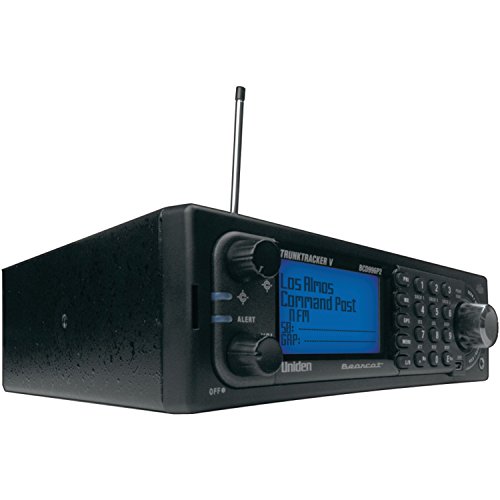
- Best for: A fixed home base station or a mounted vehicle install following P25 systems.
- Model: BCD996P2
- Type: Base/mobile digital scanner
- Channels: 25,000
- Display: 4-line alpha display

- Best for: Hobbyists who keep several regional setups and like organising systems as objects.
- Model: WS1040
- Type: Handheld digital trunking scanner
- Digital: Motorola P25 Phase I
- Memory: Virtual Scanner mode, 21 configurations, over 38,000 objects
All 4 Picks at a Glance
| Product | Specs | Action |
|---|---|---|
| Uniden BCD436HP |
| Check price on Amazon |
| Uniden BCD996P2 |
| Check price on Amazon |
| Whistler WS1040 |
| Check price on Amazon |
 Uniden BC365CRS |
| Check price on Amazon |
Key takeaways
- Compare the best police scanners for digital trunked systems and analog channels alike, with zip-based handhelds, a base unit and a simple desktop pick.
Buying a police scanner goes wrong in one predictable way: the radio arrives, you switch it on, and your local agencies stay silent because they moved to a digital trunked system your analog model cannot follow. The real decision is matching the scanner to the radio systems used where you live, then choosing a format, handheld or base, that fits how you will actually listen.
This guide is for first-time buyers who want local police, fire and EMS traffic at home, drivers who want a unit that works on the road, and hobbyists ready to follow P25 talkgroups properly. The four scanners below were picked from their Amazon listing names and stated specifications, covering digital handhelds, a base and mobile digital unit, and one straightforward analog desktop model for areas that still broadcast in the clear.
Quick Picks
As an Amazon Associate we earn from qualifying purchases.
| Product | Best for | Key spec from title |
|---|---|---|
| Uniden BCD436HP | Handheld listening with location-based setup | TrunkTracker V with S.A.M.E. weather alert |
| Uniden BCD996P2 | A fixed home or vehicle install | 25,000 channels with Close Call capture |
| Whistler WS1040 | Storing many systems for travel | P25 Phase I with PC interface |
| Uniden BC365CRS | Analog areas and bedside listening | 500 channels with alarm clock and FM radio |
How to Choose
Analog or Digital: Match Your Local System First
Everything else about a scanner is secondary to this question. Many larger departments now run APCO P25 digital trunked networks, and an analog-only radio hears none of that traffic, no matter how good its antenna is. Smaller towns, rural fire services, railroads, marine and aviation bands still lean heavily on conventional analog channels. Before you buy, look up your county in an online frequency database and note whether the agencies you care about are listed as analog, P25 Phase I or P25 Phase II. That single check decides whether a simple desktop model is enough or a digital trunking scanner is mandatory.
Trunking Support and Phase Coverage
A trunked system shares a pool of frequencies across many talkgroups, and the scanner has to follow control-channel data to track a conversation as it hops. TrunkTracker V in the Uniden models here follows Motorola, EDACS and LTR systems alongside P25. Phase coverage matters just as much: the Whistler WS1040 decodes P25 Phase I, while the BCD996P2 also handles Phase II talkgroups, which some newer statewide networks use exclusively. If your state system lists Phase II talkgroups you follow, a Phase I-only handheld will leave gaps in exactly the traffic you bought the radio to hear.
Programming Style: Database, Object or Manual
How a scanner is programmed shapes your first evening with it. The BCD436HP carries a built-in database covering the USA and Canada, so entering a location pulls in local systems with very little typing. The WS1040 uses object-oriented programming, where channels, talkgroups and search ranges are stored as objects you arrange into scan lists, with a PC interface for building them on a computer. The BC365CRS takes the traditional route of storing frequencies channel by channel. Database models suit beginners, object systems reward organised hobbyists, and manual models work when your listening list is short and stable.
Form Factor, Power and Weather Alerts
Decide where the radio will live. Handhelds like the BCD436HP and WS1040 run on AA batteries or rechargeable cells, ride along in a vehicle and move room to room, but their small speakers fight road noise. Base and mobile units such as the BCD996P2 give you a larger display and a permanent antenna connection at a desk or in a dash. Desktop models like the BC365CRS plug in and stay put. Weather features are worth having on any of them: S.A.M.E. alerts wake the radio only for warnings covering your county, which makes a scanner genuinely useful overnight.
The 4 Best Options
Uniden BCD436HP
- Best for: Buyers who want location-based setup and digital trunking in one handheld.
- Model: BCD436HP, HomePatrol Series
- Type: Digital handheld scanner
- Trunking: TrunkTracker V
- Alerts: S.A.M.E. Emergency/Weather Alert
Buyers who want location-based setup and digital trunking in one handheld.
Confirm your local agencies are not fully encrypted, because no consumer scanner can decode encrypted talkgroups.
The BCD436HP is the handheld to pick when you want digital coverage without spending your first weekend typing frequencies. Its built-in database covers the USA and Canada, and the simple programming approach means you set a location and let the radio load nearby police, fire and EMS systems. TrunkTracker V follows trunked networks as conversations move between frequencies, and the S.A.M.E. weather alert function keeps it useful on a nightstand between listening sessions. It suits commuters, travellers who cross county lines often, and beginners who still want a radio that will not be outgrown quickly.
Uniden BCD996P2
- Best for: A fixed home base station or a mounted vehicle install following P25 systems.
- Model: BCD996P2
- Type: Base/mobile digital scanner
- Channels: 25,000
- Display: 4-line alpha display
A fixed home base station or a mounted vehicle install following P25 systems.
Plan the install before buying, including antenna placement, because a base/mobile unit is not a carry-around radio.
The BCD996P2 is built for a permanent spot, either on a desk at home or mounted in a vehicle, and it behaves like it. The listing states 25,000 channels with a four-line alpha display, so busy systems stay readable instead of scrolling past as bare frequencies. TrunkTracker V handles the trunking side, and the stated Phase 2 support covers the newer P25 talkgroups that Phase I-only radios miss. Close Call capture helps you find nearby transmissions you did not know existed. It is the natural choice for a home listening post or a serious in-car install.
Whistler WS1040
- Best for: Hobbyists who keep several regional setups and like organising systems as objects.
- Model: WS1040
- Type: Handheld digital trunking scanner
- Digital: Motorola P25 Phase I
- Memory: Virtual Scanner mode, 21 configurations, over 38,000 objects
Hobbyists who keep several regional setups and like organising systems as objects.
Check whether your must-hear talkgroups are Phase II, because this model is stated as Phase I only.
The WS1040 takes a different route into digital scanning, built around object-oriented programming that many hobbyists find logical once the first system is stored. The Amazon description states that Virtual Scanner mode holds 21 configurations with room for over 38,000 scannable objects, which makes it easy to keep separate setups for home, work and regular trips. It decodes Motorola P25 Phase I trunking, carries S.A.M.E. weather alerts, and adds a dedicated Skywarn button plus a Spectrum Sweeper for finding nearby signals. A PC interface lets you build and back up your configurations on a computer.
Uniden BC365CRS
- Best for: Analog areas, plus bedside listening built around weather alerts and FM radio.
- Model: BC365CRS
- Type: Conventional analog desktop scanner
- Channels: 500
- Alerts: Weather Alert
Analog areas, plus bedside listening built around weather alerts and FM radio.
Verify your local police and fire channels are still analog, because this model cannot follow digital or trunked systems.
The BC365CRS is the honest analog option, and for the right listener it is all the scanner they need. It stores 500 channels for police, fire and emergency, marine, air, amateur and other conventional services, and the listing is explicit that it covers non-digital transmissions. Around that simple scanner Uniden built a bedside-friendly package: a weather alert radio, FM broadcast reception and an alarm clock with snooze. There is no trunking and no digital decoding, so it belongs in areas where local services still run conventional analog channels, or on the nightstand of someone who mainly follows weather, rail and air traffic.
Which One Fits Your Situation
You Are New to Scanning and Want It Working Tonight
Start with the BCD436HP. The built-in USA and Canada database removes the hardest part of the hobby, which is building a frequency list from scratch, and the handheld format lets you learn what your area sounds like from home, the yard or the car. You still get digital trunking through TrunkTracker V, so the radio keeps up as your interest grows beyond the first few local channels.
Your County Runs a Modern P25 Network
Choose between the BCD996P2 and the WS1040 by phase and by format. If your system uses Phase II talkgroups, the BCD996P2 is the one stated to cover them, and it suits a desk or dash install. If your agencies are Phase I and you would rather carry the radio, the WS1040 gives you digital trunking in a handheld with deep memory for multiple configurations and a PC interface for setup.
Your Area Is Still Analog and Proud of It
The BC365CRS fits rural counties and small towns where dispatch still goes out on conventional channels. Its 500 channels cover the local services alongside marine, air and amateur bands, and the alarm clock and FM radio make it a natural bedroom or kitchen radio. Just confirm before ordering that a planned digital migration is not about to silence the channels you bought it for.
You Travel Between Several Counties Regularly
Take the WS1040 or the BCD436HP. The Whistler stores 21 separate Virtual Scanner configurations, so each county gets its own setup that you swap in seconds. The Uniden leans on its location-based database instead, refreshing what it scans as you move. Either way, a handheld with organised memory beats reprogramming a single bank of channels at every stop on the trip.
Common Mistakes
- Buying an analog scanner for a digital area, then blaming the antenna when local police channels stay silent.
- Ignoring encryption: fully encrypted talkgroups cannot be monitored on any consumer scanner, whatever the model.
- Forgetting Phase II, and discovering a Phase I-only radio skips the exact talkgroups you wanted to follow.
- Programming every channel in the county instead of a short, organised list, which slows scanning and buries the traffic you care about.
- Judging a handheld by its stock antenna indoors, before trying a window position or an external antenna for the base unit.
Frequently Asked Questions
Can a police scanner pick up encrypted channels?
No. When an agency encrypts a talkgroup, consumer scanners cannot decode it, and that applies to every model in this guide. Many dispatch channels remain unencrypted even on digital systems, but tactical and investigative channels are often protected. Check your local listings before buying, and treat encryption as a hard limit rather than a settings problem.
Do I need a licence to listen to a police scanner?
In the United States, simply listening to unencrypted public safety transmissions with a scanner at home is generally allowed without a licence. Rules differ by country and some places restrict scanner use in vehicles or while committing another offence. This is general information rather than legal advice, so check the rules that apply where you live and drive.
What is the difference between Phase I and Phase II P25?
Both are APCO P25 digital standards, but Phase II fits two voice paths into the same channel bandwidth where Phase I fits one, so Phase II systems carry more traffic on the same spectrum. A Phase II scanner like the BCD996P2 follows both kinds of talkgroup, while a Phase I model cannot decode Phase II transmissions.
Will a handheld scanner work inside a car?
Yes, and many listeners use one as their main mobile setup, powered from batteries or a vehicle adapter. Reception depends heavily on antenna position, because a car body and coated glass weaken signals, especially on higher bands. A handheld still beats a fixed base unit for flexibility, but a mounted unit with an outside antenna hears more on the move.
FAQ
Can a police scanner pick up encrypted channels?
Do I need a licence to listen to a police scanner?
What is the difference between Phase I and Phase II P25?
Will a handheld scanner work inside a car?
More from Amazon
Programs that pair well with the guide above. Offers and eligibility are set by Amazon and may change.
Free shipping on eligible items, Prime Video and more. Eligible new members can start with a free trial.
Start a Prime free trialA Prime membership for ages 18-24 with a trial period. Eligibility is set by Amazon.
See Prime for Young AdultsAudiobooks and podcasts to listen to on the go. Eligible new members can start with a free trial.
Try Audible freeAd-free music streaming. Eligible new subscribers can start with a free trial.
Try Music Unlimited freeAs an Amazon Associate we earn from qualifying purchases.