Key takeaways
- Compare smooth mower tires by size, hub length, bearing bore and load capacity, with flat-free options for zero-turn and riding mowers explained clearly.
As an Amazon Associate we earn from qualifying purchases.
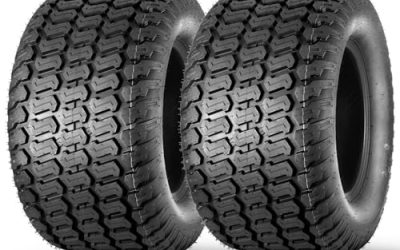
The front tires on a zero-turn or riding mower do a different job from the driven rear tires. They are caster tires. They do not pull the machine forward, so they do not need a deep, aggressive tread to find grip. What they need to do is roll cleanly, turn without tearing at the turf, carry the weight of the front of the machine and the mower deck, and keep doing that season after season without going flat at the worst moment. That is why smooth and shallow-tread flat-free tires dominate this part of the market, and why the wording of this keyword points at exactly that type: a mower tire built for smooth rolling and for durability rather than for traction.

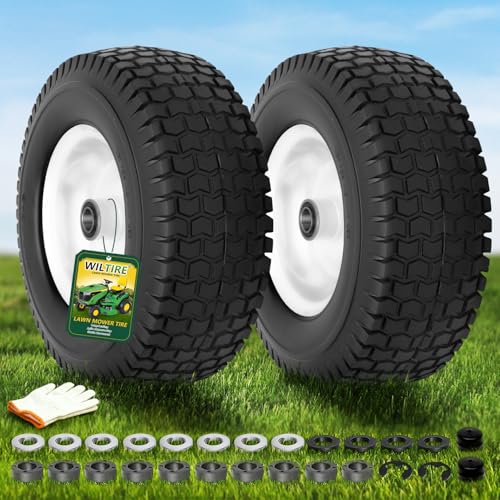
A note on the brand wording in the keyword is needed at the start. No USCarter-branded mower tire could be confirmed from Amazon US product page evidence gathered for this guide, so no product below is presented as a USCarter product. Every tire in this guide is a mower tire of the type the keyword describes — a flat-free front tire for a zero-turn or riding mower, in a smooth or shallow turf pattern — from the brand named in its own listing. If a genuine USCarter listing is confirmed later, it can be compared against these tires using exactly the checks in the how-to-choose section below: size, hub length, bearing bore, and load capacity.
All three tires below share the same broad format. They are solid, airless assemblies supplied as a tire already fitted to a wheel, with bearings or bushings included so the assembly can be fitted to a caster fork without a tire machine. They differ in width, in hub length range, in the load each listing states, and in tread pattern. One is a true smooth tire, one is a smooth solid rubber design on a wider casing, and one uses a shallow turf pattern in a narrower size. Those differences decide which machine each tire suits, so the guide works through the fit checks first and the individual tires second.
Disclosure: This article contains affiliate links. If you buy through these links, we may earn a commission at no additional cost to you.
How to Choose a Mower Tire for Smooth Rolling and Durability
Read the size from the sidewall, not from memory
Mower tire sizes are written as three numbers, such as 13×5.00-6 or 13×6.50-6. The first number is the overall diameter in inches, the second is the section width in inches, and the third is the rim diameter in inches. All three tires in this guide are 13 inches in diameter on a 6 inch rim, which is a common front caster size for zero-turn and larger riding mowers. Width is where they split: a 5.00 inch width suits narrower caster forks and lighter front ends, while a 6.50 inch width spreads the load over a wider footprint. Fitting a wider tire than the fork was built for causes rubbing and steering drag, so match the full size string on the old tire sidewall before ordering anything.
Hub length is the fit check most buyers miss
A tire and wheel assembly is only useful if its hub matches the caster fork. Hub length describes how wide the centre of the wheel is, and the listings in this guide state it as a range because spacers and bushings let one assembly cover several fork widths. A centred hub sits in the middle of the wheel rather than offset to one side. Before ordering, measure the inside width of the fork and the length of the hub on the old wheel, then compare both figures with the hub range in the listing. An assembly whose hub range does not include your fork width will either bind or leave the wheel loose on the axle, and neither fault can be fixed by tightening the axle nut harder.
Bearing bore and bushings decide whether it bolts on
Front caster wheels turn on bearings or bushings that sit over the axle bolt. The common bore sizes in this class are three-quarter inch, five-eighth inch, and half inch, and the assemblies in this guide include exchangeable bearings or bushings in those sizes. That inclusion matters because mower makers do not all use the same axle diameter. Confirm the axle diameter on your machine first, then check that the listing includes that bore size in the box. A tire with the right diameter and hub but the wrong bore cannot be fitted safely, because a loose bore lets the wheel wobble and wear the fork.
Understand what flat-free really means
Flat-free, solid, and airless all describe the same basic construction in this guide: there is no inner tube and no air cavity to puncture. The tire is moulded from solid rubber or polyurethane foam, so thorns, sharp stones, and workshop debris cannot deflate it. The trade is ride feel. An air-filled tire absorbs small bumps with the air itself, while a solid tire passes more of that texture through the frame, and a solid tire can take a temporary flat spot after standing loaded for a long period, which the listings note will roll out again in use. For a front caster tire, most owners accept that trade, because the front of a mower is where punctures from hedge trimmings and hidden debris are most common.
Smooth tread protects turf, shallow tread adds a little bite
A smooth tire has no tread blocks to dig into grass when the caster swivels, so it is the gentlest option on lawns and the easiest rolling, because there is no tread squirm to resist the roll. The cost is grip on wet slopes or loose ground, where a smooth front tire can slide sideways more readily. A shallow turf pattern keeps most of that gentleness while adding a little lateral hold. Choose smooth for flat, cared-for lawns and for machines that work mainly on even ground. Choose a shallow pattern if the ground includes damp banks or gravel edges where a plain smooth tire would wander.
Check the stated load capacity against the front of the machine
Each listing states a load capacity, and the figures in this guide run from 400 pounds to 500 pounds per tire assembly. That figure needs to cover the share of the machine weight carried by that wheel, plus the deck weight transferred through the front, plus the shock loads from bumps and kerb edges, which are higher than the static weight alone. A pair of front tires shares the front load, so the per-tire figure is compared against roughly half the front-end weight with a margin for impacts. If your machine is a heavy zero-turn with a large fabricated deck, stay toward the higher stated capacities in this guide.
Confirm the tire is not for highway use
Every listing in this guide states, in its own wording, that the tire is not for highway use. These are low-speed lawn and garden tires, built for mower speeds on grass, soil, and yard surfaces. They are not road tires, and they should never be fitted to a trailer or cart that will be towed on public roads.
The Mower Tires in This Guide
1. Ogracwheel 13×6.50-6 Flat-Free Smooth Tire and Wheel Assembly
- Link: View on Amazon
- Size: 13×6.50-6
- Tire diameter: 13 inches
- Rim diameter: 6 inches
- Bearings: 3/4 inch, 5/8 inch and 1/2 inch included
- Centred hub length: 4.0 to 6.0 inches
- Stated load capacity: 400 pounds per tire
- Construction: Solid flat-free
The Ogracwheel assembly is the clearest match in this guide to the smooth part of the keyword. Its listing describes it as a smooth tire and wheel assembly for a zero-turn front position, in the wider 13×6.50-6 size. A wider smooth casing spreads the front load across more ground, which reduces the rutting and marking that a narrow tire can leave on soft turf when the casters swivel at the end of a pass. The listing states a load capacity of 400 pounds and describes the tire as built to handle larger decks, which places it on mid-size and larger zero-turn machines rather than on the smallest riders.
The fitting package is broad. Bearings in three bore sizes are included, and the centred hub adjusts across a 4.0 to 6.0 inch range using the supplied hardware, so one assembly covers a wide spread of fork widths and axle diameters. That range is the main reason to shortlist this tire first if your old wheel used an unusual hub length. The listing names lawn mowers, riding mowers, garden tractors, and zero-turn mowers among compatible machine types, which reflects the universal nature of the size rather than a model-specific fit, so the sidewall, hub, and bore checks above still decide the purchase.
As a solid tire, it removes punctures from the front of the machine entirely. There is no pressure to check and no tube to patch. The smooth face is also the easiest of the three here to clean, because there are no tread grooves to pack with wet clippings.
2. Wiltire 13×6.50-6 Flat Free Tire and Wheel, Solid Smooth Rubber
- Link: View on Amazon
- Size: 13×6.50-6
- Tire diameter: 13 inches
- Rim diameter: 6 inches
- Centred hub length: 5.5 to 7.72 inches
- Bushings: 3/4 inch, plus 5/8 inch and 1/2 inch included
- Item weight: 22 pounds
- Construction: Solid smooth rubber, one-piece welded rim
The second Wiltire-sized option in this guide is also a 13×6.50-6, but it is a different assembly from the Ogracwheel above, and the difference that matters is the hub. Its centred hub range runs from 5.5 to 7.72 inches, which suits wider caster forks that the shorter-hub assemblies cannot fill without long spacer stacks. If you measured your fork and found a wide hub, this is the assembly in the guide built for that measurement. Its listing describes the tire as solid smooth rubber on a one-piece welded rim, and the product summary states support for up to 500 pounds.
The package content is the most complete of the three. The listing states that the box includes two tire and rim assemblies, four five-eighth inch bushings, four half inch bushings, spacers in two thicknesses, and two axle caps. In practice that means a pair of front wheels can be replaced together, which is the better way to renew caster tires, because fitting one new solid tire beside one worn pneumatic tire leaves the deck sitting unevenly and steering differently on each side.
The listing names compatibility with most Cub Cadet and Toro zero-turn mowers and with other lawn and garden equipment, and repeats the standard warning for this class: check the sidewall size on the existing tire and measure hub and bushing sizes before purchasing. That advice is worth following literally with this assembly, because its wider hub range is its whole reason to exist.
3. Wiltire 13×5.00-6 Tire and Wheel Flat Free, 2 Pack
- Link: View on Amazon
- Size: 13×5.00-6
- Tire diameter: 13 inches
- Rim diameter: 6 inches
- Centred hub: 3 inch, covering a 3 to 6 inch range in the listing title
- Bore: 3/4 inch bearing, with 5/8 inch bushings included
- Stated load capacity: 440 pounds
- Construction: Solid airless polyurethane, shallow turf tread
The narrow option in this guide is the Wiltire 13×5.00-6, supplied as a two pack of tire and wheel assemblies for riding lawn mowers. Its listing describes a 13 inch diameter, a tread width of about four and a half inches, a 6 inch rim, a 3 inch centred hub, and a three-quarter inch bore bearing, pre-assembled with four five-eighth inch bore bushings included. A reinforced hub and carbon steel bearings are stated, along with a one-piece welded rim supporting up to 440 pounds. Where the two wider tires above use a smooth face, this one uses a shallow, wide turf tread, which the listing describes as minimising grass and lawn damage while keeping stable traction on gravel and sand.
That tread difference makes this the better pick of the three for mixed ground. On a property where the mower crosses gravel drives, sandy patches, and damp grass in one round, the shallow pattern gives the front end a little more lateral hold than a fully smooth tire, while still turning gently enough not to chew the lawn. The solid airless polyurethane construction is described as puncture-proof, tear-resistant, and maintenance-free, so the puncture argument for going flat-free applies here in full.
An adapter kit is included, with bushing sleeves and nylon spacers in several sizes, which the listing presents as covering a variety of hub sizes for a faster replacement. Even with that kit, the starting hub is narrower than the other two assemblies, so this tire suits the narrower forks found on riding mowers and smaller zero-turns rather than the wide-fork machines the second product serves.
Comparison Table
| Feature | Ogracwheel 13×6.50-6 | Wiltire 13×6.50-6 Smooth | Wiltire 13×5.00-6 2 Pack |
|---|---|---|---|
| ASIN | B0DCG4J5ZQ | B0DSW3L737 | B0GHQVHWV1 |
| Size | 13×6.50-6 | 13×6.50-6 | 13×5.00-6 |
| Tread | Smooth | Smooth | Shallow turf |
| Construction | Solid flat-free | Solid smooth rubber | Solid airless polyurethane |
| Hub range | 4.0–6.0 in centred | 5.5–7.72 in centred | 3 in centred |
| Bore sizes included | 3/4, 5/8, 1/2 in | 3/4, 5/8, 1/2 in | 3/4 in, 5/8 in bushings |
| Stated load | 400 lb per tire | Up to 500 lb | 440 lb |
| Best suited to | Wide smooth fit, varied forks | Wide forks, pair replacement | Narrow forks, mixed ground |
Frequently Asked Questions
Are smooth mower tires bad for grip?
Smooth front tires are caster tires, and casters are not driven, so they do not need tread to move the machine. On flat lawns a smooth tire rolls more easily and marks the turf less when it swivels. On wet slopes or loose gravel a smooth front tire can slide sideways sooner than a shallow turf pattern, which is why this guide includes one shallow-pattern option for mixed ground.
What does flat-free mean on a mower tire?
It means the tire is solid rather than air-filled. There is no tube and no air pressure, so punctures cannot deflate it and there is no pressure to check before mowing. The trade is a firmer ride and the possibility of a temporary flat spot after long storage under load, which rolls out again once the tire is in use.
How do I know which hub length I need?
Measure the hub on the wheel you are replacing and the inside width of the caster fork it sits in. Then choose an assembly whose stated hub range includes that measurement. The three assemblies in this guide cover different ranges — roughly 3 inches, 4.0 to 6.0 inches, and 5.5 to 7.72 inches — so the measurement, not the tire diameter, usually decides between them.
Can I replace just one front mower tire?
You can, but replacing the pair is usually better. A new solid tire beside an old air-filled tire leaves the two sides of the deck at slightly different heights and with different rolling behaviour, which shows up as an uneven cut and heavier steering to one side. Two of the assemblies in this guide are supplied with pair fitting in mind.
Are these tires suitable for a garden cart or trailer?
The listings name garden equipment among compatible uses for some sizes, but every tire here is a low-speed lawn tire that is not for highway use. A cart that stays in the yard is a different case from a trailer towed on public roads. Match the size, hub, and bore to the equipment, and never use these tires for road towing.
Conclusion
For smooth rolling and durability at the front of a mower, the decision is mostly a measurement exercise. Match the sidewall size first — 13×5.00-6 for narrower machines, 13×6.50-6 for wider ones — then match the hub range to your fork and the bore to your axle. Within those limits, the Ogracwheel assembly is the smooth all-rounder with the widest hub adjustment in the middle range, the Wiltire 13×6.50-6 serves wide forks and pair replacement with the highest stated load support, and the Wiltire 13×5.00-6 adds a shallow turf tread for mixed ground. No USCarter-branded tire could be confirmed from Amazon US evidence for this guide, so treat the brand wording as keyword wording only, and judge any future USCarter listing by the same size, hub, bore, and load checks used here.
FAQ
Are smooth mower tires bad for grip?
What does flat-free mean on a mower tire?
How do I know which hub length I need?
Can I replace just one front mower tire?
Are these tires suitable for a garden cart or trailer?
More from Amazon
Programs that pair well with the guide above. Offers and eligibility are set by Amazon and may change.
Free shipping on eligible items, Prime Video and more. Eligible new members can start with a free trial.
Start a Prime free trialA Prime membership for ages 18-24 with a trial period. Eligibility is set by Amazon.
See Prime for Young AdultsAudiobooks and podcasts to listen to on the go. Eligible new members can start with a free trial.
Try Audible freeAd-free music streaming. Eligible new subscribers can start with a free trial.
Try Music Unlimited freeAs an Amazon Associate we earn from qualifying purchases.