Key takeaways
- Best all-round motorcycle GPS: Garmin zūmo XT2
- Best for budget-conscious touring: TomTom Rider 550, where available at a competitive market price
- Best minimalist navigation device: Beeline Moto II
- Best for riders who want the biggest, clearest map: Garmin zūmo XT2 with its 6-inch display
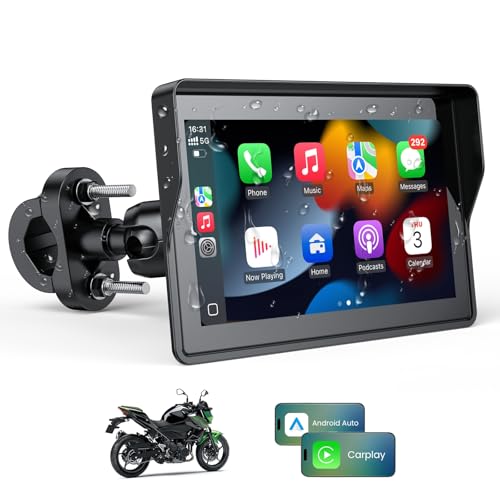
- Best for occasional commuting: A phone mounted securely with a weatherproof charging setup, although it is less purpose-built than a motorcycle GPS
The best motorcycle GPS for most serious riders in 2026 is the Garmin zūmo XT2, but the right choice depends on whether you prioritize a large, highly visible map, low weight, simple turn guidance, or a lower purchase price.
Our top picks

As an Amazon Associate we earn from qualifying purchases at no extra cost to you. Ratings are shown as listed on Amazon.
Quick picks for different riders
- Best all-round motorcycle GPS: Garmin zūmo XT2
- Best for budget-conscious touring: TomTom Rider 550, where available at a competitive market price
- Best minimalist navigation device: Beeline Moto II
- Best for riders who want the biggest, clearest map: Garmin zūmo XT2 with its 6-inch display
- Best for occasional commuting: A phone mounted securely with a weatherproof charging setup, although it is less purpose-built than a motorcycle GPS
A dedicated unit earns its cost through weather resistance, glove-friendly controls, motorcycle-specific routing, vibration-resistant mounting, and reliable power management. The important comparison is not simply which device has the most features; it is which one remains readable and dependable on your motorcycle.
Best motorcycle GPS units compared
| Model | Screen and visibility | Weather resistance | Battery rating | Approx. weight | Typical market range |
|---|---|---|---|---|---|
| Garmin zūmo XT2 | 6.0-inch, 1280 × 800, sunlight-readable | IPX7 | Up to about 6 hours | Approx. 280 g | About $550–$700 |
| TomTom Rider 550 | 4.3-inch, 480 × 272, sunlight-readable | IPX7 | Up to about 6 hours | Approx. 280 g | About $300–$450 |
| Beeline Moto II | 1.45-inch round TFT display | IP67 | Up to about 14 hours | Approx. 47 g | About $200–$250 |
Specifications and battery figures are manufacturer-style ratings and vary with brightness, Bluetooth use, navigation activity, temperature, and charging behavior. Prices are broad 2026 market ranges rather than fixed retail prices.
Garmin zūmo XT2: the strongest choice for touring
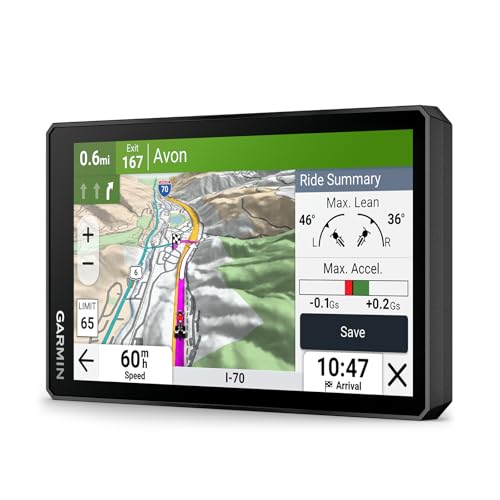
The zūmo XT2 is the best motorcycle GPS for riders who regularly travel long distances, ride in bright sunlight, or need a map that can be understood at a glance. Its 6-inch display provides substantially more map area than the TomTom Rider 550, while the 1280 × 800 resolution keeps roads, route lines, and labels comparatively crisp.
The screen is designed for outdoor use, and the device supports landscape or portrait orientation. Portrait mode can be useful on winding roads because it shows more route ahead. The glove-friendly touchscreen responds to deliberate taps, although thick winter gloves can still make small on-screen controls awkward.
Garmin’s motorcycle routing, track recording, trip planning, and integration with the Garmin Tread ecosystem make the XT2 particularly suitable for multi-day travel. It can also show weather and traffic information when paired with a compatible phone. Those connected features are useful, but they should not be confused with fully independent cellular service: live information generally depends on the phone connection.
The main drawbacks are price, physical size, and the possibility of feature overload. It occupies more handlebar space than a minimalist navigator, and advanced route-planning functions take time to learn. Its motorcycle power cradle is a major advantage for permanent installation, but buyers should confirm that the included mount and wiring suit their handlebars and electrical layout.
TomTom Rider 550: a practical route-focused alternative
The TomTom Rider 550 remains appealing to riders who want a dedicated motorcycle navigator without paying for the largest current Garmin display. Its 4.3-inch screen is smaller, but it is easier to fit behind a windscreen or between a handlebar and other accessories.
TomTom’s strength is route planning. Curvy-road and hilly-road options let riders seek more entertaining alternatives instead of accepting the fastest motorway route. The glove-friendly interface is designed around large controls, and the weatherproof housing is suited to exposed motorcycle use.
The trade-off is aging hardware and a lower-resolution display compared with newer large-screen units. A 4.3-inch screen can be perfectly adequate for turn-by-turn directions, but reading a complex map while moving requires more concentration. Availability and software support should be checked carefully before purchase because the Rider 550 is an older design.
Choose it when you value straightforward route preferences, a compact dedicated unit, and a lower price more than the widest map view or newest connectivity features.
Beeline Moto II: ideal when simplicity and low weight matter
The Beeline Moto II is not a direct replacement for a large Garmin or TomTom. It is a compact navigation display that pairs with a smartphone and emphasizes arrows, distance, and route direction rather than a full moving map. Its small round screen and approximately 47-gram weight make it easy to install on a small motorcycle, scooter, or crowded handlebar.
Its long claimed battery life is useful for riders who dislike permanent wiring. The unit is also highly resistant to dust and water, with an IP67 rating. However, the phone remains central to route calculation and app operation. You should still carry a charging solution for the phone on long rides, because the Beeline’s long runtime does not extend the phone’s battery.
This is a good choice for commuting, urban riding, and riders who already plan routes on a phone. It is less suitable when you need detailed topographic information, fuel-stop planning, a large overview map, or fully independent navigation.
Head-to-head buying decision
| Your situation | Best fit | Why | What to accept |
|---|---|---|---|
| Weekly touring and unfamiliar roads | Garmin zūmo XT2 | Large screen, strong route-planning depth, motorcycle cradle | Higher cost and larger footprint |
| Occasional trips with a moderate budget | TomTom Rider 550 | Dedicated navigation and useful curvy-road routing | Older, smaller, lower-resolution display |
| Small bike or limited handlebar space | Beeline Moto II | Very light and compact | Phone dependence and minimal map detail |
| Riding mostly in bright sunlight | Garmin zūmo XT2 | Largest screen and clearer map presentation | More windscreen and mounting-space considerations |
| Several-day trips away from charging points | Any unit with motorcycle power, especially XT2 or Rider 550 | Continuous charging avoids relying on internal battery | Installation must be fused and weatherproof |
Screen visibility and glove operation
Screen size matters more than many buyers expect. A 6-inch display gives you more room for route context, but it also creates a larger mounting object and may be more exposed to glare. Look for a high-contrast outdoor display, adjustable brightness, and a mount position that avoids direct reflections from the sky or your jacket.
Touchscreens work best when the route is set before moving. Even glove-friendly interfaces should not encourage frequent interaction while riding. Large physical buttons or clearly separated on-screen controls are preferable to phone-style interfaces filled with small icons.
Mounting hardware and motorcycle power
Do not evaluate the navigator separately from its mount. A secure motorcycle cradle should resist vibration, hold the device with one hand, and allow a useful viewing angle without blocking instruments. RAM-style ball mounts are common because they make positioning flexible, but the correct ball size and handlebar diameter still matter.
For permanent installation, connect the mount to a switched 12-volt accessory circuit rather than directly to the battery. A switched circuit turns the GPS off with the ignition and reduces the chance of draining the battery. Use the manufacturer’s wiring or an appropriate fused lead; do not assume that a USB cable alone provides waterproof, vibration-resistant power.
Many motorcycle cradles convert the bike’s 12- to 14-volt electrical system to the voltage required by the navigator. A plain USB socket supplies regulated 5-volt power, but it may not keep every GPS powered through ignition cycles. Check whether the unit expects USB-C, a proprietary cradle, or dedicated contacts before buying accessories.
Battery-life calculation for real rides
Suppose a GPS is rated for six hours but brightness, Bluetooth, and cold weather reduce practical runtime by 25 percent. The useful estimate is:
6 hours × 0.75 = 4.5 hours.
That is enough for a half-day ride, but not a full touring day. If your average riding day is eight hours, a motorcycle power connection should provide at least another 3.5 hours of operation, with margin for stops and engine-off periods. This is why a permanent cradle is more important than a headline battery number for touring.
Ownership details that affect reliability
- Clean the screen correctly: Use a soft, damp microfiber cloth. Grit trapped under a dry cloth can create fine scratches.
- Inspect contacts: Road spray and dust can oxidize charging contacts. Wipe them dry and check for corrosion before long trips.
- Protect the mount: Recheck fasteners after the first few rides and periodically afterward. Vibration can loosen hardware even when the GPS itself is waterproof.
- Plan offline: Download maps, routes, and updates before leaving areas with weak cellular coverage.
- Do not overtrust IP ratings: IPX7 or IP67 describes defined water exposure, not pressure-washing, salt buildup, or careless connector handling.
- Manage heat: A powered device left in direct sun while stationary can become much hotter than it does while moving. Remove it during long stops when practical.
Final verdict
For the broadest range of motorcycle touring needs, the Garmin zūmo XT2 is the best motorcycle GPS because its large sunlight-readable screen, motorcycle-specific features, route-planning depth, and dedicated power cradle solve the problems that matter most on long rides. The TomTom Rider 550 is a sensible lower-cost alternative if its older display and availability are acceptable. The Beeline Moto II is the better answer for riders who want minimal weight, simple guidance, and a clean handlebar rather than a full map computer.