Key takeaways
- For occasional light freezes: Place the trough in a sheltered location, insulate exposed plumbing, and check water frequently.
- For regular freezing: Consider a properly rated livestock-tank heater or de-icer compatible with the trough material and local electrical conditions. Follow the manufacturer’s clearance, grounding, and installation instructions.
- For severe or prolonged winter: Use a system designed for local conditions, such as a protected heated trough or a purpose-built insulated watering setup. Plan for power interruptions and keep a backup watering method available.
Best Livestock Water Troughs for Farms and Ranches
The best livestock water troughs depend on herd size and winter conditions: choose a properly anchored galvanized-steel tank for maximum rigidity and abrasion resistance, or a UV-stabilized poly trough for easier handling and better resistance to rust and denting. In freezing climates, neither material alone keeps water open—insulation, active heating, or a reliable winter watering routine matters more than the tank’s material.
Steel vs. poly: the practical differences
Galvanized steel is a strong choice for permanent, high-traffic watering points where cattle may push against the rim or equipment might bump the tank. Its main vulnerabilities are damaged zinc coating, corrosion at seams or cut edges, and dents that create hard-to-clean creases. Polyethylene troughs are lighter, do not rust, and can flex rather than dent. Their weak points are UV aging, punctures, and damage from animals chewing or rubbing on unsupported edges. Quality, wall thickness, bracing, installation, and exposure affect lifespan as much as material.
Our top picks
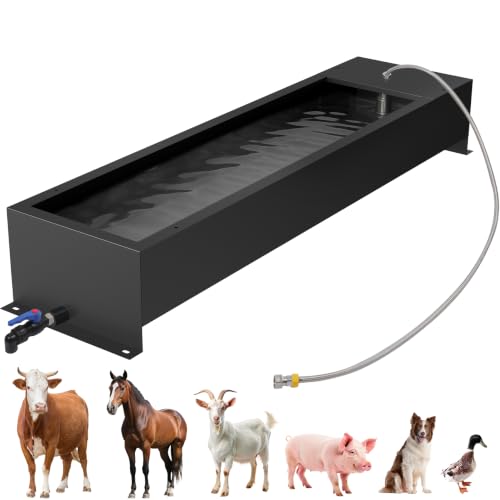


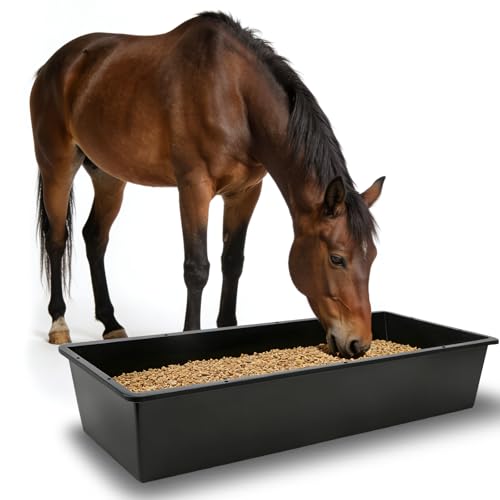
As an Amazon Associate we earn from qualifying purchases at no extra cost to you. Ratings are shown as listed on Amazon.
| Factor | Galvanized steel | Polyethylene |
|---|---|---|
| Typical capacities to compare | 50–300 gallons | 50–300 gallons |
| Approx. weight when empty, 100-gallon size | About 40–70 lb | About 20–35 lb |
| Impact and abrasion | Rigid; resists rubbing, but can dent | Won’t rust; may flex, scratch, or puncture |
| Corrosion and sunlight | Inspect coating, seams, and cut edges for rust | Look for UV stabilization; prolonged sun can age plastic |
| Cold-weather behavior | Conducts heat readily; water can freeze quickly | Insulates somewhat better, but water still freezes |
| Moving or repositioning | Heavier and less convenient to relocate | Usually easier to move and handle |
These are broad comparison ranges, not specifications for every model. Check the maker’s listed capacity, empty weight, material, and installation guidance before buying. A 100-gallon trough’s weight also varies with its shape and construction.
Choose by herd, site, and season
| Your situation | Best starting choice | Why |
|---|---|---|
| Small group or portable paddocks | UV-stabilized poly, roughly 50–100 gallons | Lower empty weight makes seasonal moves and cleaning easier. |
| Large herd at a permanent point | Braced steel or heavy-duty poly, roughly 150–300 gallons or more | Prioritize a stable base, adequate refill rate, and enough drinking access. |
| High animal or machinery traffic | Well-anchored steel, with protected plumbing | Rigid construction can suit exposed sites, though impact can dent the tank. |
| Rust-prone water or low-maintenance preference | Poly trough | No galvanized coating to wear through; still inspect for UV damage and punctures. |
| Long, hard freezes | Either material, paired with a winter system | Heating, insulation, wind protection, and dependable power or water access are decisive. |
Size for peak demand, not just average use
As a planning estimate, an adult cow may drink about 10–20 gallons per day, with higher demand in hot weather, during lactation, or on dry feed. Actual needs vary by animal, diet, weather, and water source. A 20-head group might therefore use 200–400 gallons in a day. That does not mean the trough must hold an entire day’s supply: a float valve and adequate refill rate can replenish water as animals drink. But if the supply is slow, unreliable, or shut off overnight, more storage provides a useful buffer.
For example, a 100-gallon trough serving 20 cows offers only five gallons of stored water per animal before accounting for unusable depth or refill. That is a modest reserve during a hot spell or supply interruption. A larger trough or a faster refill may be more appropriate. Also consider how many animals can drink at once; a large tank with access blocked by fencing can still create crowding.
What matters most when water freezes
Poly’s lower heat conductivity can slow heat loss compared with bare steel, but it cannot prevent freezing in sustained cold. Steel tanks may freeze faster because the tank wall transfers heat readily. In either case, exposed pipes, valves, and float assemblies are common weak points.
- For occasional light freezes: Place the trough in a sheltered location, insulate exposed plumbing, and check water frequently.
- For regular freezing: Consider a properly rated livestock-tank heater or de-icer compatible with the trough material and local electrical conditions. Follow the manufacturer’s clearance, grounding, and installation instructions.
- For severe or prolonged winter: Use a system designed for local conditions, such as a protected heated trough or a purpose-built insulated watering setup. Plan for power interruptions and keep a backup watering method available.
Never assume a heater is safe for every plastic tank, and do not use an improvised open flame. Ice can also damage fittings and trap animals at a slippery edge, so inspect the area and maintain safe access.
Ownership details that prevent early failure
Before installation, prepare a level, well-drained base. A full 100-gallon trough holds about 834 pounds of water, before adding the tank’s weight; uneven support can stress the bottom or fittings. Secure the trough against livestock movement, protect supply lines from hooves and vehicles, and position the drain where wash water will not create mud at the drinking area.
Clean out sediment, algae, and feed debris regularly, then check the float valve and drain. For steel, look for rust around seams, scratches, and edges; repair coating damage using a product suitable for the tank and its water-use conditions. For poly, inspect for cracks, gouges, brittle areas, and damaged fittings. Avoid dragging a full tank, placing it against sharp edges, or allowing cattle to use a weak rim as a rubbing post. Those small installation and maintenance choices often determine whether the tank lasts or becomes a recurring repair.
Prices vary with capacity, wall thickness, reinforcement, and included fittings. As a broad market guide, basic troughs may cost from tens to a few hundred dollars, while larger, insulated, or heated systems can cost several hundred dollars or more. Compare total setup cost—including base, plumbing, anchoring, and winter equipment—not just the empty tank.
Bottom line
Choose galvanized steel when a permanent site needs a rigid, robust tank and you can inspect and maintain its coating. Choose UV-stabilized poly when lighter handling, rust resistance, or easier relocation is more important. For larger herds, size the trough around peak demand, refill capacity, and simultaneous access. In cold regions, treat freeze protection as a separate system decision: material can influence heat loss, but it is not a substitute for a winter plan.