Key takeaways
- Compare the best ebike helmets with NTA 8776 certification, built-in lights, turn signals and dial fits, with sizes and weights from the listings.
An ebike helmet is built for the speeds pedal assist makes routine. Where a standard bicycle helmet meets the CPSC baseline alone, these add the Dutch NTA 8776 standard, written for speed pedelecs and e-bikes travelling at up to 45 km/h, with coverage reaching lower at the temples and the back of the head. Several also build in LED lights and turn signals, because riders at Class 3 pace need to be seen and to signal without lifting a hand from the bars. The five picks below each name e-bike use or carry NTA 8776 certification in their own listing data.
As an Amazon Associate, I earn from qualifying purchases.
Every figure in this article comes from listing or maker product data. Battery run times are maker claims that shift with the light mode in use, and certification is stated only where the listing itself prints it. One pick publishes no weight in its listing, and that gap is flagged rather than filled in.
What To Check Before Buying An Ebike Helmet
NTA 8776 And The CPSC Baseline
CPSC certification is the United States baseline for bicycle helmets, and every pick here lists it. NTA 8776 sits on top of that baseline for faster riding: the Dutch standard for speed pedelecs and e-bikes up to 45 km/h, it extends the area of the head the shell must cover. If your e-bike is a Class 3 model with assist up to 28 mph, NTA 8776 is the line to look for in the listing. For Class 1 or Class 2 riding it is a meaningful extra rather than a legal requirement in most places, so check your local rules.
Lights And Signals
Integrated lights sit at head height, where drivers look, and turn signals show a direction change while both hands stay on the bars. Systems here range from simple front and rear LEDs to a 54-LED layout with a wireless remote. Treat helmet lights as visibility aids that complement the lights on the bike itself. One maker in this group states plainly that its front lamp is a safety light for signalling, not a lamp for seeing the road.
Fit And Sizing
Size ranges differ more between these brands than the labels suggest, and two of the five stop at two sizes. Measure around your head just above the eyebrows and match the number to the range printed in the listing, not to the size you wear in another brand. A rear dial helps fine-tune the fit, and a ponytail opening in the fit system matters if you ride with long hair.
Battery Life And Charging
Run time claims assume a specific mode. The longest figure in this group, up to 40 hours, applies to a pulse mode; the same helmet manages about four hours in its brightest fog mode. Note the connector and what else needs charging. Two picks charge helmet and remote over USB-C, keeping the cable count down.
Weight And Ventilation
Electronics, bigger shells and extended coverage add grams. The lightest pick is a 390 g trail shell with no lights, while the urban light-equipped designs trade airflow for coverage, with eight to ten vents. Hot-climate riders should weigh vent count heavily; dark-commute riders usually accept fewer vents for the lighting.
The Five Ebike Helmets Compared
1. Xnito Old School Helmet

The Xnito Old School is the straightforward certification pick: a retro urban shell with no app and no remote, built around dual certification. Its listing states CPSC and NTA-8776 certification and positions it for Class 3 e-bikes, scooters and standard bicycles at speeds up to 28 mph. Integrated front and rear LED lights run in three modes, flash, static and wavy, for up to 10 hours per charge over USB, and the maker describes the lights as water-resistant. The in-mold shell carries 10 vents, a dial-fit wheel handles adjustment, and the stated weight is 0.83 lb. Sizes run in inches from medium through extra-large, so measure carefully against the range below.
Specs
- Certification: CPSC and NTA-8776, as stated in the listing
- Lights: integrated front and rear LED, 3 modes (flash, static, wavy), USB rechargeable, up to 10 hours claimed
- Construction: in-mold polycarbonate shell with EPS liner
- Ventilation: 10 vents
- Fit: dial-fit wheel
- Sizes: M (21.2–22.8 in), L (22.8–23.6 in), XL (23.6–25 in)
- Weight: 13.28 oz (listing item weight)
- Model: Old School
2. JARSH Commute Smart E-Bike Helmet

The JARSH Commute Smart, model C720, is the maximum-visibility pick. Its listing claims certification to NTA-8776 alongside CPSC, ASTM and CE, and wraps the shell in a 360-degree lighting system of 54 built-in LEDs covering the front, rear and sides. Turn signals are worked from a wireless handlebar remote that shows light status in real time, with no phone app involved. Battery claims are the strongest here, up to 40 hours in pulse mode and about four hours in fog mode, with dual USB-C charging in roughly two and a half to three hours. A Fidlock magnetic buckle closes one-handed, eight large vents move air, the fit system adjusts around the full head with a ponytail opening, and a brim and bug net are included. The listing publishes no weight, so riders who count grams should note that gap.
Specs
- Certification: NTA-8776, CPSC, ASTM and CE, as stated in the listing
- Lights: 54 built-in LEDs with 360-degree coverage and turn signals
- Remote: wireless handlebar remote with status display, no app required
- Battery: up to 40 hours in pulse mode, about 4 hours in fog mode (maker claims)
- Charging: dual USB-C for helmet and remote, about 2.5–3 hours
- Buckle: Fidlock magnetic buckle
- Ventilation: 8 vents
- Water resistance: IPX5
- Included: brim, bug net, remote, charging cables
- Model: C720
3. Shinmax Bike Helmet With Turn Signals

The Shinmax takes the signal idea and keeps the package simpler than the JARSH. Listing data gives it CPSC, CE and NTA 8776 certification, a front safety light, rear light modes and turn signals triggered from a handlebar remote. The maker is explicit that the front light is for signalling and being seen rather than lighting the road ahead, so plan on a separate bar light for dark routes. Charging is USB-C at about two hours for up to five hours of light use, the shortest run time here. Eight vents and a built-in visor handle sun glare, the pads come out for washing, and sizing stops at medium and large, which leaves smaller heads out.
Specs
- Certification: CPSC, CE and NTA 8776, per listing data
- Lights: front safety light, rear light modes, turn signals
- Remote: handlebar remote for the signals
- Battery: up to 5 hours claimed; USB-C charging in about 2 hours
- Ventilation: 8 vents
- Visor: built-in
- Sizes: M (54–58 cm), L (57–61 cm)
- Padding: removable and washable
4. KINGBIKE MTB Helmet With Camera Mount

The KINGBIKE MA-066 is the trail rider’s route into this category. Its listing leads with NTA-8776 certification for e-bike use alongside United States and European standards, then adds the details trail riders actually ask for: a three-position adjustable visor and a mount for an action camera. The polycarbonate and EPS shell weighs 390 g on the listing, carries 17 vents for climbing airflow, and adjusts with a rear dial over removable, washable padding. There are no integrated lights, so night riders need bike-mounted lighting, but for daylight trail use this is the only pick shaped for the job. Sizes are medium and large only.
Specs
- Certification: NTA-8776 plus United States and European standards, per the listing
- Weight: 390 g (listing figure)
- Construction: polycarbonate shell with EPS liner
- Visor: 3-position adjustable; action camera mount included
- Ventilation: 17 vents
- Sizes: M (53–56 cm), L (57–61 cm)
- Fit: rear adjustment dial; removable, washable padding
- Model: MA-066
5. BATFOX NTA 8776 E-Bike And Mountain Bike Helmet
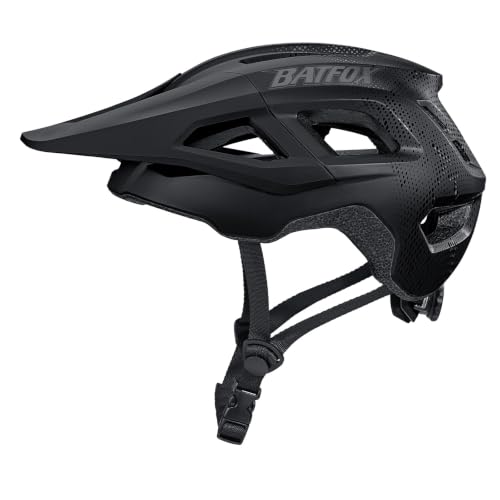
The BATFOX is the plain, wide-fit option. The maker’s listing data stacks four certifications, CPSC, CE, EN 1078 and NTA 8776, into a polycarbonate shell with 17 vents and a detachable visor, and it is the only pick here with a small size, opening the range at 51 cm. There is no MIPS layer listed and no integrated lighting, which keeps the design simple: sizing comes from the three shell sizes themselves, and the maker states one year of quality support. Commuters who already run good bike lights and want the certification stack without electronics to charge will find this the easiest helmet here to live with.
Specs
- Certification: CPSC, CE, EN 1078 and NTA 8776, per maker listing data
- Ventilation: 17 vents
- Visor: detachable
- Shell: polycarbonate
- Sizes: S (51–54 cm), M (55–58 cm), L (57–61 cm)
- Lights: none integrated
- Support: one year of quality support stated by the maker
Matching A Helmet To Your Riding
Class 3 commuters riding after dark should look first at the JARSH for its signals and battery claims, or the Xnito for the same certification family in a lighter, simpler shell. Trail riders on e-MTBs are served by the KINGBIKE, the only pick with a camera mount and a three-position visor. The Shinmax suits signal-minded commuters with shorter rides, given its five-hour light budget, while the BATFOX fits riders who want certification without electronics, including smaller heads the other four cannot size for.
Frequently Asked Questions
What does NTA 8776 certification mean on an ebike helmet?
NTA 8776 is a Dutch standard written for helmets used on speed pedelecs and e-bikes travelling at up to 45 km/h. Compared with a standard bicycle helmet standard, it calls for protection over a larger area of the head, extending lower at the temples and the back of the skull, reflecting the higher speeds pedal-assist bikes sustain. In these listings it appears alongside CPSC certification, the United States baseline.
Do I need an ebike-specific helmet for a Class 3 e-bike?
Most states name no helmet standard by class, but a Class 3 e-bike assists to 28 mph, exactly the speed range NTA 8776 was written for, and riders who spend real time at those speeds get a shell shaped and certified for them. At Class 1 or Class 2 speeds an ebike helmet is an added margin rather than a requirement, and local helmet laws apply either way.
How long do the lights on these helmets run between charges?
It depends on the mode. The JARSH claims up to 40 hours in pulse mode but about four hours in fog mode, the Xnito claims up to 10 hours across its three light modes, and the Shinmax claims up to five hours. Steady bright modes drain fastest, so match the claim to the mode you will actually use.
Can a helmet light replace the lights on my bike?
No. Helmet lights are visibility aids that put a lamp at head height and add signals, but makers position them as supplements. The Shinmax listing states its front light is for signalling rather than seeing the road. Keep a proper headlight and rear light on the bike, check what your local rules require after dark, and treat the helmet system as an extra layer.
Conclusion
Start with the certification line in the listing, then choose the feature set that matches your riding: full signals and long battery claims from the JARSH, light weight and simplicity from the Xnito, a shorter-charge signal setup from the Shinmax, trail hardware from the KINGBIKE, or a no-electronics wide size range from the BATFOX. Measure your head, match it to the printed range, and the right pick becomes clear.
FAQ
What does NTA 8776 certification mean on an ebike helmet?
Do I need an ebike-specific helmet for a Class 3 e-bike?
How long do the lights on these helmets run between charges?
Can a helmet light replace the lights on my bike?
More from Amazon
Programs that pair well with the guide above. Offers and eligibility are set by Amazon and may change.
Free shipping on eligible items, Prime Video and more. Eligible new members can start with a free trial.
Start a Prime free trialA Prime membership for ages 18-24 with a trial period. Eligibility is set by Amazon.
See Prime for Young AdultsAudiobooks and podcasts to listen to on the go. Eligible new members can start with a free trial.
Try Audible freeAd-free music streaming. Eligible new subscribers can start with a free trial.
Try Music Unlimited freeAs an Amazon Associate we earn from qualifying purchases.