Our Short List of 3
All 4 Picks at a Glance
| Product | Specs | Action |
|---|---|---|
 1. Ricoh GR IIIx — The Pocketable Street Specialist | Check price on Amazon | |
 2. Fujifilm X100V — The Classic 35mm Fixed-Lens Camera | Check price on Amazon | |
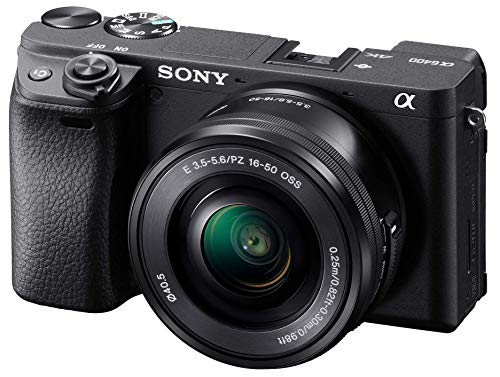 4. Sony a6400 with 16-50mm Lens — The Autofocus Performer | Check price on Amazon | |
 5. Canon PowerShot G7 X Mark III — The Small Zoom Compact | Check price on Amazon |
Our Top Picks
- Sony Alpha a6400 Mirrorless Camera: Compact APS-C Interchangeable6.2 x 9.2 x 4.55 inches6.2 x 9.2 x 4.55 inches0.6 poundsCheck on Amazon
As an Amazon Associate we earn from qualifying purchases.
Street photography rewards the camera you can carry all day, raise without attracting attention, and trust to focus before a moment disappears. Size, weight, lens focal length, autofocus speed, and control layout matter as much as sensor size.
This guide compares five real cameras sold on Amazon US, all chosen for street use. Three are fixed-lens or compact designs that keep the kit small and simple, and two are compact interchangeable-lens bodies supplied with versatile kit lenses. Every pick is a camera — no phones, bags, or accessories are padded into the list — and each section explains the specifications that actually affect street shooting, plus the trade-offs to accept before you buy.
Disclosure: This article contains affiliate links. If you buy through a link on this page, we may earn a commission at no additional cost to you.
Quick Comparison
| Camera | Sensor | Lens | Autofocus Highlights | Viewfinder | Best For |
|---|---|---|---|---|---|
| Ricoh GR IIIx | 24.2MP APS-C | Fixed 26.1mm f/2.8 (40mm equivalent) | Hybrid AF, face detection, snap focus | None (LCD only) | Pocketable, discreet shooting |
| Fujifilm X100V | 26.1MP APS-C X-Trans CMOS 4 | Fixed 23mm f/2 (35mm equivalent) | Phase detection, face and eye detection | Hybrid optical / electronic | Classic 35mm field of view and manual dials |
| Fujifilm X-T30 II with XF 18-55mm Kit | 26.1MP APS-C X-Trans CMOS 4 | XF 18-55mm f/2.8-4 zoom | Phase detection, face and eye detection | Electronic | One body that can grow with prime lenses |
| Sony a6400 with 16-50mm Lens | 24.2MP APS-C Exmor CMOS | E PZ 16-50mm f/3.5-5.6 power zoom | 425 phase points, Real-time Eye AF and Tracking, 0.02 sec claim | Electronic | Fastest tracking autofocus in this group |
| Canon PowerShot G7 X Mark III | 20.1MP 1.0-inch stacked CMOS | 24-100mm f/1.8-2.8 (equivalent) zoom | Contrast detection, 31 points | None (LCD only) | Smallest zoom option with a bright lens |
What Makes a Camera Good for the Street
Focal length: 28mm, 35mm, and 40mm equivalents
Most street work happens at wide to normal focal lengths. A 28mm equivalent frames a subject together with the surrounding scene, but it requires getting close and it stretches faces near the edges. A 35mm equivalent is the traditional compromise: wide enough for context, natural enough for people. A 40mm equivalent tightens the frame slightly, which helps when you cannot step closer, and it renders faces with less distortion. All three fixed and kit options here cover this range — the Ricoh GR IIIx sits at 40mm equivalent, the Fujifilm X100V at 35mm equivalent, and the zooms cover the whole band.
Size, weight, and discretion
A street camera should disappear into a jacket pocket or hang from a strap without pulling at your neck by midday. Fixed-lens compacts such as the Ricoh GR IIIx and Canon G7 X Mark III are the most discreet because the lens does not protrude far and there is nothing to change in public. Interchangeable-lens bodies such as the Sony a6400 and Fujifilm X-T30 II are larger, but paired with a compact kit zoom or a small prime they remain far less conspicuous than a full-frame body with a fast zoom.
Autofocus and zone focusing
Modern hybrid autofocus with face and eye detection helps when a subject is moving toward you, but street photographers also rely on zone focusing: pre-setting a manual focus distance and a narrow aperture so that everything within a depth-of-field band is acceptably sharp. The Ricoh GR IIIx is especially known for its Snap Focus feature, which sets a preset focus distance that engages at a full shutter press. Cameras with fast phase-detection systems, such as the Sony a6400 with its 425 phase-detection points, suit a more reactive, autofocus-led style.
Controls and viewfinders
Physical dials for shutter speed and exposure compensation let you change settings by touch while the camera is at your eye or hanging at your side. The Fujifilm bodies lean into this approach. A hybrid or electronic viewfinder helps in bright sunlight when a rear screen washes out, while screen-only cameras keep the body smaller and encourage a lower, less obvious shooting posture. Neither approach is universally better; the right choice depends on whether you compose at the eye or from the waist.
1. Ricoh GR IIIx — The Pocketable Street Specialist
View the Ricoh GR IIIx on Amazon
The Ricoh GR IIIx is built around a single idea: a large APS-C sensor and a sharp fixed lens in a body small enough for a coat pocket. Its 24.2MP APS-C CMOS sensor is paired with a 26.1mm f/2.8 GR lens, which gives a 40mm equivalent field of view. That slightly longer perspective suits street photographers who prefer to work a step farther back, isolating a subject against signage, traffic, or architecture without the edge stretching of a 28mm lens.
Autofocus is a hybrid system combining phase and contrast detection, with face detection for candid portraits. The defining street feature, however, is Snap Focus: you preset a focus distance, and a full, fast press of the shutter fires at that distance without waiting for autofocus to hunt. Combined with zone focusing technique, it makes the GR IIIx one of the fastest cameras here to operate from the hip. In-body image stabilization helps at slower shutter speeds in shade or at dusk, and the camera records JPEG and RAW files.
There are clear trade-offs. There is no viewfinder, so composition is on the 3.0-inch touchscreen in all light. The lens is fixed, so your feet do the zooming. Battery life is modest, and most owners who shoot all day carry a spare. For photographers who value invisibility and speed over flexibility, those compromises are the point of the design.
Key specifications: 24.2MP APS-C sensor; fixed 26.1mm f/2.8 lens (40mm equivalent); hybrid autofocus with face detection; Snap Focus preset-distance mode; in-body stabilization; 3.0-inch touchscreen; JPEG and RAW.
Choose this if you want the smallest serious street camera in this guide and you are comfortable composing on a screen at a single focal length.
2. Fujifilm X100V — The Classic 35mm Fixed-Lens Camera
View the Fujifilm X100V on Amazon
The Fujifilm X100V pairs a 26.1MP APS-C X-Trans CMOS 4 sensor with a fixed 23mm f/2 lens, a 35mm equivalent field of view that has defined street photography for decades. The lens is fast enough for evening work, and the leaf shutter in the lens is very quiet and allows flash synchronization at high shutter speeds, which is useful for fill flash in harsh midday sun.
Its hybrid viewfinder can switch between an optical viewfinder, which shows the scene directly with frame lines and minimal delay, and an electronic viewfinder, which previews exposure exactly. That choice is rare at any size and is a genuine street advantage: optical for speed and awareness of movement outside the frame, electronic for precise exposure in difficult light. Dedicated dials for shutter speed, aperture (on the lens), ISO, and exposure compensation support shooting by feel.
Phase-detection autofocus covers much of the frame and includes face and eye detection. A tilting touchscreen helps with low, discreet compositions. Fujifilm’s film simulation modes are also relevant here, because many street photographers deliver finished JPEGs in a monochrome or muted color look straight from the camera rather than processing every RAW file.
The limitations mirror the Ricoh: one focal length, no in-body stabilization, and a body that fits a large pocket rather than a small one. Availability of this model can also vary between sellers, so check the listing configuration carefully before ordering.
Key specifications: 26.1MP APS-C X-Trans CMOS 4 sensor; fixed 23mm f/2 lens (35mm equivalent); hybrid optical/electronic viewfinder; phase-detection autofocus with face and eye detection; leaf shutter; tilting touchscreen; film simulation modes.
Choose this if you want the traditional 35mm street experience, a real viewfinder, and manual dials in a fixed-lens body.
3. Fujifilm X-T30 II with XF 18-55mm Kit — The Flexible Fujifilm
View the Fujifilm X-T30 II XF 18-55mm Kit on Amazon
The Fujifilm X-T30 II uses the same 26.1MP X-Trans CMOS 4 sensor family as the X100V, but in a compact interchangeable-lens body. The kit listed here includes the XF 18-55mm f/2.8-4 R LM OIS zoom, which covers roughly 27-84mm in equivalent terms. For street work you will likely live at the wide end, but the longer settings help for details, portraits of fellow travelers with permission, and compressed city scenes. Optical stabilization in the lens steadies handheld shots at dusk.
Because the mount is interchangeable, the body can later take a small prime lens — a compact 23mm, 27mm, or 35mm prime turns the X-T30 II into a much more discreet outfit than the kit zoom suggests. That growth path is the main reason to choose it over the fixed-lens X100V. You keep Fujifilm’s dial-led handling and film simulations, gain an electronic viewfinder, and keep the option to adapt your kit as your style settles.
Autofocus uses phase detection across the sensor with face and eye detection, and continuous shooting is fast enough for a subject crossing the frame. Video is a secondary consideration for most street stills shooters, but the body records 4K video if your work mixes stills and clips.
Trade-offs: with the kit zoom fitted, this is noticeably larger than the two fixed-lens cameras above, and there is no in-body stabilization, so stabilization depends on the lens. The rear screen tilts rather than fully articulating.
Key specifications: 26.1MP APS-C X-Trans CMOS 4 sensor; XF 18-55mm f/2.8-4 zoom with optical stabilization; Fujifilm X mount; phase-detection autofocus with face and eye detection; electronic viewfinder; 3.0-inch tilting touchscreen; film simulation modes.
Choose this if you want Fujifilm handling and color in a body that can start with a kit zoom and later shrink around a small prime lens.
4. Sony a6400 with 16-50mm Lens — The Autofocus Performer
View the Sony a6400 with 16-50mm Lens on Amazon
The Sony a6400 is the autofocus-led choice in this group. Its 24.2MP APS-C Exmor CMOS sensor is covered by 425 phase-detection and 425 contrast-detection points over 84 percent of the frame, and Sony specifies autofocus acquisition in as little as 0.02 seconds under its test conditions. Real-time Eye AF and Real-time Tracking hold a moving subject as it crosses a busy frame, which suits a reactive style: raise the camera, let tracking lock on, and shoot a burst at up to 11 frames per second with autofocus and auto-exposure tracking.
The listed kit includes the E PZ 16-50mm f/3.5-5.6 OSS power zoom. It retracts to keep the outfit compact, covers a 24-75mm equivalent range, and has optical stabilization. For a more discreet street setup, the E mount offers many small prime lenses, so — as with the X-T30 II — the kit zoom is a starting point rather than the final form of the camera.
The body includes a 2.36M-dot electronic viewfinder and a touchscreen that tilts up 180 degrees. That flip-up screen is aimed at video creators, but street photographers can also use the tilt for waist-level framing. The a6400 records 4K video with full pixel readout and no pixel binning, plus Full HD at 120 fps, if your street work includes motion.
Trade-offs: there is no in-body stabilization, the kit lens aperture is modest for night work, and the menu-driven control style is less tactile than the Fujifilm dials. A fast prime largely solves the low-light point.
Key specifications: 24.2MP APS-C Exmor CMOS sensor; E PZ 16-50mm f/3.5-5.6 OSS power zoom; 425 phase-detection points; Real-time Eye AF and Real-time Tracking; up to 11 fps continuous shooting; electronic viewfinder; 180-degree tiltable touchscreen; 4K video.
Choose this if autofocus speed and subject tracking matter more to you than manual dials, and you plan to add a small E-mount prime later.
5. Canon PowerShot G7 X Mark III — The Small Zoom Compact
View the Canon PowerShot G7 X Mark III on Amazon
The Canon PowerShot G7 X Mark III takes a different route: a 20.1MP 1.0-inch stacked CMOS sensor and a built-in 4.2x zoom covering 24-100mm in equivalent terms, with a bright f/1.8-2.8 aperture range. That lens is the story for street use. At 24mm it frames a whole intersection; at the long end it reaches details across a street; and the wide maximum aperture keeps shutter speeds usable in shade, markets, and evening streets despite the smaller sensor.
At about 304 grams with battery and card, it is one of the lightest cameras here and slips into a jacket pocket with the lens retracted. Autofocus is contrast-detection based with 31 points, so it is a step behind the phase-detection systems above for fast-moving subjects, but for the more common street pace — walking subjects, street scenes, environmental portraits — it is adequate, and continuous shooting reaches up to 20 fps in its high-speed mode and 8 fps with more conventional operation, per the listing specifications. The DIGIC 8 processor handles JPEG and RAW files.
The 3.0-inch touchscreen tilts up for low or self-facing angles. There is no viewfinder, which is the main compromise alongside the smaller sensor: in very bright sun, screen composition can be harder, and at high ISO the 1.0-inch sensor shows more noise than the APS-C cameras in this guide. In return you get the simplest possible kit — one pocketable camera, no lens decisions.
Key specifications: 20.1MP 1.0-inch stacked CMOS sensor; 24-100mm equivalent f/1.8-2.8 zoom with optical stabilization; DIGIC 8 processor; contrast-detection autofocus, 31 points; up to 20 fps high-speed continuous shooting; 3.0-inch tilting touchscreen; 4K 30p and Full HD 120p video.
Choose this if you want one small camera with a genuinely useful zoom range and a bright lens, and you accept a smaller sensor in exchange.
How to Choose Among These Five
Start with how you want to frame. If a single focal length appeals to you, decide between 40mm equivalent (Ricoh GR IIIx, smaller and screen-only) and 35mm equivalent (Fujifilm X100V, with a hybrid viewfinder and leaf shutter). If you are still discovering your preferred focal length, a kit zoom on the Fujifilm X-T30 II or Sony a6400 will teach you quickly — check which focal lengths your files actually use after a month of shooting — and both bodies accept small primes afterward. If simplicity matters most and you still want reach, the Canon G7 X Mark III covers 24-100mm equivalent in a pocketable body.
Next, decide how you focus. Zone focusing and preset distances favor the Ricoh. Tracking autofocus for moving subjects favors the Sony. The Fujifilm bodies sit between those poles, with capable phase-detection systems and the most tactile manual controls.
Finally, think about light. APS-C sensors in the Ricoh, Fujifilm, and Sony bodies hold up better as ISO rises on night streets. The Canon compensates in part with its f/1.8-2.8 lens. A spare battery matters more for a full day out than any single specification here.
Frequently Asked Questions
Is a fixed-lens camera limiting for street photography?
It removes zoom decisions and keeps the camera small, which many street photographers prefer. It does require moving your feet to change framing, and you cannot reach a distant detail. If that trade-off sounds frustrating rather than freeing, start with a kit zoom body instead.
Do I need a viewfinder for street work?
No, but it helps in bright sunlight and for tracking movement outside the frame. Screen-only cameras such as the Ricoh GR IIIx and Canon G7 X Mark III encourage lower, less conspicuous compositions. The Fujifilm X100V is unusual in offering both optical and electronic finder views in one body.
Which focal length should a beginner start with?
A 35mm equivalent is the most forgiving starting point because it balances subject and context. A kit zoom that covers 24-75mm equivalent, such as those on the Sony a6400 and Fujifilm X-T30 II listings here, lets you experiment before committing to a prime.
Does sensor size matter more than the lens?
Both matter. The APS-C cameras here gather more light per pixel at high ISO, while the Canon’s bright f/1.8-2.8 zoom narrows the gap in real use. For typical street output — web, social, and moderate prints — all five cameras have resolution to spare.
Conclusion
For pure discretion and speed, the Ricoh GR IIIx is the specialist pick. For the classic street experience with a viewfinder and dials, choose the Fujifilm X100V. If you want one body that can evolve, the Fujifilm X-T30 II kit and the Sony a6400 kit take opposite approaches to the same idea — handling and color on one side, tracking autofocus on the other. And if you want the smallest camera that still zooms, the Canon PowerShot G7 X Mark III is the practical answer. Match the camera to how you walk, frame, and focus, and it will stay in your pocket or on your strap.
More from Amazon
Programs that pair well with the guide above. Offers and eligibility are set by Amazon and may change.
Free shipping on eligible items, Prime Video and more. Eligible new members can start with a free trial.
Start a Prime free trialA Prime membership for ages 18-24 with a trial period. Eligibility is set by Amazon.
See Prime for Young AdultsAudiobooks and podcasts to listen to on the go. Eligible new members can start with a free trial.
Try Audible freeAd-free music streaming. Eligible new subscribers can start with a free trial.
Try Music Unlimited freeAs an Amazon Associate we earn from qualifying purchases.