Our Short List of 3
All 5 Picks at a Glance
| Product | Specs | Action |
|---|---|---|
 1. Zareba EAC50M-Z 50 Mile AC-Powered Low Impedance Charger | Check price on Amazon | |
 2. Parmak Magnum Solar-Pak 12 | Check price on Amazon | |
 3. Parmak Solar-Pak 6 DF-SP-LI | Check price on Amazon | |
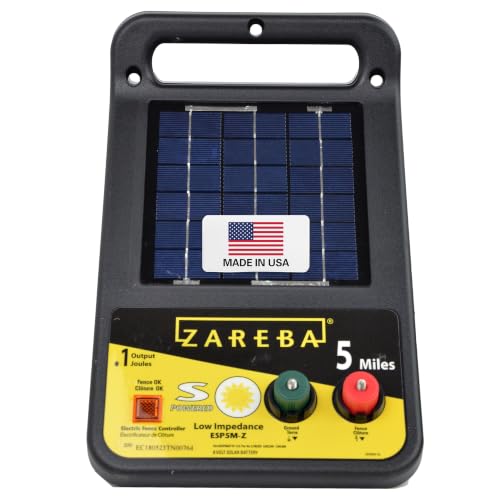 4. Zareba ESP5M-Z 5 Mile Solar Low Impedance Charger | Check price on Amazon | |
 5. Gallagher S20 Solar Electric Fence Charger | Check price on Amazon |
Key takeaways
- Compare the best electric fence chargers for cattle, horses, goats, and gardens, with solar and plug-in energizers, joule output, and range guidance.
An electric fence charger, also called an energizer, is the unit that turns a plain wire fence into a working barrier. It sends a short, high-voltage pulse down the wire about once a second. An animal that touches the wire completes a circuit through the ground and feels a sharp, brief shock, then learns to keep away from the line. The fence itself does not need to be strong enough to hold an animal by force. The pulse does the work, which is why a light wire fence with a good energizer can hold cattle, horses, goats, sheep, and pigs, and can keep deer, raccoons, and other animals out of a garden.
The best electric fence chargers match the fence they have to power. A small garden fence needs far less energy than a long multi-wire cattle pasture, and a fence far from any wall outlet needs a different power source than a fence beside a barn. This guide covers five energizers sold on Amazon, from a compact solar unit for a small paddock to a plug-in unit rated for fifty miles of fence. All five are fence energizers in the same product class, and all five are low-impedance units, which means they keep sending a useful pulse even when grass and weeds touch the wire.
Disclosure: As an Amazon Associate, we earn from qualifying purchases.
How an Electric Fence Charger Works
An energizer stores energy and releases it as a brief pulse. The key figure is stored energy, measured in joules. A higher joule figure means a stronger pulse and a better ability to push that pulse through a long fence and through vegetation touching the wire. A low joule figure is enough for a short, clean fence holding poultry or pets. A high joule figure is needed for a long fence, for heavy weed growth, and for thick-coated animals such as cattle and sheep.
The pulse travels from the energizer along the fence wire, through the animal, into the soil, and back to the energizer through the ground system. That return path is why grounding matters as much as the energizer itself. A weak ground system gives a weak shock even from a strong energizer.
Mile ratings need careful reading. A maker rating of fifty miles usually means fifty miles of single clean wire in ideal conditions, with no weeds touching the line. A real fence with several strands, corners, gates, and some vegetation will cover far less ground at full strength. Treat the rated distance as a ceiling, not a promise.
What to Look For in an Electric Fence Charger
Joule output comes first. For a garden, a poultry run, or a small pet enclosure, a fraction of a joule is enough. For horses, goats, and sheep on a few acres, look for roughly half a joule to one joule. For cattle on a longer fence, or for a fence with heavy weed pressure, look for one joule and above, and for a large ranch fence, two joules and above.
Range comes second, and it should be judged against the real fence, not the headline figure. Count the total length of wire, including every strand, then add a margin for gates, corners, and vegetation. A three-strand fence around ten acres holds far more wire than a single strand around the same ground. Choose an energizer rated well above the total wire length, so the pulse stays strong at the far end.
Power source decides where the unit can live. Plug-in AC energizers are the simplest choice near a barn or house with a wall outlet. They run continuously, need no battery care, and usually give the most joules for the money. Solar energizers suit remote pastures with no outlet. They carry a panel and a rechargeable battery, and they keep pulsing at night from the stored charge. Battery energizers run from a separate 6-volt or 12-volt battery and suit temporary fences and rotational grazing, where the unit moves often.
Grounding and lightning protection come next. A good ground system uses galvanized or copper-clad rods, solid connections, and damp soil. Dry, sandy, or rocky soil needs more rods. Lightning is the most common cause of energizer failure, so look for a warranty that covers lightning damage, and fit a lightning diverter where storms are common.
Build and warranty matter on a unit that lives outdoors year-round. Look for a weatherproof case, a mounting bracket for a post, clear fence and ground terminals, and a visible indicator that shows the unit is pulsing. A warranty of two or three years, including lightning cover, is a useful sign that the maker stands behind the unit.
Best Electric Fence Chargers
1. Zareba EAC50M-Z 50 Mile AC-Powered Low Impedance Charger
The Zareba EAC50M-Z is the plug-in pick in this guide, and it is the unit to choose when a wall outlet is within reach of the fence. It is an AC-powered low-impedance energizer rated for up to fifty miles of fence in ideal conditions, with 2.0 joules of output. That combination covers a medium to large cattle, horse, or goat pasture with room to spare, and it holds up in heavy weed conditions where a weaker unit would fade.
The unit is built for permanent installation in a barn or shed. It plugs into a standard wall outlet, so there is no battery to charge, no panel to aim at the sun, and no nightly drop in output. The maker backs it with a two-year limited warranty that includes lightning damage, which is the cover that matters most for a plug-in unit left connected through storm season.
Two joules is a serious output for a farm fence, and it is the right level for long multi-wire runs and for animals with thick coats. It is more than a garden or poultry fence needs, so this pick belongs on a working livestock fence rather than a small backyard enclosure.
2. Parmak Magnum Solar-Pak 12
The Parmak Magnum Solar-Pak 12 is the solar pick for a large remote pasture. It is a 12-volt battery-operated low-impedance energizer with its own solar panel, rated for up to thirty miles of fence. The panel charges the sealed battery during the day, and the battery keeps the unit pulsing at night, so a fence far from any outlet stays live around the clock.
Parmak has built fence chargers in the United States for many years, and this model is the strongest solar unit in its range. The case is weatherproof and built for outdoor mounting on a post, with a steel frame that resists rust. A three-year warranty covers the unit, with the battery covered for one year. The 12-volt design gives it more punch than the 6-volt solar units in this guide, which is why it suits cattle and large multi-wire fences rather than small paddocks alone.
The trade-off for that range is size and weight. This is a substantial unit with a battery and panel built in, and it needs a solid post and a good ground system to work at its best. It also needs sun, so the panel should face open sky and the fence should be kept clear of heavy growth.
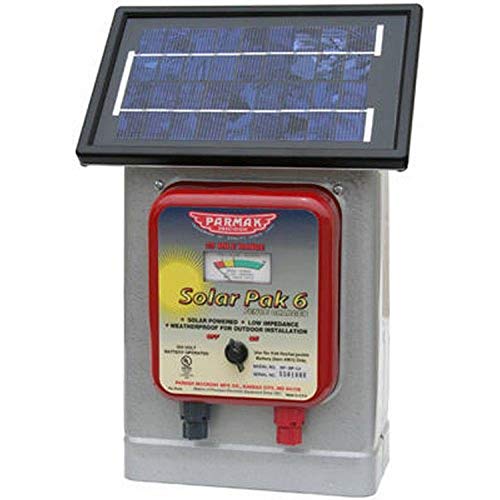
3. Parmak Solar-Pak 6 DF-SP-LI
The Parmak Solar-Pak 6, model DF-SP-LI, is the mid-size solar pick, and it is the unit to choose for a small to medium pasture that needs a real pulse without a large 12-volt unit. It runs from a 6-volt rechargeable battery kept topped up by its built-in solar panel, and it is rated for up to twenty-five miles of fence in ideal conditions. Output is 0.75 joules on the low setting and 1.6 joules and above on the high setting, so it can be turned down for light fencing and turned up for heavier weed load and larger animals.
The built-in performance meter is the feature that sets this unit apart. It shows fence condition at a glance, with a simple meter that reads battery level and fence voltage, so a walk past the post tells whether the fence is live and healthy. The maker states that the battery runs the unit for twenty-one days in total darkness, which gives a useful margin through cloudy spells. The case is weatherproof and portable, the unit is made in the United States, and the warranty runs to three years including lightning damage, with the battery covered for one year.
This pick suits horses, cattle, pigs, and dogs on a fence that is too far from an outlet for a plug-in unit and too long for a small solar unit. It is lighter and easier to move than the Magnum Solar-Pak 12, which helps for rotational grazing and for seasonal fences that move with the animals.
4. Zareba ESP5M-Z 5 Mile Solar Low Impedance Charger
The Zareba ESP5M-Z is the compact solar pick in this guide, and it is the unit to choose for a garden, a poultry run, a small paddock, or a temporary fence where a large energizer would be wasted. It is a solar-powered low-impedance charger rated for up to five miles of fence, with a built-in panel and an internal rechargeable battery. The maker states that it runs for up to two weeks without sunlight, which covers a long cloudy spell for a small fence.
The unit is built to mount on a post and rotate to face the sun. A built-in bracket fits T-posts, Y-posts, and round wood posts, and the whole unit turns through a full circle so the panel can be aimed without moving the post. The case is compact and light, the terminals are clearly marked for fence and ground, and the unit is made in the United States and fully load-tested after manufacture.
Five miles is a modest rating, and that is the point. A small fence needs a small pulse, and a low-output unit is safer and simpler for poultry, pets, and garden protection, where the goal is to deter rather than to hold heavy livestock. For a short fence near the house, this is the easiest unit in the guide to install: set the post, hang the unit, connect the fence and ground leads, and let the panel take over.
5. Gallagher S20 Solar Electric Fence Charger
The Gallagher S20 is the portable lithium solar pick in this guide, and it is the unit to choose for strip grazing, poultry netting, and temporary fences that move often. It is a self-contained solar energizer with a built-in panel and a lithium battery, delivering 0.2 joules of stored energy. The maker rates it for up to twelve miles and forty acres of fence, with a typical multi-wire fence covering a shorter distance at full strength.
Gallagher is a well-known fence brand, and the S20 carries the features that make a portable unit easy to live with. The case is tough and weatherproof, with a carrying handle and a simple on-off control. The lithium battery charges faster than a lead-acid battery and holds its charge well, and the unit keeps pulsing for weeks without sunlight. A night mode slows the pulse rate after dark to save energy, which extends the battery through long nights.
The low joule figure suits poultry, sheep, goats, gardens, and pets, and it is enough for a short fence with light weed pressure. It is not the pick for a long cattle fence or for heavy brush, where the larger Parmak and Zareba units in this guide belong. Where it earns its place is in movement: clip it to a post, connect the leads, and move the whole fence in minutes when the animals move to fresh grass.
Choosing by Fence and Animals
Match the energizer to the fence first, then to the animals. A plug-in unit near a barn is the best choice for a permanent livestock fence, because it runs without battery care and gives the most joules for the size. A solar unit is the best choice for a remote pasture, a garden far from the house, or a fence that moves with the animals.
For cattle and horses on a long fence, choose the Zareba EAC50M-Z when power is available, or the Parmak Magnum Solar-Pak 12 when it is not. For a medium pasture with some weed pressure, the Parmak Solar-Pak 6 gives a strong pulse from a portable solar unit. For poultry, pets, and gardens, the Zareba ESP5M-Z and the Gallagher S20 give a lighter pulse that is easier to install and move.
Installation and Grounding
A fence energizer only works as well as its ground system. Drive at least one ground rod, and use three rods for a long fence, spaced about ten feet apart and driven deep into the soil. Use galvanized rods and solid clamps, and keep the connections tight and free of rust. Dry soil gives a poor return path, so place the rods where the ground stays damp, and water the ground around the rods in a dry spell.
Mount the energizer under cover when it is a plug-in unit, and on a solid post when it is a solar unit, with the panel facing open sky. Keep the fence wire clear of heavy grass and branches, because every point of contact drains voltage from the line. Use insulators at every post, and check the voltage at the far end of the fence with a fence tester after installation.
Care, Safety, and Common Mistakes
Check the fence line on a regular walk, and clear weeds and fallen branches before they drag the voltage down. Keep solar panels clean, because dust and leaves cut charging. Check battery connections for corrosion, and keep spare insulators and a fence tester on hand. A fence that was strong in spring can weaken by midsummer as grass grows into the wire, so a mid-season check is worth the time.
Treat an electric fence with respect. Warn visitors and children that the fence is live, and use warning signs where people may touch the wire. Never use barbed wire as the live conductor, because an animal caught in barbed wire cannot pull away from the pulse. Keep the energizer and its leads away from fuel, and disconnect the unit before working on the fence.
The most common mistake is buying too little power for the fence. The second is skimping on grounding. A strong energizer with a poor ground gives a weak shock, and a weak energizer on a long, weedy fence gives almost no shock at all. Size the unit for the real fence, ground it well, and the fence will do its job with a modest amount of upkeep.
Frequently Asked Questions
How many joules do I need for cattle? For a short, clean cattle fence, one joule is a useful starting point. For a long multi-wire fence, or for a fence with heavy weed growth, two joules and above gives a stronger margin. The Zareba EAC50M-Z in this guide gives 2.0 joules, and the Parmak Magnum Solar-Pak 12 gives a strong solar output for a remote cattle pasture.
Can a solar fence charger work in winter? Yes, with limits. A solar panel still charges on a cloudy day, and the battery carries the unit through the night and through dull spells. The Parmak Solar-Pak 6 is rated for twenty-one days without sunlight, and the Zareba ESP5M-Z for up to two weeks. In a shaded spot or through a long run of dark winter days, check the battery and keep the panel clear of snow.
Do I need a separate battery for a solar charger? The solar picks in this guide carry their own rechargeable battery inside the case, so no separate battery is needed. The Parmak Magnum Solar-Pak 12 uses a sealed 12-volt battery, the Parmak Solar-Pak 6 uses a 6-volt battery, and the Gallagher S20 uses a built-in lithium battery.
How do I know if my fence is working? Use a fence tester at several points along the line, including the far end. A healthy fence shows a strong voltage at the far end, not only near the energizer. If the reading drops sharply along the line, look for vegetation, a broken insulator, or a poor connection. If the reading is low everywhere, check the ground rods and the energizer connections first.
Conclusion
The best electric fence charger is the one that matches the fence, the animals, and the power available at the site. A plug-in unit gives the strongest pulse for a permanent fence near power. A solar unit gives freedom for a remote pasture, a garden, or a fence that moves. A compact solar unit gives a simple, portable answer for a small fence.
For most farms, the Zareba EAC50M-Z is the strongest plug-in choice, and the Parmak Magnum Solar-Pak 12 is the strongest solar choice for a large remote fence. The Parmak Solar-Pak 6 covers the middle ground with a useful meter and a long dark-day run. The Zareba ESP5M-Z and the Gallagher S20 cover small and portable fences with simple installation and easy movement. Choose by fence length, weed load, and power source, ground the unit well, and check the far end of the line after installation.
More from Amazon
Programs that pair well with the guide above. Offers and eligibility are set by Amazon and may change.
Free shipping on eligible items, Prime Video and more. Eligible new members can start with a free trial.
Start a Prime free trialA Prime membership for ages 18-24 with a trial period. Eligibility is set by Amazon.
See Prime for Young AdultsAudiobooks and podcasts to listen to on the go. Eligible new members can start with a free trial.
Try Audible freeAd-free music streaming. Eligible new subscribers can start with a free trial.
Try Music Unlimited freeAs an Amazon Associate we earn from qualifying purchases.