Key takeaways
- Find the best weighted jump ropes for cardio, boxing, and strength training, with rope weight, handles, length, bearings, and fit explained for home gyms.
The best weighted jump ropes add resistance to a familiar cardio movement without adding a complicated machine, a bulky frame, or a long learning curve.


The quick answer is to start light if you are new to jumping, and to choose a system with more than one rope weight if you plan to progress. A rope around a quarter pound to a half pound suits most beginners and general fitness users. A one-pound rope suits regular jumpers who want a harder upper-body challenge. A two-pound rope suits experienced jumpers and strength-focused training, and it should be used in shorter sets with good form.
This guide focuses only on weighted jump ropes for fitness training. It does not cover plain speed ropes, beaded ropes for children, or cordless ropes. Every pick below is a weighted rope, with the weight built into the rope, into the handles, or into a set of interchangeable ropes.
Quick Picks
Our Short List of 3
All 5 Picks at a Glance
| Product | Specs | Action |
|---|---|---|
| Crossrope Get Lean Set (B0CCSXDYTL) | Check price on Amazon | |
| Crossrope Get Strong Set (B0CJ9ZBFGX) | Check price on Amazon | |
 Redify Weighted Jump Rope (B08RB46DBY) | Check price on Amazon | |
 FEECCO Weighted Jump Rope (B08RWX975G) | Check price on Amazon | |
 Valeo Weighted Jump Rope (B000BKXE0C) | Check price on Amazon |
How to Choose
Rope Weight and Your Fitness Level
Rope weight is the first decision, and it shapes everything else. A lighter weighted rope, around a quarter pound to a half pound, keeps the rhythm close to a standard rope while adding enough resistance to make the shoulders and forearms work harder. It suits beginners, people returning to jumping after a break, and anyone who wants longer steady sessions. A one-pound rope slows the turn, makes timing easier to feel, and adds a clear strength element, which suits regular jumpers and boxing training. A two-pound rope is a different kind of workout. It suits short intervals, strength-focused sessions, and experienced jumpers who already have clean form.
Where the Weight Sits
Weighted ropes place their weight in different places, and the feel changes with that placement. Rope-weighted models carry the weight along the length of the rope, so the resistance is spread through the turn and the rope gives a steady pull through each rotation. Handle-weighted models carry the weight in the handles, so the grip and forearms feel the load more directly while the rope itself may feel lighter. Interchangeable systems carry the weight in the rope and let you change the rope while keeping the same handles. Rope weight tends to feel smoother for rhythm and footwork. Handle weight tends to feel more direct in the forearms and grip.
Rope Length and Sizing
Length determines whether the rope clears the floor cleanly and whether your arms stay in a relaxed position. A rope that is too long drags, slows the turn, and catches on the floor. A rope that is too short forces the arms wide, raises the shoulders, and makes it hard to keep a steady rhythm. Many weighted ropes are adjustable, which is useful when more than one person will use the same rope or when you are still finding your length. As a starting point, stand on the middle of the rope with one foot and bring the handles up toward your armpits. The handles should reach roughly to armpit height for general training.
Rope Material and Thickness
Rope material affects durability, feedback, and the surface it can be used on. Thick PVC rope is common in weighted ropes because it holds its shape, gives clear feedback, and stands up to regular use on smooth indoor floors. Cotton rope feels softer and quieter, and it can be a good companion rope for indoor training where a PVC rope might mark a floor. Solid rubber rope is heavy and durable, and it suits a simple, sturdy training tool. Match the material to where you will jump. Rough concrete and abrasive mats wear a rope faster than a smooth gym floor or a rubber mat.
Handles, Grip, and Bearings
Handles are where comfort and control meet. Slim handles suit smaller hands and faster turning. Thicker power handles suit heavier ropes and give more to hold during hard intervals. Bearings matter just as much. Ball bearings in the handles let the rope turn smoothly and reduce twisting in the rope. A rope with poor bearings will twist, tangle, and slow down, even if the rope weight is right.
Adjustability and Interchangeable Ropes
Some weighted ropes are a single fixed weight, while others are part of a system. A single-weight rope is simple and easy to use, and it suits a clear training goal. An interchangeable system lets you swap ropes of different weights onto the same handles, which suits progression and varied training. A fast-clip connection makes that swap quick, so you can move from a light rope for warm-up to a heavier rope for intervals without stopping for long. Adjustable length is a separate feature, and it is useful in a different way. It lets you fine-tune the fit and share the rope between people of different heights.
Training Goal: Cardio, Boxing, or Strength
Your training goal should guide the weight and the design. For general cardio, a lighter weighted rope around a quarter pound to a half pound keeps the pace up and lets you jump for longer. For boxing and combat training, a rope around a half pound to one pound gives clear feedback on timing and footwork, and it strengthens the shoulders without slowing the hands too much for skill work. For strength-focused training, a one-pound or two-pound rope turns the session into a full-body effort, with more work for the shoulders, back, forearms, and calves. Shorter sets, longer rest periods, and careful form matter more as the weight rises.
The Best Best Weighted Jump Ropes Reviewed
Crossrope Get Lean Set (B0CCSXDYTL)
The Crossrope Get Lean Set is the clearest starting point for someone who wants to learn weighted jumping and progress without buying a new rope at each step. The set includes a quarter-pound rope and a half-pound rope, with slim handles and a fast-clip connection that lets you change ropes in seconds.
The weight sits in the rope rather than in the handles, so the turn feels smooth and the feedback is steady through each rotation. The slim handles suit smaller hands and a relaxed grip, and the sized fit gives a clean length for one person.
This set suits beginners, people returning to jumping, and anyone who wants a structured way to progress through rope weights. It is less suited to someone who already jumps with a one-pound or two-pound rope and wants a heavy strength tool, because the heaviest rope here is a half pound. It is also less suited to sharing between people of very different heights, because the ropes are sized rather than adjustable in length.
Crossrope Get Strong Set (B0CJ9ZBFGX)
The Crossrope Get Strong Set is built for strength-focused jumping, with a one-pound rope and a two-pound rope included in the set. The power handles are thicker than the slim handles in the lighter Crossrope set, which gives more to hold during hard intervals and helps with control when the heavier rope is turning.
The two-pound rope is the heaviest option in this guide, and it should be used with care. It suits short intervals, strength-focused sessions, and experienced jumpers who already have a smooth turn and strong shoulders. The weight sits in the rope, so the resistance is spread through the turn and the rope gives a steady pull.
This set suits experienced jumpers, people training for strength and power, and anyone who wants a clear progression from one pound to two pounds. It is less suited to beginners, because the lightest rope here is one pound, which is heavy for a first weighted rope. It is also less suited to long steady cardio sessions, because the heavier ropes will shorten the time you can keep a smooth rhythm.
Redify Weighted Jump Rope (B08RB46DBY)
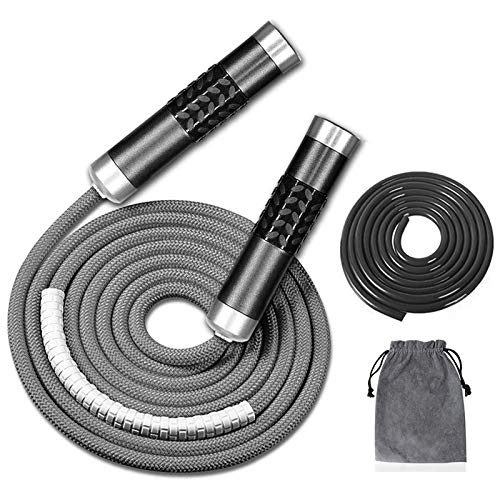
The Redify Weighted Jump Rope is a straightforward first weighted rope, with a one-pound total weight and two rope materials included in the box. The set includes a 9 mm solid PVC rope and a 9 mm cotton rope, so you can switch between a firmer rope for outdoor or gym use and a softer rope for quieter indoor training.
The adjustable length is a practical feature for a first rope. It lets you set the fit for your height and adjust it again if someone else in the household wants to use the same rope. The one-pound weight sits in a useful middle range. It is heavy enough to give clear feedback and a real upper-body challenge, and light enough for regular jumpers to use for longer sessions than a two-pound rope would allow.
This rope suits beginners who want to try a one-pound rope without committing to a full interchangeable system, and it suits people who want two rope materials for different surfaces. It also suits boxing and cardio training, where a one-pound rope gives a good balance of feedback and pace. It is less suited to someone who wants to progress through several weights, because it is a single fixed weight.
FEECCO Weighted Jump Rope (B08RWX975G)
The FEECCO Weighted Jump Rope is a heavier single rope for boxing and cardio training, with a one-pound 9 mm PVC rope, metal handles, and ball bearings. The PVC rope holds its shape well, gives clear feedback on each turn, and stands up to regular use on smooth floors.
The metal handles feel firm and durable, and the ball bearings help the rope turn without twisting. The length is adjustable across a range of about eight to eleven feet, which covers most adult heights and makes it easier to share the rope between people. The one-pound weight makes this rope a good fit for boxing footwork, where the rope should be heavy enough to feel but light enough to keep the hands and feet moving.
This rope suits regular jumpers, boxing and combat training, and anyone who wants a single heavy rope with a firm metal handle. It also suits people who prefer a PVC rope for durability and clear feedback. It is less suited to complete beginners, because a one-pound rope is a big step up from a standard rope, and it is less suited to someone who wants to change weights often, because it is a single fixed weight.
Valeo Weighted Jump Rope (B000BKXE0C)
The Valeo Weighted Jump Rope is a different kind of weighted rope, because the weight sits in the handles rather than in the rope. Each handle holds a removable one-pound weight, giving a two-pound total, and the solid rubber rope is adjustable to a ten-foot length. The cushioned foam handles are comfortable for longer sessions, and the sealed ball bearings help the rope turn evenly.
The handle-weighted design gives a distinct feel. The forearms and grip feel the load more directly, while the rope itself feels lighter than a rope-weighted model of the same total weight. The removable weights are a useful feature, because you can take them out and use the rope at a lighter weight, or keep them in for a harder session.
This rope suits people who want handle-weighted training, people who want to adjust the weight by removing the handle weights, and anyone who prefers a simple solid rubber rope with foam grips. It is less suited to someone who wants the smooth, spread-out resistance of a rope-weighted model, because the weight here is concentrated in the handles. The total weight listed for the rope is two pounds, while the item weight is listed as two and a half pounds, so check the listing details and expect the rope to feel heavier in the hands than in the turn. That handle-heavy feel is a partial fit for the usual rope-weighted idea, and it should be kept in mind when choosing between this model and a rope-weighted rope.
What to Check Before You Buy
Check the total weight and where it sits before you buy. A headline weight can mean the rope, the handles, or the whole set, and the feel changes with that placement. Check whether the length is adjustable or sized by height, and whether the listed length range covers your height. Check the rope material and thickness, and match it to the surface where you will jump most often.
Check the handles for grip, thickness, and bearing quality. Foam grips cushion the hands, metal and aluminum handles feel firm, and ball bearings help the rope turn smoothly. Check whether the set includes more than one rope weight, and whether you will need that range for progression.
FAQ
What weight should a beginner choose for a weighted jump rope?
A beginner should start with a rope around a quarter pound to a half pound. That range adds resistance without slowing the turn too much, and it lets you learn timing, footwork, and a relaxed shoulder position. A two-pound rope is best left until you have regular jumping experience and strong shoulders.
Is a weighted jump rope good for cardio?
Yes, a weighted jump rope is good for cardio, because it raises the effort of a familiar movement and works the shoulders, forearms, core, and calves at the same time. Lighter weighted ropes suit longer steady sessions and interval training. Heavier ropes suit shorter intervals with rest periods.
How do I size a weighted jump rope?
Stand on the middle of the rope with one foot and bring the handles up toward your armpits. The handles should reach roughly to armpit height for general training. Adjustable ropes let you fine-tune this fit and share the rope between people. Sized ropes give a cleaner fit for one person but less flexibility for sharing.
Can I use a weighted jump rope for boxing training?
Yes, a weighted jump rope is widely used for boxing training, because it builds footwork, timing, coordination, and shoulder endurance. A rope around a half pound to one pound is a common choice for boxing, because it gives clear feedback without slowing the hands too much for skill work.
How long should a weighted jump rope session last?
A weighted jump rope session can be as short as ten minutes for a beginner, with short jumping intervals and rest periods between them. Regular jumpers often train for fifteen to thirty minutes, mixing steady jumping with intervals. Heavier ropes call for shorter sets and longer rest, while lighter ropes allow longer steady work.
Bottom Line
The best weighted jump ropes for most people are the ones that match their current fitness level and leave room to progress. The Crossrope Get Lean Set is the strongest starting point for beginners, because it includes a quarter-pound and a half-pound rope and lets you move between them with a fast-clip connection. The Crossrope Get Strong Set is the strongest choice for strength-focused training, with a one-pound and a two-pound rope and thicker power handles. The Redify Weighted Jump Rope is a solid first one-pound rope, with two rope materials and adjustable length. The FEECCO Weighted Jump Rope is a firm, durable one-pound rope for boxing and cardio. The Valeo Weighted Jump Rope is a handle-weighted option for grip and forearm work, with removable weights and a solid rubber rope.
Start light, focus on smooth timing and relaxed shoulders, and choose a rope that fits your height, your hands, and your training goal. A weighted rope does not need to be the heaviest one you can find.
Disclosure: As an Amazon Associate, we may earn from qualifying purchases.
FAQ
What weight should a beginner choose for a weighted jump rope?
Is a weighted jump rope good for cardio?
How do I size a weighted jump rope?
Can I use a weighted jump rope for boxing training?
How long should a weighted jump rope session last?
More from Amazon
Programs that pair well with the guide above. Offers and eligibility are set by Amazon and may change.
Free shipping on eligible items, Prime Video and more. Eligible new members can start with a free trial.
Start a Prime free trialA Prime membership for ages 18-24 with a trial period. Eligibility is set by Amazon.
See Prime for Young AdultsAudiobooks and podcasts to listen to on the go. Eligible new members can start with a free trial.
Try Audible freeAd-free music streaming. Eligible new subscribers can start with a free trial.
Try Music Unlimited freeAs an Amazon Associate we earn from qualifying purchases.