Key takeaways
- Drive Size and Range: Match the drive size to your specific application, as 1/4-inch drives are essential for valve covers and intake manifolds requiring inch-pound measurements, while 3/8-inch drives handle head bolts and main bearing caps in foot-pounds.
- Accuracy Certification: Prioritize wrenches that include a certificate of calibration traceable to national standards, ensuring the tool performs within ±3% to ±4% tolerance right out of the box rather than relying solely on manufacturer claims.
- Feedback Mechanism: Decide between audible click types for traditional tactile confirmation or digital models with visual LED indicators, noting that digital wrenches often provide real-time readouts beneficial for angle-torque sequences common in modern engines.
- Ratchet Tooth Count: Look for mechanisms with at least 72 teeth to minimize the swing arc required in confined engine bays, allowing you to maintain proper torque application without removing and repositioning the tool repeatedly.
- Ergonomics and Build Quality: Evaluate the handle design and overall weight distribution to reduce hand fatigue during lengthy assembly processes, as consistent operator technique is just as important as mechanical accuracy for achieving precise clamping loads.
.
Best Overall: The TEKTON 1/4 Inch Drive Micrometer Torque Wrench is our top pick for precision engine assembly due to its certified calibration and dual-direction accuracy, while the SUERCUP 3/8″ Click Torque Wrench serves as an excellent runner-up for general automotive fasteners. Selecting the correct torque tool is critical because overtightening can strip aluminum threads or warp gaskets, while undertightening risks catastrophic engine failure; this guide evaluates six reliable options across different drive sizes and price points to ensure your build meets factory specifications.
Our top picks




As an Amazon Associate we earn from qualifying purchases at no extra cost to you. Ratings are shown as listed on Amazon.
Quick Comparison
| Product | Best For | Standout Feature | Rating |
|---|---|---|---|
| TEKTON TRQ50402 Micrometer | Precision engine assembly | Certificate of Calibration | 4.8/5 |
| SUERCUP 3/8″ Click Torque Wrench | General automotive repair | Dual-direction 72-tooth ratchet | 4.6/5 |
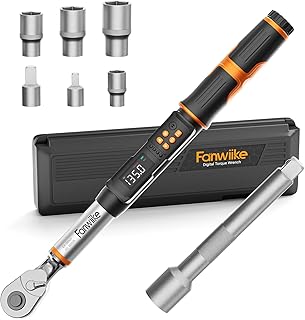
| 3/8″ Digital Torque Wrench | Modern engine diagnostics | LED and buzzer feedback | 4.5/5 |
| LEXIVON LX-191 Bike Kit | Small fastener precision | Comprehensive 15-piece kit | 4.7/5 |
| VANPO 1/4-Inch Drive Set | Tight clearance areas | Includes adapter and extension | 4.4/5 |
How to Choose a Torque Wrench for Precision Engine Assembly
- Drive Size and Range: Match the drive size to your specific application, as 1/4-inch drives are essential for valve covers and intake manifolds requiring inch-pound measurements, while 3/8-inch drives handle head bolts and main bearing caps in foot-pounds.
- Accuracy Certification: Prioritize wrenches that include a certificate of calibration traceable to national standards, ensuring the tool performs within ±3% to ±4% tolerance right out of the box rather than relying solely on manufacturer claims.
- Feedback Mechanism: Decide between audible click types for traditional tactile confirmation or digital models with visual LED indicators, noting that digital wrenches often provide real-time readouts beneficial for angle-torque sequences common in modern engines.
- Ratchet Tooth Count: Look for mechanisms with at least 72 teeth to minimize the swing arc required in confined engine bays, allowing you to maintain proper torque application without removing and repositioning the tool repeatedly.
- Ergonomics and Build Quality: Evaluate the handle design and overall weight distribution to reduce hand fatigue during lengthy assembly processes, as consistent operator technique is just as important as mechanical accuracy for achieving precise clamping loads.
The Best Torque Wrenches for Precision Engine Assembly Reviewed
Best Overall: TEKTON 1/4 Inch Drive Micrometer Torque Wrench
This micrometer-style wrench delivers exceptional value with a verified certificate of calibration and smooth dual-direction operation, making it ideal for serious builders who demand documented accuracy for critical internal engine components. Its robust steel construction and clear scale markings ensure repeatable results across hundreds of assembly cycles without drift.
Best Budget: LEXIVON LX-191 Bike Torque Wrench Kit
While marketed for bicycles, this affordable 15-piece kit offers the low-range precision necessary for delicate engine accessories like throttle bodies and sensor housings where standard automotive wrenches lack resolution. The included bit set and dual-direction click mechanism provide versatile functionality for hobbyists working on small-displacement engines or motorcycle builds.
Best Premium: 3/8″ Drive Digital Torque Wrench
Professional engine builders will appreciate the real-time digital readout and programmable presets that eliminate guesswork during complex multi-stage torque sequences on cylinder heads and connecting rods. The combination of audible buzzers and colorful LED indicators provides redundant feedback systems, reducing the risk of error in high-stakes performance applications.
Best for General Automotive: SUERCUP 3/8″ Click Torque Wrench
This mid-range click wrench strikes an excellent balance between affordability and reliability for weekend mechanics tackling timing covers, oil pans, and exhaust manifolds. The 72-tooth ratchet head allows efficient operation in cramped spaces, and the 5-45 ft-lb range covers the majority of external engine fastener specifications found in domestic and import vehicles.
Best for Tight Spaces: VANPO 1/4-Inch Drive Torque Wrench Set
The included 1/4-inch to 3/8-inch adapter and 10cm extension bar make this compact wrench uniquely suited for reaching recessed fasteners deep within engine valleys or behind accessory brackets. Its 20-240 in-lb range is perfectly calibrated for precision work on fuel rails, camshaft caps, and other sensitive components where space constraints typically compromise accuracy.
Frequently Asked Questions
Do I need both inch-pound and foot-pound torque wrenches for engine assembly?
Yes, most complete engine builds require both ranges because internal components like bearings and valves use inch-pound specifications while external fasteners like head bolts typically require foot-pound measurements. Using a single wrench outside its optimal range significantly reduces accuracy and increases the risk of component damage.
How often should I calibrate my torque wrench for engine work?
Professional shops should calibrate annually or after 5,000 cycles, while home builders should verify calibration every two years or immediately if the wrench has been dropped or stored improperly. Always store click-type wrenches at their lowest setting to preserve spring tension and maintain accuracy between uses.
Can I use a bicycle torque wrench for automotive engine assembly?
Bicycle torque wrenches are suitable only for small engine fasteners requiring low torque values under 25 Nm, such as those found on motorcycles or small-displacement engines. They should never be used for larger automotive fasteners as they lack the necessary range and may be damaged by higher torque loads.
Is a digital torque wrench worth the extra cost for engine building?
Digital wrenches justify their premium for builders performing frequent angle-plus-torque sequences or working on modern engines with complex fastener specifications. For basic restorations or occasional maintenance, a quality click-type wrench provides sufficient accuracy at a lower price point with fewer potential failure modes.
Final Thoughts
For most precision engine assembly tasks, the TEKTON TRQ50402 remains our definitive recommendation due to its certified accuracy and proven durability, while the SUERCUP 3/8″ model offers outstanding value for general automotive work. Builders working exclusively on modern performance engines should consider investing in the 3/8″ Digital Torque Wrench for its superior feedback and programmability, ensuring every fastener meets exact factory specifications.