Key takeaways
- 8-inch: Best for filling in missing low bass. Expect useful output roughly from the upper 30s or low 40s Hz upward, depending on the enclosure and vehicle.
- 10-inch: The strongest all-around size for many sedans, hatchbacks, and crossovers. It balances punch, depth, enclosure size, and electrical demand.
- 12-inch: Better for deep bass and higher volume in trucks, SUVs, and larger cars. It normally requires more enclosure volume and amplifier power.
- 15-inch: A specialist choice for very high output. Installation space, enclosure construction, and electrical upgrades become much more important.
The best subwoofers depend on how much space you can give up: choose a powered subwoofer for a quick, compact upgrade, or a component subwoofer and separate amplifier when maximum output and system flexibility matter more than installation time.
Our top picks

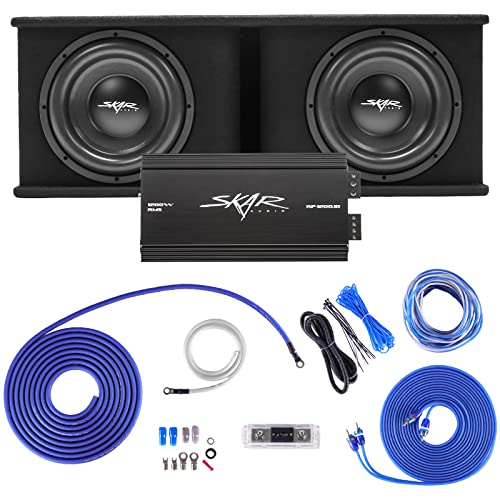

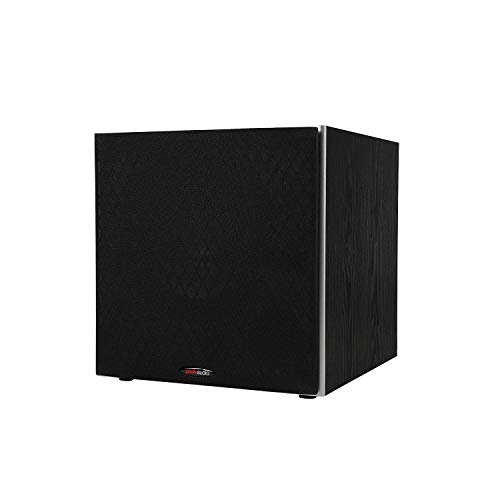
As an Amazon Associate we earn from qualifying purchases at no extra cost to you. Ratings are shown as listed on Amazon.
Best subwoofers by vehicle and priority
| Situation | Best fit | Useful target | Why it makes sense |
|---|---|---|---|
| Small hatchback, coupe, or regular cab pickup | Powered 8-inch subwoofer | 120–250 watts RMS, under 14 inches deep | Adds bass without consuming much cargo or passenger space |
| Family sedan or crossover with limited wiring experience | Powered 10-inch subwoofer | 200–400 watts RMS | Offers a stronger low-end foundation while keeping the amplifier integrated |
| SUV, truck, or vehicle with room behind the seats | Single 10- or 12-inch component subwoofer | 300–600 watts RMS, sealed enclosure | Produces deeper, cleaner bass with room for a dedicated amplifier |
| High-output system or bass-heavy music | 12-inch component subwoofer, often vented | 500–1,000 watts RMS | Moves considerably more air, but requires space, wiring, and electrical planning |
| Factory audio system with no obvious RCA outputs | Powered subwoofer with speaker-level inputs | High-level input and signal-sensing turn-on | Can integrate with the original radio without replacing the head unit |
Powered versus component subwoofers
A powered subwoofer combines the speaker, enclosure, and amplifier in one housing. This is usually the easiest route for a daily driver. The Kicker Hideaway HS8, Alpine PWE-S8, Rockford Fosgate Punch P300-10, and JL Audio ACP108LG-W3v3 are examples of established powered designs, although their enclosure shapes and output levels differ significantly.
The main advantage is predictable matching. The manufacturer has selected an amplifier and enclosure that work together, reducing the risk of pairing a subwoofer with too little or too much power. Powered units also commonly include adjustable low-pass filtering, phase control, bass-level control, and speaker-level inputs.
The compromises are limited upgradeability and lower maximum output than a similarly priced component system. A compact 8-inch powered enclosure can improve factory sound dramatically, but it will not create the same cabin pressure as a large 12-inch driver with a dedicated amplifier. Integrated amplifiers can also be more difficult to replace if they fail outside the warranty period.
A component system uses a separate subwoofer, enclosure, and amplifier. A JL Audio 10W0v3-4 or 12W0v3-4, Kicker CompR, Rockford Fosgate P3, or Alpine S2-W10D4 can form the basis of a substantially more powerful system. You choose sealed or vented enclosure volume, amplifier power, wiring, and sometimes the final impedance.
Component systems demand more planning. The amplifier must be matched to the subwoofer’s RMS rating, the enclosure must suit the driver’s specifications, and the vehicle’s charging system must support the current draw. They are the better choice when output, sound shaping, and future upgrades matter more than a quick installation.
Size, RMS power, and real-world bass
Driver diameter is not the whole story. A well-designed 10-inch subwoofer in the correct enclosure can sound deeper and louder than a poorly installed 12-inch model. Cone area, excursion, enclosure alignment, amplifier power, and cabin acoustics all affect the result.
- 8-inch: Best for filling in missing low bass. Expect useful output roughly from the upper 30s or low 40s Hz upward, depending on the enclosure and vehicle.
- 10-inch: The strongest all-around size for many sedans, hatchbacks, and crossovers. It balances punch, depth, enclosure size, and electrical demand.
- 12-inch: Better for deep bass and higher volume in trucks, SUVs, and larger cars. It normally requires more enclosure volume and amplifier power.
- 15-inch: A specialist choice for very high output. Installation space, enclosure construction, and electrical upgrades become much more important.
Use RMS power rather than peak or “maximum” power when comparing products. A subwoofer rated at 300 watts RMS generally pairs well with an amplifier delivering about 250–400 watts RMS at the correct impedance. Supplying substantially less power is not automatically safer: a small amplifier driven into clipping can damage a speaker just as a powerful amplifier can.
Head-to-head: compact powered bass versus a custom component system
| Factor | Powered 8-inch enclosure | Powered 10-inch enclosure | Component 10-inch sealed system | Component 12-inch vented system |
|---|---|---|---|---|
| Typical RMS capability | 120–250 watts | 200–400 watts | 300–600 watts | 500–1,000 watts |
| Approximate enclosure volume | 0.15–0.35 cubic feet | 0.30–0.60 cubic feet | 0.50–0.90 cubic feet | 1.25–2.25 cubic feet |
| Typical installed footprint | Small under-seat or side-panel area | Small trunk or cargo-area section | About one-third to one-half of a sedan trunk | Large cargo-area section |
| Common impedance options | Usually fixed, often 2 or 4 ohms internally | Usually fixed, commonly 2 or 4 ohms | Single or dual voice coil, commonly 2 or 4 ohms | Single or dual voice coil, commonly 2 or 4 ohms |
| Installation difficulty | Low to moderate | Moderate | Moderate to high | High |
| Bass character | Controlled fill and improved impact | Stronger punch with useful depth | Accurate, controlled, and upgradeable | Deepest and loudest, with more enclosure influence |
Impedance: the specification that prevents expensive mistakes
Impedance determines how much load the amplifier sees. A 4-ohm subwoofer connected to a mono amplifier rated at 300 watts RMS at 4 ohms may receive approximately 300 watts. The same amplifier might produce considerably more power at 2 ohms, but only if it is designed to operate safely at that load.
Dual-voice-coil subwoofers provide wiring flexibility. A dual 4-ohm voice-coil driver can usually be wired to 2 ohms or 8 ohms. A dual 2-ohm driver can usually be wired to 1 ohm or 4 ohms. The final load must be compatible with the amplifier; never assume that a lower resistance automatically means better performance.
When using two subwoofers, their voice coils and wiring should be matched. Unequal loads can make amplifier selection confusing and may produce uneven power distribution. For many first installations, a single 4-ohm or dual 4-ohm subwoofer is easier to configure safely.
Sealed or vented enclosure?
Sealed boxes are compact and generally forgiving. They typically produce tight transient response and are a good match for rock, acoustic music, jazz, and mixed listening. They also provide an air spring that helps control cone movement, but they need adequate amplifier power to reach high output.
Vented boxes can produce more output around their tuning frequency and often reach deeper with less amplifier power. They are attractive for electronic music, hip-hop, and high-volume listening. However, they are larger, more sensitive to incorrect design, and require a subsonic filter when used with many high-output systems. Playing a vented enclosure below its tuning frequency can cause excessive cone movement and damage.
Installation requirements by system type
Even a powered subwoofer needs a fused power cable from the battery, a solid chassis ground, signal wiring, and a way to turn the amplifier on. Keep the main fuse close to the battery. A typical compact powered unit may use a 10- to 30-amp fuse, while a 600-watt system can require substantially more current.
For a larger component system, plan the wiring before buying the amplifier. A useful estimate is:
Current draw ≈ amplifier power ÷ (vehicle charging voltage × efficiency).
For a 600-watt amplifier operating at 14 volts with 80 percent efficiency, the estimate is 600 ÷ (14 × 0.8), or about 54 amps at full output. Music is dynamic, so average draw is lower, but this calculation shows why cable gauge, fuse size, battery condition, and alternator capacity matter.
Route power cables away from RCA or signal cables where possible, secure the enclosure so it cannot move during hard braking, and verify clearance around seat rails, spare-tire compartments, and battery terminals. In hybrid or electric vehicles, do not probe or modify high-voltage wiring; use the vehicle’s approved 12-volt connection points and professional installation guidance.
What wears out first and how to extend ownership life
- Loose connections: Vibration can loosen terminals and create intermittent bass or heat. Inspect them periodically and use proper crimped or secured connections.
- Enclosure damage: MDF boxes can swell if exposed to water. Keep cargo-area enclosures dry and repair damaged carpet or seams.
- Thermal stress: Repeated clipping, blocked amplifier ventilation, and excessive bass boost create heat. Lower the gain rather than treating it as a volume control.
- Speaker surround and cone: Sunlight, moisture, and cleaning chemicals can degrade suspension materials. Vacuum dust gently and avoid soaking the driver.
- Rattles: Trunk lids, license plates, trim panels, and loose tools often rattle before the subwoofer fails. Add suitable closed-cell foam or tighten the offending part.
The best choice for most drivers
For a factory system and limited space, start with a powered 8- or 10-inch subwoofer that accepts speaker-level input. The 10-inch class is the best compromise for many vehicles because it adds noticeable depth without demanding a full custom build. Choose a component 10-inch sealed system when you want cleaner upgrade paths and more control. Choose a component 12-inch vented system only when you have the cargo space, electrical capacity, and willingness to tune and maintain it.
Before purchasing, measure the available space, confirm the amplifier’s RMS output at the subwoofer’s final impedance, check whether the factory radio needs a line-output converter, and decide whether cargo access matters more than maximum bass. Those four checks will usually identify the best subwoofers for your vehicle more reliably than peak wattage or driver size alone.