Key takeaways
- For home practice: Build one clean and one driven preset, then save a second version before experimenting. USB recording and headphone or direct-output options matter more than a large footswitch count.
- For live use: Put essential changes on dedicated switches. Test the layout standing up, and label functions clearly enough to recognize in dim light.
- For recording: Save a dry or less-processed version when possible. Reamping or keeping the original signal gives you room to revise amp and effect choices later.
Best Guitar Multi-Effects Processors: The Right Pick for Home, Stage, or Studio
The best guitar multi effects processors for most players are the Line 6 HX Stomp for a compact, flexible rig, the Boss GX-100 for hands-on stage control, and the Neural DSP Quad Cortex for advanced modeling and recording. The right choice depends less on the number of effects listed on the box than on how easily you can build, control, and connect the sounds you need.
Quick comparison
| Processor | Approx. size (W × D × H) | Approx. weight | Foot control | Best fit |
|---|---|---|---|---|
| Line 6 HX Stomp | 17.8 × 12.2 × 6.6 cm | 0.8 kg | 3 onboard footswitches | Pedalboard rigs, home recording, travel |
| Boss GX-100 | 46.2 × 24.8 × 7.0 cm | 3.5 kg | 8 footswitches and expression pedal | Players who want direct access on stage |
| Neural DSP Quad Cortex | 29.0 × 19.5 × 4.9 cm | 1.95 kg | 11 footswitches with displays | Deep modeling, preset control, and studio work |
| HeadRush Core | 35.9 × 23.6 × 6.1 cm | 3.2 kg | 5 footswitches with displays | Touchscreen editing and vocal-friendly setups |
Dimensions and weights are approximate and can vary slightly by manufacturer documentation or measurement method. These units are digital processors rather than battery-powered practice amps; plan on mains power and check the included power supply before travel.
Our top picks


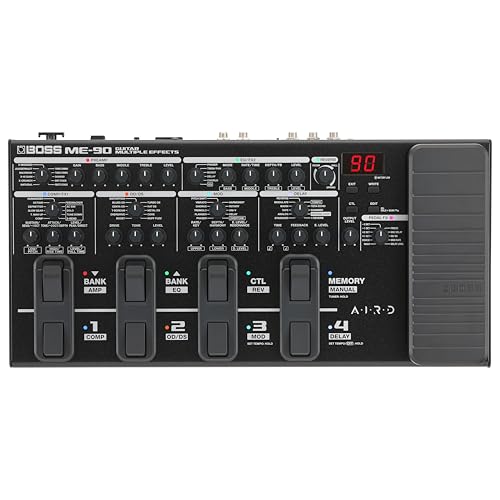
As an Amazon Associate we earn from qualifying purchases at no extra cost to you. Ratings are shown as listed on Amazon.
Choose by situation
| Your situation | Strong starting point | Why |
|---|---|---|
| Limited space, occasional home use | Line 6 HX Stomp | Compact footprint, broad effects and amp models, USB recording |
| Regular gigs; want switches underfoot | Boss GX-100 | Larger layout and built-in expression pedal reduce dependence on add-ons |
| Experienced player building detailed scenes and signal chains | Neural DSP Quad Cortex | Flexible routing, detailed control, and capture-based sounds |
| One unit for guitar, vocals, and a touch-first workflow | HeadRush Core | Touchscreen editing and vocal processing options suit combined setups |
Price varies by region and retailer, but these products occupy different tiers: HX Stomp is generally mid-priced; GX-100 and HeadRush Core are typically mid-to-upper-mid-priced; Quad Cortex sits in the premium range. Compare current local pricing with the cost of any expression pedal, footswitch, or carrying case you may need.
What separates the leading options
Line 6 HX Stomp: best when board space matters
HX Stomp combines amp and cabinet modeling with a large effects library in a pedal-sized enclosure. It works well as a complete direct-to-PA rig, a recording interface, or an effects-and-amp section placed on an existing pedalboard. USB audio supports recording and reamping workflows, while stereo inputs and outputs make it practical for broader signal chains.
The trade-off is control density: three onboard switches cannot provide a separate button for every effect, preset, and snapshot. Players who need frequent live changes may want an external footswitch or expression pedal, which adds cost, cable clutter, and board space. It is a strong choice for home players and gigging guitarists comfortable organizing sounds into snapshots or presets.
Boss GX-100: best for clear stage access
The GX-100 offers a larger footswitch layout, an expression pedal, amp models, and a broad selection of effects. Its touchscreen makes editing more approachable than navigating a small display, and its USB connection supports recording. The physical controls are a useful advantage when switching between rhythm, lead, and ambient sounds during a set.
Its size and weight make it less attractive for a crowded pedalboard or frequent air travel. If your live setup is mostly one preset with modest changes, the GX-100 may offer more floor control than you need; if you change sounds often, those extra switches can simplify a performance.
Neural DSP Quad Cortex: best for deep, flexible rigs
Quad Cortex brings amp modeling, effects, flexible routing, USB audio, and capture-based tones into a compact floor unit. Its footswitches have individual displays, making it easier to identify assigned functions at a glance. It is particularly appealing to players who want to build complex scenes, run stereo or parallel paths, and use one device for both stage and studio work.
Its premium price and extensive editing options are the main cautions. A large feature set does not automatically make setup faster: beginners may spend more time comparing models and refining chains than playing. Check current software and capture-library support before buying if your workflow depends on sharing or downloading tones.
HeadRush Core: best for touchscreen editing and combined setups
HeadRush Core pairs a large touchscreen with amp modeling and effects, and includes tools aimed at guitarists who also process vocals. Its five footswitches have displays for assigned functions, providing more direct control than a compact three-switch unit without taking up as much floor space as a large board.
It is worth considering for a singer-guitarist or a player who prefers editing visually. Before choosing it as a recording hub, confirm that its input and output configuration matches your interface, microphone, and monitoring needs; a feature list cannot replace checking the actual signal path.
Make the preset workflow work for you
Before buying, picture the transitions you make in a song. If you need a clean verse, a driven chorus, and a boosted solo, decide whether you want three separate presets or one preset with snapshots, scenes, or assigned switches. Snapshot-style changes can keep the amp and effects chain consistent while changing selected settings; separate presets may be simpler to understand but can introduce abrupt changes in volume or ambience if levels are not matched.
- For home practice: Build one clean and one driven preset, then save a second version before experimenting. USB recording and headphone or direct-output options matter more than a large footswitch count.
- For live use: Put essential changes on dedicated switches. Test the layout standing up, and label functions clearly enough to recognize in dim light.
- For recording: Save a dry or less-processed version when possible. Reamping or keeping the original signal gives you room to revise amp and effect choices later.
A practical first-session setup is to choose an output mode for your destination, set a conservative output level, and make one complete preset before copying it. For a guitar amp’s effects return, use a signal path suited to a power amp and avoid duplicating cabinet simulation. For headphones, studio monitors, or a PA, cabinet or speaker simulation is usually important. Matching the output to the destination helps prevent a thin, harsh, or unexpectedly quiet sound.
Ownership details that matter
Footswitches, expression pedals, jacks, and cables are the parts most exposed to repeated use. Keep cables from pulling sideways on the connectors, use a case for transport, and avoid stacking gear on the touchscreen or switches. Dust around controls can be reduced with a soft, dry cloth; do not spray cleaner directly into the unit. A screen protector may be useful for a touchscreen device, but make sure it does not interfere with touch response.
Common setup mistakes include running a cabinet simulation into an amp’s own guitar speaker, setting patches at very different volumes, and editing a preset without saving a backup. Keep a copy of important presets on a computer or the manufacturer’s supported backup system. Also check firmware and software compatibility before a major gig, rather than updating immediately before leaving.
Bottom line
Choose the HX Stomp when portability and a versatile pedalboard-friendly rig are priorities. Choose the Boss GX-100 when stage-ready foot control and an expression pedal matter more than a small footprint. Choose the Quad Cortex for advanced routing and deep modeling, and consider HeadRush Core if touchscreen editing or vocal processing suits your setup. The best choice is the one whose switches, outputs, and preset workflow fit the way you actually play—not simply the one with the longest effect list.