Key takeaways
- The best AMD graphics cards and GPUs brand for most buyers is Sapphire or PowerColor, while AMD’s Radeon RX 9070 XT is the strongest all-round choice for 1440p and 4K gaming in 2026; your best pick changes with resolution, case…
The best AMD graphics cards and GPUs brand for most buyers is Sapphire or PowerColor, while AMD’s Radeon RX 9070 XT is the strongest all-round choice for 1440p and 4K gaming in 2026; your best pick changes with resolution, case space, power supply, and warranty support.
Our top picks
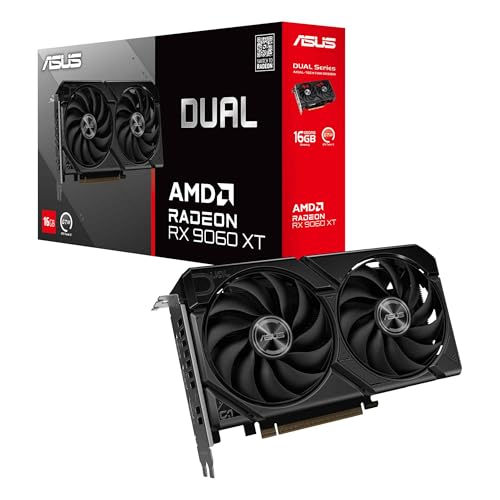


As an Amazon Associate we earn from qualifying purchases at no extra cost to you. Ratings are shown as listed on Amazon.
Quick picks by gaming situation
| Situation | Recommended GPU | Best board-partner direction | Why |
|---|---|---|---|
| 1080p on a value budget | Radeon RX 9060 XT 8GB or 16GB | Short dual-fan Sapphire, ASRock, or XFX model | Lower power draw and easier case fit than high-end cards |
| 1080p with a high-refresh monitor | Radeon RX 9060 XT 16GB | Quiet dual- or triple-fan design | Strong raster performance without paying for a 4K-class card |
| 1440p, best balance | Radeon RX 9070 | Sapphire Pulse, PowerColor Hellhound, or similar mid-sized card | Good performance, 16GB VRAM, and generally easier cooling than flagship models |
| 1440p at very high settings | Radeon RX 9070 XT | Sapphire Nitro+, PowerColor Red Devil, or a large premium cooler | More headroom for demanding games and high-refresh displays |
| 4K raster gaming | Radeon RX 9070 XT or Radeon RX 7900 XTX | Three-fan cards with reinforced construction | Higher shader throughput and 16GB or 24GB memory options |
| Compact or older PC | Radeon RX 7600 or RX 9060 XT 8GB | Two-fan card under approximately 280mm | More likely to fit and less demanding on the power supply |
AMD Radeon GPU tiers compared
Radeon RX 9060 XT: sensible 1080p and entry-level 1440p
The RX 9060 XT is the practical starting point for a new gaming PC. The 8GB model suits 1080p esports and lighter games, but the 16GB version is the safer purchase for modern AAA titles, texture-heavy settings, and future upgrades. Choose the 16GB card when the price difference is reasonable; VRAM capacity cannot be increased later.
Most RX 9060 XT cards use a two-fan cooler and a single auxiliary power connector. They are usually easier to install in compact cases than enthusiast cards. Check the exact length rather than assuming every model is small: factory-overclocked versions can be considerably longer and thicker.
Radeon RX 9070: the balanced 1440p option
The RX 9070 is aimed at players who want high 1440p settings without moving to the largest and most expensive cards. Its 16GB memory capacity is useful for high-resolution textures and demanding games. It also makes sense for a 4K monitor if you are comfortable using a mixture of high settings, resolution scaling, and selective ray-tracing compromises.
Board-partner models commonly use large dual- or triple-fan heatsinks. A standard two-and-a-half-slot design is easier to accommodate than premium cards approaching three or more slots. For a gaming PC with a front-mounted radiator, drive cage, or restricted airflow, the shorter model may deliver better overall value than a heavily overclocked version.
Radeon RX 9070 XT: the high-value performance choice
The RX 9070 XT is the most compelling AMD choice for high-refresh 1440p and entry-level 4K gaming. It has the performance needed to keep frame rates high in rasterized games, while 16GB of VRAM gives it useful longevity. Ray tracing performance is improved over older Radeon generations, although NVIDIA remains the safer choice for buyers whose priority is maximum ray-traced performance or CUDA-dependent software.
Expect substantial cards: many RX 9070 XT designs are roughly 300 to 340mm long, occupy between two and three slots, and require two 8-pin PCIe power connectors. A 750W quality power supply is a sensible baseline for many systems, while heavily overclocked builds may justify more capacity. Always follow the specific manufacturer recommendation.
Radeon RX 7900 XTX: still relevant for 24GB workloads
The RX 7900 XTX remains attractive when discounted into the upper-performance range. Its 24GB VRAM buffer is valuable for 4K texture packs, mods, and some creator workloads. It is less appealing if a newer RX 9070 XT costs a similar amount or if you specifically want the latest ray-tracing and media features. Its physical size and power consumption also tend to be higher than newer midrange alternatives.
Board partners: which AMD GPU brand should you choose?
Sapphire
Sapphire is dedicated to Radeon cards and offers several cooler tiers, from compact Pulse models to larger Nitro+ designs. Pulse cards are often the sensible choice for a normal case, while Nitro+ models typically prioritize lower temperatures, quieter fan curves, and stronger materials at a higher price.
PowerColor
PowerColor’s Fighter, Hellhound, and Red Devil families generally represent increasing cooler size and features. Hellhound is a strong middle ground for quiet gaming. Red Devil cards can be excellent for sustained heavy loads, but confirm clearance because the cooler may occupy three slots or more.
XFX
XFX frequently offers long, substantial cooling designs. Its cards can be appealing in spacious airflow-focused cases, but length is the main warning. Measure from the rear expansion slots to the front fans, not merely the manufacturer’s advertised case compatibility.
ASUS, Gigabyte, and ASRock
These brands provide Radeon options with familiar support channels and different cooler formats. ASUS TUF models often emphasize robust construction, Gigabyte Gaming models commonly target balanced cooling, and ASRock Challenger or Steel Legend cards cover more compact and midrange requirements. The exact model matters more than the logo: compare cooler thickness, connector placement, noise settings, and the warranty terms for your country.
Size, cooling, and power comparison
| GPU class | Typical card length | Typical thickness | Typical board power | Practical PSU target |
|---|---|---|---|---|
| RX 7600 | 200–280mm | 2–2.5 slots | About 165W | 550W quality PSU |
| RX 9060 XT | 230–310mm | 2–2.5 slots | About 160–190W | 550–650W quality PSU |
| RX 9070 | 280–330mm | 2.5–3 slots | About 220W | 650–750W quality PSU |
| RX 9070 XT | 300–340mm | 2.5–3.5 slots | About 300W | 750W quality PSU |
| RX 7900 XTX | 300–355mm | 2.5–3.5 slots | About 355W | 800W quality PSU |
These are planning ranges, not universal specifications. A partner card with a factory overclock may be longer, thicker, and more power-hungry than the reference design. Leave room below the card for airflow, and avoid sharply bending power cables against the side panel.
How to choose the right model before buying
- Set the monitor target first. For 1080p, prioritize value and low noise. For 1440p, start with the RX 9070 class. For 4K, consider the RX 9070 XT or RX 7900 XTX.
- Measure the case. Record maximum GPU length, maximum thickness, and whether a front radiator reduces available space. Compare those measurements with the complete card dimensions.
- Check power connectors. Confirm that the PSU has the required number of separate PCIe cables. Avoid relying on one daisy-chained cable for a high-power card when the manufacturer recommends separate cables.
- Compare the cooler tier. A premium cooler is worthwhile in a warm case or for long gaming sessions, but it is wasted if the card cannot receive fresh air.
- Read the local warranty policy. Warranty duration, registration requirements, regional coverage, and procedures for coil whine or fan faults differ by country and model. Keep the receipt and record the serial number.
Ownership realities and common mistakes
Fans and dust filters are the parts most likely to need attention first. Clean the case filters every few months, and use compressed air carefully while preventing the GPU fans from freely spinning. Do not open the cooler unless you accept the risk of affecting warranty coverage. Rising temperatures can result from blocked intake filters, a failing fan, dried thermal interface material, or a case with poor exhaust—not necessarily a defective GPU.
Do not select a card solely because it has the highest factory boost clock. A larger cooler may maintain its speed more consistently, but the real-world difference between partner versions is often smaller than the difference between adjacent GPU tiers. Also avoid filling every available motherboard slot: a three-slot graphics card can block expansion cards and restrict intake airflow.
Final recommendation
For most new builds, choose the Radeon RX 9070 for balanced 1440p gaming or the RX 9070 XT for high-refresh 1440p and 4K. Pick the RX 9060 XT 16GB for value-conscious 1080p or compact systems, and consider the RX 7900 XTX when its 24GB memory and discounted pricing matter more than newer features. Among brands, Sapphire and PowerColor are the safest starting points, but the best AMD graphics cards GPUs brand is ultimately the partner model that fits your case, power supply, noise preference, and local warranty—not simply the one with the fastest advertised clock.