Key takeaways
- Abrasive strength: Compounds cut (removing deeper swirls and 1200–2000 grit sanding marks), polishes refine (removing haze and light wash marring). A good kit includes both, or a diminishing-abrasive “one-step” that does a bit of each.
- Pad pairing: Microfiber or wool cutting pads multiply the compound’s cut; foam finishing pads pair with polish. Kits that include only one pad type force a one-step approach.
- Machine vs. hand: A DA (random orbital) polisher oscillates and rotates simultaneously, which makes it nearly impossible to burn paint. Rotary machines cut faster but are for experienced users. Hand application works on spot repairs only — a whole hood by hand is a 2-hour job with inferior leveling.
- Paint-safety margin: Modern factory clear coat is roughly 35–50 microns thick, and a proper two-step correction removes about 2–5 microns. Hand polishing removes under 1 micron. Long-throw (21mm) DAs cut faster but demand more attention on edges and body lines.
The Best Paint Correction Kits at a Glance
The best paint correction kits for most home detailers in 2026 are dual-action (DA) polisher bundles that pair a 15mm-or-21mm-throw machine with a matched compound, polish, and foam pad set — they remove swirls safely while keeping the risk of burning through clear coat low. If you’re working by hand or on a tight budget, a compound-and-pad hand kit can still fix isolated scratches, but expect to spend 3–4x the labor for the same result. Below, we break down the kits worth buying by situation, abrasive strength, and skill level.
What Actually Matters in a Paint Correction Kit
Before comparing products, understand the four variables that determine whether a kit works for you:
Our top picks
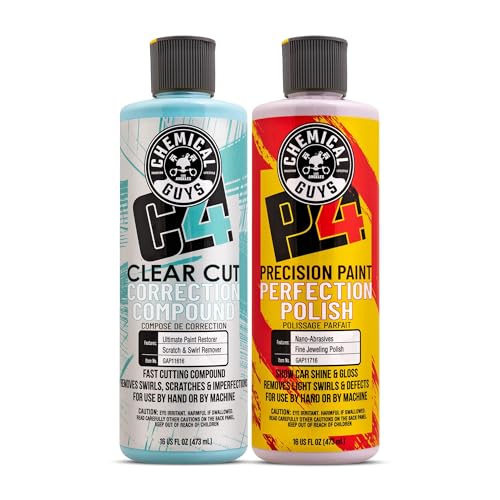
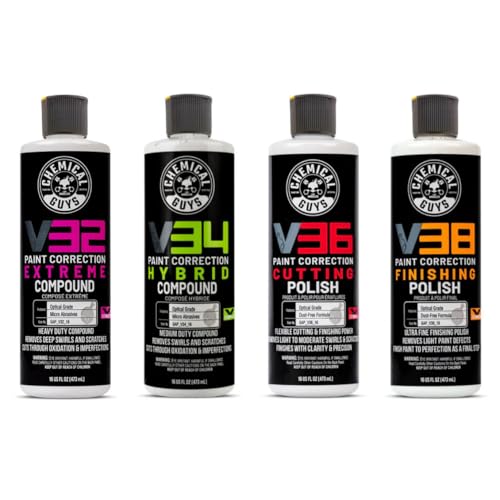
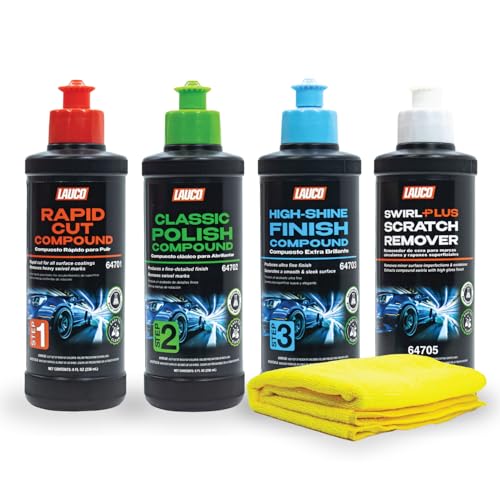
As an Amazon Associate we earn from qualifying purchases at no extra cost to you. Ratings are shown as listed on Amazon.
- Abrasive strength: Compounds cut (removing deeper swirls and 1200–2000 grit sanding marks), polishes refine (removing haze and light wash marring). A good kit includes both, or a diminishing-abrasive “one-step” that does a bit of each.
- Pad pairing: Microfiber or wool cutting pads multiply the compound’s cut; foam finishing pads pair with polish. Kits that include only one pad type force a one-step approach.
- Machine vs. hand: A DA (random orbital) polisher oscillates and rotates simultaneously, which makes it nearly impossible to burn paint. Rotary machines cut faster but are for experienced users. Hand application works on spot repairs only — a whole hood by hand is a 2-hour job with inferior leveling.
- Paint-safety margin: Modern factory clear coat is roughly 35–50 microns thick, and a proper two-step correction removes about 2–5 microns. Hand polishing removes under 1 micron. Long-throw (21mm) DAs cut faster but demand more attention on edges and body lines.
Comparison: Top Paint Correction Kits for 2026
| Kit | Application | Machine Throw | Abrasives Included | Pads Included | Coverage (est.) | Skill Level | Typical Price Range |
|---|---|---|---|---|---|---|---|
| Griot’s Garage G9 Random Orbital Kit | Machine (DA) | 9mm | Fast Correcting Cream + Perfecting Cream | 4–6 foam pads (cut/polish/finish) | 1–2 full vehicles | Beginner | $200–$280 |
| Chemical Guys TORQX Kit | Machine (DA) | 8mm | Compound + polish + pad conditioner | 3–5 Hex-Logic foam pads | 1 vehicle + touch-ups | Beginner | $150–$220 |
| Rupes LHR 15 Mark III Kit | Machine (DA) | 15mm | D-A Coarse + D-A Fine | 4 pads (foam + wool option) | 2–3 full vehicles | Intermediate | $450–$550 |
| Meguiar’s DA Power System / Ultimate Compound + Polish | Drill attachment or hand | N/A | Ultimate Compound + Ultimate Polish | 2–4 applicator/finishing pads | 2–3 spot repairs or 1 vehicle | Beginner | $30–$80 |
| 3D One Hybrid Kit | Machine or hand | N/A (liquid + pads) | 3D One (one-step cut/finish) | Cutting + finishing pads | 2+ vehicles | Beginner–Intermediate | $60–$120 |
Coverage estimates assume a midsize sedan (~10–12 m² of painted surface) using 3–4 pea-sized drops of product per 2×2 ft section.
Which Kit for Which Situation
First-timer correcting a daily driver: Griot’s G9 or Chemical Guys TORQX
Short-throw DAs (8–9mm) are the right starting point. They stall if you press too hard — that’s a safety feature, not a flaw. The Griot’s kit is the more refined machine with a lifetime-guarantee-style reputation and smoother operation; the TORQX gets you 90% of the capability for less money. Both include enough pads and product to correct one vehicle completely with supplies left for maintenance polishing.
Budget spot repair (a scratch here, a door ding there): Meguiar’s hand/drill kit
If your problem is one keyed panel or isolated RIDS (random isolated deep scratches), buying a $250 machine makes no sense. Ultimate Compound applied with a foam applicator in tight circular passes will level a scratch’s edges enough to make it invisible in normal light. Work 6×6 inch sections, wipe, inspect under a light, repeat. The drill attachment version bridges the gap — more consistent than hand work, no dedicated polisher needed.
Enthusiast doing multiple cars or harder paint: Rupes LHR 15 Mark III
Hard German and Japanese clear coats (paint over ~60 on a durometer scale, colloquially) laugh at mild compounds on soft pads. The 15mm throw covers a hood in half the time of an 8mm machine and, paired with the wool pad option, cuts enough to remove 1500-grit sanding marks. The trade-off: the longer throw makes the machine want to “walk” on curved panels, so beginners should practice on a horizontal surface first.
One product, one step, whole car: 3D One
One-step correction won’t fully remove deep swirls, but it will knock out 80% of defects and leave a gloss-ready finish — ideal if you’re selling a car, maintaining ceramic coating, or correcting soft paint that you don’t want to thin. Run it on a cutting pad for more bite, finishing pad for more gloss.
Worked Example: Cost Per Correction
A professional two-step correction runs $400–$800 per vehicle. Here’s the math on the Griot’s G9 kit at ~$250:
- Machine (amortized over 10 uses): $17/correction
- Compounds (kit bottles ≈ 1.5 vehicles): ~$25/correction once refilled at $35–$45 per 16 oz
- Pads (foam pads last 2–3 corrections before the face tears or velcro fails): ~$12/correction
- Misc. (microfiber towels, isopropyl wipe-down, masking tape): ~$8/correction
Total: roughly $60 per correction after the first one, vs. $400+ professionally. The machine pays for itself on the first job.
Ownership Realities Nobody Puts on the Box
- Pads wear out first. Foam pads last 2–3 full corrections; clean them on the fly with compressed air or a pad brush every panel, or dried compound will re-scratch your paint.
- Compound flash times matter. Work small sections (2×2 ft) and wipe residue before it dries — dried compound dusts and clogs pads.
- Edges and badges are the danger zone. Clear coat is thinnest on body lines. Tape off edges, emblems, and plastic trim on your first few corrections.
- The most common beginner mistake is too much product. 3–4 pea-sized drops per section — more floods the pad and reduces cut.
- Always finish with an IPA wipe-down (15–25% isopropyl in water) to strip polish oils before judging your results or applying protection.
FAQ
Will a correction kit remove deep scratches I can feel with a fingernail?
If your nail catches in the scratch, it’s likely through the clear coat. Correction will soften its appearance but won’t remove it — that needs touch-up paint or a respray.
Do I need a paint thickness gauge?
Not for a first correction on factory paint using a short-throw DA — you’ll remove only a few microns. It’s worth the $30–$60 if the car has been repainted or previously polished, where remaining clear coat is unknown.
Should I polish before waxing or coating?
Yes — sealants and ceramic coatings lock in whatever is underneath. Always correct first, then protect.